Advocacy
🌸 20 Free Spring Coloring Pages That’ll Make You Feel Fresh, Happy & Creative
Spring has a way of making everything feel possible again. After months of gray skies and cold winds, the world bursts back into color — cherry blossoms bloom, birds return with their songs, and fresh grass peeks through the soil. It’s like nature takes a deep breath and says, “Let’s begin again.”
By The Waiting Treeabout a year ago in Earth
Earth’s Magnetic Field: How It Protects Life from Solar Radiation
Earth’s Magnetic Field: How It Protects Life from Solar Radiation Imagine Earth without its magnetic field — a planet exposed to the full fury of the Sun’s radiation, a place where life as we know it could hardly survive. From shielding our atmosphere to creating the spectacular auroras, the Earth's magnetic field plays a silent yet critical role in maintaining the delicate balance necessary for life. But what exactly is this invisible shield? How does it work, and why should we care about it today more than ever?
By Jeno Treshan about a year ago in Earth
Practical Steps to Reduce Your Environmental Footprint
In the face of escalating environmental challenges, individual actions play a pivotal role in fostering sustainability. By integrating mindful practices into daily routines, we can collectively mitigate our ecological impact. Here are actionable steps to consider:
By Futoshi Tachinoabout a year ago in Earth
Trump is sending his national security adviser Mike Waltz to the UN in a shakeup . AI-Generated.
Trump Sends National Security Adviser Mike Waltz to the UN: A Dramatic Shake-Up in the White House In a move that has stirred both surprise and criticism, President Donald Trump has removed National Security Adviser Mike Waltz from his post and nominated him as the United States Ambassador to the United Nations. This decision, coming just within the first 100 days of Trump’s second term, marks a significant reshuffling within the highest levels of the U.S. government.
By sayma farzana tamimaabout a year ago in Earth
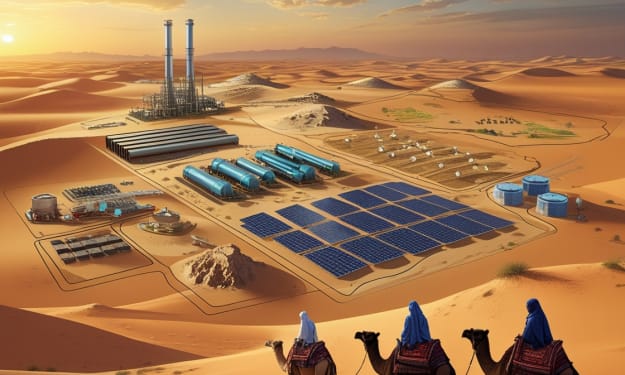
The Sahara's Hidden Fortune: Calculating the True Net Worth of the World's Greatest Desert. AI-Generated.
The Mongol War Machine: The Largest Imperial Army in History Summary: Under the leadership of Genghis Khan, the Mongol Empire rose from the steppes of Central Asia to forge the largest contiguous empire the world has ever seen. Central to this conquest was a massive and highly organized military force—estimated at over a million strong at its peak. This article explores the rise, structure, and tactics of the Mongol army, detailing how it conquered lands from China to Eastern Europe through speed, discipline, and revolutionary strategy. The Mongol army remains one of history’s most formidable and influential military forces. You said: Create a article about the networth of the sahara desert more than 700 words ChatGPT said: Title: The Wealth of Sand: Calculating the Net Worth of the Sahara Desert Summary: Stretching across 11 countries and over 9.2 million square kilometers, the Sahara Desert is often viewed as a barren wasteland. However, beneath its sands lie untapped riches—ranging from oil and gas reserves to rare minerals, solar energy potential, and even tourism opportunities. This article explores the hidden wealth of the Sahara Desert and attempts to estimate its staggering net worth, which could rival some of the world's richest regions. Introduction: More Than Just Sand The Sahara Desert, the largest hot desert in the world, spans across North Africa—covering countries like Algeria, Libya, Egypt, Sudan, Chad, Mali, Mauritania, Morocco, Niger, Tunisia, and Western Sahara. For most people, the Sahara conjures images of endless sand dunes, scorching heat, and lifeless terrain. Yet, this vast expanse is far from worthless. In fact, the Sahara is home to enormous natural resources that contribute significantly to the economies of several African nations—and it holds the key to a potential future of global energy and rare mineral wealth. 1. Oil and Natural Gas Reserves Some of the richest underground assets in the Sahara are petroleum and natural gas reserves. Countries like Algeria and Libya rely heavily on oil exports sourced from Saharan basins. For example: Algeria is the third-largest gas supplier to Europe and holds the 10th-largest natural gas reserves in the world. Its Hassi R'Mel field is one of the largest in Africa. Libya, before its civil unrest, held Africa’s largest proven oil reserves, most of which are found in the Sirte Basin, deep in the desert. Together, these Saharan oil and gas fields generate tens of billions of dollars annually. According to estimates, the proven oil reserves alone in the Sahara exceed 50 billion barrels, with current market prices suggesting a valuation of over $4 trillion USD. 2. Mineral Wealth Beneath the Sand Beyond hydrocarbons, the Sahara is home to critical minerals used in modern technologies. These include: Uranium: Niger is one of the world’s top producers, and its uranium mines in the Sahara power nuclear energy worldwide. Gold: Mali and Sudan have vast desert mining operations producing hundreds of tons of gold. Phosphate: Morocco’s Saharan region holds some of the richest phosphate deposits, essential for agriculture. These minerals play an essential role in industries from energy to electronics and food production. The collective estimated value of exploitable mineral wealth in the Sahara is easily in the hundreds of billions, if not trillions. 3. Solar Energy: A Powerhouse for the Future The Sahara receives over 4,000 hours of sunlight per year, making it one of the most solar-rich regions on Earth. Scientists and engineers have long imagined turning the Sahara into a solar power farm capable of generating electricity for entire continents. Projects like Desertec, though still in developmental stages, propose the installation of massive solar arrays across the desert to supply Europe and Africa with clean energy. If just 1% of the Sahara were covered with solar panels, it could generate over 20 times the electricity that the entire world uses today. The potential market value of such energy production is incalculable, but conservative projections place it in the range of several trillion dollars if fully developed. 4. Tourism and Cultural Heritage Though difficult to quantify compared to minerals or oil, the Sahara holds tourism and cultural value: Destinations like the Erg Chebbi dunes in Morocco, Siwa Oasis in Egypt, and the Tassili n’Ajjer rock formations in Algeria draw adventurous travelers. Archaeological sites, such as prehistoric rock art, ancient trade routes, and Berber and Tuareg cultural landmarks offer significant heritage appeal. Tourism revenue is modest now due to instability and harsh climate, but it could generate billions annually with improved infrastructure and political stability. 5. Strategic Geopolitical Value The Sahara is not just about resources—it also holds immense strategic value: It connects sub-Saharan Africa with the Mediterranean world. It houses key transnational pipelines, roads, and migration routes. Its vast open spaces are of military interest and influence regional security.
By Say the truth about a year ago in Earth
India wants Kashmir attackers brought to justice, foreign minister tells Rubio . AI-Generated.
--- A recent terror attack in the picturesque region of Pahalgam, located in Indian-administered Kashmir, has reopened deep wounds and sparked renewed tensions between India and Pakistan. The assault, which targeted a convoy of Hindu pilgrims heading toward a sacred site, left 26 people dead and dozens injured. As the country mourns, the Indian government has launched a diplomatic offensive, calling for justice and international support to hold the perpetrators accountable.
By sayma farzana tamimaabout a year ago in Earth
Neon Skies of Arcturon
The city of Arcturon gleamed like a monument to perfection—skybridges coiling between diamond towers, airborne trains whispering past the clouds, and a sky so full of neon that stars had been forgotten. Beneath it all, millions of citizens existed under a perfect algorithm, breathing engineered air and thinking thoughts pre-approved by the city’s Central Intelligence Grid.
By muqaddas shuraabout a year ago in Earth
The Origins of Earth: How Our Planet Formed 4.5 Billion Years Ago
The Origins of Earth: How Our Planet Formed 4.5 Billion Years Ago Today, when we walk barefoot on soft grass or gaze up at towering mountains, it's easy to forget how dramatically different our planet once was. Earth’s journey from a chaotic swirl of dust and gas to the vibrant, life-filled world we know today is a story of violence, patience, and remarkable transformation. Travel back with me to about 4.5 billion years ago, and let’s explore the origins of our home.
By Jeno Treshan about a year ago in Earth