Advocacy
North America’s Underside is Slowly Melting into the Earth: A Hidden Geologic Process Unveiled. AI-Generated.
North America’s Underside is Slowly Melting into the Earth: A Hidden Geologic Process Unveiled Deep beneath the surface of the western United States, a silent and powerful process is unfolding — one that scientists believe could reshape how we understand Earth’s internal dynamics. The underside of the North American tectonic plate is slowly melting and dripping into the mantle. This phenomenon, known as "delamination," is not only fascinating from a scientific perspective but could have serious implications for the region's geology, including volcanic activity and seismic risks.
By Adnan Rasheedabout a year ago in Earth
NASA rover discovers out-of-place 'Skull' on Mars, and scientists are baffled
In a startling development that has reignited public imagination and scientific curiosity, a NASA rover has captured an image of what appears to be a skull-like object on the surface of Mars. The object, discovered by the Perseverance rover during its ongoing exploration of the Jezero Crater, is drawing widespread attention from scientists and spa.ce enthusiasts alike, with some calling it the most puzzling find since the infamous “Face on Mars” photographed by Viking 1 in 1976
By Sudipto Halderabout a year ago in Earth
NASA Finds "Skull Hill" Rock On Mars Believes It "Originated From Elsewhere"
NASA Finds "Skull Hill" Rock On Mars Believes It "Originated From Elsewhere" Mysterious Rock Formation on Mars Resembles a Skull Sparks Scientific Debate Over Its Unusual Composition and Origins
By Adnan Rasheedabout a year ago in Earth
Bearish Dollar Bets Move Toward Levels That Raise Risk of Recoil
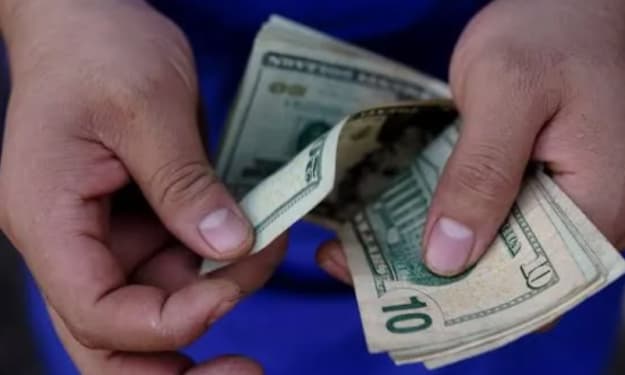
The risk of a sharp rebound is increased when bearish dollar bets reach extreme levels. April 22, 2025 The U.S. dollar is under mounting pressure as traders and investors continue to pile into bearish bets, driving the currency to multi-year lows. The crowded nature of these positions, on the other hand, is alarming financial analysts, who believe that the situation is ripe for a sudden and potentially sharp rebound—a scenario that is frequently referred to as a "short squeeze." The dollar's once-unchangeable status as the world's reserve currency is being challenged as the global financial community loses faith in U.S. economic policy and concerns about the Federal Reserve's independence grow. Yet paradoxically, a near-term rally may be sparked by this extreme bearish sentiment. Dollar drops to a low not seen in years The U.S. Dollar Index (DXY), which tracks the value of the dollar against a basket of major currencies, has dropped to its lowest level in over three years. The index has dropped nearly 9% since the beginning of 2025, indicating widespread dissatisfaction with the fiscal and monetary trajectory of the United States government. President Trump's increasingly protectionist stance, his public criticism of Federal Reserve Chair Jerome Powell, and investor concerns that the Fed's policy decisions are no longer immune from political influence are all major contributors to this decline. Global investors have moved away from the dollar and toward alternative assets like gold, the euro, and the Japanese yen as a result of these developments, which have created an atmosphere of economic uncertainty. Extremes of Bearish Sentiment Approach An unprecedented number of short positions have been created as a result of the dollar's weakness. The dollar's continued decline has been heavily bet on by institutional investors, asset managers, and hedge funds. The Commodity Futures Trading Commission (CFTC) recently released data that shows that net short positions in dollar futures have increased to their highest levels since 2020. Notably, companies like RBC BlueBay Asset Management have made their short positions public, citing a decline in investor confidence in the economic framework of the United States. Mark Dowding, BlueBay's Chief Investment Officer, stated, "The policy uncertainty in Washington is undermining the credibility of the U.S. dollar." "The dollar is no longer regarded as a safe haven." Even though the current fundamentals appear to support this overwhelming bearish consensus, seasoned traders are aware that when everyone is moving in the same direction, the risk of a countermove is greatly increased. Risks of Rebound on the horizon A sharp rebound in the dollar — even if only temporary — could be triggered by several factors. To begin, technical indicators indicate that the dollar is currently oversold. The DXY has recently experienced a false breakout and a descending triangle pattern, both of which are typically signs of reversals in technical analysis. Support levels at 95 and 90 are being closely watched, and in the event of a bounce, resistance is likely to emerge around 101 and 107. If the dollar begins to retrace, even modest upward momentum could force short sellers to cover their positions, sparking a rally.
By GLOBAL NEWSabout a year ago in Earth
“The Day We Celebrate Our Home: A Story of Earth Day”
Every year, on April 22nd, people all over the world come together to plant trees, clean up parks, recycle, and raise awareness about protecting the environment. But have you ever wondered how Earth Day began? Like many great movements, it started with a few concerned voices and grew into something that would inspire millions.
By muhammad khalilabout a year ago in Earth
Advancing Environmental Justice
by Futoshi Tachino Environmental justice is a critical aspect of the broader environmental movement, focusing on the fair treatment and meaningful involvement of all people, regardless of race, color, national origin, or income, in environmental policies and practices. This concept seeks to address the disproportionate environmental burdens faced by marginalized communities and strives for equitable access to a healthy environment.calepa.ca.gov+3apha.org+3ecology.wa.gov+3
By Futoshi Tachinoabout a year ago in Earth
“Words Without Action: The UN’s Fragile Role in the Israel-Palestine Crisis”
“Words Without Action: The UN’s Fragile Role in the Israel-Palestine Crisis” For decades, the Israel-Palestine conflict has remained one of the most volatile and unresolved issues in global politics. With roots embedded in colonial history, religious divisions, and disputed land claims, this conflict has claimed countless lives and left millions displaced. While the world watches, the United Nations—tasked with promoting peace and protecting human rights—has often issued resolutions, statements, and condemnations. But despite these efforts, little has changed on the ground. As the violence continues and humanitarian concerns grow, the UN's role has come under increasing scrutiny. Is it a force for peace, or merely a bystander? Historical Context: A Conflict that Won’t Fade The conflict between Israelis and Palestinians dates back to the early 20th century, intensified by the creation of the state of Israel in 1948 and the subsequent displacement of hundreds of thousands of Palestinians. Multiple wars, intifadas, and peace attempts have followed. Over the years, the United Nations has passed numerous resolutions, including the famous UN Resolution 242, calling for Israel to withdraw from territories occupied during the 1967 war, and Resolution 194, concerning the right of return for Palestinian refugees. Despite these efforts, the situation has deteriorated, with Gaza facing repeated bombings, West Bank settlements expanding, and peace talks stalling. The UN’s Role: Resolutions Without Results The United Nations has not been silent on this issue. The General Assembly and Security Council have passed a series of resolutions aimed at promoting a two-state solution, condemning violence from both sides, and demanding respect for international law. However, these efforts often fail to translate into tangible results. One of the key reasons is the political dynamics within the UN itself—particularly the power of the United States as a permanent member of the Security Council, which frequently vetoes resolutions critical of Israel. While the General Assembly can reflect the majority global opinion, its resolutions are non-binding. On the other hand, the Security Council, which can enforce international law, remains paralyzed due to political divisions. This dynamic has led many to view the UN as an institution that talks loudly but carries a small stick. Humanitarian Crisis in Gaza: A Failing Response In recent years, especially following the 2023 escalation in Gaza, humanitarian conditions have deteriorated at an alarming rate. The UN has warned of looming famine, lack of access to clean water, healthcare collapse, and mass displacement. Despite these warnings, the international community has struggled to coordinate an effective response. Aid convoys are often blocked or delayed, and UN agencies like UNRWA (United Nations Relief and Works Agency) face chronic underfunding and political pressure. Many critics argue that the UN’s failure to enforce ceasefires, ensure accountability for war crimes, or deliver consistent humanitarian aid has contributed to the worsening crisis. While the organization frequently issues calls for restraint, these appeals often go unheeded, exposing the gap between diplomatic language and ground realities. Accusations of Bias and the UN’s Credibility Crisis The UN has also faced criticism from both sides of the conflict. Israel often accuses UN bodies of systemic bias, pointing to the disproportionate number of resolutions passed against it. On the other hand, Palestinians and their allies argue that despite these resolutions, no meaningful pressure is ever applied to halt occupation, end blockades, or secure Palestinian rights. This double-edged perception has eroded the UN’s credibility. In the eyes of many, the organization has become symbolic—able to speak but unable to act. The result is a loss of trust not only among the parties involved but also among global citizens who look to the UN for moral leadership and practical solutions. The Politics of the Veto: An Unfair Game Much like with other global conflicts, the issue of the Security Council’s veto power plays a significant role in stalling any real progress in the Israel-Palestine case. The United States, a key ally of Israel, has repeatedly used its veto to block resolutions that could impose consequences or demand accountability. This monopoly over international decisions reflects a deeper structural flaw within the UN system—where national interests often override global justice. Without reforming the Security Council or finding ways to bypass political paralysis, the UN will continue to remain ineffective in resolving deeply rooted conflicts like this one. Calls for Reform and a Renewed Mandate Amid growing global frustration, voices are calling for a reimagined role for the UN in the Israel-Palestine crisis. Suggestions include appointing a more empowered special envoy with real authority, increasing funding for humanitarian missions, and implementing mechanisms to hold violators of international law accountable—regardless of political alliances. There is also a push for greater inclusion of civil society, grassroots peacebuilders, and local communities in the peace process. The current top-down, government-driven negotiations have failed time and again. It’s time to explore bottom-up approaches that prioritize human rights, coexistence, and shared futures over territorial disputes and political posturing. Conclusion: Will the UN Step Up or Step Aside? The Israel-Palestine conflict continues to test the international community’s commitment to justice, peace, and human dignity. While the United Nations remains an essential platform for diplomacy and dialogue, its current approach has proven insufficient. For decades, it has issued statements, passed resolutions, and held emergency meetings—yet the violence persists, the occupation continues, and lives are lost every day. If the UN wishes to remain relevant in the 21st century, it must evolve beyond symbolic gestures. It must confront political bias, reform its power structures, and take bold, principled actions that prioritize human rights over strategic alliances. The people of Gaza, the West Bank, and Israel deserve more than carefully worded press releases—they deserve a future where their children can grow up in safety, dignity, and peace.
By Md Shoriful Islamabout a year ago in Earth
Tesla Stock Is Falling. Odometers, Low Priced Cars, Earnings Loom Over Shares.
Shares of Tesla fall as a result of delays, brand issues, and competition. As Tesla's stock continues its sharp decline in 2025, investors are increasing their scrutiny of the company, which was once the undisputed market leader in electric vehicles (EVs). The automaker is facing a variety of challenges, including delayed vehicle launches, reputational damage, and stiffening global competition, as well as a market capitalization loss exceeding $500 billion and shares down more than 40% year to date. Low-Cost EV's Delay in Launching The delay of Tesla's highly anticipated low-cost electric vehicle, which was originally scheduled for release in early 2025, is a major contributor to the company's current stock woes. The vehicle was positioned as Tesla's response to the increasingly crowded mass-market EV market and was expected to cost between $25,000 and $30,000. However, recent reports suggest that this model's production will not begin until late 2026. This delay occurs at a crucial moment when EV adoption is primarily driven by affordability and accessibility, particularly in cost-conscious markets. Investors, who had hoped that the model would revive demand and drive volume sales, are frustrated by Tesla's inability to deliver on this front. Concerns have been raised regarding the company's capacity to keep up with rapidly changing industry dynamics because it has provided very little in the way of a detailed roadmap. Earnings fall short, and margins are strained. Investors' concerns have not been alleviated by Tesla's financials. The company reported earnings of $0.66 per share in its most recent report, which were lower than the $1.05 per share it earned a year ago and significantly below the expectations of analysts. Even though revenues fell short of expectations, they increased by 9% to $23.35 billion. Tesla's profit margins are under a lot of stress. The company has aggressively cut prices on a number of its models in an effort to remain competitive in the face of decreasing demand. Although this strategy temporarily increased sales volume, it has also reduced profitability, particularly in markets with higher operating costs like the United States and Europe. This squeeze on margins comes at a time when Tesla needs money to finance its robotaxi initiative and AI-powered vehicle software. Political Debates and Damage to the Company's Image Reputational damage caused by CEO Elon Musk's personal involvement in politics is another issue that is affecting Tesla's stock. Parts of the customer base have criticized Musk for his public support of far-right figures and advisory role in Donald Trump's reelection campaign, particularly in progressive markets like Europe and California. The backlash has been evident, with public calls for boycotts and protest actions like vandalism in Tesla showrooms. Real business effects have resulted from this political alignment. In the first quarter of 2025, Tesla reported a 13% drop in vehicle deliveries—the lowest in nearly three years. Analysts have pointed to Musk's contentious public persona as a growing brand liability. JPMorgan recently reduced its outlook for Tesla's profit in a rare move, citing "unprecedented brand damage" as the primary reason. Wells Fargo went even further, stating that deteriorating fundamentals and waning investor confidence could cause Tesla stock to fall another 50%. Global competition growing External threats are getting worse while Tesla struggles with internal issues. The largest of these is BYD, a Chinese manufacturer of electric vehicles that recently surpassed Tesla as the company with the most customers worldwide. Because of its strong domestic base and vertically integrated manufacturing, BYD is able to offer a wide range of models at affordable prices. Nio, XPeng, and even older automakers like Volkswagen and Hyundai are rapidly gaining market share. In addition to offering pricing that is more competitive, these businesses are also making significant investments in software, battery technology, and design—areas in which Tesla once clearly dominated. Elon Musk has acknowledged the growing threat posed by Chinese automakers, stating that these businesses could "demolish" their global counterparts without trade protections. This comment contrasts sharply with previous years, when Tesla's market position appeared almost untouchable. Uncertain Future Among Bets on Innovation Tesla is betting heavily on the future, despite the obstacles. Full Self-Driving (FSD) software, which Musk claims will eventually power a fleet of autonomous robotaxis, is still being developed by the company. Additionally, there is talk of a new Model Y, enhancements to the Cybertruck, and an expansion of Tesla's energy business. However, these long-term bets will not alleviate investor anxiety in the immediate future. The deployment timeline for robotaxi is still a mystery, and regulatory obstacles persist. In the meantime, Tesla's rivals are moving quickly, frequently with funding that is supported by the state and aggressive pricing strategies that Tesla is unable to match without hurting its margins. Last Thoughts The slump that Tesla will experience in 2025 is not the result of a single mistake; rather, it is the culmination of multiple pressures coming together simultaneously. The electric vehicle giant is going through one of its toughest periods in its history, with issues like delayed products, low earnings, challenges with its brand, and threats to its competition. Tesla will need to offer more than just bold promises in order to regain investor confidence. For the company to get back on track, timely execution, clear communication, and a renewed focus on its core values—innovation, sustainability, and customer trust—will be crucial. The market will keep a close eye on the situation until then because the path ahead appears uncertain.
By GLOBAL NEWSabout a year ago in Earth