Advocacy
Ultimate Luxury Showdown: Rolls-Royce vs Bugatti. Which is best?
Rolls-Royce La Rose Noire Droptail vs. Bugatti La Voiture Noire: A Battle of Luxury Titans In the ultra-exclusive world of high-end automobiles, two names stand out as pinnacles of art, engineering, and status: Rolls-Royce La Rose Noire Droptail and Bugatti La Voiture Noire. These aren’t just cars—they’re statements, rolling sculptures with prices that soar beyond most people’s wildest dreams. But when placed head to head, which one truly reigns supreme?
By Dr Sazidul about a year ago in Earth
China: The Rising Giant of the 21st Century . AI-Generated.
In the 21st century, no discussion about global power and influence is complete without mentioning China. From a once-isolated nation to a dominant global player, China has emerged as a powerful force in almost every domain—economics, military, politics, and technology. With its ancient civilization, massive population, and strategic vision, China today stands as one of the most influential nations in the world.
By Real life 🧬 stories about a year ago in Earth
"I Quit My Job to Travel the World — Here's What No One Tells You"
For years, I watched YouTubers and Instagram influencers pack up their lives into 40-liter backpacks and chase sunsets across the globe. “Quit your 9-to-5,” they said. “Live your dream.” So one day, after a particularly soul-crushing meeting where my ideas were ignored yet again, I did exactly that. I handed in my resignation, sold most of my belongings, bought a one-way ticket to Thailand, and posted the obligatory “New Chapter” photo with my passport and latte. My DMs flooded with messages: You’re so brave! I wish I could do that! Living the dream! At first, it felt like I was. The Honeymoon Phase My first few weeks were magical. I island-hopped across Thailand, lived in a treehouse in Bali, and met people from every corner of the world. My days were filled with jungle hikes, coconut smoothies, and sunset yoga. I was finally “free.” No deadlines. No commutes. Just me, my backpack, and the world. I remember thinking, Why didn’t I do this sooner? But Then Reality Hit It started small. A delayed flight here. A stolen phone there. Then came the loneliness. Making friends was easy, but keeping them wasn’t. Everyone was on their own journey, constantly moving, constantly leaving. I’d connect with someone over street food one night, and the next morning they’d be gone—on a bus to another city or a flight to another country. Then came the money stress. I had savings, sure. But they went faster than I expected. Travel wasn’t always cheap, especially when you factored in flights, accommodation, insurance, and the occasional medical emergency (hello, Bali belly). I tried to freelance, but working from different time zones with weak Wi-Fi in humid hostels wasn’t exactly the productivity dream I imagined. You Don’t Escape Yourself One of the biggest myths about quitting your job to travel is that you’ll somehow “find yourself.” But what they don’t tell you is that your problems follow you. In fact, they echo louder when the distractions of daily life are stripped away. Alone on a beach in the Philippines, I realized I was still anxious. Still doubting myself. Still chasing external validation, only now in the form of likes on travel photos. There were nights I cried in hostel beds, missing my friends, my family, my old routine—even my old coffee mug. I felt guilty for not feeling grateful all the time. After all, wasn’t this the dream? Not All Days Are Instagram-Worthy Social media doesn’t show the overnight buses, the language barriers, the food poisoning, or the fear of getting scammed in unfamiliar places. It doesn’t show you panicking when your card gets declined in a country where no one speaks English. Or trying to sleep in a 12-person dorm with someone snoring like a chainsaw. And it certainly doesn’t show the identity crisis that comes when you’re no longer “the marketing manager” or “the reliable friend,” but just another backpacker trying to figure it all out. But It Was Worth It Despite all of this—maybe even because of all of this—I don’t regret it. Traveling stripped away the noise. It forced me to confront who I really was, outside of titles and routines. I learned resilience. How to be okay with being uncomfortable. How to ask for help. How to be alone without being lonely. I discovered that joy isn’t just in the big, dramatic moments, but in tiny ones too—watching monks feed stray dogs at sunrise, or learning how to say “thank you” in five different languages just to see someone smile. And eventually, I found balance. I settled into a slower pace, choosing fewer countries and longer stays. I found a rhythm of working online, budgeting better, and building deeper connections. I stopped chasing the next “epic experience” and started appreciating the stillness. What No One Tells You Quitting your job to travel the world won’t solve your problems. It won’t instantly make you happy or confident or whole. What it will do is challenge you, break you, and—if you let it—transform you. It’s not a fairytale. It’s not always beautiful. But it’s real. And in a world full of filters and false perfection, real is rare. So if you’re thinking about taking the leap, know this: It’s okay to feel scared. It’s okay to miss home. It’s okay if the journey doesn’t look like what you expected. Because sometimes, the best chapters in life are the ones that aren’t planned. And sometimes, freedom isn’t found in where you go—but in finally learning who you are when no one else is watching.
By Nizam khanabout a year ago in Earth
Scientists detect signature of life on a distant planet
In a groundbreaking discovery that would redefine humanitys knowledge of the universe, scientists have detected what seems to be the signature of existence on a far off exoplanet. Using current area telescopes and spectrometry techniques, a group of global researchers found atmospheric markers that strongly endorse the presence of organic activity.
By Prottasha Alamabout a year ago in Earth
Top 50 Must-Visit Destinations in Europe: A Journey Through History, Culture, and Natural Beauty
Seven of the top ten most visited countries are European, thanks to the continent's rich cultural heritage, historical landmarks, safety, and efficient infrastructure. Embark on a journey through the top 50 destinations that showcase Europe's diverse allure.
By Sharmin Smrityabout a year ago in Earth
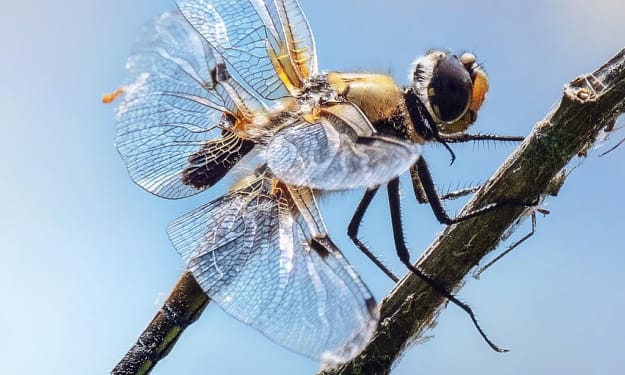
Dragonfly: The Ancient Aviator of the Skies
Introduction The dragonfly, a shimmering symbol of transformation and agility, is not just an insect — it is a marvel of evolution, a predator of precision, and a creature of deep cultural significance. Found across almost every continent, dragonflies have fascinated humanity for millennia. From their prehistoric lineage to their mesmerizing flight mechanics, the story of the dragonfly is as complex and fascinating as the creature itself. --- 1. Evolutionary History: Living Fossils of the Insect World Dragonflies are some of the oldest flying insects on Earth. Their ancestors date back over 300 million years, long before the age of dinosaurs. Fossil records show that ancient dragonflies like Meganeura had wingspans of up to 28 inches, dwarfing their modern descendants. Belonging to the order Odonata, which also includes damselflies, dragonflies are further classified under the suborder Anisoptera. Their primitive features — such as fixed-wing structures and aquatic larvae — highlight their ancient evolutionary roots. --- 2. Anatomy and Physiology: Designed for Speed and Agility Dragonflies are built for flight dominance. With two pairs of independently moving wings, they can hover, glide, fly backward, and even make sharp turns at high speeds. Their flight capabilities have inspired engineers and roboticists studying micro aerial vehicles. Key anatomical features include: Compound eyes: Each eye contains up to 30,000 ommatidia, giving them nearly 360-degree vision. They can detect polarized light and even colors in the ultraviolet range. Thorax: Strong muscles in the thorax control wing movement independently. Abdomen: Long and slender, it balances the dragonfly during flight and aids in mating. Legs: While not used for walking, the six spiny legs are perfect for catching prey mid-air. Dragonflies are ectothermic, relying on environmental heat. Some species, like Pantala flavescens, use a technique called wing-whirring to warm up their flight muscles before takeoff. --- 3. Lifecycle: From Aquatic Predator to Aerial Hunter Dragonflies undergo incomplete metamorphosis, passing through three stages: egg, nymph (larva), and adult. Eggs: Laid in or near water, dragonfly eggs hatch in a few days to several weeks, depending on species and climate. Nymph: This aquatic stage can last from months to several years. Dragonfly nymphs are voracious predators, feeding on mosquito larvae, tadpoles, and even small fish. They use a hinged, extendable lower jaw to snatch prey. Emergence: After molting multiple times, the nymph climbs out of the water and undergoes its final transformation. The adult dragonfly emerges, pumping fluid into its wings to expand them. Most adult dragonflies live only a few weeks to a few months, during which their primary focus is reproduction. --- 4. Behavior and Ecology: Masters of the Air and Water Dragonflies are apex insect predators in both their larval and adult stages. They exhibit complex behaviors such as: Territoriality: Males are highly territorial and often engage in aerial battles to defend prime mating spots near water. Mating: Their unique "wheel position" during mating is iconic. Males use claspers at the end of their abdomen to grip the female behind the head, while the female bends her abdomen forward to collect sperm. Oviposition: Females lay eggs in water or on aquatic plants. Some species dip their abdomens repeatedly into the water to release eggs. Dragonflies help maintain ecological balance by feeding on pests like mosquitoes, flies, and midges. They are sensitive to pollution and serve as bioindicators of water quality. --- 5. Diversity: Over 5,000 Species Worldwide There are more than 5,000 known species of dragonflies, with incredible diversity in size, color, and behavior. Some notable families include: Libellulidae (Skimmers): The largest family, found in a wide range of habitats. Aeshnidae (Darners): Large, strong fliers with distinctive stripes. Gomphidae (Clubtails): Named for their swollen tail segments. Corduliidae (Emeralds): Often metallic green or blue. Tropical regions like Southeast Asia, South America, and Africa are hotspots for dragonfly biodiversity. --- 6. Dragonflies in Culture and Symbolism Dragonflies carry deep symbolic meaning across cultures: Japan: Considered symbols of strength, courage, and happiness. Samurai used them in armor and art. Native American traditions: Associated with swiftness and change. Europe: Once linked with superstition and danger (e.g., "Devil’s darning needle"), modern views are more positive. China: Symbols of harmony, prosperity, and the arrival of summer. In modern symbolism, the dragonfly is often seen as a sign of transformation, adaptability, and self-realization. --- 7. Conservation Status: Threats and Protection Despite their ancient success, dragonflies are under threat due to: Habitat destruction: Wetland drainage, deforestation, and urbanization. Pollution: Pesticides and water contamination harm larval stages. Climate change: Alters migration patterns and breeding cycles. Organizations like the IUCN monitor dragonfly populations. Wetland preservation and clean water initiatives are crucial to protecting them. Some species, such as the Hine's emerald dragonfly (Somatochlora hineana), are listed as endangered. --- 8. Dragonflies and Science: Bioinspiration and Research Dragonflies have become a focal point in scientific research due to their unique features: Aviation and robotics: Their flight mechanics inspire biomimetic drones and micro air vehicles. Neuroscience: Studies of their vision and motion detection contribute to understanding sensory processing. Pest control: Research continues into using dragonflies for natural mosquito population management. Additionally, dragonflies are used in citizen science projects where communities help monitor local species. --- 9. Fun Facts About Dragonflies A dragonfly can fly up to 35 miles per hour, making it one of the fastest insects. Pantala flavescens is the most widespread dragonfly, known for transoceanic migrations over thousands of kilometers. Dragonflies can eat their own body weight in insects every 30 minutes. Their wings beat independently, allowing them to perform aerial feats no helicopter can mimic. --- Conclusion: The Living Jewel of the Natural World Dragonflies are more than just beautiful insects gliding over ponds — they are ancient survivors, ecological warriors, and icons of transformation. In a rapidly changing world, protecting dragonflies means protecting the delicate ecosystems they inhabit. Observing a dragonfly is like glimpsing nature’s artistry and engineering at its finest — a reminder that even the smallest creatures have the power to inspire awe and curiosity.
By Ikram Ullahabout a year ago in Earth
The Moon: A Mysterious Companion
The Moon—one of the most familiar and captivating objects in the night sky. Since childhood, we’ve heard countless stories, poems, and songs inspired by it. However, the Moon is not just a subject of imagination; it is a scientific wonder as well. Every fact we learn about the Moon opens a new door to understanding space. In this article, we’ll explore the Moon’s formation, history, scientific features, and modern research related to it.
By Fahim Rahmanabout a year ago in Earth
The Importance of Tree Conservation: A Necessity of Our Times
"Without trees, the clouds disperse, Without clouds, water disappears, Without water, agriculture fails, Without agriculture, prosperity declines, Without prosperity, all become disheartened, Such devastation is caused by cutting down trees."
By Kadam's Publishing Companyabout a year ago in Earth
The Ashes of the Third World War
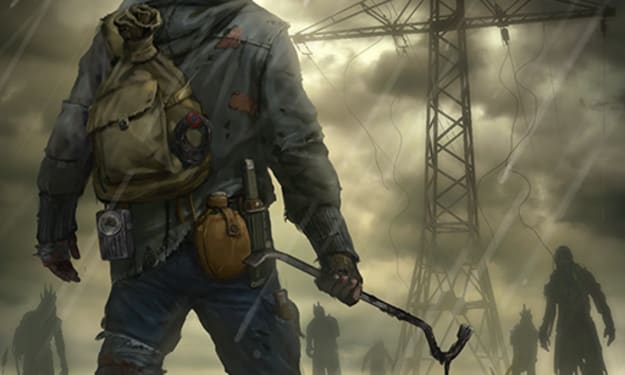
The sky was no longer blue. It hadn’t been for years. Instead, a permanent layer of ash and smoke hung above the shattered cities, casting a dim gray gloom over the remains of what was once civilization. The Third World War had ended not with a victor, but with silence. Silence so thick it suffocated the earth itself. In the remnants of what was once Eastern Europe, a group of survivors huddled in the ruins of an old underground metro station. The war had been waged with the most advanced weapons known to man—nuclear strikes, drone armies, AI-controlled missiles, biological agents. In less than a year, more than five billion people had died. Nations collapsed. Governments fell. Satellites blinked out of the sky, and the digital world was erased. Among the survivors was 17-year-old Elina Markov, once a student of history, now a bearer of it. Her parents had died in the second wave of strikes when a biochemical attack swept through their village. She had survived by hiding in a cellar for days, feeding on canned beans and stale water. The Elina who had once dreamed of becoming a teacher no longer existed—she had become something different. Hardened. Focused. Relentless. Beside her sat Darius, an ex-military engineer, now the de facto leader of their small group. There were twelve of them in total: a nurse, two mechanics, three children, and six adults who had once been everything from artists to accountants. Now, they were simply survivors. "Power’s running low again," Darius muttered as he looked at the flickering battery display on the solar charger. "Tomorrow, we’ll need to search Sector C." Sector C was part of the old industrial zone—radioactive, partially collapsed, and filled with dangers both environmental and human. Bandits and warlords ruled what was left of the surface world, feeding on desperation. Elina volunteered to go. "I know the route. I’ve been there before." She didn’t wait for permission. She rarely did anymore. The next morning, covered in ash-gray cloaks and carrying makeshift gas masks, Elina and two others stepped into the wasteland. The buildings stood like tombstones, empty and eerie, blackened by fire and decay. Once, this had been a vibrant city filled with lights, life, and laughter. Now, only echoes remained. In Sector C, they found a damaged supply drone—likely abandoned during the final days of the war. Its cargo was mostly intact. Batteries, ration bars, a first aid kit, and a strange, sealed container marked with an old emblem—UN Reconstruction Program. Inside the container were documents and a data chip labeled: “Project Phoenix.” Back in the station, Darius worked all night to get the chip operational. When he finally accessed it, he read aloud with a voice trembling in awe. “Project Phoenix was initiated as a last hope… a post-war initiative created by remaining scientists and world leaders to establish an underground city equipped with clean water, sustainable food supplies, and long-range communication systems. Coordinates encrypted. Only to be opened when all other systems fail.” The group erupted with cautious hope. Could this be real? A sanctuary? A way forward? For weeks, they deciphered the data, fought off raiders, and endured sickness and cold. But the promise of Phoenix kept them going. One by one, others joined their cause—wandering survivors drawn to the whisper of something better. Finally, they reached the location—deep beneath a mountain ridge in what used to be the Alps. The entrance was hidden, but the data chip provided the codes. With a hiss of ancient hydraulics, the doors opened. What they found inside brought tears to their eyes. Clean corridors. Power. Water. A greenhouse. And messages left by the builders, urging any survivors to build again, to remember the past and avoid repeating it. It wasn’t paradise. But it was hope. And hope was enough. Elina stood on the platform of the inner chamber and looked back at the people who had followed her through fire and ash. “This,” she said, “is not the end. This is the beginning of what comes after.” And in the heart of the broken world, the embers of humanity began to glow once more.
By Mati Henry about a year ago in Earth
Trump’s Middle East Tour: The Untold Strategic Depth Behind the Diplomatic Show
Introduction: More Than Just a Photo Op When former President Donald Trump embarked on his first international trip to the Middle East in May 2017, the White House presented it as a ceremonial visit—a gesture of goodwill to Muslim allies and a symbolic stand against extremism. Yet, beneath the carefully choreographed handshakes and grand speeches, the tour was a meticulously planned geopolitical maneuver that reshaped U.S. strategy in the region.
By Paradox 269about a year ago in Earth
Beyond The stars
Space was never silent. Though the void between worlds seemed still, there was always the soft hum of energy, the background radiation of existence, and the heartbeat of a ship pressing onward into the unknown. Commander Aisha Khan stood before the viewing bay of the Aetheris, Earth’s most advanced exploration vessel. After years of preparation and five months of travel through deep space, they had arrived at Gliese-92b—a planet orbiting a red dwarf 20 light-years from Earth. Initial scans suggested atmospheric compatibility, surface water, and, most importantly, signs of technology. Not nature. Technology. “Orbit stable,” said Dr. Theo Marsh, the mission’s lead astrophysicist. “Reading faint energy signatures. Something’s active down there.” Aisha exhaled slowly. “Patch in the drones. Let’s take a look.” The orb-like reconnaissance drones detached from the ship’s underbelly and descended into the planet’s thick clouds. Visuals came through seconds later—vast plains of crimson grass, jagged rock formations glowing with bioluminescence, and structures. Not natural ones. Towers, geometric and smooth, partially buried in dust, half collapsed, but undeniably crafted. “Those aren’t ruins,” Theo murmured. “They’re… recent. Maybe even occupied.” Aisha felt a chill. They had come seeking proof of alien life. They didn’t expect the welcome to be this quiet—or this eerie. The team decided on a surface expedition. Protocol required extreme caution, but Earth Command authorized the landing. Curiosity had always outweighed fear when it came to humanity. The shuttle broke atmosphere and touched down near one of the tall structures. The silence on the surface was oppressive. No wind. No movement. Just the red sun casting long shadows across the strange terrain. Aisha, Theo, and three others disembarked, weapons and scanners ready. The air was breathable, but thick with static. Every few minutes, their radios hissed with unexplained distortion. “This place feels… watched,” said Lieutenant Harper, his eyes darting toward the tower ahead. They advanced carefully into the structure, its walls etched with swirling symbols that pulsed faintly with light. The architecture was unlike anything human—sharp angles merging into smooth curves, impossible geometry that hurt to look at for too long. “Radiation is low,” Theo whispered, scanning the glyphs. “But there’s a frequency. Almost like… a transmission.” Aisha’s headset crackled. Then a voice. Not a human one. “You are not the first.” She froze. “Say that again.” The voice repeated. “You are not the first. You are not alone.” “Where is it coming from?” she asked. Theo’s hands trembled over the controls. “It’s not broadcasting. It’s… inside the tower. Inside our suits. Direct neural contact.” That’s when the walls shifted. Not moved—shifted. As if space itself folded inward. And from the corner of the hall, a form emerged. It was tall, humanoid, but shrouded in darkness. Its body flickered, as though it were made of projected thought rather than matter. It had no mouth, yet the voice echoed again: “We watched your planet before your kind stood upright. You searched the stars. You found us. We waited.” Weapons were raised. Aisha held her hand up. “We are explorers. We come in peace.” “So did the last ones.” The temperature dropped. Images filled their minds—visions of other worlds, other civilizations, falling into chaos. Explosions. Disease. Collapse. The being showed them a gallery of extinction. “Curiosity brought them. Greed destroyed them. Will you be different?” Aisha’s heart pounded. “We only want to learn. We want to share knowledge.” The being paused. A long silence filled the chamber. Then— “Then one must stay. One must know. One must carry our memory. Choose.” The team erupted in confusion. “What does it mean ‘one must stay’?” Harper asked. “I think…” Theo swallowed. “It wants someone to remain here. To learn from them. To become a vessel for their knowledge.” Aisha’s mind raced. It could be a trap. But it could also be the greatest exchange in history. She stepped forward. “I will stay.” “No,” Theo objected. “You’re the commander—” “That’s exactly why.” Aisha turned. “Get back to the ship. Record everything. Bring it home.” The being extended a hand—not physical, but a shimmer of light. As Aisha touched it, her body went rigid. Her eyes glowed, filled with visions no human had ever seen. Her voice echoed, layered with something alien: “Go. Before the dawn ends.” The team ran, not daring to look back. The shuttle launched, the towers shrinking behind them. Onboard, Theo clutched the drive with their recordings. His eyes were wet. Back on Earth, decades later, the message still played in the halls of the Space Exploration Archives:
By Mati Henry about a year ago in Earth
The Last Dawn
The sky burned a dull orange as the sun struggled to rise through the thick haze. Ash floated through the air like snow, and the wind carried the scent of rot. The cities had fallen long ago. What remained were shells of buildings and streets littered with bones and memories.
By Mati Henry about a year ago in Earth