Advocacy
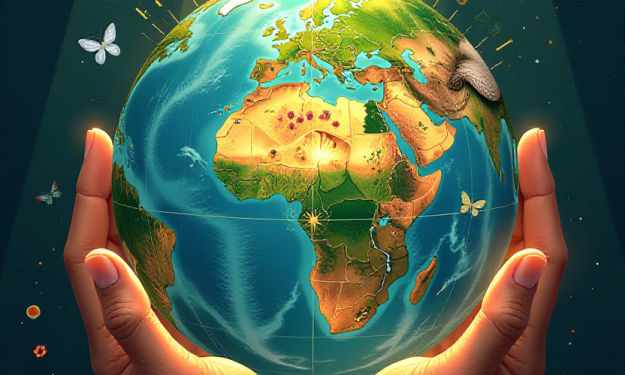
"Biodiversity: The Beauty of Life on Earth and Our Shared Responsibility"
Introduction Earth is home to an estimated 8.7 million species, yet human activity drives approximately 150 of them to extinction daily. This staggering loss isn’t just a statistic—it’s an unraveling of the intricate web of life that sustains us all. Biodiversity, the dazzling variety of life on our planet, is both a masterpiece of evolution and a lifeline for humanity. From the depths of coral reefs to the canopies of rainforests, every species plays a role in Earth’s grand symphony. This article explores the irreplaceable beauty of biodiversity, the existential threats it faces, and the collective action needed to safeguard our shared home.
By Shamshair Khan Hasan Zaiabout a year ago in Earth
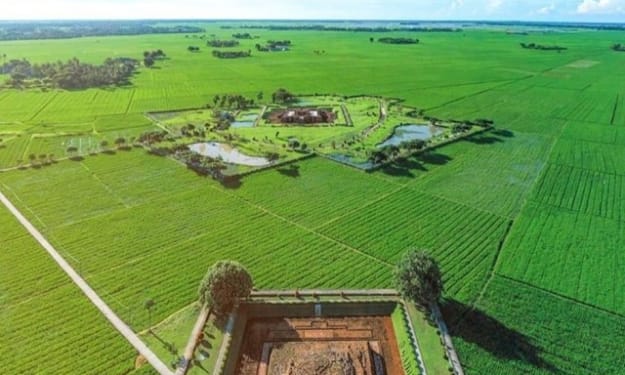
Explore Desa Batujaya: Tradition, Community, and Scenic Beauty
Explore Desa Batujaya: Tradition, Community, and Scenic Beauty Nestled in the heart of West Java, Desa Batujaya is a charming village that offers visitors a unique blend of rich traditions, a tight-knit community, and stunning natural beauty. While many travelers seek bustling cities or well-known tourist spots, Batujaya stands out as an authentic cultural destination where history and nature meet in perfect harmony.
By jurus jituabout a year ago in Earth
The Amazon Rainforest: Earth's Beating Heart Is Dying in Silence
When people think of the Amazon Rainforest, they often picture an endless sea of green, teeming with exotic wildlife and ancient secrets. It's a place that has inspired adventurers, scientists, and storytellers for centuries. But while its mysteries captivate the imagination, there’s an even greater story unfolding—one of quiet tragedy and unexpected revelations. The Amazon isn’t just a forest; it's a biological miracle. And it’s in more danger than most people realize. The Surprising Science Behind the Forest We all learned in school that the Amazon is the "lungs of the Earth." But that’s only partly true. The forest absorbs about 2 billion tons of CO₂ every year. However, scientists recently discovered that parts of the Amazon are now emitting more carbon than they absorb due to widespread deforestation and wildfires. In other words, this once life-giving ecosystem may be turning against us—not by choice, but by our actions. What’s more fascinating is how the Amazon creates its own weather. It releases water vapor through a process called transpiration—basically, the trees "sweat." This moisture forms clouds and rainfall not just for the forest itself, but for surrounding regions and even continents. Without the Amazon, farming regions as far away as the United States and Argentina could face severe droughts. It’s not just a rainforest—it’s a climate engine. More than Just Trees and Animals The Amazon is home to over 400 billion individual trees, spread across 16,000 species. But it’s not just the trees that matter—this region supports one in ten known species on Earth. From the jaguar to the Amazon river dolphin, from poison dart frogs to bioluminescent fungi, the biodiversity here is beyond comprehension. Yet, the most mind-blowing part? We haven’t even discovered everything. Scientists estimate that thousands of species of plants, animals, and fungi remain unnamed and undocumented. In fact, on average, a new species is discovered in the Amazon every three days. And here’s something truly unexpected: The Amazon has its own "internet" system. Not digital, of course—but fungal. Known as the “Wood Wide Web,” this underground network of mycorrhizal fungi allows trees and plants to share nutrients, send warnings about pests, and even support weaker trees. It’s a form of natural communication that puts modern technology to shame. People of the Amazon: Keepers of Forgotten Knowledge Often overlooked in environmental discussions are the people who have lived in harmony with this land for thousands of years. The Amazon is home to over 350 Indigenous groups, many of whom still live without formal contact with the outside world. These communities possess knowledge about medicinal plants, sustainable farming, and biodiversity that modern science has only begun to explore. Here’s a shocking twist: Modern pharmaceuticals have already benefited from Amazonian knowledge. More than 25% of Western medicines are derived from rainforest ingredients—many of them found in the Amazon. The rosy periwinkle, for example, led to life-saving drugs for childhood leukemia and Hodgkin’s disease. Imagine what else might be hidden in the leaves and roots of this vast forest, waiting to be discovered—or destroyed. Deforestation: Death by a Thousand Cuts Despite all this wonder, the Amazon is vanishing. Over 17% of the forest has already been lost, mostly to cattle ranching, logging, and soy farming. And if we reach 20–25%, scientists warn of a terrifying tipping point. The forest could collapse into a dry savannah, unable to support its current biodiversity or climate functions. It gets worse: Illegal mining operations are poisoning rivers with mercury, threatening both wildlife and Indigenous communities. Fires—some natural, most manmade—rip through huge swathes of forest every dry season. Satellite images show black scars across green expanses, the wounds of our greed. The Forest Isn’t Just a Victim. It Fights Back. In a strange twist of fate, the Amazon may have the last word. As it becomes drier and more fragmented, its ability to absorb carbon diminishes. That means global temperatures could rise faster, leading to more extreme weather, rising sea levels, and failing crops worldwide. It's not a distant crisis—it's one that's beginning to knock on all our doors. But the forest also offers hope. Reforestation projects in Brazil, Colombia, and Peru have shown that with time and care, some areas can recover. Scientists are now using drones and AI to identify critical zones for restoration. Even local communities are stepping up, reviving traditional land practices to heal the soil and protect what’s left. So, What Can You Do? You don’t have to live near the Amazon to protect it. Here are a few impactful ways to help: 1. Support Rainforest Charities: Groups like the Rainforest Alliance, Amazon Watch, and the Pachamama Alliance work directly with communities on the ground. 2. Watch What You Eat: Beef and soy are major drivers of deforestation. Choose sustainable sources and support companies with deforestation-free supply chains. 3. Go Paperless (When Possible): Paper and wood products contribute to logging. Recycled materials make a difference. 4. Raise Awareness: Share articles, speak up, and educate others about the Amazon's true importance. 5. Support Indigenous Rights: The best protectors of the forest are those who have always lived there. Final Thoughts: A Global Forest The Amazon isn’t just Brazil’s treasure—it’s the planet’s inheritance. It holds the key to fighting climate change, curing diseases, and understanding life itself. But its wonders may vanish before we truly understand them. It’s time to stop thinking of the Amazon as someone else’s problem. Because in many ways, the Amazon is us—our weather, our air, our medicine, our future. And if we let it die in silence, the whole world may go quiet with it. ---
By Umair Khanabout a year ago in Earth
The Global Fallout of the U.S.–China Trade War
In the heart of Beijing, 27-year-old entrepreneur Liu Wei watched as the last of his export shipments was canceled. Once a thriving supplier of electronics to Silicon Valley, his business had become collateral damage in a war that had no soldiers, no missiles—just tariffs and policies. Across the Pacific, in a modest Michigan manufacturing town, Jack Thompson, a soybean farmer, faced a similar crisis. His harvest, once destined for Chinese markets, now sat rotting in silos. The year was 2029, and what began a decade earlier as a series of economic chess moves between the United States and China had exploded into a full-blown trade war with worldwide consequences. It wasn't just about goods or services anymore—it was about dominance, control, and survival. Back in 2018, the U.S. imposed tariffs on Chinese steel and aluminum, citing unfair trade practices and intellectual property theft. China retaliated swiftly, targeting American agriculture and tech. At first, global markets wobbled but recovered. Analysts believed it would be temporary—just political posturing. They were wrong. As years passed, the tension grew. The U.S. began decoupling from Chinese supply chains, encouraging domestic manufacturing and imposing restrictions on Chinese tech giants. China, in turn, fast-tracked its Belt and Road Initiative, creating alliances in Asia, Africa, and Eastern Europe, while dumping U.S. Treasury bonds, shaking global confidence in the dollar. Liu Wei and Jack Thompson became two faces of a growing international crisis. In Africa, where Chinese investments had surged, U.S. sanctions forced a freeze on infrastructure projects, leaving cities half-built and economies stalled. In Southeast Asia, nations were forced to “pick sides,” with alliances being forged or broken not with bullets, but with trade agreements and digital infrastructure. The World Trade Organization struggled to mediate. Its authority was undermined by both superpowers. The United Nations attempted diplomatic resolution, but the rivalry had grown too personal. It wasn't just about economics anymore—it was a fight over whose system would define the future: Western democracy or Eastern state capitalism. In the middle of this storm, a group of economists, business leaders, and diplomats formed an informal alliance known as the Global Balance Initiative. Their goal: to de-escalate the trade war before it led to total economic collapse. Among them was Maria Chen, a half-Chinese, half-American trade analyst who had spent her childhood crossing between Beijing and Boston. She understood both worlds—and the dangers of their collision. Maria led a daring plan. Through a series of anonymous essays titled “Clash of Titans”, she revealed classified details of how both governments were using trade as a proxy for cyber espionage, manipulating currencies, and destabilizing third-party nations. The essays went viral, translated into dozens of languages, igniting protests and movements across the globe. In India, college students rallied to push for independent economic policies. In Germany, mass demonstrations called for a united European stance. Even in the U.S. and China, citizens began questioning their leaders, demanding peace through cooperation, not competition. But neither nation wanted to blink first. The breaking point came when a Chinese semiconductor factory in Taiwan was hit by a cyberattack that nearly led to real military conflict. Satellites were scrambled. Missiles were placed on alert. It was Maria’s leaked intel that revealed the attack originated from a rogue tech faction trying to profit off the war. The world came terrifyingly close to World War III. Finally, shaken by the near catastrophe, U.S. and Chinese leaders agreed to meet in Geneva. The summit lasted six days, broadcast worldwide. Tensions were high, trust was low—but the pressure from the global community was overwhelming. In the final hours, a framework agreement was signed: The Geneva Trade Accord, a 300-page document outlining fair trade rules, cyber neutrality, and digital cooperation between nations. Liu Wei received an order from California two weeks later. Jack Thompson’s soybeans were sold to a Chinese company the following month. --- Epilogue: The U.S.–China trade war left scars, but it also taught the world a valuable lesson—economic battles can be just as devastating as real ones. It showed that in an interconnected world, there are no isolated consequences. Every policy, every tariff, every retaliatory move ripples outward. Maria Chen’s essays were later compiled into a book titled The Balance of Power, now taught in universities across the globe. And as the new decade dawned, the world took cautious steps forward, reminded that the future isn’t built through domination—but through collaboration.
By Mati Henry about a year ago in Earth