Advocacy
From Rome to Vienna: The 10 Best Monuments to Visit in Europe Once in Your Life
Europe is a treasure trove of history, art, and architectural marvels. The continent is home to some of the most breathtaking structures in the world, ranging from grand Baroque palaces to ancient Roman ruins. If you’re planning the ultimate European adventure, here are the 10 must-see landmarks that deserve a spot on your bucket list.
By parves mosharafabout a year ago in Earth
New Study Redraws World Map: Earth Has Only 6 Continents
Get ready for a groundbreaking revelation that shakes our traditional view of Earth's geography. Recent research has led to a significant shift in how we perceive the continents. A new study has emerged, suggesting that our planet is comprised of only six continents. This finding is set to redraw the world map as we know it, offering a fresh perspective on the world's layout. Key Takeaways The traditional understanding of continents is being reevaluated. A recent study proposes a new classification of continents. The number of continents is reduced to six. This change impacts our understanding of Earth's geography. The new classification is expected to influence various fields of study. The Groundbreaking Discovery Researchers have unveiled a groundbreaking discovery that shakes the foundations of our understanding of Earth's continents. This study offers a compelling argument for reclassifying the continents. It could fundamentally alter our perception of global geography. Key Findings of the Research The team discovered that the traditional seven-continent model might not accurately depict geological reality. Key findings reveal a single supercontinent, Eurasia, which contradicts the conventional separation of Europe and Asia. The research findings stem from a detailed analysis of geological data and tectonic plate boundaries.
By Tech Horizonsabout a year ago in Earth
Ancient Supercontinents
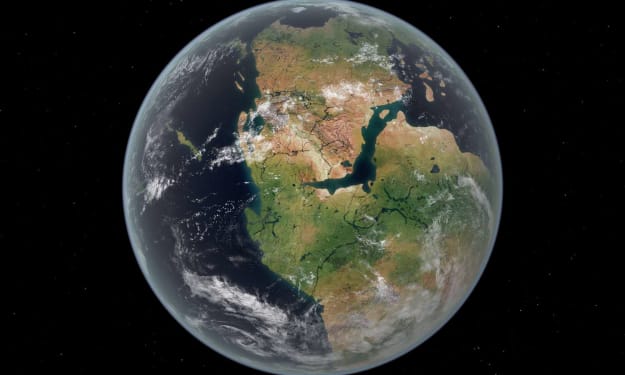
Ancient Supercontinents: The Story of Pangaea and Its Breakup Have you ever looked at a world map and thought that some continents look like they could fit together like puzzle pieces? You’re not alone! Scientists noticed the same thing, and it helped them discover something amazing: the Earth’s continents haven’t always been where they are now. In fact, millions of years ago, all the continents were joined together in one giant landmass called Pangaea. This is the story of Pangaea, how it formed, why it broke apart, and how it changed our planet forever.
By Jeno Treshan about a year ago in Earth
More carbon is currently being released by some woods than they are storing.
Forests have long stood as symbols of hope in weather. Towering pines, lush rainforests, and dense boreal woodlands are regarded to maintain a solution to our growing emissions. Their leaves breathed in carbon dioxide. Their roots locked carbon within the soil. Their presence presented consolation in a warming world.
By Francis Damiabout a year ago in Earth
The Sun: The Life-Giving Star of Our Solar System
Details About the Sun The Sun is the most essential and powerful star in our solar system. It is the primary source of light, heat, and energy for the Earth and all other planets. Without the Sun, life as we know it could not exist. From providing energy to driving weather patterns and enabling photosynthesis in plants, the Sun plays a crucial role in the stability and continuity of life on Earth. Below are detailed insights into the Sun's characteristics, structure, and influence. --- 1. Size of the Sun The Sun is enormous compared to our planet. It has an approximate diameter of 1.39 million kilometers (1,390,000 km), making it about 109 times wider than Earth. When we consider its volume, it is so vast that over 1.3 million Earths could fit inside it. This immense size is one reason why it can produce and emit such an enormous amount of energy continuously. --- 2. Structure of the Sun The Sun is composed of several distinct layers, each playing a specific role in energy production and transfer: Core: This is the Sun’s innermost part and the powerhouse where nuclear fusion occurs. Here, hydrogen atoms fuse to form helium, releasing an immense amount of energy in the form of light and heat. Radiative Zone: Energy generated in the core travels outward through this zone in the form of electromagnetic radiation. Convective Zone: In this layer, energy moves via convection currents—hot plasma rises, cools down near the surface, and sinks back, creating loops that transfer energy to the outer layers. Photosphere: This is the visible surface of the Sun. It emits the light we see and has a temperature of about 5,500°C. Sunspots, which are cooler, darker patches, can also be observed here. Chromosphere: Located above the photosphere, this layer is harder to observe but becomes visible during solar eclipses as a reddish glow. Corona: The outermost layer of the Sun's atmosphere, extending millions of kilometers into space. Despite being far from the core, it is incredibly hot—up to 1 to 3 million degrees Celsius—and is visible as a white halo during total solar eclipses. --- 3. Temperature of the Sun The Sun’s temperatures vary dramatically across its layers: Core Temperature: About 15 million degrees Celsius (15 million °C). This extreme heat drives the nuclear fusion reactions. Photosphere Temperature: Approximately 5,500 degrees Celsius (5,500 °C). This is the temperature of the Sun’s surface from where light is emitted. Corona Temperature: Between 1 to 3 million degrees Celsius, significantly hotter than the surface due to magnetic activities. --- 4. Mass and Weight of the Sun The Sun’s mass is about 333,000 times that of Earth. It holds 99.86% of all the mass in our solar system, making it the dominant gravitational force that keeps all planets, asteroids, and comets in orbit. Its massive weight and gravitational pull govern the movement and structure of the entire solar system. --- 5. Sunlight and Radiation Sunlight takes around 8 minutes and 20 seconds to reach Earth, traveling at the speed of light. This light contains various types of radiation: Visible Light: The light we see. Infrared Rays: Felt as heat. Ultraviolet (UV) Rays: Invisible rays that can cause sunburn. X-rays and Gamma rays: High-energy rays detected through scientific instruments. Magnetic Waves: Responsible for solar storms and auroras on Earth. These different rays serve various roles, from providing warmth and visibility to driving chemical reactions like photosynthesis and affecting weather and climate. --- 6. Source of Solar Energy The Sun generates its energy through nuclear fusion, a process in which hydrogen nuclei fuse to form helium under extreme temperature and pressure conditions. This reaction releases a vast amount of energy, which travels through space in the form of electromagnetic radiation. A small fraction of this energy reaches Earth and sustains all life. --- 7. Rotation of the Sun The Sun rotates on its axis, but unlike Earth, it doesn’t rotate uniformly: The equatorial region completes a full rotation in about 25 days. The polar regions take about 35 days to complete a rotation. This differential rotation leads to complex magnetic field patterns and solar activities like sunspots, flares, and coronal mass ejections. --- 8. Impact of the Sun on Earth The Sun influences almost every aspect of life on Earth: Climate and Weather: Solar energy drives the water cycle and global wind patterns. Photosynthesis: Plants use sunlight to create food, which supports the food chain. Biological Rhythms: Day and night cycles affect human and animal behavior. Technology: Solar radiation can affect satellite operations and radio communications during solar storms. Without the Sun, Earth would be a frozen, lifeless rock drifting in space. --- 9. Age of the Sun The Sun is approximately 4.6 billion years old, formed from a giant cloud of gas and dust. Scientists estimate that it is currently about halfway through its main sequence life stage. This means it has enough fuel (hydrogen) to continue burning for another 5 billion years or so. --- 10. Future of the Sun As the Sun ages and exhausts its hydrogen fuel: It will swell into a Red Giant, possibly engulfing Mercury, Venus, and even Earth. After this phase, it will shed its outer layers and become a White Dwarf, a small, dense remnant. Over billions of more years, it will gradually cool down and fade away. This long evolutionary journey reflects the life cycle of medium-sized stars like our Sun. --- 11. Importance of the Sun The Sun’s energy and light have a direct impact on agriculture, biology, and the overall climate system. Crops depend on sunlight for growth, animals and humans need it for warmth and survival, and weather systems are directly influenced by it. Without the Sun, Earth would be a cold, dark, and lifeless planet. --- Conclusion The Sun is not just a ball of hot gases in the sky—it is the central life-supporting force of our solar system. Understanding the Sun helps us appreciate the delicate balance of nature and the vast, interconnected systems that allow life to exist. Its incredible energy, structure, and lifecycle are reminders of the complexity and beauty of the universe. The more we learn about the Sun, the better we can understand our place in the cosmos and prepare for future changes it may bring.
By Ikram Ullahabout a year ago in Earth
Because it lacks a shore, it is the only sea on Earth that never touches land.
The Atlantic Ocean holds a secret: a patch of calm water ringed with the aid of using quick currents, sitting approximately 590 miles east of Florida but in no way touching land. Known as the Sargasso Sea, sailors have crossed it for centuries, however, few observe the border once they slip into glassy indigo waters.
By Francis Damiabout a year ago in Earth
The Last Horned Giants. AI-Generated.
In the quiet corners of our world, where the forest meets the mist and the ocean touches forgotten shores, live creatures whose names may one day be spoken only in memory. These are not just animals — they are living echoes of an older, wilder Earth. Among them, the rhinoceros stands as a solemn guardian, but it is not alone in its fading.
By Leesh lalaabout a year ago in Earth
The Deepest Hole on Earth: A Journey into the Heart of Our Planet
How Deep Have Humans Drilled Into the Earth? When we look up at the night sky, we often marvel at how far humans have gone—reaching the Moon, sending probes to Mars, and even exploring the outer planets. But have you ever wondered how far we've gone downward, into our own planet? Surprisingly, despite all our technological advancements, our deepest journey into the Earth barely scratches the surface compared to its total depth. The deepest man-made hole on Earth is known as the Kola Superdeep Borehole, located in the Kola Peninsula in northwest Russia, near the border with Norway. This remarkable scientific project began in the early 1970s, and over nearly two decades of intense drilling, researchers managed to reach a depth of 12,262 meters, or about 7.6 miles below the Earth's surface. Not a Hunt for Gold or Oil Unlike many deep drilling operations that aim to extract oil, gas, or precious minerals, the purpose of the Kola Superdeep Borehole was purely scientific. The Soviet Union initiated this ambitious project as part of its efforts during the Cold War era to gain a deeper understanding of Earth's interior layers. They weren’t looking for gold or silver; they were looking for answers to the mysteries hidden beneath our feet. The scientists wanted to explore the Earth's crust, study the transition between different layers of rock, understand tectonic activity, and examine the history of the Earth as preserved in the rocks. What they found was far beyond what they had imagined. Discoveries from the Depths During the course of the drilling, researchers encountered rocks that were over 2.7 billion years old, revealing some of the oldest geological materials ever studied. These rocks told stories of ancient environments and long-extinct ecosystems. Among the most fascinating discoveries were microfossils—the tiny remains of single-celled organisms—trapped in rock formations several kilometers below the surface. These microfossils were estimated to be billions of years old, indicating that life on Earth has existed in microscopic forms far deeper—and longer—than previously thought. Another surprise was the unexpectedly high temperature encountered at the deepest levels. Scientists had anticipated rising temperatures, but what they found exceeded all predictions. At the deepest point, the temperature reached 180 degrees Celsius (356°F), making further drilling technically impossible with the equipment of that time. The rocks became more plastic and less stable, behaving more like soft clay than hard stone, which made continued drilling dangerous and impractical. The Myth of the "Well to Hell" In the 1990s, as news about the Kola Borehole spread, the project became the subject of urban legends and internet myths. One particularly eerie tale claimed that as scientists reached the deepest layers, they heard screams of human-like voices coming from the depths—leading to sensational headlines calling it the “Well to Hell.” A supposed audio recording circulated online, adding to the chilling effect. According to the myth, scientists fled in fear after lowering a microphone into the borehole and hearing tortured screams. The hole was then allegedly sealed. While the story spread widely, especially in tabloids and paranormal communities, it was eventually debunked. The audio was traced back to a fabricated sound effect from a horror movie, and there was no scientific evidence to support any of the claims. This incident reminds us how mystery and fear often accompany our attempts to explore the unknown, especially when dealing with parts of the Earth we rarely access. What the Kola Borehole Teaches Us The Kola Superdeep Borehole is not just a forgotten Soviet science experiment; it is a monument to human curiosity and determination. It reminds us that while we’ve sent astronauts into space and robots to Mars, we still struggle to penetrate even a fraction of the Earth's total depth. To put it in perspective, the Earth's radius is about 6,371 kilometers (nearly 4,000 miles), but the deepest we've ever drilled is just 12.2 kilometers (7.6 miles)—less than 0.2% of the way to the center of the Earth. It's like barely scratching the skin of an apple when trying to reach its core. The borehole also demonstrated the technical and physical limitations of deep-earth exploration. As depth increases, so does pressure and temperature, making it increasingly difficult to design machines that can survive and operate in such extreme conditions. Why It Still Matters Though the Kola Borehole project was officially abandoned in the early 2000s, its legacy lives on. The knowledge gained from the project is still used in geology, seismology, and even in the search for new energy sources. It helped scientists better understand plate tectonics, the formation of continents, and the thermal dynamics of Earth's crust. In the modern era, countries like Germany, Japan, and the United States have initiated their own deep-drilling projects, often targeting ocean floors where the crust is thinner. These efforts aim to eventually drill into the mantle, the layer beneath the crust, something that no one has ever achieved before. Conclusion: We’ve Been to the Moon, But Not to Earth’s Core The Kola Superdeep Borehole stands as a symbol of both human achievement and our limits. It reflects our desire to understand the planet we call home and the challenges we face in doing so. It’s humbling to realize that while we can observe galaxies millions of light-years away, we still know so little about what lies beneath our own feet. One day, perhaps with more advanced technology, we might finally reach deeper into the Earth. Until then, the journey to the center of the Earth remains more a dream of science fiction than of science fact.
By Ikram Ullahabout a year ago in Earth
How earth was born form then air
How Earth Was Born and How Air Formed The story of Earth’s birth and the formation of its atmosphere is one of the most fascinating tales in the history of the universe. Over 4.5 billion years ago, in the vast emptiness of space, a spectacular sequence of cosmic events led to the formation of the planet we call home. Let’s explore how Earth was born and how the life-giving air we breathe came to exist. The Birth of Earth Around 4.6 billion years ago, our solar system began as a giant cloud of gas and dust, known as a solar nebula. Triggered by the shock wave from a nearby supernova, the nebula collapsed under its own gravity. As it spun faster, most of the material gathered in the center to form the Sun. The remaining gas and dust flattened into a rotating disk, where particles began to stick together, forming larger and larger bodies. Through a process called accretion, these particles collided and merged to form planetesimals—early building blocks of planets. Over millions of years, some planetesimals grew large enough to become protoplanets, including the early Earth. This early Earth was a hot, molten sphere, constantly bombarded by other space debris, including a Mars-sized body that likely caused the formation of the Moon. As Earth cooled, it began to differentiate into layers. Heavier elements like iron sank to the center to form the core, while lighter materials rose to form the mantle and crust. But Earth was still a harsh, lifeless place—with no air, no oceans, and extreme volcanic activity. The Formation of Earth’s Atmosphere The early atmosphere didn’t come from the outside—it was created from within. This first atmosphere was likely formed by a process called volcanic outgassing. As Earth’s interior remained hot, volcanoes released gases trapped in the planet’s crust. These gases included water vapor (H₂O), carbon dioxide (CO₂), ammonia (NH₃), methane (CH₄), nitrogen (N₂), and small amounts of hydrogen (H₂) and other compounds. This early atmosphere was very different from what we know today. There was no oxygen, so it couldn't support human life. It was a thick, toxic mix of gases. However, this was a crucial step in preparing Earth for the development of life. The Role of Water and Oceans As water vapor in the atmosphere cooled, it condensed and fell as rain—possibly for thousands of years. This created Earth’s first oceans. These vast bodies of water played a key role in shaping the planet’s surface and in the formation of the next vital component: oxygen. Water also helped in dissolving carbon dioxide, which reduced its concentration in the atmosphere and made conditions more stable. The oceans became home to the earliest life forms: simple, microscopic organisms like bacteria and archaea. The Great Oxygenation Event One of the most important changes in Earth's atmosphere happened about 2.5 billion years ago. Cyanobacteria, a type of photosynthetic microbe, began using sunlight to convert carbon dioxide and water into glucose and oxygen through photosynthesis. At first, this oxygen reacted with iron in the oceans, forming iron oxide that settled on the seafloor. But over time, as more oxygen was released, it began to accumulate in the atmosphere. This was known as the Great Oxygenation Event. This dramatic rise in oxygen transformed Earth. It wiped out many of the anaerobic (non-oxygen-using) organisms but made way for new forms of life that could use oxygen for energy. It also led to the formation of the ozone layer, which protected the planet from harmful ultraviolet (UV) rays, allowing life to expand onto land. The Air We Breathe Today Today’s atmosphere is composed of about 78% nitrogen, 21% oxygen, and trace amounts of argon, carbon dioxide, and other gases. This stable mixture supports complex life forms, including humans. The balance of gases is maintained through natural cycles: plants produce oxygen and absorb carbon dioxide, animals do the opposite, and oceans and forests act as carbon sinks. However, human activities such as burning fossil fuels have begun to disturb this balance, leading to climate change and air pollution—an urgent reminder of how precious our atmosphere truly is. Conclusion From fiery beginnings and violent collisions to the gentle rise of oxygen-producing microbes, Earth’s journey to becoming a blue planet with breathable air is a story of transformation, resilience, and balance. Understanding how Earth and its atmosphere formed not only connects us to our cosmic roots but also reminds us of our responsibility to protect the air and environment that sustain us today.
By Shah saab ITabout a year ago in Earth
The Deepest Places on Earth: Exploring the Mariana Trench
The Deepest Places on Earth: Exploring the Mariana Trench Beneath the vast expanse of the Pacific Ocean lies a chasm so deep and enigmatic that it challenges our understanding of Earth's final frontiers. The Mariana Trench, stretching over 2,550 kilometres (1,580 miles) in length and plunging to depths exceeding 10,900 metres (35,800 feet), is the deepest known part of the world's oceans . This crescent-shaped trench, located about 200 kilometres (124 miles) east of the Mariana Islands, represents not just a geographical marvel but a realm of scientific intrigue and discovery .
By Jeno Treshan about a year ago in Earth