Advocacy
How To Prepare Raw Land for Development: A Complete Timeline and Checklist
Key Takeaways: The standard process of preparing raw land for development includes three phases, comprising soft (paperwork) and hard work (physical labor).Phase one typically covers the first three months of development and focuses on zoning, title searches, and boundary surveys.Phase two involves developers conducting critical research into soil composition and utility planning; it typically spans months three through six of the development process.Finally, phase three focuses on site preparation, transitioning from the soft work of the previous steps to more labor-intensive work, such as land clearing.
By Andrew Lemieux9 months ago in Earth
The Bench That Faced the River
The bench had been there longer than anyone could remember. It sat at the edge of the riverwalk, facing the slow-moving water, its paint chipped and its wood smoothed by years of weather and waiting. People passed it every day—joggers, couples, tourists with cameras—but only a few ever sat down.
By Yasir khan9 months ago in Earth
The Richest Impact Craters on Earth: How Asteroids Created Geological Wealth
1. Vredefort Crater – South Africa The Creator The Vredefort Crater was created about 2 billion years ago by an asteroid estimated to be 10–15 kilometers wide. The collision released energy greater than billions of nuclear bombs. Crater Formation The impact fractured Earth’s crust deeply, causing extreme heat and pressure. This event altered rock layers across a vast region, redistributing minerals and creating pathways for gold-rich fluids. Economic Importance The crater is closely linked to the Witwatersrand Basin, the richest gold-producing region in human history. Over 30% of all gold ever mined comes from this area Estimated total gold value: trillions of dollars While the asteroid did not directly “bring” gold, it played a major role in concentrating and preserving gold deposits, making Vredefort the most economically significant impact crater on Earth. 2. Sudbury Basin – Canada The Creator The Sudbury Basin was formed around 1.85 billion years ago by a massive asteroid impact. The asteroid is estimated to have been 10 km or larger. Crater Formation The impact melted vast quantities of rock, forming a magma sheet rich in metals. As the molten material cooled, heavy metals settled into concentrated layers. Economic Importance Sudbury is one of the world’s richest mining regions, containing: Nickel Copper Platinum-group metals The metals extracted from Sudbury have been essential for: Stainless steel Electronics Aerospace industries Estimated economic value of Sudbury’s metals exceeds hundreds of billions of dollars, with reserves still remaining underground. 3. Chicxulub Crater – Mexico The Creator The Chicxulub Crater was created 66 million years ago by an asteroid approximately 10–12 km wide. Crater Formation This impact caused: Massive earthquakes Global firestorms A “nuclear winter” effect It is famously linked to the extinction of the dinosaurs. Economic and Geological Importance Although not a major mining region, Chicxulub’s value lies in: Scientific knowledge Oil and gas trapping structures Understanding mass extinctions The crater helped form geological conditions that trap hydrocarbons in the Gulf of Mexico, indirectly contributing to billions of dollars in energy resources. 4. Popigai Crater – Russia The Creator Popigai Crater formed 35 million years ago in Siberia after a massive asteroid impact. Crater Formation The impact generated extreme pressure, transforming carbon into impact diamonds. Economic Importance Popigai is believed to contain the largest diamond deposit on Earth, far exceeding traditional diamond mines. These diamonds are mostly industrial-grade Extremely hard and valuable for cutting and drilling If fully exploited, Popigai’s diamond resources could be worth hundreds of billions of dollars, though mining challenges and environmental concerns limit extraction. 5. Morokweng Crater – South Africa The Creator The Morokweng Crater was created around 145 million years ago by a large asteroid impact. Crater Formation The impact buried the crater deeply under sediments, preserving fragments of the asteroid itself. Economic Importance While not a major mining site, Morokweng is scientifically important because asteroid fragments were found embedded in Earth’s crust. These fragments help scientists understand asteroid composition and early solar system materials. Its value is primarily scientific rather than commercial. 6. Manicouagan Crater – Canada The Creator Manicouagan Crater formed 214 million years ago after a massive asteroid strike. Crater Formation The impact created a large ring-shaped structure still visible today, often called the “Eye of Quebec.” Economic and Environmental Value Though not a major metal source, the crater hosts: Hydroelectric power stations Freshwater resources The hydroelectric value generated over decades contributes billions of dollars in renewable energy. 7. Hoba Meteorite Site – Namibia (Honorable Mention) The Creator Unlike craters, the Hoba meteorite is a massive iron meteorite that landed intact around 80,000 years ago. Economic Value Contains iron and nickel Estimated metal value: millions of dollars However, its scientific and cultural value far exceeds its raw metal worth. Why Impact Craters Become Wealth Centers Asteroid impacts create wealth because they: Fracture deep rock layers Concentrate metals Create heat-driven mineral flows Preserve ancient deposits Without these events, many of Earth’s richest mineral zones would not exist or would be inaccessible. Estimated Combined Wealth of Impact Craters
By Say the truth 9 months ago in Earth
Some Lessons Only Come When You’re Broke. AI-Generated.
There is a kind of education that no classroom offers, no book fully explains, and no motivational quote can replace. It arrives quietly, often uninvited, and usually at a moment when you have very little left—financially, emotionally, or mentally. Being broke is not something people romanticize, and rightly so. It is uncomfortable, stressful, and sometimes humiliating. But hidden within that phase are lessons that wealth and comfort rarely teach. When money is gone, clarity often arrives. You Learn the Real Value of Money When you have enough, money feels abstract. It’s numbers in an app, bills that get paid automatically, meals ordered without checking prices. But when you’re broke, money becomes tangible again. Every small expense carries weight. You start asking questions you never did before: Do I really need this? Can this wait? Is there a cheaper way? This isn’t about becoming cheap; it’s about becoming conscious. Being broke teaches you that money is not just for spending—it’s for protecting your peace, your time, and your future. You learn that earning money is only half the skill; managing it is the other half. You Discover Who Actually Cares Hard times have a way of filtering people out. When you can’t afford dinners, gifts, or outings, some connections fade naturally. It hurts at first, but eventually, it feels honest. You learn who checks on you without expecting anything back. You learn who listens instead of judging. And you also learn to stop performing for people who only valued you when you were convenient or impressive. Being broke teaches you that real relationships are built on presence, not spending. You Become Resourceful Instead of Comfortable Comfort can make you lazy without you realizing it. Scarcity, on the other hand, forces creativity. When you don’t have money, you start finding ways. You fix instead of replace. You learn skills instead of outsourcing them. You search, read, experiment, and try. This resourcefulness often becomes a lifelong asset. Even when money returns, the mindset stays. You stop depending entirely on convenience and start trusting your ability to figure things out. That confidence doesn’t come from wealth—it comes from surviving without it. You Redefine Success When you’re broke, flashy definitions of success lose their shine. Expensive cars, luxury trips, and social media lifestyles feel distant and, sometimes, meaningless. Success starts to look simpler: stability, freedom from constant worry, the ability to help family, the chance to sleep peacefully at night. You realize that success isn’t about impressing others—it’s about building a life that doesn’t constantly put you in survival mode. This shift in perspective often leads to healthier goals and more sustainable ambitions. You Learn the Difference Between Wants and Needs Being broke strips life down to essentials. Food, shelter, health, and basic dignity take priority. Everything else becomes optional. This lesson is uncomfortable but powerful. You realize how much of what you once chased was driven by comparison rather than necessity. You learn that happiness doesn’t disappear when luxuries do. In fact, gratitude often grows when life becomes simpler. Later, when you can afford more, this lesson protects you from excess and emotional spending. You Build Emotional Resilience Financial struggle tests your mental strength. There are days when anxiety is loud and hope feels thin. But surviving those days builds resilience that can’t be bought. You learn how to sit with discomfort. You learn patience. You learn how to keep going even when progress feels invisible. That resilience becomes useful far beyond money. It helps in relationships, careers, and personal growth. Once you’ve faced financial rock bottom, many other challenges feel less intimidating. You Stop Waiting for Rescue When money is tight, you quickly realize that no one is coming to save you. This realization can feel heavy, but it is also empowering. You stop waiting for the perfect opportunity, the ideal timing, or someone else’s approval. You start taking small actions—learning, applying, creating, improving. Responsibility shifts inward. You understand that while support is valuable, ownership is essential. This lesson often marks the beginning of real independence. You Appreciate Stability in a New Way After experiencing financial uncertainty, stability feels luxurious. A predictable income, paid bills, and basic security become deeply appreciated—not taken for granted. This appreciation changes how you approach life. You become more cautious with risks, more grateful for routine, and more committed to maintaining balance. Stability stops feeling boring and starts feeling powerful. The Lesson No One Talks About Perhaps the most important lesson being broke teaches is this: your worth is not tied to your bank balance. When money is gone, you are forced to face yourself without financial validation. And you realize—you are still here. Still capable. Still valuable. That understanding can be quietly transformative. Closing Thoughts No one should aspire to be broke. Financial struggle is not a goal, and it is not easy. But if you find yourself there, it doesn’t mean you are failing. It may mean you are learning lessons that will shape you into someone wiser, stronger, and more intentional. Some lessons really do only come when you’re broke. And if you listen closely, they may guide you toward a future that is not just richer in money—but richer in meaning too.
By Saboor Brohi 9 months ago in Earth
The Net Worth of Volcanoes: Measuring the Value of Earth’s Fiery Giants
Volcanic Land and Agricultural Wealth One of the greatest economic benefits of volcanoes lies in fertile soil. Volcanic ash is rich in minerals such as potassium, phosphorus, magnesium, and calcium. Over time, weathered lava and ash create some of the most productive agricultural lands in the world. Regions near Mount Etna (Italy), Mount Fuji (Japan), Java (Indonesia), and parts of Central America support dense populations because of volcanic soil. Crops such as rice, coffee, tea, bananas, grapes, and sugarcane thrive in these areas. The agricultural value generated by volcanic regions globally is estimated to be hundreds of billions of dollars annually, making fertile volcanic land one of the most valuable long-term assets derived from volcanoes. Mineral and Metal Resources Volcanoes play a major role in forming valuable mineral deposits. Many metals essential to modern industry originate from volcanic or hydrothermal activity. These include: Gold Silver Copper Zinc Nickel Platinum Rare earth elements Volcanic regions are also sources of obsidian, pumice, basalt, and sulfur, which are used in construction, medicine, cosmetics, and industry. Some of the world’s richest mining zones—such as the Andes, the Pacific Ring of Fire, and parts of Africa—exist because of ancient volcanic activity. The estimated global value of volcanic-related mineral reserves runs into trillions of dollars, making volcanoes indirect contributors to global wealth and industrial development. Geothermal Energy: A Renewable Power Source Another major component of a volcano’s net worth is geothermal energy. Heat stored beneath volcanic regions can be harnessed to produce electricity and provide heating with minimal carbon emissions. Countries such as: Iceland Indonesia Philippines New Zealand Kenya generate a significant portion of their electricity from geothermal power. A single large geothermal field associated with volcanic activity can be worth billions of dollars over its operational lifespan due to low fuel costs and long-term energy stability. Globally, geothermal energy from volcanic zones contributes tens of billions of dollars annually to national economies and plays a growing role in clean energy transitions. Tourism and Cultural Value Volcanoes attract millions of tourists each year. Famous volcanoes like Mount Vesuvius, Mount Fuji, Mount Kilimanjaro, Kilauea, and Mount Etna generate enormous tourism revenue through: Guided treks and viewing platforms National parks and museums Cultural festivals and spiritual tourism Local businesses and hospitality Volcanic tourism contributes billions of dollars annually to global tourism. For example, Hawaii’s volcanic landscapes alone generate several billion dollars per year in tourism-related income. In addition to economic value, volcanoes hold deep cultural and spiritual significance, adding intangible value that cannot be measured purely in money. Scientific and Educational Value Volcanoes are natural laboratories that help scientists understand: Earth’s interior Plate tectonics Climate interactions Natural disaster prediction The knowledge gained from volcanic research helps protect lives, improve infrastructure planning, and advance earth sciences. While difficult to quantify, the long-term scientific value of volcanoes is immense and contributes indirectly to global safety and economic stability. Ecosystem and Biodiversity Benefits Although eruptions can temporarily destroy ecosystems, volcanoes also create new land and support unique biodiversity. Volcanic islands such as Hawaii and Iceland are prime examples of life emerging from lava. Over time, volcanic regions develop rich ecosystems that support wildlife, forests, and marine life. These ecosystems provide services such as carbon storage, water regulation, and biodiversity preservation—services valued at billions of dollars globally. The Cost Side: Destruction and Risk While volcanoes generate wealth, they also carry enormous risks. Eruptions can cause: Loss of life Destruction of cities and infrastructure Disruption of air travel Agricultural damage Major eruptions can cause economic losses ranging from millions to tens of billions of dollars. For example, the 2010 Iceland eruption disrupted global aviation, costing the airline industry billions. Therefore, a volcano’s net worth must be viewed as a balance between long-term benefits and potential catastrophic costs. Estimating the Net Worth of Volcanoes When all factors are considered—fertile land, minerals, geothermal energy, tourism, scientific knowledge, and ecosystems—the global net worth of volcanoes collectively can be estimated in the tens of trillions of dollars over long time scales. An individual major volcano, depending on location and utilization, could be valued anywhere from several billion to hundreds of billions of dollars in combined economic and environmental benefits over centuries. Conclusion Volcanoes are far more than symbols of destruction. They are engines of creation, shaping continents, enriching soil, powering cities, and sustaining life. Their true net worth lies not just in money, but in their ability to support agriculture, industry, energy, science, and culture over generations. When measured across time, volcanoes may rank among the most valuable natural assets on Earth—dangerous, powerful, and incredibly rewarding when understood and respected.
By Say the truth 9 months ago in Earth
Earthquake Near Me: Why This Search Is Surging Across the United States
Earthquake Near Me: Why This Search Is Surging Across the United States Across the United States, millions of people are suddenly typing the same alarming phrase into their phones and computers: earthquake near me. The spike in this search is not random. It reflects a growing sense of uncertainty, heightened awareness, and fear driven by recent tremors, phone alerts, social media posts, and the memory of past disasters. When the ground shakes, even slightly, people instinctively seek answers. They want to know what happened, whether it will happen again, and how to protect themselves and their families. One of the most common questions people are asking is why they felt shaking when no major earthquake was reported immediately. Small or moderate earthquakes can be felt over wide areas, especially at night when background noise is low. In some cases, vibrations from construction, explosions, or even weather-related events can feel like seismic activity. However, the uncertainty itself pushes people to search for confirmation, reassurance, and real-time information. Another frequent question is whether an earthquake near me means a bigger one is coming. This fear is understandable, but the answer is complex. Earthquakes are difficult to predict, and most small tremors do not lead to larger events. Aftershocks can follow a noticeable quake, but they usually decrease in strength over time. The sudden rise in searches often reflects fear of the unknown rather than evidence of an impending disaster. Many people are also asking which areas in the United States are most at risk. States along major fault lines tend to experience more frequent earthquakes, but tremors can occur almost anywhere. Recent activity in unexpected regions increases public anxiety, as people are reminded that earthquakes are not limited to a single part of the country. This broader awareness is one of the main reasons the phrase earthquake near me spreads so quickly during seismic events. Another popular concern is what to do immediately after feeling shaking. Confusion and panic are common reactions, especially for people who have never experienced an earthquake before. Staying calm, checking for injuries, and avoiding damaged structures are critical first steps. People often search online to confirm whether others felt the same thing and to understand what actions are safest in the minutes that follow. The rise of smartphones and instant alerts also plays a major role in this trend. When phones vibrate with emergency notifications or social media fills with posts about shaking, fear spreads faster than the earthquake itself. Even those who did not feel anything may begin to worry and search for information. This creates a chain reaction where curiosity, anxiety, and caution blend together, driving massive spikes in search activity. Another question people frequently ask is whether earthquakes can be predicted or prevented. The honest answer is that science has not yet reached that point. While technology can detect earthquakes quickly after they begin, predicting the exact time and location in advance remains impossible. This uncertainty fuels public concern and keeps people searching for updates, explanations, and warnings. People are also asking how to prepare for an earthquake if they live in a high-risk or newly active area. Preparation is one of the few areas where individuals have control. Having emergency supplies, securing heavy furniture, and knowing safe spots inside the home can make a significant difference. The surge in searches shows that many people are realizing preparedness matters, even if earthquakes are rare where they live. Another important question is why anxiety spreads so quickly after seismic activity. Earthquakes strike without warning, disrupt daily life, and challenge the sense of safety people rely on. When combined with dramatic videos, breaking news headlines, and personal stories shared online, fear can escalate rapidly. Searching for earthquake near me becomes a way to regain control and understanding in an unpredictable situation. In the end, the popularity of this search phrase reflects more than just geological activity. It reveals how modern society responds to sudden threats. People seek clarity, reassurance, and practical guidance in moments of uncertainty. While not every search indicates real danger, it highlights the importance of awareness and readiness. The surge in searches for earthquake near me is a reminder that natural disasters do not need to be catastrophic to have an emotional impact. Even a brief shake can awaken deep fears and prompt millions to look for answers. Staying informed, prepared, and calm remains the most powerful response when the ground beneath us reminds us how fragile normal life can be.
By America today 9 months ago in Earth
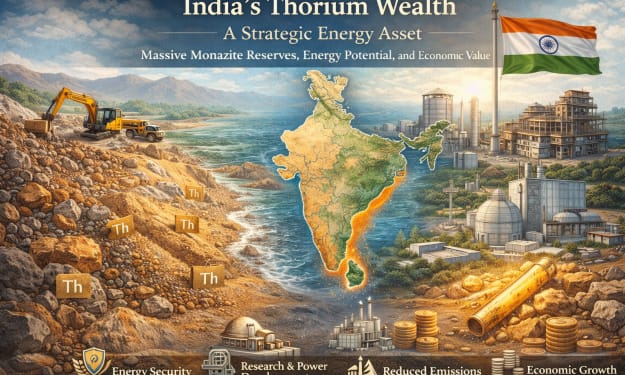
The Net Worth of Thorium in India
# ** ## **How India’s Thorium Reserves Could Shape Its Energy and Economic Future** --- ## **What Is Thorium?** Thorium is a naturally occurring radioactive metal found in the Earth’s crust. It is named after Thor, the Norse god of thunder. Thorium itself is not directly fissile like uranium-235, but it can be converted into uranium-233, which is an excellent nuclear fuel. Thorium is: * More abundant than uranium * Less radioactive in its natural form * Capable of producing large amounts of energy * Safer in many reactor designs These features make thorium an attractive option for long-term nuclear energy. --- ## **India’s Thorium Reserves** India possesses one of the **largest thorium reserves in the world**, estimated to be around **25–30% of global thorium resources**. Thorium in India is mainly found in **monazite sands**, which are present along the coastal regions of: * Kerala * Tamil Nadu * Odisha * Andhra Pradesh The estimated quantity of thorium reserves in India is about **846,000 to 1,000,000 tonnes**. ---
By Say the truth 9 months ago in Earth
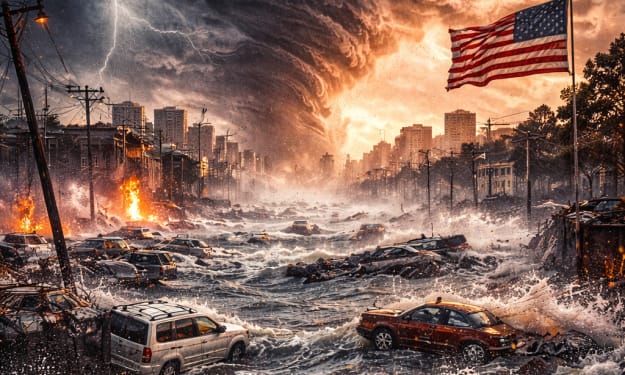
HURRICANE CERBERUS: A DEADLY STORM THAT WILL NOT FORGIVE HESITATION
**HURRICANE CERBERUS: A DEADLY STORM THAT WILL NOT FORGIVE HESITATION** Hurricane Cerberus is not an ordinary storm. It represents the most violent expression of nature’s power, a force capable of destroying lives, cities, and entire regions in a matter of hours. Storms of this scale do not simply pass through an area; they transform it beyond recognition. The threat posed by Hurricane Cerberus demands absolute seriousness, immediate action, and zero complacency. When a hurricane reaches this level of intensity, it becomes more than wind and rain. It becomes a moving disaster zone. Winds strong enough to tear buildings apart can turn everyday objects into deadly weapons. Roofs are ripped away, walls collapse, and entire neighborhoods are reduced to debris fields. Power grids fail instantly, plunging millions into darkness and isolation. Once Cerberus makes landfall, survival depends almost entirely on decisions made before its arrival. The most terrifying danger associated with Hurricane Cerberus is storm surge. Massive walls of ocean water can push inland with unstoppable force, flooding coastal cities within minutes. Streets become rivers, homes become traps, and escape routes vanish. Many victims of past hurricanes believed they had more time. They were wrong. Storm surge does not give warnings at the door. It arrives fast, violent, and deadly. Flooding does not stop at the coast. Inland regions face relentless rainfall that overwhelms rivers, dams, and drainage systems. Entire towns can disappear under water. Vehicles are swept away, bridges collapse, and roads become impassable. Emergency services are rendered powerless as responders struggle to reach those in need. In these moments, people are left alone with the consequences of delay. One of the most dangerous illusions during hurricanes like Cerberus is false confidence. People convince themselves that they have survived storms before, that this one will be similar, or that evacuation is unnecessary. History proves otherwise. Every major hurricane disaster is filled with stories of people who waited one hour too long. When evacuation orders are issued, they represent the last safe window to escape. Ignoring them often leads to irreversible outcomes. Hospitals and emergency infrastructure face extreme strain during catastrophic hurricanes. Power outages disrupt life-saving equipment. Flooded roads prevent ambulances from moving. Medical staff are overwhelmed, and resources run out quickly. Those who rely on daily medications, oxygen, or medical devices are placed in immediate danger. In such conditions, emergency systems cannot save everyone. Preparation at the individual level becomes the final line of defense. As Hurricane Cerberus advances, panic becomes as dangerous as the storm itself. Highways clog with vehicles. Fuel shortages leave families stranded. Communication networks fail, separating loved ones when they need each other most. Children, the elderly, and people with disabilities are especially vulnerable. Once conditions deteriorate, rescue operations may be impossible for days. Nature controls the timeline, not human intention. The aftermath of a storm like Cerberus is often worse than the storm itself. Floodwaters contaminate drinking supplies. Food spoils without refrigeration. Extreme heat or cold becomes deadly without power. Disease spreads rapidly in stagnant water. Communities face not only physical destruction, but psychological trauma that can last for years. For many survivors, returning home is not an option because nothing remains to return to. In severe cases, displacement becomes permanent. Families are forced to leave their cities, their jobs, and their memories behind. This is not relocation by choice, but by survival. When recovery timelines stretch into years and infrastructure is destroyed beyond repair, moving elsewhere becomes the only path forward. The cost of staying can be far higher than the pain of leaving. Hurricane Cerberus serves as a brutal reminder that preparation is not optional. It is not fear-driven. It is survival-driven. Knowing evacuation routes, securing essential supplies, and acting early saves lives. Waiting for absolute certainty is the most dangerous mistake anyone can make. In conclusion, Hurricane Cerberus is the kind of storm that punishes hesitation. It does not negotiate, weaken for convenience, or spare those who underestimate it. When warnings are issued, action must follow immediately. Survival belongs to those who prepare early, evacuate when told, and respect the raw power of nature. When the winds rise and the water surges, there will be no second chances.
By America today 9 months ago in Earth
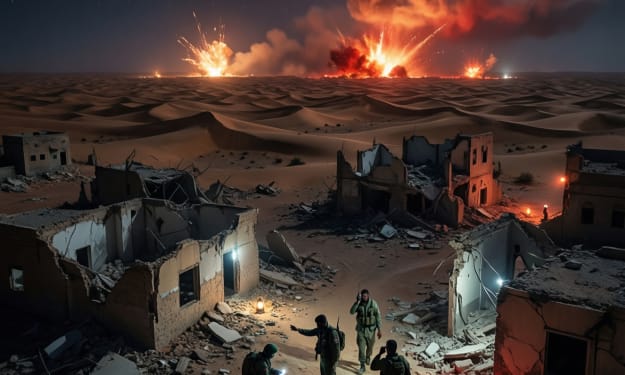
Saudi Arabia and Yemen: A Conflict That Refuses to End
Saudi Arabia and Yemen: A Conflict That Refuses to End The conflict between Saudi Arabia and Yemen is one of the longest and most complex wars in the Middle East. While the intensity of fighting has changed over time, reports of renewed airstrikes and military activity continue to raise concern across the region. Understanding what is happening requires separating confirmed facts from political claims and looking at the broader context of the war.
By Wings of Time 9 months ago in Earth