Advocacy
USA Weather Forecast, Next 3 Days cold
Day 1 — Friday: Winter Storm Impact Begins Across much of the nation from the southern plains to the Northeast, storm conditions will rapidly intensify: Snow and Ice Spread — Snow and freezing rain will expand eastward, leading to slick roads and hazardous travel. Ice accumulations could be significant in certain corridors, particularly across parts of Texas, the Mississippi Valley, and the Southeast.
By USA daily update 8 months ago in Earth
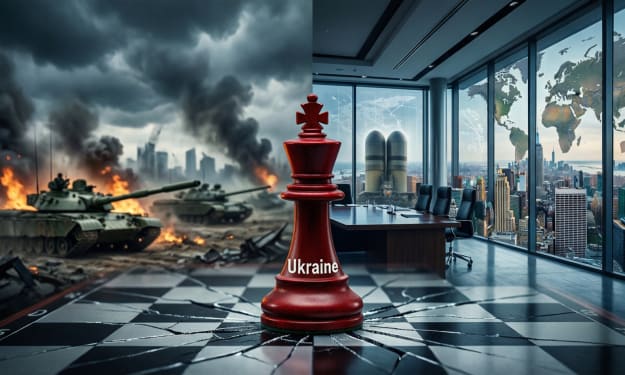
Is the Ukraine–Russia War Pushing the World Toward World War III?
Is the Ukraine–Russia War Pushing the World Toward World War III? The war between Ukraine and Russia began as a regional conflict, but over time it has grown into something much larger. While it is not officially World War III, many experts, analysts, and ordinary citizens are asking the same question: is the world moving dangerously close to a global war?
By Wings of Time 9 months ago in Earth
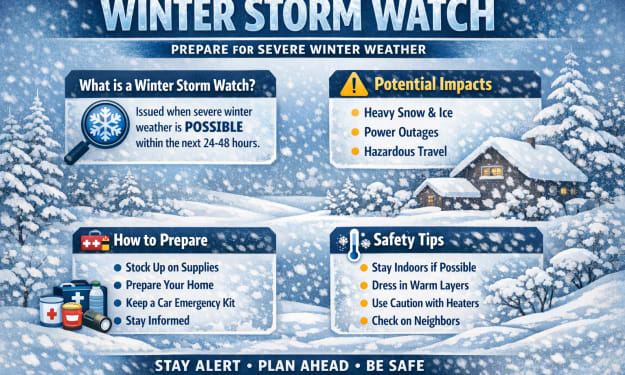
Winter Storm Watch. What It Means and How to Prepare
What Is a Winter Storm Watch? A winter storm watch is issued when forecasters identify the possibility of severe winter weather, but the exact timing, location, or intensity is still uncertain. This alert is different from a winter storm warning, which is given when dangerous winter conditions are imminent or already happening. The watch phase is essentially a heads-up. It allows individuals, businesses, and local governments to start preparing before conditions worsen. During this time, meteorologists continue to analyze weather patterns and refine their forecasts. If confidence in the storm increases, the watch may be upgraded to a warning or advisory. Typical conditions associated with a winter storm watch include heavy snow accumulation, ice storms, strong winds, reduced visibility, and extreme cold. These elements can create treacherous roads, power outages, and health risks, especially for vulnerable populations.
By USA daily update 9 months ago in Earth
How AI Is Becoming the Next Geopolitical Frontier
Why This Matters Right Now The world is changing faster than ever. Wars, trade, jobs, and even daily life are being reshaped—not only by soldiers and weapons, but by artificial intelligence (AI).Right now, countries are racing to control AI. The reason is simple: whoever leads in AI will likely lead in power, money, and influence. This race is already affecting global politics—and it is quietly touching the lives of ordinary people everywhere.AI is no longer just a technology.It is becoming the next geopolitical frontier.
By LegacyWords9 months ago in Earth
Northern Lights May Be Visible in 10 States Jan. 20 as Earth’s Magnetic Field “Rings Like a Bell” After CME Impact
What Happened: A Massive CME Hit Earth On Jan. 19, 2026, a powerful CME associated with a major X1.9-class solar flare erupted from the sun and traveled the approximately 93 million miles to Earth in around 25 hours — much faster than most such events. When it reached Earth’s magnetic field at about 2:38 p.m. EST, it triggered a severe geomagnetic storm, classified as G4 on NOAA’s geomagnetic storm scale. Geomagnetic storms occur when energetic, charged particles from the sun slam into Earth’s magnetosphere — the protective magnetic bubble surrounding our planet. Those particles excite atoms in the upper atmosphere, which then emit light and produce auroras. Under strong geomagnetic disturbance, the auroral oval expands farther toward the equator, meaning people much farther south than usual can see the lights. Meteorologists and space weather forecasters have described Earth’s magnetic field as “ringing like a bell” after the CME impact — a colorful way of saying that the magnetosphere is oscillating and unsettled as it absorbs and redistributes the CME’s energy. These oscillations enhance auroral activity and can sustain visible displays for hours after the initial impact.
By USA daily update 9 months ago in Earth
Old Red Cedar
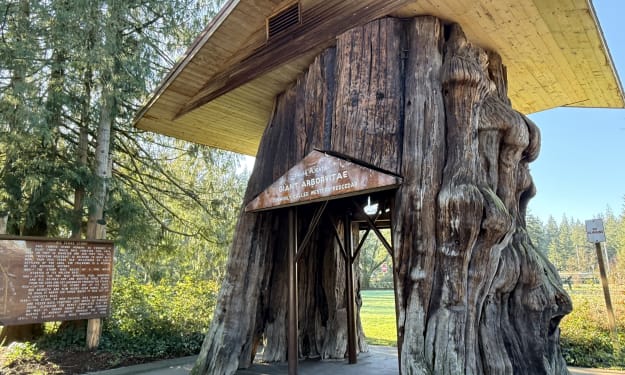
Western red cedar, over 1000 years old, you grew for 200 years and towered over others, silently observing sights in the forest that are no more, your secrets buried within your spirit. The bark covering your tree trunk, said to be about 23 feet around, was hollow when men discovered you. Inside the hollow trunk, a fire somehow began; you cannot tell us when, how, or why, and there is no record of it. The fire caused your death. Slowly, you died, from the inside out. Such a sad loss for an old soul of the forest, with centuries of knowledge in its cells. Houses, watercraft, shingles, bowls, bows and arrows, and paper that men used to write what they knew of your history could have been made from your body, branches, and bark. Truly, fire was a better death for you than a logger’s saw.
By Andrea Corwin 9 months ago in Earth
Trump’s Message to Norway: A Controversial Diplomatic Signa
**Trump’s Message to Norway: A Controversial Diplomatic Signal** In January 2026, a written message sent by former U.S. President Donald Trump to Norway’s Prime Minister Jonas Gahr Støre sparked widespread political debate and media attention. The message quickly became a topic of discussion across the United States and Europe, not because it announced a formal policy change, but because of its tone and implications. It reflected Trump’s personal view of international recognition, his frustration over the Nobel Peace Prize, and his broader vision for American power and security in a changing world. The message came at a time of growing tension in global politics, especially in the Arctic region, where strategic competition between major powers has intensified. Norway, as a close U.S. ally and a NATO member, found itself unexpectedly drawn into a controversy that highlighted deeper questions about diplomacy, alliances, and leadership style. **What Was the Core Message Trump Sent to Norway?** At the heart of Trump’s message was his assertion that he no longer felt an obligation to think “purely of peace” in shaping U.S. policy. He linked this statement to what he described as a lack of recognition for his efforts to reduce or prevent conflicts during his time in office. In particular, he referenced his disappointment at not receiving the Nobel Peace Prize, which is awarded by a committee based in Norway. Trump framed his argument around the idea that international honors matter in global politics, not just as symbolic gestures, but as acknowledgments of leadership. He suggested that the absence of such recognition freed him to pursue a more forceful and interest-driven approach to foreign policy, centered on what he viewed as the best interests of the United States. **Why Did Trump Mention the Nobel Peace Prize?** The Nobel Peace Prize has long carried symbolic weight in international relations. Trump has repeatedly argued that his diplomatic actions deserved recognition comparable to past recipients. In his message to Norway’s prime minister, Trump appeared to conflate the independent Nobel Committee with the Norwegian state, expressing frustration that the prize had not been awarded to him. This aspect of the letter drew criticism, as the Nobel Peace Prize is not controlled by the Norwegian government. Nevertheless, Trump’s focus on the prize revealed how deeply personal validation and public recognition factor into his worldview. For supporters, it reinforced the belief that Trump’s achievements were overlooked. For critics, it raised concerns about personal grievance influencing foreign policy rhetoric. **How Did Greenland Become Part of the Message?** One of the most striking elements of Trump’s message was his reference to Greenland. He questioned the legitimacy of Denmark’s control over the island and suggested that U.S. authority over Greenland would be necessary for global security. Trump framed the issue in terms of strategic defense, pointing to the Arctic’s growing importance amid competition with Russia and China. Greenland’s vast natural resources and strategic location have long attracted interest from major powers. By raising the issue in a message to Norway, Trump signaled that Arctic geopolitics remain a priority in his thinking. However, the language used was seen as confrontational and dismissive of established international norms regarding sovereignty. **Why Did the Letter Alarm European Leaders?** European leaders reacted with concern because the message touched on sensitive issues of sovereignty, alliance trust, and diplomatic conduct. Norway and Denmark are both long-standing allies of the United States, and statements questioning territorial ownership can strain even the strongest partnerships. The tone of the message also mattered. Rather than emphasizing cooperation or shared security goals, Trump’s words suggested pressure and unilateral decision-making. For many in Europe, this reinforced fears that U.S. leadership could become unpredictable, driven more by personal perspectives than by coordinated alliance strategy. **What Does This Reveal About Trump’s Foreign Policy Style?** Trump’s message to Norway reflects a consistent pattern in his approach to foreign policy: a blend of personal conviction, transactional thinking, and direct communication. He often challenges diplomatic conventions, preferring blunt statements over carefully worded agreements. Supporters argue that this style projects strength and honesty, forcing allies and rivals alike to confront uncomfortable realities. Critics contend that it undermines trust, weakens alliances, and blurs the line between personal opinion and official policy. The letter to Norway became a clear example of how Trump’s personality shapes his diplomatic messaging. **How Could This Affect U.S.–European Relations Going Forward?** While a single message does not define an entire relationship, it can influence perceptions and expectations. Trump’s communication with Norway added to existing concerns in Europe about long-term U.S. commitment to multilateral cooperation. It also highlighted differences in how American and European leaders view diplomacy, recognition, and the role of international institutions. In the broader picture, the message underscored growing uncertainty in global politics. As strategic competition intensifies and alliances face new pressures, the way leaders communicate matters as much as the policies they pursue. Trump’s message to Norway served as a reminder that words, especially when delivered directly and publicly, can reshape diplomatic landscapes. Ultimately, the controversy surrounding Trump’s letter was not just about Norway, the Nobel Peace Prize, or Greenland. It was about power, recognition, and the evolving nature of leadership in international affairs.
By America today 9 months ago in Earth
A building's lifetime climate impact is mostly determined by its daily energy use.
The majority of a building's climate impact is not caused by its construction. As the heating, lighting, and ventilation systems continue to function year after year, it gradually accumulates.
By Francis Dami9 months ago in Earth
The timing of Earth's ice ages may be influenced by Mars.
According to recent calculations, Mars may influence the date of ice ages by helping to establish a 2.4 million-year rhythm in Earth's orbit. Recently, researchers investigated the possibility of a tiny planet leaving a discernible imprint in long-term climate records.
By Francis Dami9 months ago in Earth
1600 People Reported Dead and 12 Homes Collapsed After a 4.7 Earthquake Struck Israe
**1600 People Reported Dead and 12 Homes Collapsed After a 4.2 Earthquake Struck Israel** Reports circulating after a 4.2-magnitude earthquake struck parts of Israel have caused widespread confusion and alarm, particularly claims stating that 1600 people were killed and 12 homes collapsed as a result of the tremor. The earthquake itself was felt across several regions, especially in the south near the Dead Sea and the Negev, prompting emergency alerts and heightened public concern. However, the scale of the reported casualties has raised serious questions, given the relatively moderate magnitude of the quake. This article examines what is known so far, why such claims spread rapidly, and how authorities and the public are responding to the situation. **What Happened During the Earthquake** The earthquake occurred suddenly and was strong enough to be felt by residents across multiple areas. Many people reported shaking buildings, rattling windows, and momentary panic. Emergency systems were activated, including alerts that warned residents of seismic activity. While the tremor was noticeable, a 4.2-magnitude earthquake is generally considered moderate and typically does not result in mass casualties or widespread structural collapse. **Where Did the Claims of 1600 Deaths Come From** Shortly after the earthquake, reports began circulating on social media platforms and messaging apps claiming that 1600 people had lost their lives and that 12 homes had collapsed. These claims spread rapidly, fueled by heightened regional tensions and public anxiety. In situations involving sudden natural events, unverified information often spreads faster than confirmed facts, especially when official updates are delayed. **Have Authorities Confirmed These Numbers** As of now, there has been no official confirmation supporting claims of 1600 fatalities linked directly to the earthquake. Emergency agencies and local authorities typically release casualty figures in stages after verification, particularly in the case of large-scale disasters. The absence of confirmed reports matching these numbers has led experts and observers to urge caution when interpreting early or unofficial information. **Is a 4.2 Earthquake Likely to Cause Mass Casualties** Seismologists note that earthquakes of this magnitude rarely result in catastrophic loss of life, especially in areas with modern infrastructure and building standards. While localized damage can occur, including cracks in buildings or minor collapses in older structures, large-scale fatalities are uncommon. This discrepancy has further contributed to skepticism surrounding the reported death toll. **What Damage Has Been Reported So Far** Some residents reported minor structural damage, including cracks in walls and falling debris. Claims of 12 homes collapsing have not been independently verified, but isolated damage to older or poorly maintained buildings is possible during seismic events. Emergency teams typically inspect affected areas to assess safety risks and prevent secondary injuries. **Why Do Earthquake Rumors Spread So Quickly** In regions already experiencing political or security tensions, public sensitivity to emergencies is heightened. Social media plays a major role in amplifying dramatic claims, often without verification. Fear, shock, and the desire for immediate information can lead people to share unconfirmed reports, unintentionally spreading misinformation. **How Are Emergency Services Responding** Emergency services responded by monitoring aftershocks, checking infrastructure, and ensuring that essential services remained operational. Public safety messages focused on advising residents to remain calm, stay away from damaged buildings, and follow official guidance. Authorities also worked to counter misinformation by urging the public to rely on verified announcements. **What Should the Public Do After Such Events** Residents are encouraged to follow official emergency channels, avoid spreading unverified information, and check on the safety of their surroundings. Earthquakes can be frightening, but responsible communication is critical to prevent panic and confusion. Waiting for confirmed updates helps ensure that public response remains measured and effective. While the earthquake was real and felt across several regions, the claims of 1600 deaths and widespread destruction remain unconfirmed. The situation highlights the importance of distinguishing between verified information and circulating rumors, especially during moments of crisis. As authorities continue assessments, clarity and accurate reporting will be essential in understanding the true impact of the event.
By America today 9 months ago in Earth
How A Dog Bite Attorney Can Get You Fair Compensation
Dog bites can happen unexpectedly, leaving victims with physical injuries, emotional trauma, and financial burdens. In the United States, millions of dog bites occur each year, according to data from health organizations. These incidents often lead to medical bills, lost wages, and long-term recovery needs. Seeking fair compensation is crucial for victims to cover these costs and move forward. This article explores how legal professionals specializing in dog bite cases can assist in navigating the process, from understanding laws to building a strong claim. By learning about the steps involved, individuals can make informed decisions after such an event.
By CEO A&S Developers9 months ago in Earth
Mother Earth Still Breathes
Mother Earth Still Breathes LINK TO SONG! "This song began as a realization that the Earth isn't just a backdrop for our lives, she is a living, humming organism. After a video sparked a conversation with my creative partners, we moved from poetic meditation into Mother Earth Blues.
By Vicki Lawana Trusselli 9 months ago in Earth