Latest Stories
Most recently published stories in Earth.
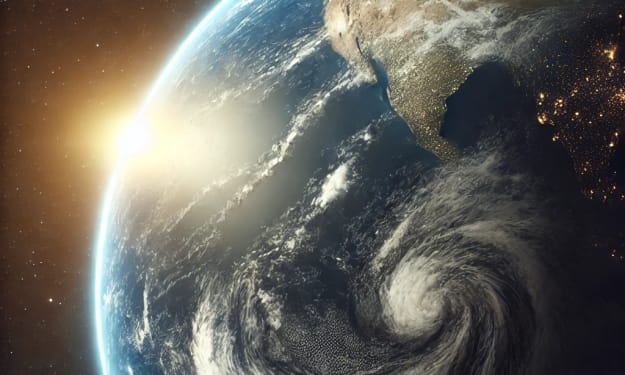
The Earth is 100% round?. AI-Generated.
The Earth is frequently portrayed as a flawless sphere—a smooth, round ball effortlessly gliding through the vastness of space. We get pictures of the Earth that show it perfectly circling from early childhood, and our minds are trained to think of it that way. However, the actual shape of our planet is far more fascinating and intricate. Scientifically, the Earth is better described as an oblate spheroid—not a perfect sphere, but slightly flattened at the poles and bulging around the equator. This subtle bulging is caused by the Earth's rotation on its axis. A centrifugal force that pushes outward most strongly at the equator is produced as the planet spins. The equatorial region expands slightly outward as a result of this force, while the poles are gently pressed inward. The Earth's shape changes as a result, becoming slightly wider from east to west and slightly shorter from north to south. Simply put, our planet is like a ball that has been slightly compressed and is rapidly moving through space. To better understand this difference, let us look at some numbers. The diameter of the Earth at the equator is approximately 12,756 kilometers. In contrast, the distance from the North Pole to the South Pole—the polar diameter—is about 12,714 kilometers. Although a distance of about 42 kilometers may appear insignificant, it is significant on a planet of this size. It affects a wide range of scientific disciplines and technologies. Gravity, for instance, is influenced by this shape variation. Gravity is slightly weaker at the equator than it is at the poles, because the equator is farther from the Earth's center due to the bulge. This means a person would weigh just a little bit less in countries like Kenya, Ecuador, or Indonesia than they would at the North or South Pole. Though we do not notice this difference in daily life, it is critical for precision in scientific calculations. Modern satellite and navigation systems also depend heavily on the true shape of the Earth. The Earth's oblate shape necessitates GPS technology, which we rely on for everything from tracking our location to finding nearby restaurants. Positions would be off by several meters or more if it was based on the assumption that the Earth was a perfect sphere. Even the paths of satellites orbiting Earth are planned using precise models of its real shape. The equatorial bulge also plays a role in shaping our planet’s climate. Regions near the equator, such as Indonesia in Asia, Brazil and Ecuador in South America, and Uganda and Kenya in Africa, all lie along this widest stretch of the Earth. These places often receive more direct sunlight year-round, contributing to warmer climates and unique ecosystems. On the other hand, traveling northward toward Canada, Russia, or Norway—or southward into the frozen expanse of Antarctica—means moving along the Earth's slightly shortened vertical axis. Temperature, daylight patterns, and the kinds of plants and animals that can survive in these polar regions are all affected by the colder temperatures and slanted sunlight. The Earth’s seemingly minor asymmetry adds an elegant complexity to the design of our world. From space, the effects of the bulge and compression can't be seen with the naked eye, but they affect the systems that support life. The Earth's unique shape has a subtle effect on everything from the force of gravity to ocean currents, airplane flight paths, and weather satellites' operation. Although referring to our planet as "round" may appear straightforward, the reality is significantly more complex. Earth is not just a spinning globe—it is a finely tuned, living system whose shape, motion, and internal forces are all connected. It is dynamic, functional, and conducive to life in part because of its slight imbalance between the equator and poles. Nature has created a design that is both beautiful and necessary with its gentle curve and quiet tilt.
By Abul kalam azadabout a year ago in Earth
The Hidden Dangers of Medical Waste: Why Proper Disposal Matters for Public Health
Proper medical waste disposal in a healthcare facility is about more than just following the rules blindly. Once you know and understand why these rules are in place, you can take more effective precautionary measures to better protect patients, staff, and the environment around you. While legal consequences can be serious if you’re found to be disposing of medical waste improperly, the true consequences can also include severe health hazards for patients and staff, as well as environmental damage.
By Aaron Smithabout a year ago in Earth
The Broken Door That Saved the Day: A Tale of Resilience and New Beginnings
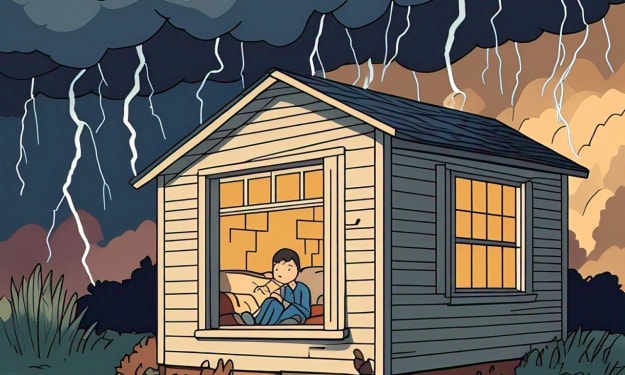
arVanessa trudged up Alex’s driveway, her eyes flicking to the ominous sky above. The gray clouds that had loomed overhead all day had thickened into a near-black canopy, the air heavy with the scent of rain. The storm was minutes away, its arrival as inevitable as the turmoil brewing in Vanessa’s heart. “Figures the storm would hit right when I need to vent,” she thought, her frustration mounting. The driveway stretched endlessly before her, each step weighed down by the emotional baggage she carried. Her recent breakup with Sean had left her raw, and she needed her best friend Alex to help make sense of the wreckage. Despite the tension in her chest, the darkened sky stirred an odd, primal unease. Bad weather always made her anxious, and today was no exception. When she reached Alex’s door, she immediately noticed the boarded-up windows. Thick planks of wood, secured with heavy nails, covered every pane of glass. She frowned in confusion. Grabbing the door handle, she twisted it, only to find it jammed. “What is it with him and this door?” she muttered aloud, yanking at the stubborn handle. Frustration gave way to determination as she pounded on the door with her fist. By the fifth knock, the door swung open to reveal Alex, his face adorned with a mischievous grin. “Well, dang, Sheila,” he teased, leaning lazily against the doorframe. “Didn’t anyone teach you not to bang on a man’s door while he’s napping? That’s bad luck, you know.” Vanessa rolled her eyes. “Didn’t anyone teach you that refusing to fix your door makes you a cheapskate? You’re asking for trouble.” She stepped inside, brushing past him. “Dramatic as ever,” Alex said with a chuckle, closing the door behind her. “For your information, I’ve tried fixing that door three times, and each time, it broke again. Maybe the universe wants it this way.” Vanessa raised an eyebrow but decided to let the matter drop. She sank onto the couch, her hands clasped tightly in her lap. “I just can’t get over Sean ghosting me after all this time,” she admitted, her voice barely above a whisper. “We were together for years. I thought we had a future… maybe even marriage.” Alex sat beside her, his expression softening. “Sometimes things don’t work out how we plan, Nessa. But maybe that’s for the best.” Vanessa frowned. “How can losing Sean be a good thing?” Alex leaned back, his gaze thoughtful. “Sean’s a good guy, but let’s be honest: he wasn’t what you needed. You’re emotional, open, and deeply connected to your feelings. Sean… well, he was starting to shut down. Maybe it’s better you found out now rather than later.” Vanessa’s lips tightened. She wanted to argue but knew Alex was right. Before she could respond, a loud crack of thunder shook the house. The storm had arrived. Rain pounded on the roof, and the wind howled like a restless spirit. Vanessa tensed, her earlier unease flooding back with force. She clung to Alex’s arm as hail joined the cacophony outside. “This storm is terrifying,” she whispered. Alex nodded toward the boarded windows. “That’s why I put up those planks. But I’m not so sure about the door.” Vanessa glanced toward the infamous jammed door. “You really should have gotten that fixed,” she said, her voice trembling. “Maybe,” Alex replied, “but let’s see if it holds.” The storm raged on, its fury testing every corner of the house. The wind battered the boarded windows, but they held firm. Surprisingly, so did the door. Despite its well-known flaws, the jammed door resisted the onslaught, standing as a barrier against the chaos outside. Vanessa watched in awe. “How is that door not falling apart?” she asked. Alex’s eyes lit up with realization. “It’s the jam,” he said. “The very thing that makes it hard to open is reinforcing it against the wind.” The storm began to subside, the rain easing into a gentle drizzle. Vanessa let out a breath she hadn’t realized she was holding. “You know,” she began, “if you’d fixed that door, it wouldn’t have had the jam that protected us from the storm. You were right, Alex. It did need to stay broken for a reason.” Alex smiled. “Exactly. Now you need to have that same kind of faith in your own life. Your broken door is your ended relationship. It feels like a setback now, but maybe it’s protecting you from something worse.” Vanessa considered his words, a sense of clarity washing over her. “Maybe you’re right. Maybe things break so better things can come along.” As the storm fully passed, sunlight began to peek through the dissipating clouds. Vanessa hugged Alex tightly, gratitude and hope filling her heart. For the first time in weeks, she felt ready to move forward. The storm was over, both outside and within her. Sometimes, the things we think are broken are exactly what we need to weather life’s storms. And when the skies clear, we find that resilience and hope can lead to beautiful new beginnings. t writing...
By Mujeeb Ur Rahmanabout a year ago in Earth
Saturday Night’s Celestial Show: The Full ‘Pink Moon’ and a Rare Micromoon
This weekend, skywatchers are in for a treat as April’s full moon, known as the "Pink Moon," rises on Saturday night (April 20, 2024). But there’s an extra twist—this full moon is also a micromoon, making it a unique celestial event.
By Shahi Sayeba Pritheyabout a year ago in Earth
8 LATEST IMAGES OF BLACK HOLES CAPTURED BY NASA HUBBLE SPACE TELESCOPE
8 LATEST IMAGES OF BLACK HOLES CAPTURED BY NASA HUBBLE SPACE TELESCOPE........ 1. NGC 4951: A Seyfert Galaxy with an Active Core NGC 4951 is a spiral galaxy in the Virgo constellation, about 50 million light-years away. It has a bright, starry spiral structure that surrounds an active galactic nucleus. A supermassive black hole powers this nucleus and accretes surrounding matter, releasing electromagnetic radiation across the spectrum
By Kindless Exeabout a year ago in Earth
Mouths Full of Rain. AI-Generated.
I called the first bone us after the man my dad bought the pills. I felt that was correct. A fatty name. Like something to survive the Apocalypse by raw into a creeping room or licking the shape of a copper pipe. Cretus stared at me through the glass as if he knew I was broken. How did he approve?
By Md.Abdul Wahedabout a year ago in Earth
Top 10 Herbs for a Healthy Heart Backed by Science
With stress, poor dietary choices, and sedentary lifestyles becoming the norm, cardiovascular issues are steadily rising. But what if nature already holds the key to keeping our hearts strong and vibrant? There are natural remedies backed by centuries of traditional use and now, modern science. These herbs for the heart have time and again proven their worth and so have found a place in ayurvedic health care.
By Ayush Herbsabout a year ago in Earth
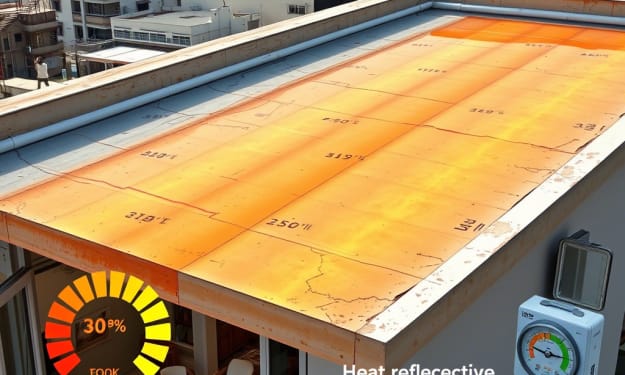
Energy Savings and Roof Protection with Roof Cool Coating
As global temperatures continue to rise, energy efficiency and building protection are becoming top priorities for homeowners and commercial property managers alike. In hot, humid cities like Karachi, where temperatures can easily soar above 40°C (104°F) in summer, the pressure on air conditioning systems becomes intense. One of the most effective solutions to reduce energy consumption and increase the lifespan of building structures is the application of heat reflective roof coatings.
By Abdul Samad Kararabout a year ago in Earth
Earth on Fire
The earth is burning! That’s not a metaphor anymore, but it’s becoming our reality. In the current age, temperatures are constantly rising, glaciers are melting and we are experiencing frequent wildfires. Climate change is no longer a distant threat, but it’s happening right now, and we’re all experiencing it.
By Piku - fragments_of_me🌻about a year ago in Earth
Upper Dolpo Trek Guides: Exploring Nepal’s Hidden Himalayan Trails with Local Experts
The Upper Dolpo Trek is one of the most peaceful and untouched trekking routes in all of Nepal. Far away from the busy trails of Everest and Annapurna, this journey takes you into a world of high passes, deep valleys, quiet villages, and ancient Tibetan Buddhist culture. Because the area is so remote and restricted, it’s not a place where you can go alone. You must hire Upper Dolpo Trek guides, and honestly, they make the experience even better.
By Lucifer Smithabout a year ago in Earth
"Mongolia Travel Guide: Discover Nomadic Culture, Genghis Khan’s Legacy & the Gobi Desert"
Mongolia—a land of vast steppes, rugged mountains, and nomadic traditions—is one of the world’s last great frontiers. Known as the "Land of the Eternal Blue Sky," this sparsely populated country offers breathtaking landscapes, a rich history tied to Genghis Khan, and a culture deeply rooted in horseback riding, throat singing, and eagle hunting.
By Bint E Ruqqyyahabout a year ago in Earth