Latest Stories
Most recently published stories in Earth.
"The Clock in the Wild"
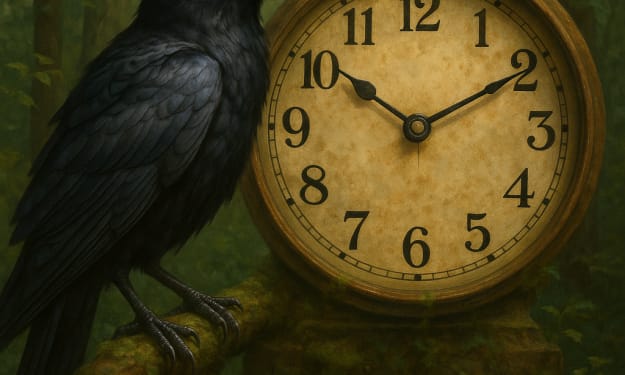
Humans march through life to the steady tick of the clock. A second, a minute, an hour—rigid structures governing our days. But in the wild, where shadows shift and seasons drift, time does not follow a clock. And some say animals move through time on a different rhythm entirely. In a forest untouched by highways and city lights, where moss grows thick and time seems to stand still, lived a raven named Koa. Koa had seen more than his fair share of days—more than most birds ever do. Some believed he was hundreds of years old, others said he simply remembered better than most. The truth? Koa had mastered something very few creatures could—he had learned how to feel time. While humans debated over whether time was an illusion or a measurable constant, animals simply lived it. To a hummingbird, time raced. Its wings beat 80 times per second, its heart thudded over a thousand beats a minute. Every flower bloom, every gust of wind, every danger arrived in a blur of motion. In the hummingbird's world, a second could hold the weight of a minute. And yet, to a tortoise sunning itself near the banks of the river, life unfolded in slow, deliberate movements. Each moment stretched and yawned like the rising sun. One summer, something curious happened in the forest. A team of scientists, equipped with cameras, sensors, and a deep desire to understand animal consciousness, arrived to study time perception in wildlife. They set up camp near the edge of the forest and began their observations. A young woman named Lila led the team. She believed that understanding how animals perceived time could unlock new paths in neuroscience—and maybe even help humans reconnect with a deeper rhythm of life. “Time is not absolute,” she told her colleagues. “A dog waiting for its owner feels those hours differently than we do. A fly dodging a swatter sees the world in more frames per second. We are all in different time zones—not just across the globe, but across species.” The scientists recorded squirrels reacting to falling nuts before they even hit the ground. They captured hawks adjusting mid-flight to gusts of wind humans wouldn’t have noticed. But the most baffling discovery came from the camera trained on Koa, the raven. At first, Koa did nothing extraordinary. He flew from branch to branch, occasionally cawed into the wind, and watched the humans with a gaze too knowing for comfort. But then came the moment Lila would later describe as “temporal elasticity.” It happened one misty morning. Koa, perched above the research tent, suddenly swooped down and intercepted a falling pinecone that had been dislodged by a squirrel. Not remarkable on its own—except the video showed something odd. When slowed down, Koa appeared to move before the pinecone began to fall. Not just reflexively, but intentionally. Like he had seen it coming from a future the squirrel had not yet reached. Lila replayed the footage dozens of times. The team argued—some called it coincidence, others blamed a glitch in the timestamp. But Lila suspected something more profound. What if Koa was experiencing time differently? What if his perception wasn’t linear? She remembered a paper she had read years ago about flicker fusion rate—the rate at which animals can process visual stimuli. Flies, for example, perceive more frames per second than humans. What appears as a blur to us is a detailed event for them. Could ravens, known for their intelligence, possess a similar perceptual advantage—not just visually, but temporally? She began journaling her thoughts: > “To a mayfly, a day is a lifetime. To a Galapagos tortoise, decades are but chapters in a long story. Time is not a thread running straight—it’s a river with many eddies. And Koa… perhaps Koa knows how to swim upstream.” The forest seemed to agree. As the days passed, Lila felt her own sense of time begin to shift. Her wristwatch no longer felt necessary. She started to wake with the birds and sleep with the stars. She sat for hours simply listening—to the crunch of twigs under deer hooves, to the echoing call of loons at dusk, to the wind whispering through pine needles like ancient secrets. She began to see how a fox might feel time in the tense pause before a pounce. How a mother bear nursing her cubs might stretch each second into eternity. How the song of the cicada, measured in cycles of seventeen years, was a kind of time-travel in itself. The final day of the research trip came with little fanfare. The tents came down, the cameras were packed. But Koa remained, watching. As Lila zipped up her backpack, she turned once more toward the tree where the raven perched. “Thank you,” she whispered. Koa tilted his head, as if acknowledging the message had arrived before she spoke it. Back in the city, Lila wrote her paper. She titled it, “The Elastic Clock: Temporal Perception in Non-Human Species.” It received modest academic attention, but on Vocal Media, where she published a more poetic retelling, the story resonated deeply. People wrote in droves, sharing stories of pets who seemed to anticipate their moods, birds who returned on the same day each year, dogs who aged quickly but loved slowly. They spoke of feeling disconnected from the natural rhythms of life and yearning to understand the world the way a raven—or a tortoise—might. Because maybe animals don’t just live differently. Maybe they remember differently. Maybe they feel time the way we feel love—not in minutes or hours, but in moments that bend and stretch and linger. And maybe, just maybe, the clock in the wild ticks to a wiser beat.
By Soul Draftsabout a year ago in Earth
Why do UTC+14 even exist?
Have you ever wondered amongst the diversity of regions and countries around Earth, what other people on the other side might be doing? Putting this in a scenario, you could be commuting to work, while people on the other side of the world are already getting off school; how does that work? Why does time work like that, and what are the possible timezones around the world? This brings us to the topic of time zones and UTCs, a fundamental tool for the modern world to operate.
By LuckyToday Geographyabout a year ago in Earth
Guadalupe River Flood Disaster: Inside Kerrville’s Worst Flash Flood in Decades
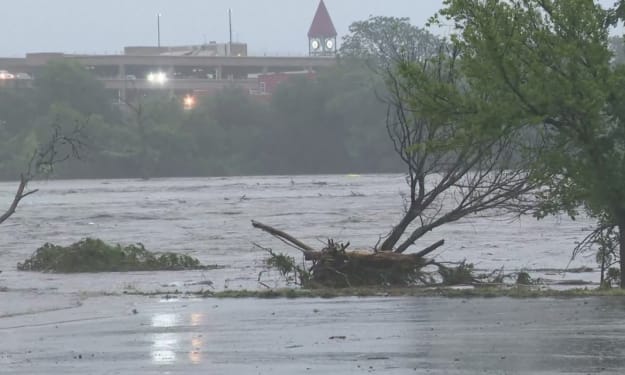
Kerrville, Texas: What started as a rainy July morning along the Guadalupe River quickly spiralled into one of the most devastating flash floods in Kerrville’s recent history. Within hours, entire roads were submerged, homes were lost to the fast-moving current, and families were forced to evacuate with only what they could carry. This wasn’t just another Texas flood — it was a disaster fuelled by days of persistent storms and a river pushed beyond its limits.
By Bevy Osuosabout a year ago in Earth
Kerrville Flooding 2025: What Happened in Texas and Why It’s Far from Over
In the early hours of July 4, 2025, what started as a calm morning in Kerrville, Texas, turned into a devastating scene of flash flooding. The Guadalupe River, which winds through the heart of Kerrville and surrounding areas in Kerr County, quickly rose beyond its banks following torrential rainfall overnight. Residents woke to sirens, flooded roads, submerged vehicles, and rising panic. By midday, floodwaters had inundated parts of downtown Kerrville, and nearby communities like Hunt, Ingram, and Camp Mystic were put on high alert or evacuated entirely.
By Bevy Osuosabout a year ago in Earth
How Solar Power Works: Science of Clean Energy
Breaking Down the Technology and Physics Behind the World’s Most Promising Renewable Energy Source Solar energy is often celebrated as a clean, sustainable solution to global energy needs—but how exactly does it work? While the concept of harnessing the sun’s power sounds simple, there’s fascinating science and innovation behind every solar panel you see on a rooftop or in a solar farm.
By Lucy watsonabout a year ago in Earth
An Ultimate Guide to Valley of Flowers Trek, Uttarakhand, India
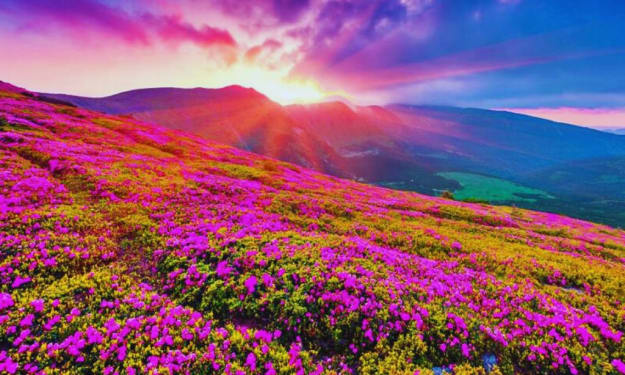
The Valley of Flowers National Park is a UNESCO World Heritage site nestled high in the Western Himalayas of Uttarakhand, India. Renowned for its sweeping meadows of endemic alpine flowers, the valley bursts into color each monsoon, carpeted by species such as blue poppies, primulas, marigolds, and anemones.
By Mountains Curveabout a year ago in Earth
"The Hidden Life of Your Money"
Most people don’t think much about what happens to their money after they spend it. They swipe a card or hand over a bill, get a receipt, and move on. But if your dollar could talk, it would tell a story more exciting and far-reaching than you'd expect. Let’s follow one ordinary dollar — call it “Buck” — and see where it goes. --- Chapter 1: The Coffee Shop It’s Monday morning. You’re groggy and running late, so you grab your usual $5 latte from the local coffee shop. Part of that money — let’s say Buck — goes straight into the register. The rest? Tips, supplies, and expenses. But Buck? Buck ends up in the hands of the cashier, Sarah, who’s working her way through college. At the end of her shift, Sarah pockets her tips and heads to the grocery store. Buck is now part of her $20 purchase — apples, pasta, and some cheap granola bars. Just like that, Buck changes hands again, now owned by the supermarket. --- Chapter 2: The Supply Chain At the supermarket, Buck is added to the daily cash flow that helps pay for deliveries and electricity. When the store buys more stock from its wholesaler, Buck becomes part of a larger transaction that supports truck drivers, warehouse staff, and suppliers across the country. Eventually, Buck trickles down to a farmer in California, who grows the apples you love. That dollar may help him fix a broken irrigation pipe or buy seeds for the next planting season. It’s no longer just “your dollar” — it’s fuel for an entire network. --- Chapter 3: The Bank Not all money moves physically. Often, it rests — temporarily — in banks. Let’s rewind. When you got paid last week, your paycheck was direct-deposited into your account. That money didn’t just sit there. Your bank lent it out — to someone applying for a mortgage, to a small business needing startup capital, or even to fund government bonds. Every dollar you save becomes part of the financial system that drives investment and growth. Buck, in the form of electronic digits, may have helped someone buy their first home or fund a medical clinic in a developing country. That’s the hidden power of saving — your money can work for you and others, even when you’re not spending it. --- Chapter 4: The Dark Side But not every journey is bright. Sometimes, Buck finds itself in less noble places: fueling fast fashion made in sweatshops, supporting companies that exploit workers or damage the environment, or lost to high-interest debt that keeps families struggling for years. Where you spend and how you invest can unintentionally support practices that don’t align with your values. For example, using a credit card irresponsibly can bury someone in interest payments — $1 spent turns into $3 repaid over time. That’s not just expensive. It’s dangerous. Buck becomes a burden when it’s not treated with respect. --- Chapter 5: The Bigger Picture Now let’s zoom out. If millions of people spend and invest consciously — choosing local businesses, ethical companies, sustainable products — the ripple effect can be massive. A dollar might help a small café survive a recession. Another could support clean energy. Another could educate a girl halfway across the globe. When you save, you create security for yourself. When you spend thoughtfully, you influence the world. Money is not just a tool; it’s a vote for the kind of future you want. And it all starts with Buck — and all his little friends. --- Epilogue: The Choice Is Yours Most people see money as either a source of stress or freedom. In truth, it’s both — depending on how you use it. So next time you reach into your wallet, take a second to ask yourself: Where will my dollar go next? What kind of story will it tell? Because every Buck has a journey. And you are its guide. --- Key Takeaways: Every dollar you spend has a ripple effect. Your money supports jobs, businesses, and industries — for better or worse. Saving and investing wisely can help others. Banks and institutions use your money to fund loans and growth. Your financial choices shape your life and the world. Being intentional can align your spending with your values. Even small amounts add up. Don’t underestimate the power of just one dollar.
By Muhammad Saad about a year ago in Earth