Latest Stories
Most recently published stories in Earth.
The essential components of life may have always been present on Earth.
What was the origin of life on Earth? That has been a long-standing question. The solutions are still strewn across rocks, seas, and prehistoric terrain. One hint can be found in phosphorus, a necessary component of life.
By Francis Damiabout a year ago in Earth
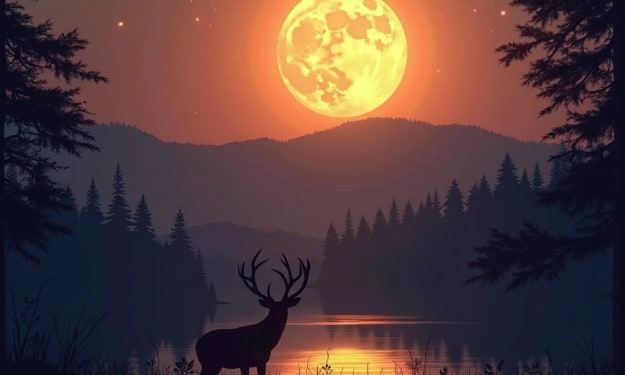
Full Moon July 2025: When To See The ‘Buck Moon’ Rise Where You Are
Get ready to look up this July—because the first full moon of summer is about to rise. On Thursday, July 10, skywatchers across the Northern Hemisphere will witness the full buck moon, a celestial event steeped in seasonal tradition and natural symbolism.
By Muhammad Sabeelabout a year ago in Earth
Camp Mystic 2025 Flood Horror: 20+ Campers Missing as Guadalupe River Swells
In the early hours of July 4, 2025, Camp Mystic, a beloved girls’ summer camp nestled along the Guadalupe River in Hunt, Texas, became ground zero for a sudden flash flood emergency that would shake families and the entire Kerr County community. Thunderous rainfall, measuring between 6 and 10 inches overnight, caused the river to surge 22 to 26 feet in mere minutes. In the chaos, more than 20 campers were swept away or stranded as cabins vanished under rushing water, turning what began as a typical Independence Day setup into a nightmare.
By Bevy Osuosabout a year ago in Earth
Earth: The Living Puzzle
From space, Earth looks like a marble — blue, green, and white, suspended in the black canvas of the universe. But beneath its beauty lies a complex, living system—an ancient puzzle still being assembled piece by piece. Scientists, explorers, and thinkers across time have tried to decipher it. And now, more than ever, that puzzle demands our attention. The Puzzle of the Past Earth is over 4.5 billion years old. Its surface has been shaped and reshaped by fire, ice, water, and life itself. The continents we know today were once part of a single supercontinent called Pangaea. It broke apart, drifted, and gave birth to the landmasses we now call home. Fossils, like time-stamped puzzle pieces, reveal ancient oceans, vanished species, and catastrophic events. The extinction of the dinosaurs, for instance, was caused by an asteroid that struck with the force of billions of atomic bombs. That single impact reshaped Earth’s biological path—and made room for mammals, and eventually humans, to rise. Each layer of rock tells a story. Each ice core drilled from Antarctica holds frozen bubbles of ancient air, allowing scientists to “read” Earth’s climate over hundreds of thousands of years. The planet keeps records, even if we don’t always know how to interpret them yet. The Present We Inhabit Today, Earth is a masterpiece of balance—one that supports nearly 9 million species, with humans playing the most dominant role. But our presence is starting to warp the puzzle. Since the Industrial Revolution, our use of fossil fuels has sent vast amounts of carbon dioxide into the atmosphere, trapping heat and warming the planet. Glaciers are melting. Sea levels are rising. Coral reefs, once vibrant underwater cities, are bleaching and dying. Weather patterns are growing more extreme, from hurricanes in the Atlantic to wildfires in the Arctic. At the same time, Earth’s biodiversity—the rich tapestry of life—is unraveling. Species are disappearing at a rate 1,000 times the natural background rate. This isn’t just a tragedy for wildlife. Every lost species is a missing piece in ecosystems that provide us with clean air, water, and food. Yet Earth remains resilient. Forests still breathe. Rivers still run. Migrating birds still trace invisible sky-paths mapped over millennia. The planet is not giving up—it’s waiting for us to listen. The Fragile Future The puzzle of Earth’s future is the most uncertain of all. Will we continue to take more than we give? Or will we learn to live in harmony with the only home we’ve ever known? Solutions exist. Renewable energy like solar and wind can replace dirty fuels. Cities can be redesigned to be green, walkable, and sustainable. Agriculture can be transformed to regenerate soil and protect pollinators. Most importantly, our relationship with nature can shift—from one of domination to one of stewardship. Young people around the world are already stepping up. Movements like Fridays for Future and Earth Guardians are led by youth who understand what’s at stake. Scientists are developing carbon-capture technology, reviving endangered species, and restoring damaged ecosystems. Indigenous communities, who have long lived in balance with the land, offer ancient wisdom for modern problems. But change must come quickly. The next ten years will shape the next thousand. If we delay, the cost will be measured not just in dollars—but in lives, livelihoods, and lost potential. One Planet, One Chance In a way, Earth itself is the greatest puzzle ever created—self-sustaining, interconnected, and endlessly fascinating. Every rainforest, glacier, desert, and deep-sea trench is a piece. So are we. We are not separate from this planet. We are made of it. The calcium in our bones came from ancient stars. The water in our cells has flowed through rivers and clouds for millions of years. When we protect the Earth, we protect ourselves. As we look forward, let’s stop treating Earth like a resource and start treating it like a relative—an elder whose stories we must learn, honor, and pass down. Because the puzzle is still being built. And we still have time to finish it—together. --- Author's Note: Our planet doesn’t need us—but we absolutely need it. Earth: The Living Puzzle is a reminder that science, history, and hope are all connected. Every small action counts. And every one of us is a piece that matters.
By Muhammad Saad about a year ago in Earth