Latest Stories
Most recently published stories in Earth.
"Warming Earth, Waning Time"
Warming Earth, Waning Time: Unveiling the Science and Consequences of a Changing Climate A hush settled over the planet an unsettling calm, like a world holding its breath. Beneath this silence, however, Earth’s systems were in turmoil. Science has made it clear: our planet is warming faster than ever, and the window to act is rapidly closing.
By Khurram Munir about a year ago in Earth
When the Guadalupe Roared—and the Rumors of “Weather Editing” That Followed
On July 4, 2025, Central Texas residents expecting typical Independence Day river relays were met instead with a scene of raw power and devastation. A series of slow-moving storm cells dumped between 5 and 10 inches of rain over the upper Guadalupe watershed in under six hours. The normally placid Guadalupe River rose from near-normal to more than 12 feet at Comfort—well above major-flood stage—sweeping away picnic tables, riverfront cabins and, tragically, claiming two lives. As floodwaters receded and communities rallied to rebuild, a persistent current of speculation emerged: Was this disaster “natural,” or the product of clandestine weather-editing programs?
By Briar Roseabout a year ago in Earth
Whispering Valley
In the heart of Aethelburg, a city made of steel, glass, and the quiet hum of electronics, lived Lyra. Her world was clean, calibrated, controlled. The air in her apartment carried the scent of synthetic pine—pleasant, but soulless. The lighting? Perfectly tuned, like everything else. And through her window, the transport pods danced between the towers like fireflies under strict command.
By anass ammourabout a year ago in Earth
Why People Enjoy Being in the Forest
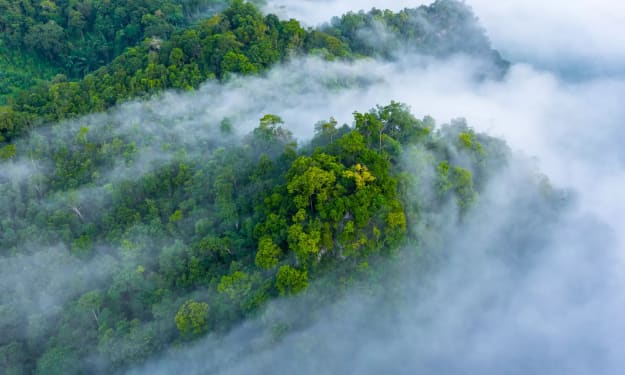
Many people love spending time in forests for many reasons. Forests give a strong feeling of calm, help people feel better physically and mentally, and help us feel connected to the natural world. From the soft sound of leaves under your feet to the fresh smell of pine trees, forests give us something we can't find easily in busy cities. Research shows that spending time among trees is good for our minds and bodies.
By Blue Spartanabout a year ago in Earth
Why People Enjoy Being in the Water
Many people feel drawn to water. There's something about being near a lake, river, or the sea that makes us feel relaxed and happy. This feeling comes from a mix of our history as humans, the way water affects our senses, and how it helps our minds and bodies feel better. Watching the blue color of water or hearing the sound of waves can help us get away from the busy demands of life and feel more at ease.
By Blue Spartanabout a year ago in Earth
Five Minutes Before the World Ended
Five Minutes Before the World Ended 00:05:00 The clock on the kitchen wall kept ticking. Five minutes. Lena’s coffee had gone cold, untouched, as she stared at the television, her pulse pounding in her ears. The broadcast had been repeating the same phrase for the last ten minutes:
By Huzaifa Dzineabout a year ago in Earth
Saving Our Planet from the Heat
The Earth, our shared home, is heating up. From melting glaciers in the Arctic to raging wildfires in Australia and deadly heatwaves in cities around the world, the signs of global warming are all around us. This crisis is not just about warmer summers—it’s about rising sea levels, food insecurity, loss of biodiversity, and threats to human health. Yet, amid this growing concern, there is hope. By understanding the causes and embracing practical, science-backed solutions, we can still save our planet from the heat.
By Leah Brookeabout a year ago in Earth
Pollution and their Effects on the Environment
Pollution: Ang unwanted and undesirable change in the environment that affects the atmosphere and disturbs the ecosystem is called pollution. The addition of certain contaminants or pollutants to the environment is also called pollution Animals, plants, humans and all other organisms suffer due to pollution. The major types of pollution can be categorized as follows. Air Pollutants and their sources: Pollution began to be recognized as a serious threat during the industrial revolution of the 19" century. During this period, burning of fossil fuels in the factories and industries led to a high level of waste gases in the air. Like other forms of pollution, air pollution has dangerous effects on the environment. During air pollution, harmful pollutants are released into the air. These harm all living organisms. It may be man made of natural Carbon monoxide (CO), sulphur dioxide (50,), oxides of nitrogen (NO and NO) chlorofluorocarbons (CFCs), etc, are the main air pollutants, produced by human activities and natural sources. Harmful effects of air pollutants: 1. Acid rain: Chemical reactions involving air pollutants can create acidic rain compounds which con cause damage to vegetation and buildings. Acid rain can destroy leaves of plants 2. Eutrophication: Rain can carry oxides of nitrogen to rivers and soil. This can cause abnormal growth of algae in water bodies making conditions for ather aquatic organisms very difficult to live. 3. Ground level ozone: Chemical reactions involving air pollutants create poisonous ozone (O3) gas, which effect People's health and can damage plants and animal's Life. Effect of Human Activities on Human environment: Generally human activities such as ute of vehicles, burning of fuels, aerosol sprays, fertilizers, water products, insecticides and deforestation are affecting environment. These actions con cause degradation of habitats and also result in the depletion of natural resources. Green House Effect: When the UV (ultraviolet) radiations enter the earth, a part of it is absorbed by the earth and the rest are reflected back to the atmosphere. Some gases present is the atmosphere eg: carbon dioxide, methane, asides of nitrogen, water vapors, etc. trap a part of the heat reflected by the earth, causing an increase in the atmospheric temperature. This atmospheric effects is known as greenhouse offer. The gases involved in the green house effect are called green house gases. e.g carbon dioxide, carbon monoxide etc. An increase in greenhouse effect can lead to global warming and climate change. Cool burned in power stations contains carbon, which combines with oxygen to form carbon dioxide. Which is also a cause of increase of carbon dioxide concentration in air. Global Warming: Global warming refers to the rise in overage temperature on earth. Due to human activities like burning of fuels, industries vehicles etc, the green house games are continually increasing in the atmosphere and speeding up the green house effect. As result, the earth is getting warmer and warmer this phenomenon is known as global warming Global warming causing the glaciers to melt at an alarming rate. The show on Polar Regions and the mountains melts faster, causing floods and raise in the level of seawater. The climate of many regions of the world is also changing due to global warming. Global warming a serious threat to the life on earth, especially to future generations. Acid Rain: When the quantity of acids increase in the atmosphere, it leads sa acid rain during rainfall. Acid rains are the result of sive carbon dioxide, sulphur dioxide, smoke and nitrogen dioxide in the atmosphere. When these gases come in contact with water vapours, acids such as sulphuric acid, were said t ere formed. These acids make the rain water acidic. Acid rain harms a lot of living and non living things. For example. • Kills the aquatic life in rivers, ponds and lakes. • Destroys the leaves and bark of trees. • Corrodes the metals and stones used in buildings. • Damages the crops. ∆ Depletion of Ozone Layer: The word "Ozone is a Greek ward which means strong odour. Ozone is a gas made up of three oxygen atoms (0, Ozone is formed when sunlight hits oxygen molecules (0) and breaks up them into individual atoms. These individual atoms then combine with O. molecules and make O, or ozone molecules. The upper porn of atmosphere has a fairly high concentration of ozone molecules, known as the ozone layer (Ozone sphere). The ozone layer protects us from harmful ultraviolet (UV) rays of the sun. Chlorofluorocarbons (CFCs) which are used in air conditioners, refrigerators, spray, etc enter the air due to leakage from these appliances. On reaching the ozone layer they break down the ozone molecules and thus cause depletion of the ozone layer. This phenomenon of the ozone layer depletion is not only harmful to human beings but also damages other organisms. Deforestation: Deforestation refers to the cutting and removal of forests for human use. Forests bring favourable characteristics to an area. They stop storms, soil erosion and bring rain. Forests are the main source of timber, firewood, resins, gums, medicines and habitat for large number of plants and animals. However, increasing human population has resulted in the need for increased demand for firewood, construction and more area for harvesting. Human beings are therefore engaged in deforestation. Increase in trade and possibilities of exporting wood items like furniture etc. have speed up the process of deforestation. However, the effects of deforestation are more severe than just the loss of trees. Deforestation is affecting human life to a great extent by bringing about negative changes in the environment and atmosphere. Deforestation causes many problems some of which are: *Air Pollution *Green House effect. *Destroy habitat for wildlife. *Global warming and increasing sea level. *Soil erosion. *Less rain. *Sea animals dying.
By Sherooz khanabout a year ago in Earth
The Last Breath of the Amazon
The dawn in the Amazon unfurled like a silent symphony, a green expanse stretching beyond the horizon, where towering ceiba trees pierced the sky, and thick vines clung to their ancient trunks. The jungle, alive with the chatter of howler monkeys, the iridescent flutter of butterflies, and the distant call of harpy eagles, whispered secrets older than time itself. This was a kingdom where every leaf, every creature, played a role in a delicate dance of life.
By Muhammad Aizazabout a year ago in Earth
Earth Speaks: The Untold Story of Our Living Planet
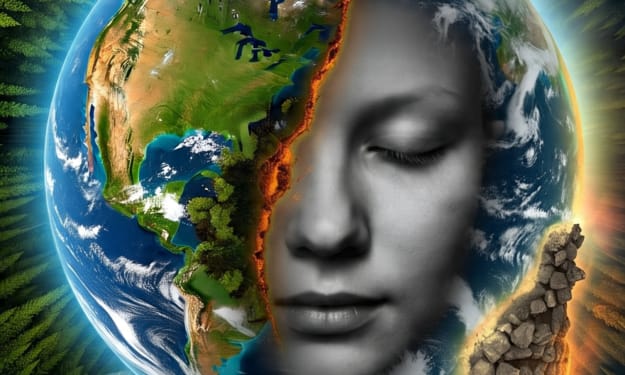
If Earth could speak, its voice might be slow and deep, echoing across valleys and mountains, whispering through leaves and crashing in waves. For 4.5 billion years, it has spun silently through space, bearing witness to cosmic chaos, violent eruptions, mass extinctions, and the rise of an intelligent species—us. Yet Earth is not just a rock hurtling around the sun. It is alive in ways we are only beginning to understand. Its crust shifts and sighs through tectonic plates, its atmosphere breathes with the rhythms of seasons, and its ecosystems are intricate symphonies of life and death. When we pause and listen, Earth speaks—not in words, but in signs, patterns, and warnings. The Ancient Birth of a Blue Planet Long before there was life, Earth was forged from cosmic dust and fire. Volcanic storms raged, seas of lava hardened into crust, and gases formed an atmosphere. Then came a miraculous twist—water. Comets and early volcanic activity may have delivered this precious substance, forming the oceans that would become the cradle of life. Somewhere in those primordial waters, life sparked. Tiny microbes emerged, eventually giving rise to all living things. Earth watched silently as fish took to the seas, plants to the land, and dinosaurs thundered across continents. And then—humans arrived. Humanity: Earth’s Most Talkative Species For the first 99% of our history, we lived in balance with nature. We hunted, gathered, and told stories by firelight. But in the last few centuries, something changed. We industrialized. We burned coal, then oil, then forests. We built cities that never sleep and machines that never stop. Earth began to speak louder. Through rising temperatures, melting glaciers, and increasingly violent storms, the planet now sends unmistakable signals. The last eight years have been the hottest on record. Wildfires burn longer, oceans rise faster, and species vanish at rates not seen since the dinosaurs disappeared. Scientists call this the Anthropocene—the age in which human activity is the dominant influence on climate and the environment. But to Earth, this age might feel like a fever, a disturbance in its otherwise slow, evolutionary pulse. Nature’s Resilience and Fragility Despite this, Earth is not helpless. Forests still breathe in carbon and release oxygen. Wetlands purify water. Coral reefs, though threatened, support more marine life than any other habitat on Earth. But these systems are not infinite. Like any living organism, the planet has limits. When pushed too far, it breaks down. Consider the Amazon rainforest. Often called the “lungs of the Earth,” it absorbs billions of tons of carbon dioxide. Yet deforestation and climate change threaten to turn parts of it into dry savannah, a shift that could release more carbon than it absorbs. Or the polar ice caps—white mirrors that reflect sunlight and help regulate global temperature. As they melt, darker ocean water absorbs more heat, accelerating warming. This feedback loop is Earth’s way of shouting, “Something is wrong.” Listening to Earth, Before It’s Too Late We are the only species capable of understanding these messages—and the only one with the tools to change course. Renewable energy, sustainable agriculture, conservation efforts, and reforestation all offer hope. Already, nations are rethinking how we live and grow. Individuals are making conscious choices, from reducing waste to protecting biodiversity. But time is limited. Scientists warn we have less than a decade to make profound changes before the damage becomes irreversible. The clock is ticking, not for the planet—which will eventually recover—but for the ecosystems and civilizations we’ve built. Earth Is Not Asking Us to Save It Here’s the truth: Earth doesn’t need saving. It has endured asteroid impacts, ice ages, and extinction events. What it needs is respect—and action. We must stop treating nature as a resource to be exploited and start seeing it as a partner in our survival. In the quiet of a forest, the roar of a storm, or the whisper of the wind across a field, Earth speaks. Are we listening? Perhaps the most powerful thing we can do is remember this: We are not separate from the Earth. We are Earth. Every breath we take, every meal we eat, every drop we drink is a gift from this living planet. To protect it is to protect ourselves. So let this be more than a story. Let it be a call to listen—and to act—before Earth’s voice becomes a cry we can no longer answer.
By Muhammad Saad about a year ago in Earth
Pearls, Palms, and Sky‑High Dreams: How Qatar Went From Sleepy Peninsula to Global Powerhouse
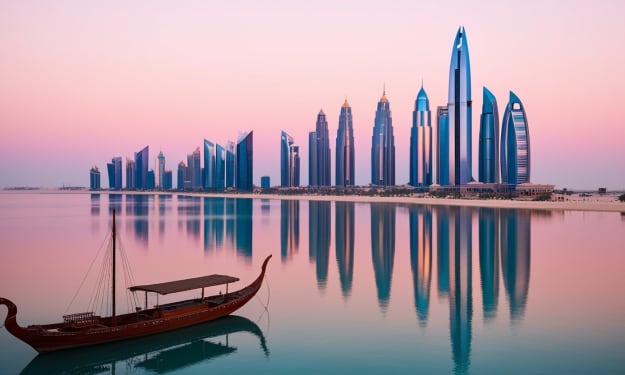
A Morning That Smells Like Cardamom The encounter starts with the fragrance of gahwa—cardamom-infused coffee—wafting down a cold lane in the souq. For anyone who stops to converse, a vendor in a well ironed thobe provides free little finjan cups. The bright welcome, “Marhaba, my friend—welcome,” strikes as genuine, as do the constantly refilled cups. In Qatar, hospitality is an instinct rather than simply a catchy slogan; it is ingrained from a time long before opulent cars and modern skyscrapers when a pearl diver depended on the kindness of those around the fire for survival.
By Shahjahan Kabir Khanabout a year ago in Earth