Latest Stories
Most recently published stories in Earth.
Can mammals also be hermaphroditic? How do two-headed snakes, which may have one male and one female, live and reproduce?
Among many animals, there is one extremely special type of snake, they can be hermaphroditic, and this type of snake is called a two-headed snake. So, how do such snakes that share two heads of one body live and reproduce?
By Milton Braganza4 years ago in Earth
The "South American Yeti" fossil was surrounded by spectators, weighing more than a ton, did a giant race really exist on Earth?
"South American Yeti Fossil Surrounded by Spectators, Weighing Over a Ton, Did a Giant Race Exist on Earth? Paleontologists from Argentina and Ecuador have introduced a strange animal, a South American Yeti that lived in the late Pleistocene. Ecuador found the skeleton of this animal, which has been more than 100 years old, knowing that has a sufficient number of skeletal remains to restore its size, scientists said after seeing it was too spectacular.
By Cilva Kustes4 years ago in Earth
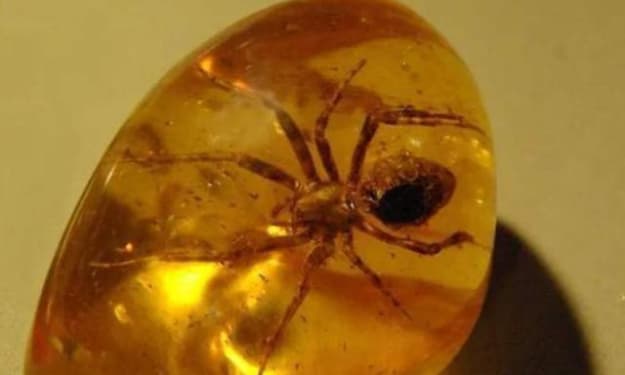
Scientists find 'giant sperm' that fell during mating and was sealed in amber, about 100 million years ago
Scientists find 'giant sperm' that fell during mating and was sealed in amber, about a hundred million years ago The Earth was born about 4.6 billion years ago, and throughout its long history, humans and other creatures on the planet have gradually evolved. However, it is important to know that in ancient times there were no humans on Earth, or that humans were not the masters of the planet at that time. In modern times there is still some evidence or remains that can help us to understand prehistoric creatures. In this case, the main way to understand the ancient world is through fossils or the remains of animals. Amber is also a very important object of study, and they are powerful evidence.
By Paul Weiest4 years ago in Earth
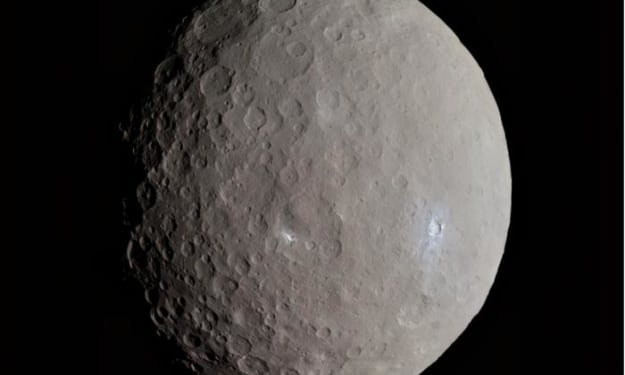
The mysterious bright spot on Ceres, is it really an ocean? Scientists: there may even be life
For a long time, scientists have focused on stars, planets, and moons in space exploration, with little regard for small objects such as asteroids and dwarf planets, the main reason being that small objects are directly excluded from the list of habitable planets because they are too small in size and mass. But in recent years, some scientists have discovered that dwarf planets in our solar system are underestimated, and that they may have some conditions for habitability, such as the notorious Ceres.
By Grady Shah4 years ago in Earth