
Wrestling in the Mud: How Pope Leo XIV is Risking the Church’s Moral Authority
An Analysis of Institutional Roles and the Clash of Sovereignty
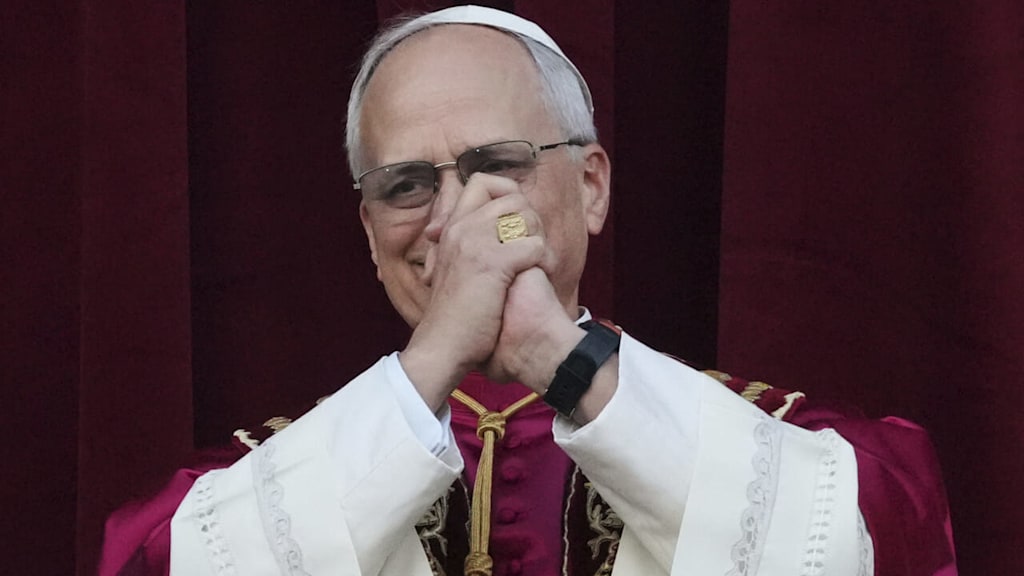
Wrestling in the Mud: How Pope Leo XIV is Risking the Church’s Moral Authority
An Analysis of Institutional Roles and the Clash of Sovereignty
By Meda Parameswara Reddy, Ph.D.
Introduction
In the early months of 2026, the world is witnessing a diplomatic spectacle once thought impossible: a Pope born in the United States, Leo XIV, locked in a bitter and public confrontation with a twice-elected President of the United States. While Popes have traditionally acted as a global "moral conscience," the current friction transcends conventional diplomacy, descending into a personal and highly publicized conflict.
As a scientist with a career built on thirty U.S. patents and the study of structural systems, I view this conflict through a specific lens: in any complex system—whether a chemical reaction or a global civilization—stability depends on the integrity of boundaries. When a component of a system operates outside its intended jurisdiction, it ceases to provide useful "input" and instead becomes "noise" that threatens systemic failure. By leaving his position of spiritual neutrality to engage in a partisan struggle, Pope Leo XIV is breaching these institutional boundaries, risking the very moral authority he seeks to protect.
The Clash of Mandates: Ballots vs. Benedictions
At the heart of this tension is a fundamental disagreement over authority. President Donald Trump serves by the will of the American people, confirmed through a legitimate democratic process. His mandate is secular, sovereign, and focused on the security of a nation-state. Conversely, Pope Leo XIV holds a spiritual mandate that is global and religious.
From a structural standpoint, these two mandates operate in different "planes" of a system. When the Pope criticizes specific military interventions—such as the 2026 action in Iran—he is not merely offering moral guidance; he is attempting to override the democratic choice of a sovereign voting public. There is a structural danger when a religious leader, who was not elected by the citizens of a nation, attempts to undermine a leader who was. By doing so, the Pope contradicts the democratic principle that a nation’s policy should be guided by its own collective decision-making, not external clerical decree.
The "Hotline to God" Fallacy
A central critique of the current Papal stance is the assumption of divine expertise in secular matters. Critics argue that the Pope acts as if he possesses a "Hotline to God" regarding complex geopolitical strategy. While the Pope is the ultimate authority on church doctrine, the application of morality to international relations requires an analysis of variables that are rarely simple.
In the case of the Iran conflict, the Pope has condemned military action as an "unacceptable" breach of peace. However, a scientist knows that a conclusion is only as valid as the data set behind it. A national leader must weigh confidential security briefings, nuclear proliferation risks, and the survival of millions. If a hostile government is on the verge of acquiring catastrophic weapons, a leader may feel a moral obligation to "nip it at the bud." In this context, early intervention is not unprovoked aggression; it is a defensive catalyst intended to prevent a runaway reaction that could lead to global disaster. The Pope, lacking both the data and the direct responsibility for national safety, risks making a moral judgment without a factual foundation.
Historical Precedents: From Diplomacy to Discord
Historically, Popes have navigated world conflicts with a high degree of neutrality to maintain their role as mediators. During World War II, Pope Pius XII exercised extreme caution in his public statements. He understood that by maintaining a neutral "systemic position," the Church could remain a channel for humanitarian aid and secret negotiations. He recognized that taking a loud, partisan side would collapse the bridge he needed to help people behind the scenes.
Pope Leo XIV represents a departure from this strategic tradition. His familiarity with American politics has colored his Papacy with an uncharacteristically personal tone. When a Pope uses his extraordinary position to settle personal or political disagreements, he risks transforming the Holy See from a sacred institution into just another non-governmental organization. Once the boundary between the sacred and the secular is erased, the Church's unique influence is lost.
Wrestling with the Pig: The Cost of the Conflict
There is an old saying: “Never wrestle with a pig; you both get dirty, but the pig likes it.” In the realm of systems thinking, this refers to the loss of structural integrity. Politicians are professionally accustomed to public conflict; it is the "medium" in which they operate. A President, when attacked, is expected by his supporters to defend his position vigorously.
When the Pope enters this arena, he enters a fight he cannot win without damaging his office. By labeling a President "unacceptable," the Pope invites a harsh, secular response. When the political leader hits back, the Papacy is dragged into the world of insults and media scandals. The "pig" of political conflict thrives in this environment, but the Papacy is left "dirty," facing a divided Church and a loss of respect from citizens who support the very leaders the Pope is attacking.
Conclusion: Toward a "Nip it at the Bud" Diplomacy
Just as a leader must sometimes intervene early to prevent a nuclear threat, the Vatican must "nip at the bud" its own tendency to interfere in national politics. The world needs a Pope who stands above the daily noise—a figure who reminds us of our shared dignity without trying to manage the defense policies of sovereign nations.
For the Papacy to remain respected, it must respect the democratic "jurisdictions" of individual nations. The Pope should remember that his influence is greatest when it remains universal. When the Vatican treats political opinion as divine decree, it is effectively attempting to solve a geopolitical equation while ignoring the variables of reality. For the sake of global stability, the Pope must leave the political arena to those chosen by the people to navigate it. Only then can he serve as a true model for humanity, fostering a system where both faith and democracy can function within their proper boundaries.
________________________________________
About the Author: Meda Parameswara Reddy, Ph.D., is a retired scientist with 30 patents, and the Director of the Reddy Center for Critical and Integrated Thinking. He utilizes structural thinking and systems analysis to navigate contested public debates. He most recently published in RealClearMarkets. Contact: [email protected]
About the Creator
Meda Parameswara Reddy Ph.D.
Dr. Reddy ([email protected]) is a scientist with 30 patents, and a former R&D executive. He directs the Reddy Center for Critical and Integrated Thinking, analyzing behavior, public health, and global affairs https://lnkd.in/gn2zQJbs
Enjoyed the story? Support the Creator.
Subscribe for free to receive all their stories in your feed.
Comments
There are no comments for this story
Be the first to respond and start the conversation.