Dialogue
The Tainted Cup
The Tainted Cup by Robert Jackson Bennett I made this entire series to write this review. The 2024 Hugo Winner is a Holmes and Watson style whodunnit taking place in a fantasy world that blends Area X from the Southern Reach Trilogy and The Lost World–more on the setting later.
By Matthew J. Fromm10 months ago in Critique
The Lost City of Z
The Lost City of Z by David Grann Growing up I thought I wanted to be an archaeologist. Now that I’m a ripe 32, I realize what I really wanted to be was an adventurer–someone who dug deep into the dark and emerged with treasures unseen for millennia.
By Matthew J. Fromm10 months ago in Critique
Words of Radiance
Words of Radiance by Brandon Sanderson And so we come to the yearly ovation for Mr. Sanderson. The man is a genius, his lecture series is one of the most important resources ever developed for writers, and I’m yet to pick up a Sando that’s scored below a 70. I have critiques that we’ll come to, but suffice to say I am a big supporter of Sanderson.
By Matthew J. Fromm10 months ago in Critique
The Blade Itself
The Blade Itself by Joe Abercrombie Every once in a while, I pick up a book that reminds me fundamentally why I enjoy reading—a book that turns my brain off and sweeps me away to some far flung world that I can sit at any quiet moment and. . . disappear into.
By Matthew J. Fromm10 months ago in Critique
H/Jack
Introduction I will be honest, when I saw this advertised on Apple TV the only things that grabbed me were the fact Idris Elba was in it and the title "H/Jack". I have watched a lot of excellent stuff on the channel, most recently "Slow Horses" and "Down Cemetery Road", both absolute must-watch, and "Murderbot" was brilliant.
By Mike Singleton 💜 Mikeydred 10 months ago in Critique
Sparking Cognitive Ignition
In the United States of America, and probably elsewhere in the world, the first and foremost lessons we received in our youth indoctrination centers were to sit down! … be quiet! … follow instructions! … and most important, do not question!
By We the PPUL11 months ago in Critique
Judge Temporarily Blocks Deployment of National Guard in Washington
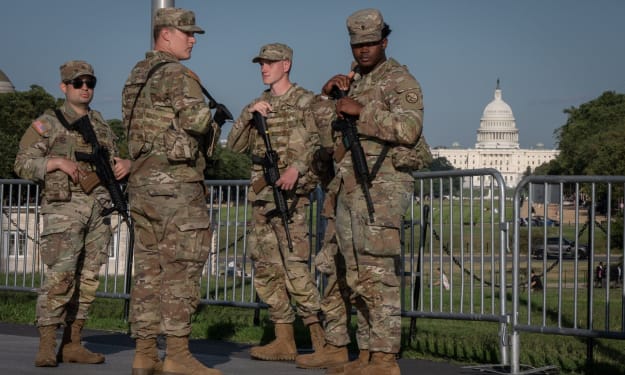
A federal judge in Washington temporarily blocked the Trump administration on Thursday from maintaining more than 2,000 members of the National Guard deployed to the city’s streets, finding the city was likely to succeed in arguing the deployment was illegal. Judge Jia M. Cobb of Federal District Court, a Biden appointee, wrote in a 61-page opinion that the deployment, which began in August, appeared to be illegal for a variety of reasons, including limits on the president’s authority to assert total control over the local D.C. National Guard, as well as concerns over the city’s rights to self-governance. Those concerns were compounded, she wrote, by the fact that more than 1,000 members of the force deployed to Washington are from other states, and that the Trump administration had taken steps to establish a semi-permanent command structure, with an eye to keeping troops in the city well into next year. She paused her ruling for three weeks, to allow time for the administration to remove the troops, as well as to appeal her decision. “At its core, Congress has given the District rights to govern itself,” Judge Cobb wrote. “Those rights are infringed upon when defendants approve, in excess of their statutory authority, the deployment of National Guard troops to the District.” President Trump announced the deployment in Washington as part of an aggressive drive to ratchet up law enforcement in the city, directing heavily armed National Guardsmen to deploy to the city while integrating federal agents with local police officers to conduct sometimes routine police work. The troops have also played a role as armed backup for sharply stepped-up immigration and deportation operations around the city in what experts have described as a trial run in joint immigration operations. Since the summer, small groups of armed National Guardsmen have been ubiquitous around the city, patrolling subway stops, tourist areas and nightlife districts. They have also been subject to mockery online after being observed guarding national monuments and relatively vacant areas or doing “beautification” work such as removing trash or sweeping plant debris. Judge Cobb’s ruling followed several others around the country in which federal judges found that Mr. Trump’s deployment of troops to Chicago, Memphis and Portland, Ore., also most likely violated the law. The Supreme Court is currently considering whether the president can deploy hundreds of National Guard troops to the Chicago area over the objections of state and local leaders. Whatever the justices decide in the Illinois case will most likely set the ground rules for Mr. Trump’s efforts to use state-based troops in other American cities as part of his aggressive immigration crackdown. But it’s not clear if the court’s decision will have a similar impact in Washington, because of the unusual status of the District of Columbia, where federal authorities including the president have expanded powers. Mr. Trump has used that authority to bring in a force of National Guard troops contributed by at least 9 Republican states to serve as a semipermanent patrol in the city, and has announced plans to keep the force in place until at least the end of February. “There is also the risk that this incursion may become permanent, or at least enduring, given the creation of a D.C.N.G. unit specifically established to conduct law enforcement in the District,” Judge Cobb wrote, referring to the D.C. National Guard. She noted that under the Home Rule Act, the federal law granting the city limited self-government, Congress delegated considerable control over the city’s law enforcement to its local leaders. She described the president’s actions as “major intrusions into local governance.” She wrote that the Trump administration “exceeded the bounds of their authority” with the deployment, and “acted contrary to law” by sending in the Guard to carry out “nonmilitary, crime-deterrence missions in the absence of a request from the city’s civil authorities.” A White House spokeswoman said in an email that Mr. Trump enjoyed broad power to assume control over and command the members of the D.C. National Guard. “This lawsuit is nothing more than another attempt — at the detriment of D.C. residents — to undermine the president’s highly successful operations to stop violent crime in D.C.,” said the spokeswoman, Abigail Jackson. While Muriel E. Bowser, the city’s mayor, initially opposed the Trump administration’s efforts to wrest law enforcement control from her office, she has since softened her rhetoric, expressing openness to collaborating with the federal government to decrease crime in the city. The lawsuit was brought by Brian Schwalb, Washington’s attorney general, who was elected separately from the mayor. He celebrated the ruling as a major breakthrough for the city after months of daily patrols by armed troops spread out across much of the city. “From the beginning, we made clear that the U.S. military should not be policing American citizens on American soil,” he said in a statement. “Normalizing the use of military troops for domestic law enforcement sets a dangerous precedent, where the president can disregard states’ independence and deploy troops wherever and whenever he wants — with no check on his military power.” The decision was a second win for Mr. Schwalb’s office. A previous case kept control of the local police department with city leaders after Mr. Trump had tried to use emergency powers to seize command.
By DigitalAddi11 months ago in Critique
The Man on Fire: A Story of Love, Sacrifice and Redemption
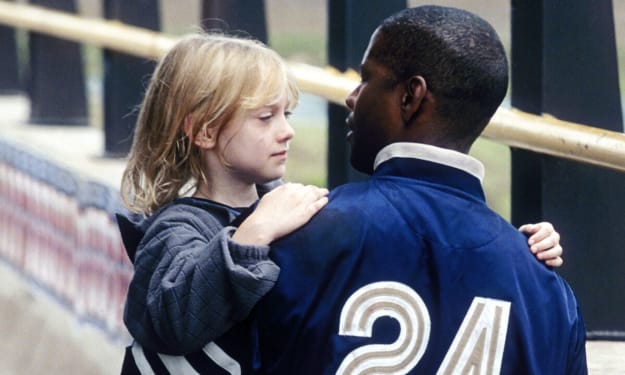
The Man on Fire, released in 2004 by Tony Scott and starring Denzel Washington, is much more than just an action film. It is a poignant dive into the twists and turns of the human soul, where violence mixes with raw emotion and redemption takes shape in the simplest gestures. But at the heart of this gripping thriller, what stands out above all is the unique relationship that develops between bodyguard Creasy and young Pita, a kidnapped girl. Creasy, this solitary character, bruised by life, is initially presented as a cold, distant, almost irreducible man. A former CIA agent, he has left behind a dark past and withdrawn into himself, like a suit of armor, with obvious resignation. His heart seems to have been destroyed by the horrors of the world and he hides it behind an apparent indifference. But Pita, this little girl full of life and innocence, will succeed where everyone else has failed: she will give him back the will to live. There is something deeply human about this relationship. At first, Pita seems like just a mission for Creasy. He is paid to protect her — it is a business. But as the days go by, a sincere, almost familial bond develops between them. Creasy begins to smile, little by little, something he has not done in a long time. Pita offers him the most precious thing: a reason to fight, a reason to feel, a reason to love again.The film beautifully plays with this contrast between Creasy's coldness and Pita's warmth. With each smile from the girl, with each burst of laughter, Creasy becomes a little more human. The moments shared between them are not only moving, they are also disarmingly simple. Creasy is not an indestructible superhero — he is a man who, through contact with Pita's innocence and joy of life, begins to rediscover his humanity. It is in this dynamic that The Man on Fire finds its strength and beauty — in showing how an encounter, however improbable, can turn a life upside down. But as is often the case in such stories, this development is doomed to inevitable tragedy. The film's end is marked by a sacrifice, the Creasy's. Faced with Pita's desperate situation, whose fate is sealed by a ruthless criminal group, Creasy, true to his role as protector, is willing to give his all. In a final act of courage, he chooses to sacrifice himself so that Pita can be reunited with her mother. His sacrifice is more than just a heroic act. It symbolizes the character's redemption, the cleansing of his sins. Creasy dies but in death, he finds peace, having done everything in his power to give this little girl a chance at a better life. This sacrifice is all the more poignant because it is motivated by love but also by the realization of the importance of life. Through Pita, Creasy realizes that life is not just about violence and revenge but about moments of grace, tenderness and hope. It was Pita who showed him what life was really about. It was she who awakened him, who pushed him to believe again that there was something beautiful in this devastated world. The final scene, where Creasy dies, his eyes full of peace, is all the more heartbreaking because he has achieved a form of redemption. He has given Pita back not only her freedom, but also a part of himself that he had lost. The richness of this film also lies in its underlying message: life, however broken, can be repaired through acts of love and sacrifice. In a world where selfishness and violence seem to dominate, The Man on Fire reminds us that hope, compassion, and the ability to sacrifice for others remain fundamental human values. Creasy, despite his violent past, becomes an example of redemption through his ultimate act of sacrifice for a person he didn't know for long but whom he learns to love deeply. Finally, Denzel Washington's masterful performance gives the film undeniable emotional power. His performance not only impresses with action but also touches the heart, revealing the many facets of a man who, through the love of a child, manages to rise from the ashes. The film reminds us that, even in the darkest moments, a spark of light can change the course of a life.The Man on Fire is not just a gripping action film — it is an emotional and human exploration of sacrifice, redemption and love. Creasy and Pita's relationship reminds us that sometimes it is the smallest things — a smile, a gesture of tenderness — that can mend a broken heart. And in a world too often marked by violence, this message of hope and reconciliation is needed more than ever.
By Baptiste Monnet12 months ago in Critique