
"Smile" Makes Me Frown
Because "'Smile' Pisses Me the Hell Off" isn't as catchy a title


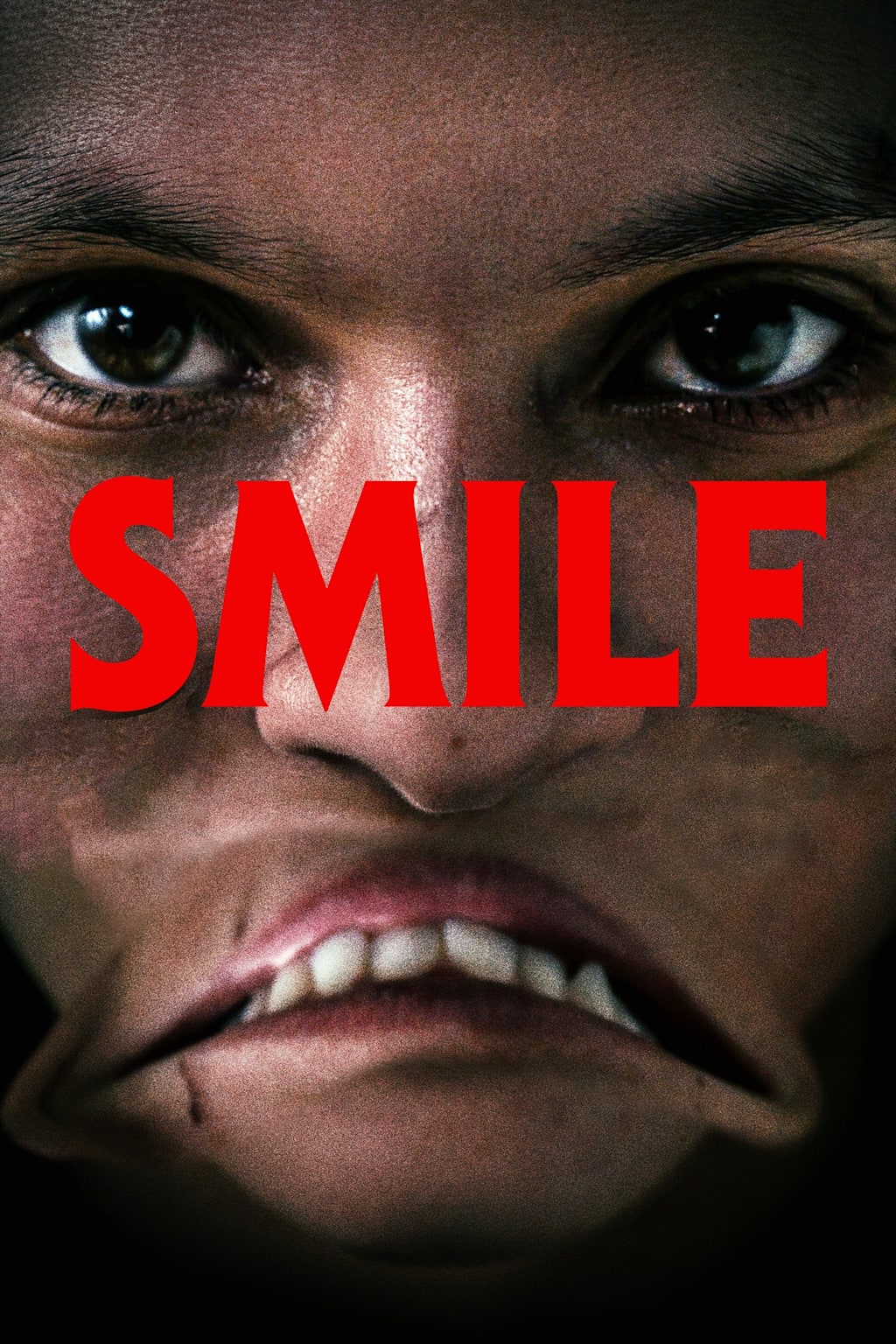
Spoilers ahead for "Smile" (2022); I won't go through the whole thing beat-by-beat, but I will give enough detail to warrant a spoiler warning.
My buddies and I bond over horror media. Spooky season is a sacred time for us. And we're not snobs about what movies we put on the calendar for every night of October. We love a good bad movie. We can usually find something good to say about a movie even if we all disliked it. Maybe we'll just sus out what a film was going for while looking at how it failed. We don't usually get heated.
I've never seen us so unanimously angry at a film as we were at the end of "Smile."
Starting with some pros: The visual direction and sound design are pretty good and have a discernible, consistent voice. The tension mostly works, even if the pacing is a little "meh." The spooky stuff looks great, in my opinion. Your mileage may vary regarding whether a given scare is effective or goofy, but the execution is more than competent.
Where did "Smile" go wrong? Underneath all that it does well, the script does not feel like a final draft. It's not a first draft -- the plot is solid, if plodding. But most of the characters don't feel like people. They don't relate to each other in a way that feels real. The details of who they are and what their life is like are sparse, but then they'll exposition-dump all of the story-relevant information in conversation. I feel like I could take a red pen to it and circle everything that could be worked in visually or as subtext in subsequent drafts.
My friends and I find it baffling that a movie so clunky is such a hit to the point of becoming a franchise. Do the viewers really not pick up on this stuff? Do they not care? Is it not distracting? Is the director satisfied with it? (Spoiler: Yes, from what I can tell, he is.)
The Players
The protagonist, Rose, is a psychiatrist who has been working too much. Her fiancé, Trevor, is... Rose's fiancé. He has a job, and I think he wears a suit to his job, but we don't get to find out what line of work he's in. There's also a cop, Joel, to whom Rose goes for help when crap starts to hit the fan. Joel and Rose used to be a couple. When? How long ago? How serious was it? What happened between them? Beyond a small speech near the end where Rose blurts out why she couldn't handle emotional intimacy between them, we don't get to know that either. Rose has an icy and unhelpful therapist, Madeline. I'll also loop back around to Rose's boss and Rose's sister, who as minor characters somehow feel the most like real, living humans.
Rose is immediately introduced to us as a psychiatrist working in a hospital setting. I feel like that gives the audience some information about what kind of person Rose might be: intelligent, competent, hard-working (to a fault), rational (when she's had enough sleep). Her early interactions with her boss support that. Her boss even states, out loud, the first time we meet him, that he trusts Rose's judgment. The inciting incident comes when an emergency patient ends their life right in front of Rose, and in doing so passes some kind of curse onto her.
That's a pretty traumatic incident, right? Take a moment to think about how people in your life might react after you've experienced something awful. Think about your significant other; your siblings; your therapist; your boss.
Trevor
Trevor seems promising in his first scene. He can tell that something is bothering Rose. He asks what's wrong, he comforts her, and he asks what he can do. I love that, and it's too bad he doesn't keep it up. There are definitely some factors working against him: Rose goes from zero-to-"crazy" extremely quickly, and she does (or seems to do) some deeply disturbing things before the two of them even get a chance to properly converse. It would be strange if Trevor wasn't stressed out by what he's witnessed by the time Rose decides to confide in him. I can even forgive him for the brief attempt to dodge the conversation.
Rose tells him something is wrong and it may be difficult to believe. She's seeing something that nobody else can see, and it's going to kill her. What is Trevor's response? He tells her she's crazy like her mother, that he "looked it up" and found out mental illness is genetic. Rose, understandably, asks him why the hell he would look that up. "I wanted to know what I'm possibly hitching my entire life to." Excuse me? That's some early-20s-boyfriend behavior coming from a man sharing a home and a cat with an intelligent professional who he plans to marry.
Trevor further betrays Rose's trust by inviting her therapist to their home for an Intervention-style ambush. I can see why he might think that's a good idea, but it's an unprofessional move from a therapist who previously responded to Rose reaching out for help with, "Are you sure this isn't about your mother's suicide?" and "I think we should resume our regular sessions." Speaking of telling rather than showing, Rose takes this opportunity to vent explicitly about how Trevor doesn't listen to her or support her. As if reading the viewer's mind, Trevor responds by asking, "Why are we even together?" Rose says she doesn't know. If I remember correctly, this is the last we see of Trevor. His role in the story has ended.
Joel
I don't have a lot to say about Joel, mainly because there isn't much to be said about him. Joel is a plot vehicle. He has an apartment where Rose can crash, access to police records, access to the prison housing the only survivor of the curse, and enough fondness in his heart for Rose to be sympathetic to her plight. He's mainly a warm body for Rose to exposit to. You can feel that there's a subplot packed into him that should have been explored in another draft. They make sure the audience knows they dated, and toward the end Rose shoehorns in a confession about why she shied away from the relationship. There should be more there, but in the final product, it falls short.
Another symptom of Joel's plot convenience is that he's a smart dude, he's a police detective, but he doesn't think any harder than the story needs him to. He doesn't give much pushback when Rose asks for police records (available on his personal laptop at home) or to go speak to the survivor in prison (without a warrant). Couldn't he get in trouble for that stuff? But his convenient lapses in cognition also allow Rose to simply lie to him, saying the survivor didn't give her any information, in order to keep him out of the loop as she considers the possibility of committing murder to rid herself of the curse. Once that plan changes to Rose accepting her death on her own terms, far away from any witnesses, Joel immediately knows where to find her: Her childhood home that's out in the middle of nowhere. Joel arrives just in time to witness her death and receive the curse. If he'd been paying attention to the movie, he might remember that all he has to do is close his eyes or leave the house once it becomes clear that this is the end. But if he'd remembered that, we wouldn't have "Smile 2."
The Real Ones
There are a couple of exceptions that I feel prove the script could have gotten where it was headed if it had been workshopped a bit more. Rose's boss, Dr. Desai, is easily the character who best understands the assignment. From the first, he is concerned that Rose has been working too hard but still trusts her judgment and respects her decisions. When Rose's hallucinations cause her to have a docile patient forcibly restrained, her boss makes the decision to have Rose take mandatory vacation time. Even that difficult conversation is handled with genuine concern. She screwed up, but he doesn't throw her wellbeing aside in a rush to discipline her.
Later, Rose finds herself sitting in the hospital parking lot, contemplating committing violence to end the curse. Dr. Desai approaches her car, assesses the situation, and suggests she come inside to talk. "You shouldn't be alone right now." Unfortunately, that line brings Rose to the realization that the solution to her problem is, in fact, to be alone. She drives off without explaining herself, but not before her boss notices the knife in the passenger seat. He then makes the most correct decision in the entire film, and calls the police off-screen. He's the most grounded character here: a man of compassion, a man of action, and a man who doesn't just exist to spoon-feed the audience.
I also want to shout out Rose's sister, Holly. When we first meet Holly, the film is asking us to view her through Rose's eyes. Rose is mentally checked out as her sister prattles on about unimportant things. Holly's priority is to make sure Rose will be there for her son's birthday party, or at least buys him a gift. In case we didn't pick up on it, Rose will later tell Holly exactly how she sees her: "some fucking stay-at-home PTA housewife who lives in her own self-centered, smug little bubble."
That particular outburst comes at a point in the movie after Rose has had a spectacular meltdown in front of the attendees of her nephew's party, apparently having gifted the kid the corpse of her cat. As Rose is running low on allies, she goes to her sister's house to try and explain about the curse. Holly's husband is absolutely ready to turn Rose away, but Holly chooses to speak with her. Actress, Gillian Zinser, does an excellent job communicating to the audience who Holly is underneath the "PTA housewife" exterior.
This does, unfortunately, happen through another info-dump, but it works. When Rose screams at her, Holly doesn't scream back. She explains why she felt she needed to leave home and move on with her life. She apologizes for leaving Rose to deal with the tail end of their mother's illness. She tries to get Rose to see what she sees: her little sister refusing to let go of the past and showing symptoms like their mother had. And then when Rose refuses to hear her, she chooses to end the conversation to protect her peace. It's one of the most grounded moments of the film, and it sets up one of the most memorable jump scares.
And it leaves me thinking, man, wouldn't it have been cool to develop that relationship and weave it into the narrative a bit more?
Loose Ends?
With the overarching character issues out of the way, I have a few other nitpicks I need to unload.
I'm very good at suspending my disbelief, and will stay engaged with a weaker piece of media longer than some of my friends. So, when something breaks the immersion for me, it's jarring enough to stick with me. One of the scariest scenes (prior to the finale) comes when the therapist, Madeline, makes an unannounced house call to make sure Rose isn't a danger to herself or others. The two of them start to talk, but then the phone rings. It's Madeline, who has been trying to get in contact with her all morning. The "Madeline" in the room with Rose dons the titular smile and advances, stepping over furniture, locking eyes with Rose. The monster gets in her face, and Rose screams, "What the fuck ARE you?" The monster roars.
And we cut to Rose walking through the hospital like nothing happened.
That subsequent hospital scene turns out to be a dream, and leads into Rose waking up in the parking lot for that scene with her boss. But, wait a minute, what are we supposed to make of that scene with the monster? Are we supposed to assume that was a dream, too, based solely on the fact that the next scene is a dream? That doesn't sit right. The monster scene was in line with all of the other hallucinations/confrontations Rose has experienced while awake. If it was real experience, how did Rose get out of that situation? Did the monster just let her go? If it was a dream, why isn't it made explicitly clear to the audience like every other dream in the movie? These questions really knock the air out of one of the most intense moments of the film. It makes me so mad.
My final gripe is actually more on me than on the movie, but I'd still like to blame the movie for setting this up: The final witness should have been the nephew, not Joel. I get it, the director had an endpoint in mind, and he drove the story to that point. It's definitely not weird or wrong that it's Joel at the end (even though he should have thought to close his eyes.) But the nephew...
Jackson, the nephew, is an innocent kid. He's been raised by Holly, who has intentionally distanced herself from her childhood and family trauma. That trauma comes barreling back into their lives when Jackson opens a present containing a dead cat and sees his aunt freak out. Holly tells Rose that she has traumatized her son, and that's reinforced for the audience when Jackson watches from a window while Rose freaks out in her car. It's so close, I can taste it. If Rose's death had come right there, in that moment, Jackson would have been the next victim. It's supernaturally genetic. It makes so much thematic sense.
I am glad that director, Parker Finn, got the opportunity to expand on "Laura Hasn't Slept," the short film that preceded "Smile." I am legitimately happy that he made a movie he's proud of and that it was so well received. It's really cool that this world has become a franchise in which Finn and others can continue to play and write stories.
But, god damn, "Smile" pisses me off.
About the Creator
Rebekah Conard
34, She/Her, a big bi nerd
Rebekah Conard is a writer of short stories, flash fiction, and occasionally, poetry. Her preferred genre is horror, though sometimes she can’t help but write something cozy and real. She has a cat named Lily. <3
Enjoyed the story? Support the Creator.
Subscribe for free to receive all their stories in your feed. You could also become a paid subscriber, letting them know you appreciate their work.
Comments
There are no comments for this story
Be the first to respond and start the conversation.