
Neon Genesis Evangelion: A Masterpiece We May Have Overrated
When Being Complicated Isn't the Same as Being Deep

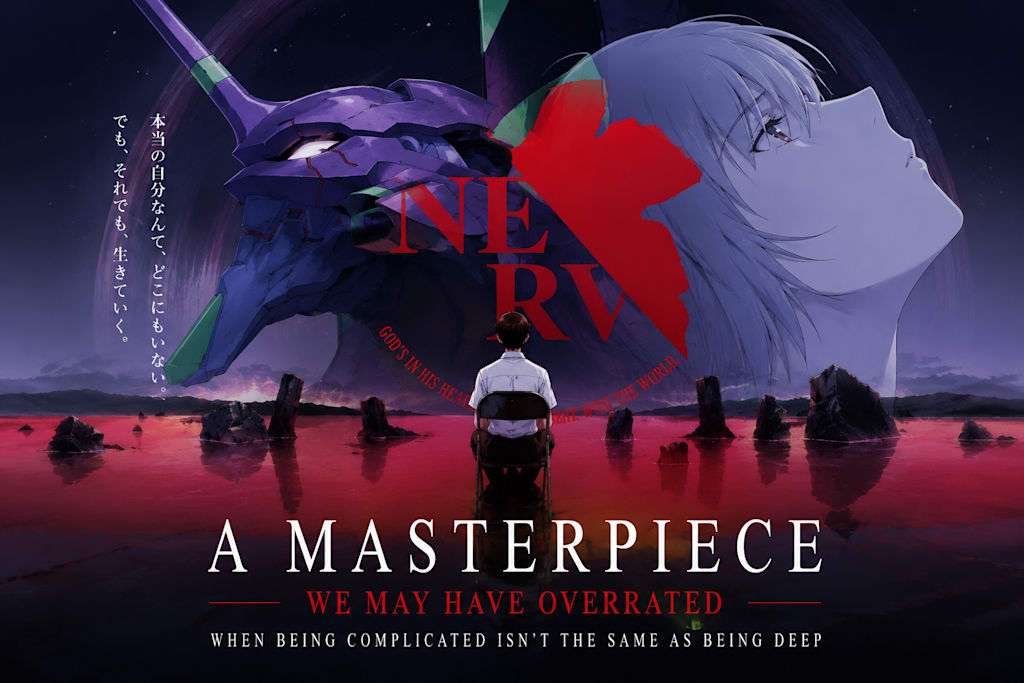
There are certain works of art that become bigger than the work itself.
People stop simply watching them, reading them, or listening to them. Instead, they begin studying them. They create theories, explain symbols, argue about hidden meanings, and build entire communities around the question of what the creator really meant.
Neon Genesis Evangelion is one of those works.
First released in 1995, Hideaki Anno's anime series became one of the most influential works in Japanese animation. It changed the way many people thought about anime, especially outside Japan. Its troubled characters, strange imagery, psychological themes, religious symbolism, and willingness to abandon conventional storytelling made it feel unlike almost anything else on television.
I understand why people love it.
I also wonder if we have gone too far.
Is Evangelion really as brilliant as its reputation suggests?
Or have we gradually confused being complicated with being profound?
Confusion Is Not Automatically Depth

One of Evangelion's greatest strengths is also one of its biggest weaknesses: it refuses to explain itself.
Angels appear. Giant biomechanical creatures fight them. Characters talk about mysterious organizations and complicated plans. Religious symbols appear everywhere. Characters experience psychological breakdowns. The story becomes increasingly abstract.
And then, rather than neatly explaining everything, the series essentially asks the audience to figure it out.
For some viewers, this is fascinating.
For others, it can feel like being handed a puzzle with several missing pieces and then being congratulated for noticing that the puzzle is difficult.
There is nothing wrong with ambiguity. Some of the greatest stories in history leave questions unanswered.
But ambiguity is not automatically profundity.
A story can be mysterious because it has something meaningful to hide. It can also be mysterious because the storytelling itself is incomplete.
With Evangelion, those two things sometimes become difficult to separate.
The Symbolism Can Feel More Important Than the Story
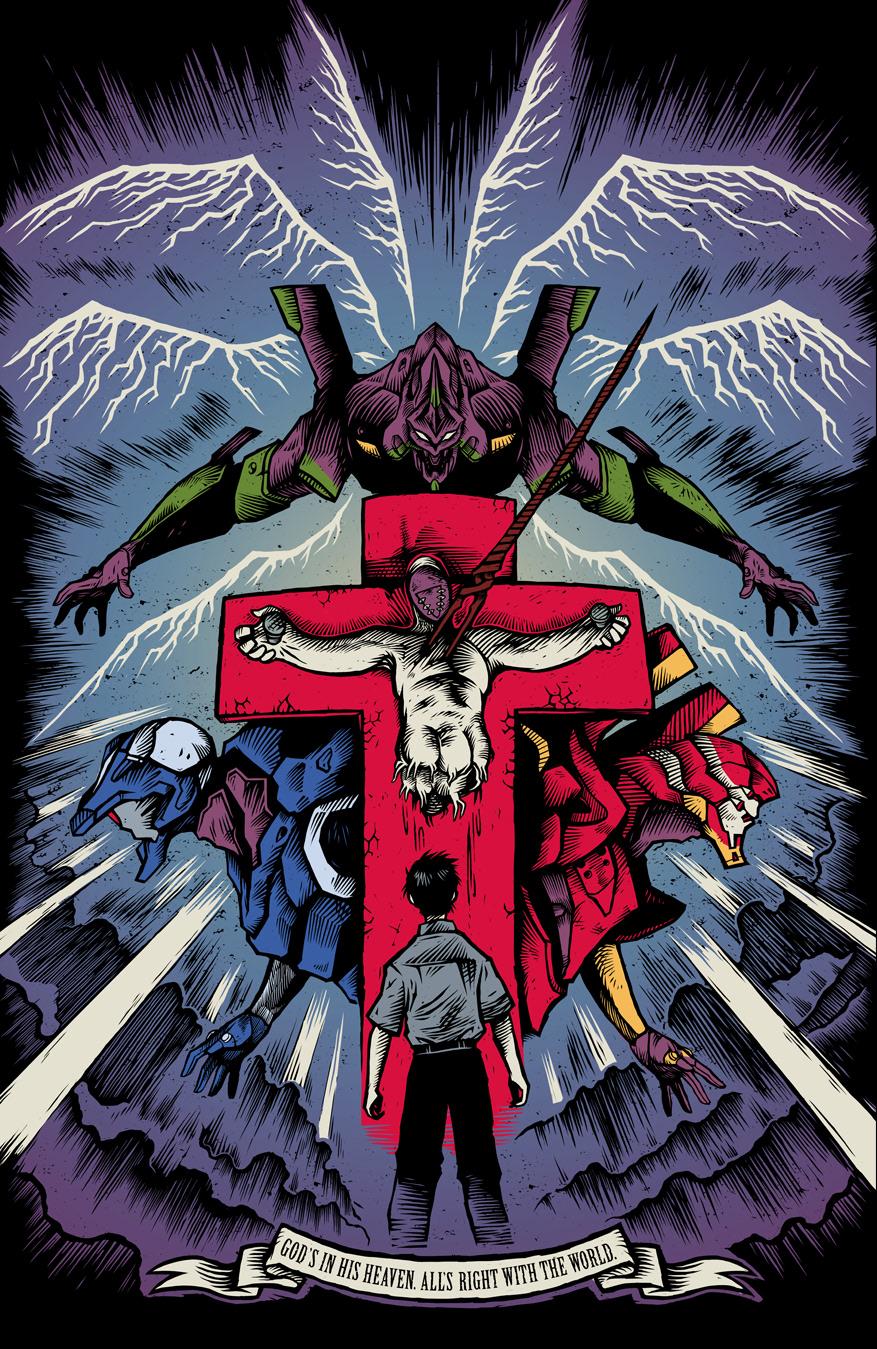
The religious imagery in Evangelion is iconic.
Crosses. Angels. Biblical references. Kabbalistic imagery. Names borrowed from Christianity and Judaism.
The imagery is memorable, and it certainly helped give the series an unusual visual identity.
But there is an amusing problem.
Many Western viewers have spent years analyzing what these symbols mean, while Anno himself has explained that some of the Christian imagery was chosen largely because it looked interesting and unfamiliar in Japan.
That creates an interesting contradiction.
Sometimes the audience is searching for a secret philosophical message that may not actually exist.
It is almost like finding a mysterious symbol on the wall of a restaurant and spending twenty years trying to determine its religious significance, only to discover that the owner thought it looked cool.
That does not make the imagery bad.
It simply means we should be careful about giving every cross, angel, and biblical reference enormous intellectual weight.
Shinji Is Brilliantly Realistic—and Frustratingly Static
Shinji Ikari is one of anime's most famous protagonists.
He is insecure, lonely, afraid of rejection, desperate for approval, and deeply uncomfortable with the expectations placed upon him.
In other words, he behaves like a human being.
That was revolutionary in an era when many young male anime protagonists were confident heroes who ran toward danger without hesitation.
Shinji runs away.
He cries.
He hesitates.
He wants people to love him while simultaneously being terrified of getting close to them.
This is one of the reasons the character remains so memorable.
But there is another side to this.
After spending so much time with Shinji, some viewers may reasonably ask:
How much has he actually changed?
The answer depends on how you interpret the story.
His emotional journey is certainly significant. But his development is not the kind of traditional character growth many audiences expect. Instead of steadily becoming stronger, Shinji repeatedly collapses, retreats, and confronts the same emotional problems.
This may be intentional.
In fact, it probably is.
But intentional frustration is still frustration.
A character can realistically refuse to change. That does not necessarily make watching that refusal satisfying.
The Story Sometimes Feels Like It Is Arguing With the Audience
Perhaps the most controversial part of Evangelion is its ending.
Rather than delivering the kind of dramatic conclusion many viewers expected, the final episodes turn inward.
The giant robots and battles become secondary.
The story enters the minds of its characters.
Identity, loneliness, self-worth, and human connection become the real battlefield.
Conceptually, this is fascinating.
Emotionally, however, it can feel like the series suddenly changes the rules of the game.
Imagine spending hours watching a mystery novel develop, only for the final chapters to announce:
"The real mystery was your relationship with yourself."
That can be profound.
It can also make you want to throw the book across the room.
The later Evangelion films attempted to provide another kind of resolution, but even those works continued to divide audiences.
And perhaps that is part of the point.
Evangelion does not always want to give you what you want.
But refusing to satisfy an audience should not automatically be treated as artistic superiority.
Sometimes an ending is challenging because it is brilliant.
Sometimes it is challenging because the creator simply refused to give you a conventional ending.
The difference matters.
Perhaps Evangelion Became More Important Than Evangelion Itself

This is where my criticism becomes less about the anime and more about its legacy.
Neon Genesis Evangelion influenced countless creators. Its visual language, characters, music, psychological themes, and approach to storytelling left a massive mark on anime and popular culture.
That achievement is undeniable.
But somewhere along the way, Evangelion became more than an anime.
It became a cultural test.
If you understand it, you are supposed to understand something deeper about loneliness, depression, identity, relationships, religion, adolescence, and the human condition.
And if you don't understand it?
Maybe you simply haven't watched it carefully enough.
That attitude can make criticism almost impossible.
A masterpiece should be allowed to be questioned.
In fact, truly great art should survive criticism.
If the only acceptable opinion is that Evangelion is a masterpiece, then we are no longer discussing the work. We are protecting its reputation.
So, Is Evangelion Overrated?
Yes.
And no.
Neon Genesis Evangelion deserves enormous credit for taking risks that mainstream television animation rarely took at the time. Its characters feel unusually vulnerable. Its atmosphere remains distinctive. Its influence is enormous.
But influence and perfection are not the same thing.
Being difficult to understand does not automatically make a story deep.
Being symbolic does not automatically make it philosophical.
Being psychologically uncomfortable does not automatically make it profound.
And being considered a masterpiece for thirty years does not mean every part of the work deserves unquestioned admiration.
Maybe the most interesting way to look at Evangelion is not as a perfect masterpiece, but as a deeply imperfect work that dared to be strange, uncomfortable, ambitious, and occasionally frustrating.
That might actually be more interesting.
Because perhaps Evangelion does not need to be perfect to be important.
It just needs to make us keep arguing about it.
And, almost thirty years later, we clearly haven't stopped.
About the Creator
Takashi Nagaya
I want everyone to know about Japanese culture, history, food, anime, manga, etc.
Enjoyed the story? Support the Creator.
Subscribe for free to receive all their stories in your feed.
Comments
There are no comments for this story
Be the first to respond and start the conversation.