
Doctor Who’s Uncertain Future Was Inevitable
We didn’t need a Time Machine to see this coming…

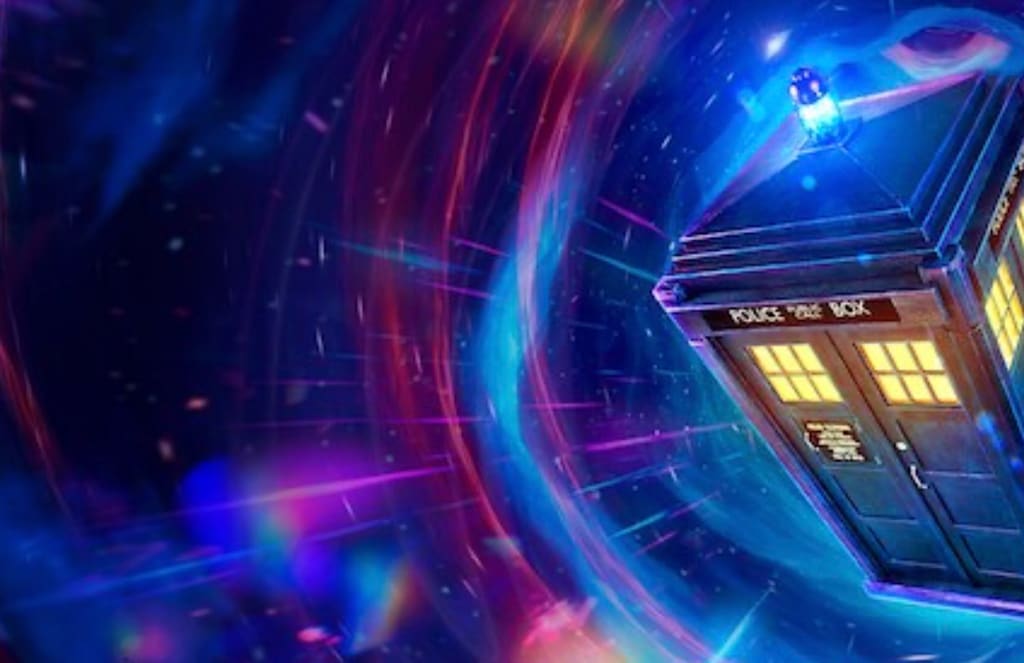
In a single announcement, the BBC cancelled the promised Christmas special, confirmed Russell T Davies’s departure, ended its partnership with Bad Wolf Productions and placed Doctor Who’s future into the hands of a competitive tender process.
For many fans, it felt like the end of an era. For me, it felt inevitable.
The cancellation of the planned Christmas special is not the real story. The real story is that the BBC has brought the entire Russell T Davies revival era to an end. Davies is gone. Bad Wolf Productions is gone. The Disney partnership is over. The show is now being put out to competitive tender as the BBC searches for a new direction for one of its most iconic franchises.
This is not a pause. It is a regeneration, pun fully intended.
Unfortunately, it is also the inevitable conclusion to an era that never seemed entirely sure of what it wanted to be.
Russell T Davies’s second tenure in the TARDIS has been poorly received by many fans, and I’ve written previously about why I believe this revival missed the mark. Aside from a handful of standout episodes, this two-season arc relied heavily on weak mysteries and even weaker plot twists. Viewers were constantly promised that answers were just around the corner, yet meaningful payoffs rarely arrived. Plot threads were introduced with great fanfare only to be abandoned or resolved in underwhelming fashion.
Then came the warning signs.
Ncuti Gatwa departed the role, reportedly leading to substantial changes to his final episode. Disney’s involvement ended after just two seasons. Rather than providing a satisfying conclusion, Davies once again turned to nostalgia, ending the era with a surprise appearance from Billie Piper that generated headlines but raised more questions than answers.
For me, however, the biggest issue was the lack of a coherent story.
Looking back at the eras of Steven Moffat and Chris Chibnall, both had their flaws. Moffat could become overly convoluted and Chibnall’s writing was often criticised for its exposition-heavy style. Yet both showrunners understood the importance of character development and long-term storytelling. Their Doctors evolved. Their companions changed. Their eras felt like journeys with a destination.
What makes this disappointment particularly frustrating is that Russell T Davies already demonstrated he could do this better. The Bad Wolf arc, and the gradual return of the Master all rewarded viewers for paying attention. The mysteries mattered because the answers mattered. That is why his first era remains beloved by so many fans.
His second tenure often felt like storytelling had been replaced by audience manipulation.
Mysteries were no longer a tool to serve the narrative; they became the narrative. Every episode seemed determined to present viewers with another impossible question, another shocking reveal, another cliffhanger designed to dominate online discussion. Yet when the answers finally arrived, they rarely justified the attention they had demanded.
Ruby Sunday’s origins, Mrs Flood’s constant appearances, recurring hints about the Doctor’s granddaughter, and the Billie Piper reveal all followed a similar pattern. The setup was enormous. The payoff was either underwhelming, rushed, or, in some cases, non-existent.
At its worst, the era gave the impression that Davies had become more interested in generating speculation than delivering satisfying stories. The audience was repeatedly encouraged to invest in mysteries that often felt as though they existed simply because the show needed another mystery.
Good twists reframe what has come before. Good mysteries reward the audience for paying attention. The audience should feel clever for spotting the clues, not frustrated that the clues never mattered.
Too often, Davies’s second era seemed content to ask questions without knowing whether the answers would ever be worth hearing.
What truly astonished me was Davies’s own farewell statement on Instagram:
And so GOODBYE from me to Doctor Who but HELLO to a big new future for the show, as the BBC announces it’s putting the show out to tender. As a result, there won’t be a Christmas Special - we only cooked that up to guarantee a future when no one knew what would happen, but now we do know, there’s no need for it. You’ll have to wait a bit longer for new Doctor Who… but you’ll be waiting for MORE Doctor Who than a one-off. So it’s worth it! For the record: there was no script, I never wrote it, and no actor was ever approached to play the next Doctor. You may disagree; fine, sit in that chair and wait to be proved right. You’ll wait a lonnng time 🪑 Now I’m as excited as anyone to see what comes next! Will they keep the theme tune? Will they lose the blue box? Will they bring back the Drahvin?! It’s all up for grabs, which is so Doctor Who, exciting and unpredictable and new! Here comes the future, vworp vworp ⏳ @bbcdoctorwho ❤️
According to the departing showrunner, the promised Christmas special never had a completed script.
Let me repeat that. The Christmas special that had been announced to fans had not even been written.
Perhaps there were ideas. Perhaps there were outlines. But there was no finished story waiting in the wings. For a writer whose era depended so heavily on anticipation and cliffhangers, that admission feels very telling about the thought put into this series.
Looking back, it is difficult not to see an infuriating pattern. The era ended with a dramatic Billie Piper reveal that appeared designed to launch the next chapter of the story. Fans were encouraged to speculate. Questions were asked. Theories were formed. Yet we now know there was no script waiting to answer those questions.
That, more than anything else, encapsulates my frustration with this era of Doctor Who.
The problem was never politics. Doctor Who has always been political. The problem was never diversity. Doctor Who has always reinvented itself for new audiences. The problem was storytelling.
For all the spectacle, mystery boxes and social media discussion, there never seemed to be a clear narrative spine holding everything together. The show constantly promised that the next revelation would make everything worthwhile. Too often, it didn’t.
Ironically, my enthusiasm for Doctor Who has been kept alive not by the television series, but by Big Finish Productions. Since 2018, I have found more consistent storytelling through its Doctor Who, Torchwood and Class ranges than I have on television. Former actors continue to reprise their roles, narrative gaps are explored with care, and the writers demonstrate a genuine respect for the continuity and spirit of the franchise.
With Christopher Eccleston and Jodie Whittaker both continuing to expand their incarnations of the Doctor through audio adventures, Big Finish remains a thriving home for the series. The company has also embraced a new generation of performers capable of carrying the torch, with Miles Taylor now voicing the Eleventh Doctor and Jon Culshaw taking on the role of the Twelfth Doctor. Rather than feeling like imitations, these performances allow new stories to be told while preserving the characterisation and tone that made those incarnations so beloved.
At a time when the future of the television series appears uncertain, Big Finish increasingly feels like the place where Doctor Who’s strongest storytelling continues to thrive.
Perhaps Doctor Who will return to television sooner rather than later. History suggests it eventually will.
But if and when it does, it needs more than a new production company or a new Doctor. It needs a showrunner with a story worth telling.
About the Creator
Ted Ryan
Screenwriter, director, reviewer & author.
Ted Ryan: Storyteller Chronicles | T.J. Ryan: NA romance
Socials: @authortedryan | @tjryanwrites | @tjryanreviews
Enjoyed the story? Support the Creator.
Subscribe for free to receive all their stories in your feed. You could also become a paid subscriber, letting them know you appreciate their work.
Comments
There are no comments for this story
Be the first to respond and start the conversation.