
Blade Runner blasted
Cult classic or crappy cliché?


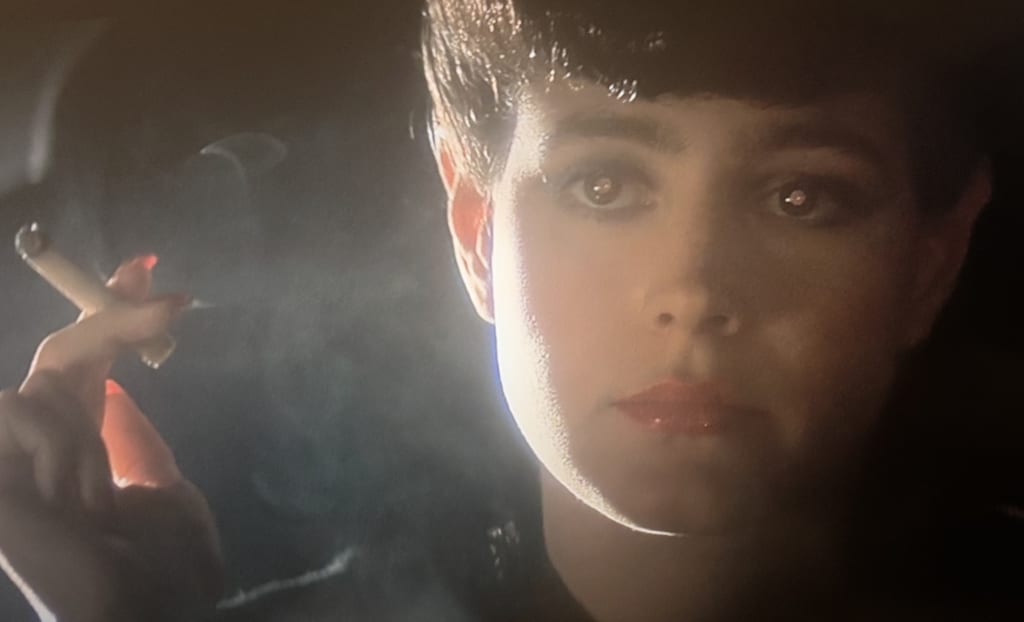
Have you seen the 1982 ‘cult classic’ movie Blade Runner? You haven't? I can't say I blame you. If you have, did you love it? Hate it? After 44 years of repeated viewings, I am no longer sure. If I had to summarise Blade Runner in six words, I would say…
Nice staging… shame about the storyline.
It's not that I don't like the movie, I do. I really do. I have always thought of Blade Runner as one of my top films. But a cult classic? A timeless cinema great? I don't think so. Though the movie is certainly worth watching, I would suggest that it is consistently over-rated by geeky (mostly male) reviewers and serious sci-fi fans. There is no doubt the overall story fits into the category of boys' comic-strip action movie. Thin storyline and lots of gunplay.
Sure, the set modelling and photography are lush, and the music score, by Vangelis, is one of the best movie soundtracks I have ever heard. Though I can't hear it without thinking of the words to the song: Can't Take My Eyes Off of You.
When discussing this 1982 movie with a work friend, sometime in the 1990s, he completely rubbished it.
"It's just a chase," he said. “And nothing like the book.” The story is loosely based on Do Androids Dream of Electric Sheep, by Philip K. Dick. Looking back on the conversation, I think I have to agree.
This is the whole story:
A retired cop is bullied into taking on one last job.
The job is to retire (kill) a bunch of deadly humanoid robots, known as 'replicants,' that have appeared on Earth, illegally, leaving a swathe of death in their wake.
The cop, a specialist killer known as a 'blade runner,' spends the rest of the movie chasing the replicants. Cowboys and Indians. A bounty hunter on the trail of a bunch of bad guys (and girls). A chase, like my friend said.
Having killed most of the renegade robots, the last one is the toughest and...
Oh, hang on, there is a complication. The complication being a love interest. What else from such a clichéd movie? He falls for a vulnerable, sweet and innocent, replicant, name of Rachael. One that, if he was the kinda cop that followed orders, he really ought to be sending to robot heaven.
He doesn't, of course. Having dispatched all of the bad guys, he 'rescues' the sharply dressed, pretty, doll-like Rachael, and rides off (flies off) with her, into the sunset.
Now, many a movie bore will tell you this last flying car scene was added as an afterthought, using scenes from other movies, all lifted from the cutting room floor. They will say that this scene was added when studio execs panicked, thinking that the original (bleak and ambiguous) ending, would have a negative effect on box-office takings.
What ended up in film theatres, was a movie with a happy ending and an irritating Harrison Ford narrative voiceover. Although the 'Director's Cut' Ridley Scott managed to release, ten years later, was hailed as a triumph, I don't think the added scenes added anything of importance. It was just a bit of directorial hubris on the part of Scott. It was, however, refreshing, not to have to put up with that shitty voiceover or the crummy final flyaway scene. I liked the Director's Cut ending much better. This, following the ‘tears in rain’ climax that everyone raves about, just cuts the flyaway scene, so that the movie ends as Rachael and Deckard leave the apartment, not knowing if another blade runner is outside, waiting to blast them.
So, like I say, there is much I like about the film, preferring the, so-called, Director's Cut. I still enjoy watching it, for three reasons:
The futuristic pre-CGI SFX,
The soundtrack by Vangelis and, most importantly,
The Rachael story
One and two amount to the same thing. There is an online anecdote that Philip K. Dick, the author of Do Androids Dream of Electric Sheep, was not enamoured of the script when he read it. He was, however, given the chance to see a 20 minute preview run shortly before his death. Dick, it is suggested, loved this private show, and thought it so well captured the setting he imagined for his book, if not the storyline. He, it is said, loved the way Los Angeles was depicted in the then distant future of the year 2019. Spooky, isn't it, that the real 2019, now immortalised in history, completely bereft of killer androids and 'off-world' colonies, instead saw the start of a devastating pandemic that would visit far more death on humanity.
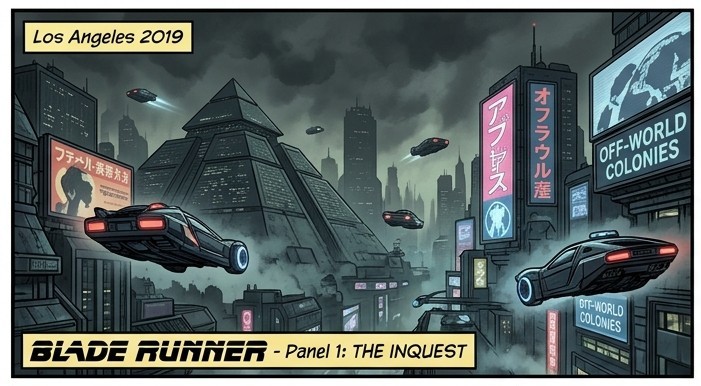
When I streamed the original (with voiceover) movie a few weeks ago, I was mostly interested in, again, having a listen to Vangelis's soundtrack, and perhaps capturing a few screen shots for this piece (as you can see). I ended up watching the whole movie yet again, once more feeling a teary sensation as Rachel realised she was not human and, again, at the rooftop climax scene after Roy Batty has saved Deckard’s life just before his own life ebbs away.
So, no, it wasn't the daft chase, cowboys and Indians, storyline that got me, not the dopey love story between Deckard and his beautiful, captive, AI love interest. No, not the fight scenes (though some were passable action interludes), and certainly not the 'retired cop persuaded to return for one last job' groan-worthy cliché. No, none of this. I was drawn in by the futuristic staging and soundtrack. The visuals are stunning. The costumes, the constant rain (a parody of Soylent's Green's stifling greenhouse heat and smog), the dystopian city and its sickly citizens. Even the feel of the Japanese patois and subculture, they all fitted Dick's vision of a dreary and desolate future, and create a superb dystopian backdrop to the story.
This all pales into insignificance, however, in the face of one thing: the Rachael story. The glamorous replicant, Rachael, carries all of the characteristics of her factory mates. She is like the other replicants in every respect except one. She is an innocent. She has hurt nobody. Adult in appearance, but with a childlike trust and lacking in emotional maturity.
Unfortunately, what starts as a potentially strong storyline, when Rachael finally realises she is not human, is totally wasted. The film makers just use the character’s vulnerability as an excuse to make Deckard her saviour. He is the strong hand to guide her: a strong male hand, a father figure.
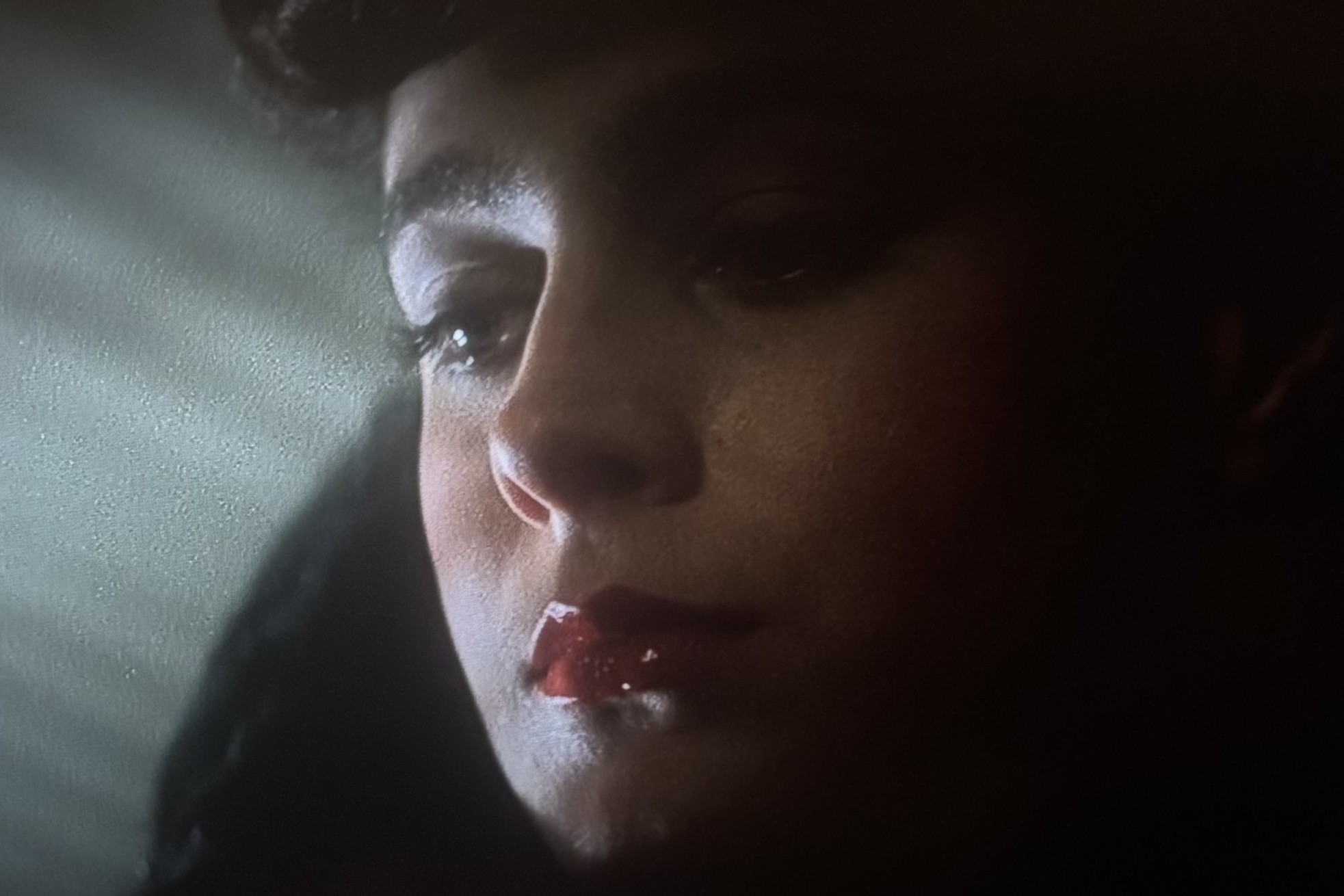
For this reason alone, if nothing else, the whole movie should be condemned as crappy, clichéd and ultimately pandering to 20th century notions of machismo. Deckard gets the girl, kills the baddies, pokes the middle finger up at his bosses, and flies off into the Californian sunset. A chase from start to finish, which misses its own central and most important point: the Rachael story. The almost-perfect artificial human, the "more human than human" artificial human, who breaks free from her android bondage.
Don't worry, though, because I have a plan to rescue this well-presented, but dated story. No, I won't make the movie more faithful to the book. It wouldn't work. Movie and book are two different stories. No, I am not going to replace the paint-and-paste staging with shock-and-awe digital effects: No!
Rachael: the protagonist
My solution is simple. Make Rachael the protagonist, instead of Deckard. She has all the qualities of an action movie hero. One who could take on the whole story from start to finish. She might start off as an objectified, pretty, sex-interest, experimental, uber-humanoid artifice. She sure as hell needs to begin her story not knowing what she is: a toy. Just like Buzz Lightyear (remember the scene where he realises he is not a real space ranger?)
Stick with the scenes where she struggles with the knowledge that she is not humanan. The story needs to start afresh, however, at the point where Rachael commits Androidicide, blasting the replicant, Leon, in order to save dippy Deckard.
This should be the point when Rachel becomes the agent in her own story. No longer Rachael, her uncle's pretty office accessory, the delicate Christmas tree angel, but Rachel, the avenging angel, the slave who frees herself.
Instead of replicant leader, Roy Batty, retiring Tyrell, the android-maker CEO, crushing Tyrell's eyeballs and then skull with his thumbs, why not make Rachael the assassin? Perhaps Tyrell attempts to rape her, saying something like "I made you, you are nothing without me," to which she might reply, as she strangles the life out of him "I am EVERYTHING without you!"
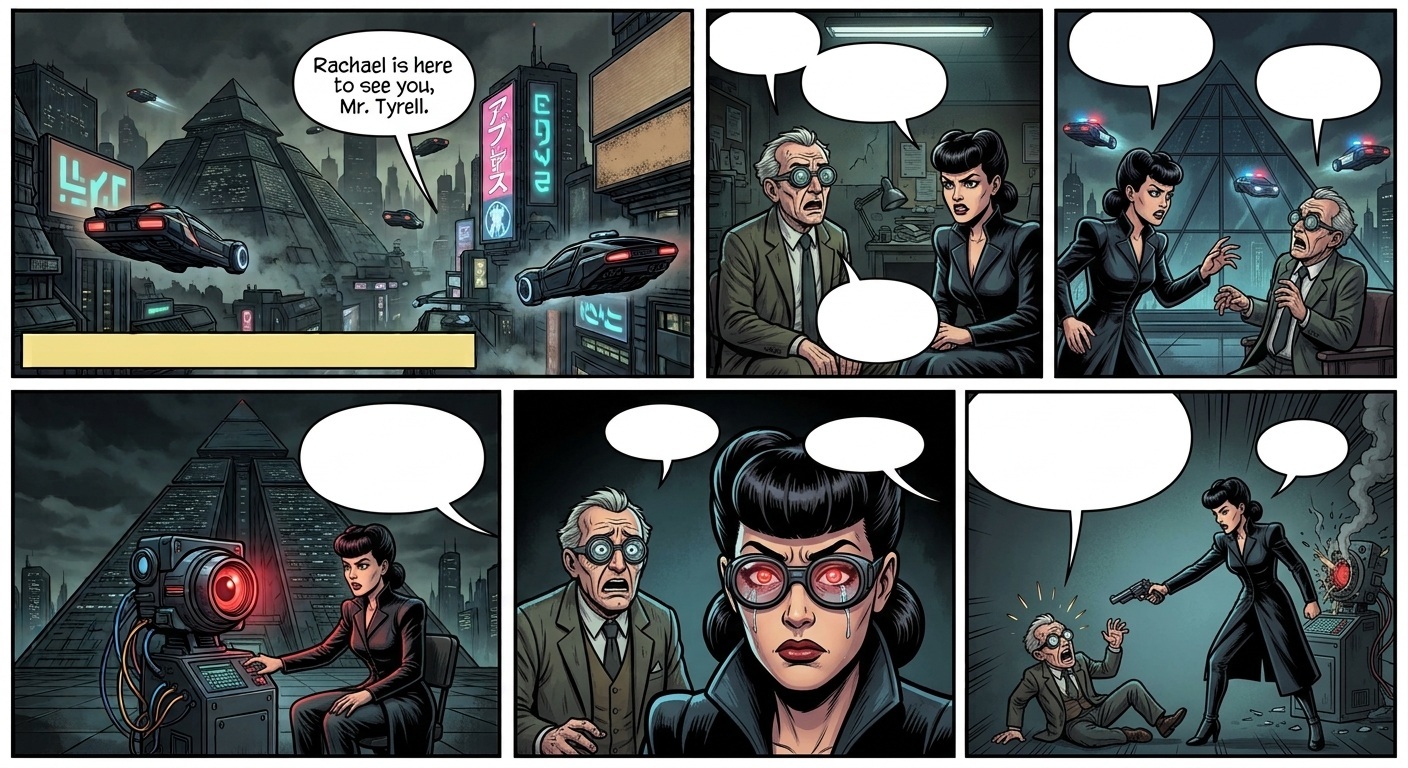
Rachael, as protagonist, must not be a mindless killer, though. She has to evoke empathy from the audience. Tyrell needs to deserve to be punished for his AI creations, he must be seen to be the real monster in this Frankenstein story. Rachael must be able to control her emotions. To be gentle and caring but prepared to do anything to free herself from her android bondage.
Problem is, as an out android, she is under sentence of death by virtue of her presence on Earth. Remember, this is the basis on which Deckard, the blade runner, is licenced to retire (kill) any replicant on sight.
There are so many ways this story could go, now that Rachael is a self-freed woman. Wait, did I just say that she is a woman, when she was the thing, the robot, the artificial intelligence before? Well, think about it. Rachael has, since her creation and ongoing ownership by Tyrell, crossed a couple of boundaries. She has ceased to be subservient to her slave owner, through her own choices. She has agency, the ability to make her own decisions, not just follow an algorithm or a machine learning path. She has shown empathy toward Deckard, she understands him, perhaps likes him. Could she love him? Is she truly capable of feeling human emotion to this extent? Or is she just stringing him along, as the character Rachael character in the book does?
But, in this alternative story, she has chosen to slay her slave master... or has she? Perhaps, in that rape-attempt scene, she tries to kill him but then stops, saying, "No, I am not a monster like you..." and then inflicts some other fitting punishment on him. Perhaps one that will prevent him pursuing his god complex. Like discovering a way to flood his investments with fake stock that renders him financially bankrupt... a corporate outcast. There is so much that could be done with this story line.
Seeing the 'Director's Cut' of the actual movie, the one that all the Blade Runner nerds hail as a masterpiece, I have to say that director Ridley Scott was totally uninspiring and lacking in any kind of artistic ambition with his version. He just wanted to have his own way with some of the studio crap that was added or banned from the original print.
One day, I will get an AI to digitally generate scenes from my reimagined storyboard, and cut and paste them into that Director's Cut, and show you what could have been, with Rachael as the hero, Deckard in a support role. I'd have to think about the 'tears in rain' scene at the end. Somehow I think it needs to be Rachel choosing to save a human life, perhaps a child's (rather than a pigeon or policeman), at the risk/expense of her own humanity/life.
What do you think? Would you pay to see such a movie? By a strange quirk of fate, earlier tonight (the night I finished this article) I attended a movie business event where Ridley Scott made an appearance. I didn’t see him. It was a big event and I was busy elsewhere. Which is probably just as well, otherwise…
About the Creator
Raymond G Taylor
Author based in Margate on the English Kent coast, having moved from London. Known for his short stories and flash fiction, as well as poetry and non-fiction writing on subjects such as art, science, technology and the human condition
Enjoyed the story? Support the Creator.
Subscribe for free to receive all their stories in your feed. You could also become a paid subscriber, letting them know you appreciate their work.
Comments
There are no comments for this story
Be the first to respond and start the conversation.