
WWF's Darkest Day: The Chris Benoit Tragedy That Changed Wrestling Forever
From Legendary Wrestler to Pure Evil

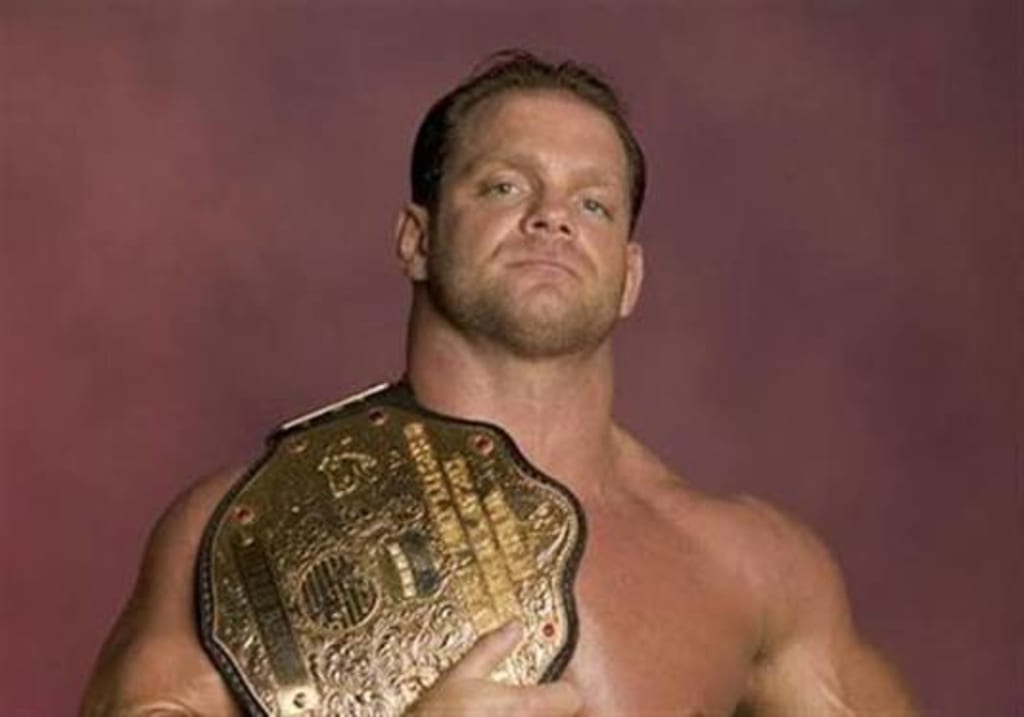
I still remember the feeling of that Monday night in June 2007. Not the match, not the promo, not the pyro. The silence.
Wrestling fans are used to noise. On June 25, 2007, Monday Night Raw opened with something wrestling almost never gives you: quiet. Vince McMahon stood in an empty arena, looked into the camera, and told us Chris Benoit, his wife Nancy, and their seven-year-old son Daniel were dead.
At first, it sounded like another wrestling tragedy. We had mourned Eddie Guerrero less than two years earlier.
But this was different. Within hours, the story stopped being a tribute and became a crime scene. Within days, it became the darkest chapter in the history of the company once known as the World Wrestling Federation — the WWF to a generation of fans, WWE by 2007 — and a wound wrestling has never fully healed from.
This is not a story about an angle gone wrong. It is about a man fans loved for his intensity, a family that trusted him, and a weekend in Georgia that ended three lives and shattered an industry's innocence.
The Man They Called The Rabid Wolverine
To understand why June 2007 hit so hard, you have to understand who Chris Benoit was to fans.
Benoit was not the biggest star, the loudest, or the flashiest. In a business built on larger-than-life characters, he built his reputation on something rarer: believability.
Born in Montreal in 1967 and raised in Edmonton, Alberta, Benoit trained in the legendary Hart Dungeon in Calgary, a basement gym famous for stretching rookies until they either quit or got tough. Benoit did not quit.
He was five-foot-ten and about 220 pounds in an era of giants, but size stopped mattering when he wrestled. His suplexes came in threes, his chops echoed, and his diving headbutt made crowds gasp every time. Fans called him The Rabid Wolverine, and it fit — he wrestled like he did not know how to pace himself.
By the early 2000s, Benoit was one of the most respected workers in the world, with runs in Japan, ECW, WCW, and finally WWE. In 2004, at WrestleMania XX in Madison Square Garden, he defeated Triple H and Shawn Michaels to win the World Heavyweight Championship. Earlier that night, his best friend Eddie Guerrero had won the WWE Championship. The two men embraced in the ring as confetti fell.
For a lot of fans, that image is still the definitive Benoit memory. It is also why what happened three years later felt impossible to reconcile.
A Family Behind The Curtain
Away from the ring, Benoit's life looked, from the outside, like a wrestler settling down.
He married Nancy Benoit in 2000. Nancy was not just a wrestling wife. Fans knew her first as Woman, a sharp-tongued manager and valet in WCW who had stood beside Ric Flair, the Four Horsemen, and later Benoit himself. She understood the business because she had lived it.
Their son Daniel was born in 2001. Benoit also had two older children, David and Megan, from a previous marriage. Friends described him as a devoted, if intense, father who trained in his home gym and worried about Daniel's development and health.
By 2007, Benoit was 40, still elite but visibly worn down by two decades of chair shots, headbutts, and bad landings. Guerrero's death from heart failure in November 2005 had devastated him, and friends said he was never quite the same. Still, nothing in June 2007 suggested a man about to destroy his family.
The Weekend No One Saw Coming
The timeline pieced together by Fayette County investigators is now painfully clear — and painfully ordinary at the start.
On Friday, June 22, 2007, Benoit was at home in Fayetteville, Georgia, a quiet suburb south of Atlanta where many wrestlers lived. That day, Nancy Benoit was killed. Investigators later determined she died from strangulation. Her body was found in the family room, with a Bible placed nearby.
On Saturday, June 23, Daniel Benoit was killed. Investigators determined he died from suffocation. His body was found in his bedroom, also with a Bible nearby. He was seven years old.
On Sunday, June 24, Benoit was supposed to be in Houston for WWE's Vengeance: Night of Champions pay-per-view. He had been scheduled to wrestle CM Punk for the vacant ECW World Championship — a match fans were genuinely excited about. Benoit never arrived.
Instead, WWE was told he had a family emergency. Behind the scenes, Benoit sent strange texts to colleagues, including Chavo Guerrero, about his address, his dogs, and an open garage door, and left tired, off-sounding voicemails.
Later that Sunday, Benoit died by suicide in his home weight room, hanging from a weight machine. Nearby, investigators found more Bibles, prescription bottles, and signs of a final hours spent in ritual and remorse — or confusion — that no one will ever fully understand.
When WWE officials and then police finally entered the house on Monday, June 25, after Benoit missed multiple check-ins and a colleague asked for a welfare check, they found all three bodies. The sheriff's department quickly ruled it a double murder-suicide.
For fans, the whiplash was brutal: Sunday we wondered why he missed a pay-per-view, Monday we mourned him, Tuesday we learned the tribute had been for a murderer.
Monday Night: From Tribute To Horror
That Monday night Raw is still one of the most uncomfortable broadcasts in television history — not because WWE did anything malicious, but because they did not yet know.
WWE had learned of the deaths but not the circumstances. Believing they had lost a beloved performer in an accident, they scrapped the planned show for a three-hour tribute of memories and classic matches.
Vince McMahon opened the show by saying the company was dealing with a terrible loss. He did not know police were still inside the house piecing together a crime scene.
By the next morning, the truth was out. WWE canceled a planned Tuesday tribute, and McMahon returned to television to address the audience again. This time, there was no celebration. He said, in effect, that the company would not glorify Benoit, that the facts were horrific, and that fans should focus on the victims.
It was the right call, but it left everyone feeling sick. Fans who had cried during the tribute felt manipulated, even though no one meant to manipulate them.
In the days that followed, WWE began to erase Benoit. His matches were pulled from broadcasts. His name was removed from most official history pages. His merchandise was discontinued. He was not inducted into the Hall of Fame. To this day, WWE rarely mentions him except in title lineage, where his name cannot be fully removed without rewriting the record books.
For some, the erasure felt necessary. For others, it felt like pretending history did not exist. Both can be true: his work happened, and so did his crimes.
What The Autopsies Found — And Did Not Explain
In the search for an answer, the public turned to toxicology and brain science.
Toxicology showed Benoit had testosterone, hydrocodone, and Xanax in his system. Nancy had Xanax, hydrocodone, and hydromorphone in hers. Daniel had Xanax in his. Prescription drugs were found in the house, and Benoit's physician, Dr. Phil Astin, later faced federal charges related to overprescribing controlled substances. Astin was convicted in 2009 on charges of illegally prescribing drugs, though prosecutors did not charge him in connection with the deaths themselves.
But steroids and painkillers alone do not explain a double murder-suicide. Investigators found no note explaining a motive, and no sudden argument that neatly explains Friday, Saturday, and Sunday.
That vacuum is where the second, more enduring explanation emerged: brain damage.
At the request of Benoit's father, researchers examined Benoit's brain. Dr. Bennet Omalu, the forensic pathologist who had first identified chronic traumatic encephalopathy, or CTE, in NFL players, led the study. His conclusion shocked even seasoned observers: Benoit's brain showed severe CTE, with damage comparable to that of an 85-year-old Alzheimer's patient. Tau protein tangles were found throughout the frontal and temporal lobes — areas that govern impulse control, judgment, empathy, and emotional regulation.
Omalu was careful not to say CTE caused the murders — it cannot be diagnosed with certainty in a living person, and it does not turn every sufferer violent. But the finding forced a conversation wrestling had avoided: what does it mean to take a diving headbutt night after night and treat concussions as something you shake off backstage?
The Reckoning
Whether CTE was a cause, a contributor, or simply a tragic backdrop, the Benoit case changed how wrestling talks about head injuries — permanently.
After 2007, WWE strengthened its Wellness Policy with more rigorous drug testing, screening, and concussion protocols. Chair shots directly to the head were banned, and wrestlers showing signs of concussion were pulled from matches.
It was not perfect, and the schedule remained brutal. But the era of treating head trauma as a badge of toughness began to end, and outside wrestling the case became a touchstone in the broader CTE debate.
The case also forced a harder conversation about mental health and life on the road — 250-plus days a year traveling, performing through pain, in a world where vulnerability is seen as weakness. We will never know if intervention would have saved Nancy and Daniel, and warning signs are often only obvious in hindsight.
The Victims We Must Not Forget
In all the debate about CTE, steroids, and WWE policy, it is easy to lose sight of the two people who did nothing wrong.
Nancy Benoit was 43. She was a mother, a former performer in her own right, and a woman who had spent years in a business that often treated women as accessories. Friends remembered her as warm, funny, and fiercely protective of Daniel.
Daniel Benoit was seven. He loved his dad's wrestling, like a lot of little boys love their dad's work. His death — a day after his mother's — is the detail that makes this story almost unbearable to sit with. There is no wrestling context that softens it. There is no industry lesson that balances it.
When we talk about "WWF's darkest day," we should be clear about whose darkness it was. It was darkest for Nancy and Daniel first. It was darkest for their extended families, who lost three relatives at once and then had to grieve in public. It was darkest for Benoit's older children, David and Megan, who lost a father, a stepmother, and a little brother in a single weekend.
Wrestling's darkness came second, and it is the industry's job to carry that weight without centering itself over the victims.
Why We Still Talk About It
Nearly two decades later, fans still argue about Chris Benoit. Should his matches be available on streaming? Should commentators mention him? Should new fans be allowed to appreciate his work without endorsing his crimes?
There is no consensus, and maybe there should not be. Some fans separate art from artist; others cannot watch him at all. WWE's silence has left that debate to fans and documentaries like Vice's Dark Side of the Ring in 2020.
What is not up for debate is the impact. Before June 2007, wrestling could pretend its tragedies were about individual excess. Afterward, the conversation became about systems: schedules, medical care, head trauma, and mental health support.
If there is any lesson from Fayetteville, it is not simple. It is not "ban this move" or "test for that drug." It is that the people we cheer for are human, that damage accumulates in ways we cannot see from the front row, and that families behind the curtain pay the highest price when that damage goes untreated.
Chris Benoit was once celebrated for wrestling like he had nothing to lose. In June 2007, he acted like a man who had lost everything — his judgment, his empathy, and, finally, his family. That is why his name still stops conversations cold. That is why June 25, 2007, remains WWF and WWE's darkest day.
Not because a star died. But because a wife and a little boy died first, and the man the world loved was the one who killed them.
About the Creator
Lawrence Lease
Alaska born and bred, Washington DC is my home. I'm also a freelance writer. Love politics and history.
Enjoyed the story? Support the Creator.
Subscribe for free to receive all their stories in your feed.
Comments
There are no comments for this story
Be the first to respond and start the conversation.