
Why Are We So Obsessed With Serial Killers?
The psychology behind true crime's massive cultural moment and what our fascination says about us.

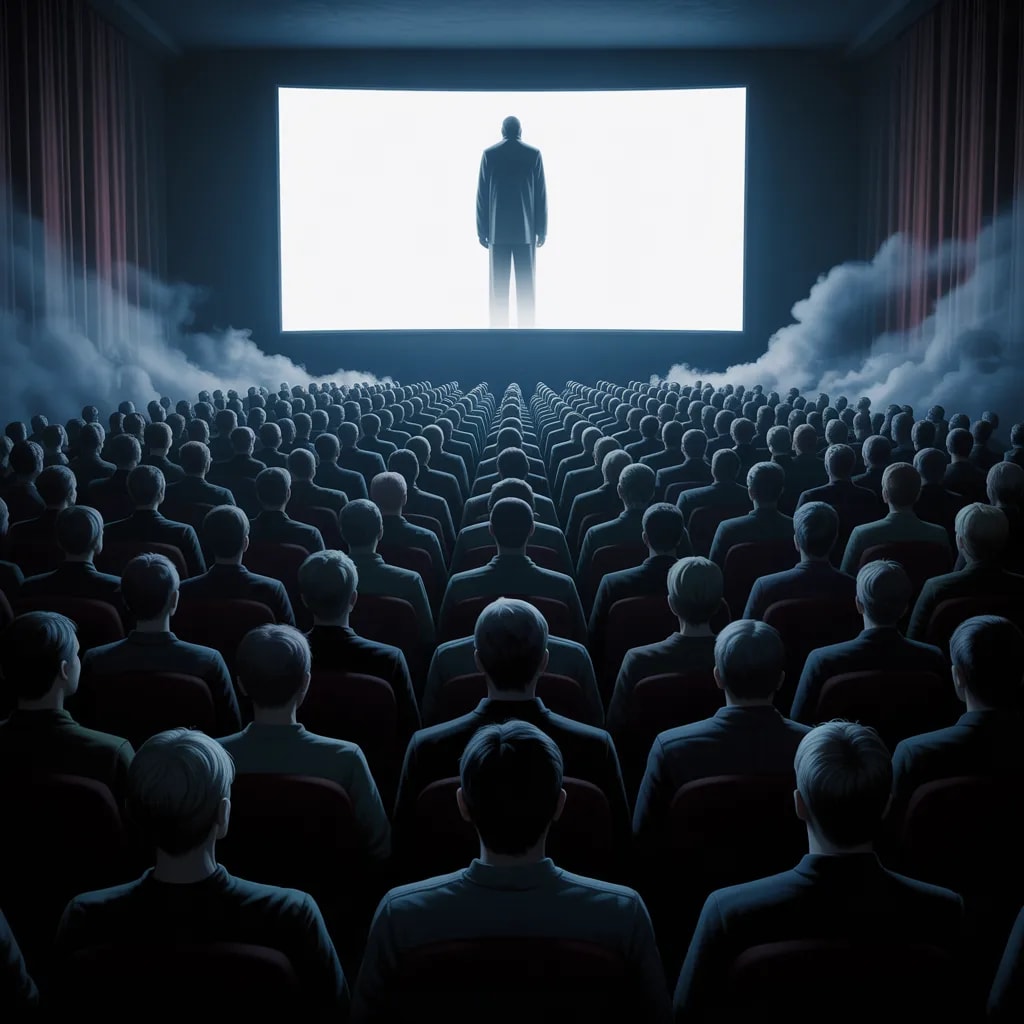
In October 2019, Netflix released a documentary series about Ted Bundy. Within weeks, it became one of the platform's most-watched titles globally. A dramatized miniseries starring Zac Efron as Bundy followed shortly after, generating significant controversy and significant viewership. Podcast episodes about the case, some recorded decades after Bundy's 1989 execution, continue to accumulate millions of downloads annually.
Ted Bundy has been dead for thirty-five years. The families of his victims are still alive.
This tension between the cultural appetite for serial killer content and the human reality of the crimes being consumed as entertainment sits at the heart of a question that psychologists, media critics, and cultural theorists have been examining with increasing seriousness: why, exactly, are we so drawn to this material? And what does the scale of that attraction reveal about us?
The answers are more complex and more revealing than the usual explanations suggest.
The Scale of the Phenomenon
True crime is not a niche interest. It is one of the most dominant genres in contemporary media across every platform and format.
In the United States alone, true crime podcasts collectively generate hundreds of millions of downloads per month. The genre accounts for a disproportionate share of Netflix's most-watched documentary content globally. True crime books reliably appear on bestseller lists. Dedicated YouTube channels with millions of subscribers release multiple episodes per week. University courses on criminal psychology have seen enrollment increases directly attributed to cultural interest generated by true crime media. The FBI's own website, which hosts summaries of notable serial killer cases, receives substantial traffic from people with no professional connection to law enforcement.
The serial killer, as a cultural figure, occupies a unique position in contemporary popular imagination. No other category of criminal attracts remotely comparable sustained interest. Bank robbers, fraudsters, and even terrorists do not generate the same enduring fascination. The serial killer does something different to the public imagination, and understanding what that is requires looking beyond simple morbid curiosity.
The Evolutionary Argument: Threat Calibration
One of the more robust explanations for the appeal of true crime comes from evolutionary psychology. The argument, advanced by researchers including psychologist Amanda Vicary at Illinois Wesleyan University, is that consuming narratives about extreme violence serves an adaptive function: it allows individuals to mentally rehearse threat scenarios and survival responses without exposure to actual danger.
From this perspective, reading about how a serial killer selected victims, how he evaded detection, and how investigators eventually identified him is not fundamentally different from the function served by cautionary folk tales in pre-literate societies. The content is a map of danger: who is vulnerable, under what circumstances, and by what methods threats can be recognized and avoided.
Vicary's research found that women consume true crime content at significantly higher rates than men — a finding that appears consistently across podcast listenership data, book sales figures, and streaming analytics. Her explanation is that women, who are statistically more likely to be victims of certain categories of violent crime, have a stronger adaptive incentive to process threat-related information. The consumption of true crime functions, at least in part, as a form of risk assessment.
This does not mean true crime audiences are consciously calculating survival odds. The process is largely intuitive, the same instinct that makes humans attentive to predator behavior in natural environments, redirected toward the social predators represented by serial killers.
The Psychological Argument: Safe Terror
A complementary explanation focuses not on survival instinct but on the psychology of controlled fear, what researchers sometimes call "benign masochism."
Human beings are unusual among animals in their capacity to seek out experiences that produce negative emotional states, fear, sadness, and disgust in contexts where they know they are actually safe. Horror films, tragedy as a literary form, extreme sports, haunted houses—these are all examples of deliberately induced negative affect pursued for its own sake. Psychologist Paul Rozin at the University of Pennsylvania has studied this phenomenon extensively, arguing that the pleasure derives precisely from the gap between the emotional response and the actual situation. The brain registers fear, but the rational mind knows there is no real threat, and the resulting experience is a form of stimulation that is genuinely enjoyable for many people.
True crime operates within this framework. The subject matter is genuinely disturbing; the crimes are real, the victims were real people, and the suffering was real. But the consumer experiences this material from a position of complete safety, typically in a domestic environment, with the knowledge that the perpetrator is dead or incarcerated. The fear is real enough to be stimulating; the threat is sufficiently remote to be manageable.
This also helps explain why serialized true crime content podcasts and documentary series that release information incrementally tend to be particularly compelling. The structure mimics the tension architecture of thriller fiction: revelations, reversals, mounting dread, and eventual resolution. The emotional experience of consuming true crime is, for many people, functionally similar to reading a crime novel with the additional charge of knowing it actually happened.
The Moral Argument: Making Sense of Evil
Beyond fear and stimulation, there is a third dimension to the true crime obsession that is perhaps the most psychologically significant: the human need to make moral sense of extreme behavior.
Serial killers represent a profound challenge to ordinary moral frameworks. They are human beings who committed acts that most people find almost incomprehensible—not merely cruel, but systematically, repeatedly, deliberately cruel, often with apparent enjoyment. This incomprehensibility creates a kind of cognitive dissonance that demands resolution. The mind, confronted with something it cannot fit into its existing categories, keeps returning to the problem.
True crime content, at its best, offers a framework for that resolution. Documentary series and investigative podcasts typically follow a structure that moves from the inexplicable act toward an explanation: childhood trauma, neurological difference, environmental factors, or psychological pathology. The narrative arc satisfies a deep need to understand: to find the point at which a human being became capable of what they did and, thereby, to restore, at least partially, the sense that human behavior is ultimately comprehensible.
This is, in essence, a moral project. Audiences are not simply watching for stimulation. They are attempting to locate the boundaries of human nature to understand how far the category of "human" can stretch and what lies at its extreme edges.
Criminologist Scott Bonn at Drew University, who has written extensively on the cultural fascination with serial killers, argues that this moral engagement is central to the genre's appeal. True crime, he contends, functions as a form of secular mythology narratives that explore the darkest dimensions of human nature in order to define, by contrast, what we consider good, acceptable, and humane.
The Problem With the Fascination
The psychological explanations for why we are drawn to serial killer content are, individually and collectively, plausible. They are also insufficient as a complete account, because they tend to describe the attraction without interrogating its costs.
The primary cost is to the victims and their families.
Serial killer content has a structural tendency to center the perpetrator. The killer's biography, psychology, methods, and personality receive detailed, sustained attention. Victims, by contrast, are frequently reduced to their role in the killer's story, identified primarily in terms of how they were selected, how they died, and what their deaths reveal about the killer's pathology. Names are mentioned; lives are not examined. The asymmetry is rarely acknowledged.
This is not merely an aesthetic criticism. Research on media coverage of violent crime has documented that the humanization of victims in news and documentary content is associated with greater public support for victim services, policy reforms, and trauma-informed responses to crime. When victims are reduced to narrative functions, that humanizing effect is lost.
The entertainment framing creates additional problems. When serial killer cases are packaged with dramatic music, cliffhanger episode structures, and aestheticized visual presentation, the implicit message is that these events are, fundamentally, compelling content, a category that sits uncomfortably alongside the reality that the people depicted were killed, often after experiencing prolonged terror and suffering. The families of victims have repeatedly and publicly described the experience of watching their loved ones' deaths discussed on popular podcasts as profoundly re-traumatizing.
Several prominent true crime podcasters and documentary makers have, in recent years, begun engaging more directly with these tensions, consulting with victim families, centering victim narratives more deliberately, and being more transparent about the ethical compromises inherent in the genre. These are meaningful adjustments. They do not resolve the underlying tension.
The Broader Cultural Context
The serial killer obsession does not exist in isolation. It emerged as a dominant cultural phenomenon during a specific historical period the late twentieth and early twenty-first centuries and it reflects something about that period's particular anxieties.
The classic era of American serial killer mythology, the cases of Bundy, Dahmer, Gacy, the BTK Killer, and the Zodiac, coincided with a period of significant social disruption: the breakdown of traditional community structures, rising urban crime rates, the erosion of institutional trust, and a growing sense that strangers, and perhaps the social fabric itself, could not be trusted. The serial killer embodied a specific fear: that predators could be invisible within ordinary social life, indistinguishable from neighbors, colleagues, and friends until the moment they were not.
That fear has not diminished. In some respects, the digital age has intensified it. The internet has produced new categories of predatory behavior, new anxieties about who people really are behind their presented identities, and new forms of vulnerability that existing social frameworks were not designed to address. True crime content, whatever its limitations, continues to serve as a cultural space for processing those anxieties.
The serial killer, in the contemporary imagination, is less a literal threat—serial murder rates in the United States have actually declined significantly since their peak in the 1980s—than a symbolic one. He represents the fear of the hidden predator, the unreliable surface, and the violence that ordinary social life fails to prevent. The obsession with him is, at its core, an obsession with the question of how well we can really know the people around us.
Conclusion
The fascination with serial killers is not simply morbid curiosity, though curiosity is part of it. It is not simply entertainment, though entertainment is part of it. It is a complex psychological and cultural response to some of the deepest anxieties in contemporary life about violence, about human nature, about the reliability of social trust, and about the limits of our capacity to understand behavior that sits at the extreme boundary of what human beings do to one another.
Understanding why we are drawn to this material does not require us to be uncritical of it. The genre has real costs, borne disproportionately by the people who had the least say in becoming part of the story, the victims and those who loved them.
What it does require is honesty. The audience for true crime is not a collection of people with a taste for the macabre. It is a reflection of something genuine in human psychology: the need to face darkness, to understand it, and to come away from the encounter with a slightly more precise map of what human beings are capable of.
That need is legitimate. How we respond to it is a choice.
About the Creator
Enjoyed the story? Support the Creator.
Subscribe for free to receive all their stories in your feed.
Comments
There are no comments for this story
Be the first to respond and start the conversation.