
What Happens When an Urban Legend Feels Real?
Exploring the intersection of internet folklore, mental health, and true crime in Kathleen Hale's "Slenderman"

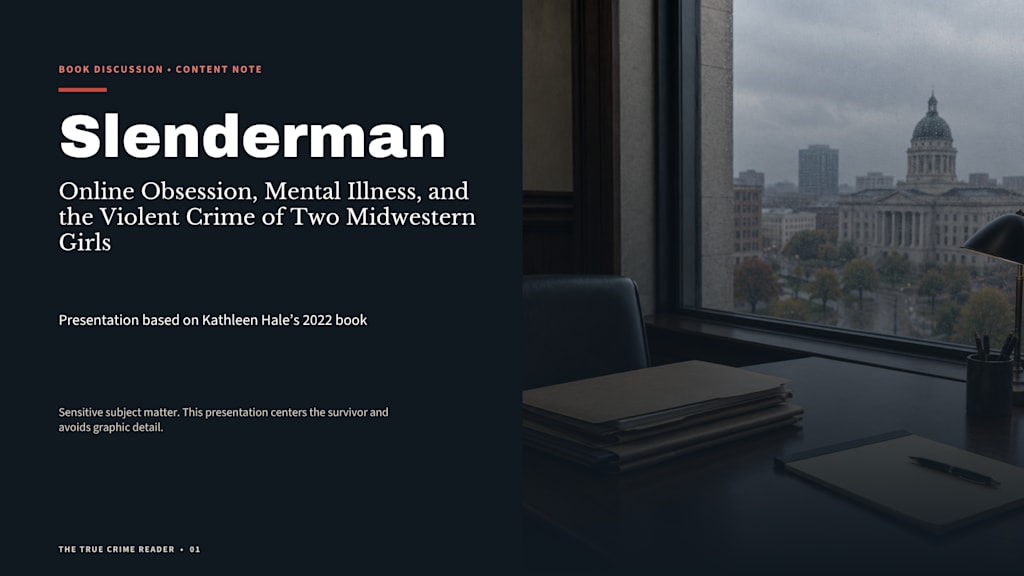
When discussing Kathleen Hale’s book, it's important to approach the subject with sensitivity and care.
This book delves into the complex interplay of online obsession, mental illness, and violent crime, focusing on a case that shook the nation. It specifically examines the actions of two Midwestern girls and centers on the survivor’s perspective.
We will navigate this content respectfully, avoiding graphic details and instead aiming to understand the broader context and implications of these events.
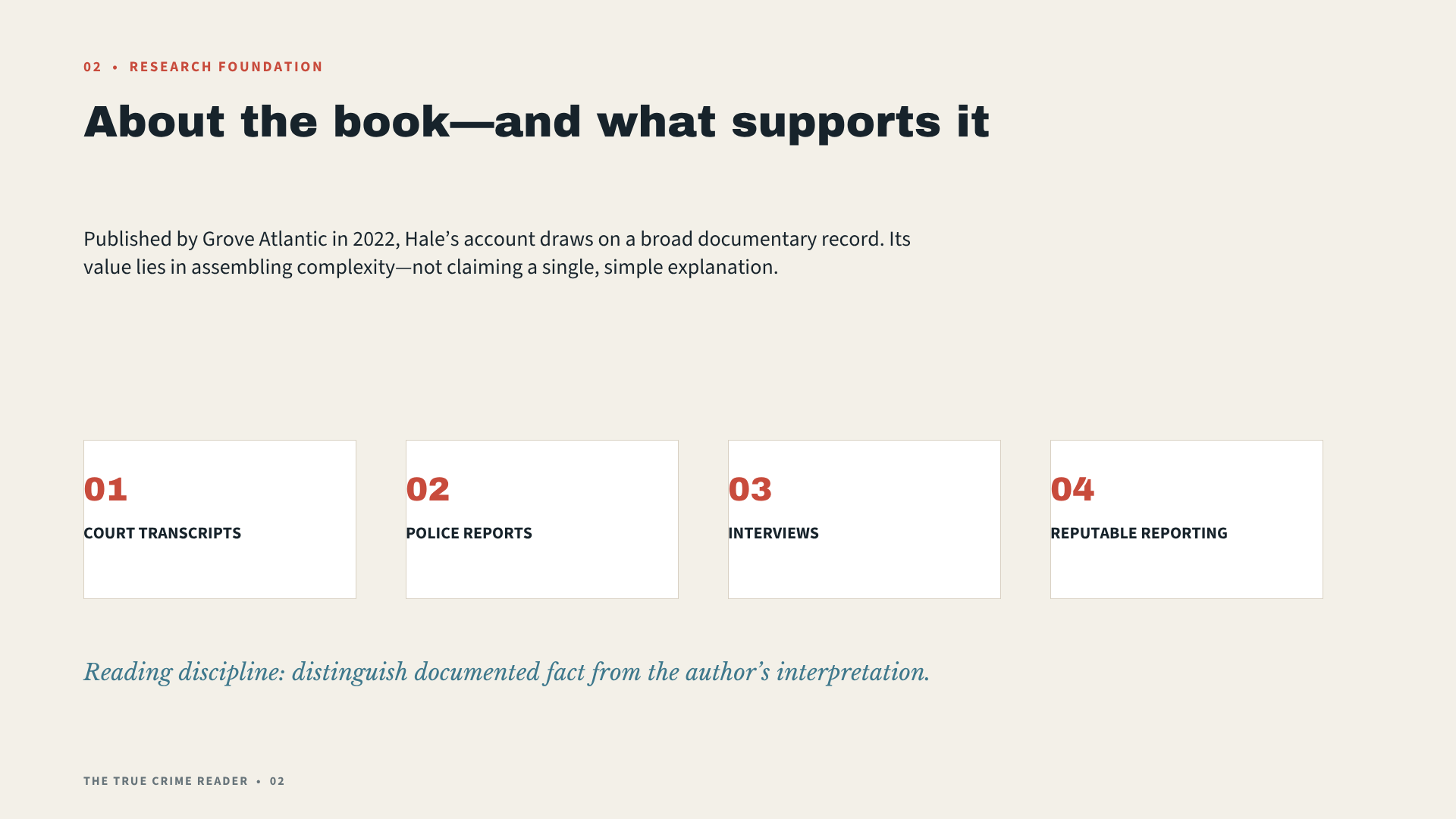
The focus of this slide is to delve into the research foundation of Kathleen Hale’s book, "Slenderman." Published by Grove Atlantic in 2022, the book's strength lies in its comprehensive use of diverse sources. Hale doesn't seek to offer a single explanation but rather presents a complex tapestry of information.
Let's take a closer look at the key sources that underpin this narrative:
First, court transcripts are used extensively. These provide verbatim records of the legal proceedings, offering insight into the judicial perspective.
Next, police reports form a crucial part of the documentation. These reports offer a detailed account of the investigation process and the facts as recorded by law enforcement.
The book also draws on numerous interviews. These firsthand accounts provide personal insights and varied perspectives, enriching the narrative.
Lastly, reputable reporting is a significant source. This includes journalistic accounts that adhere to high standards of accuracy and reliability.
It's important to approach this material with a disciplined reading eye—distinguishing between documented facts and the author's interpretation.
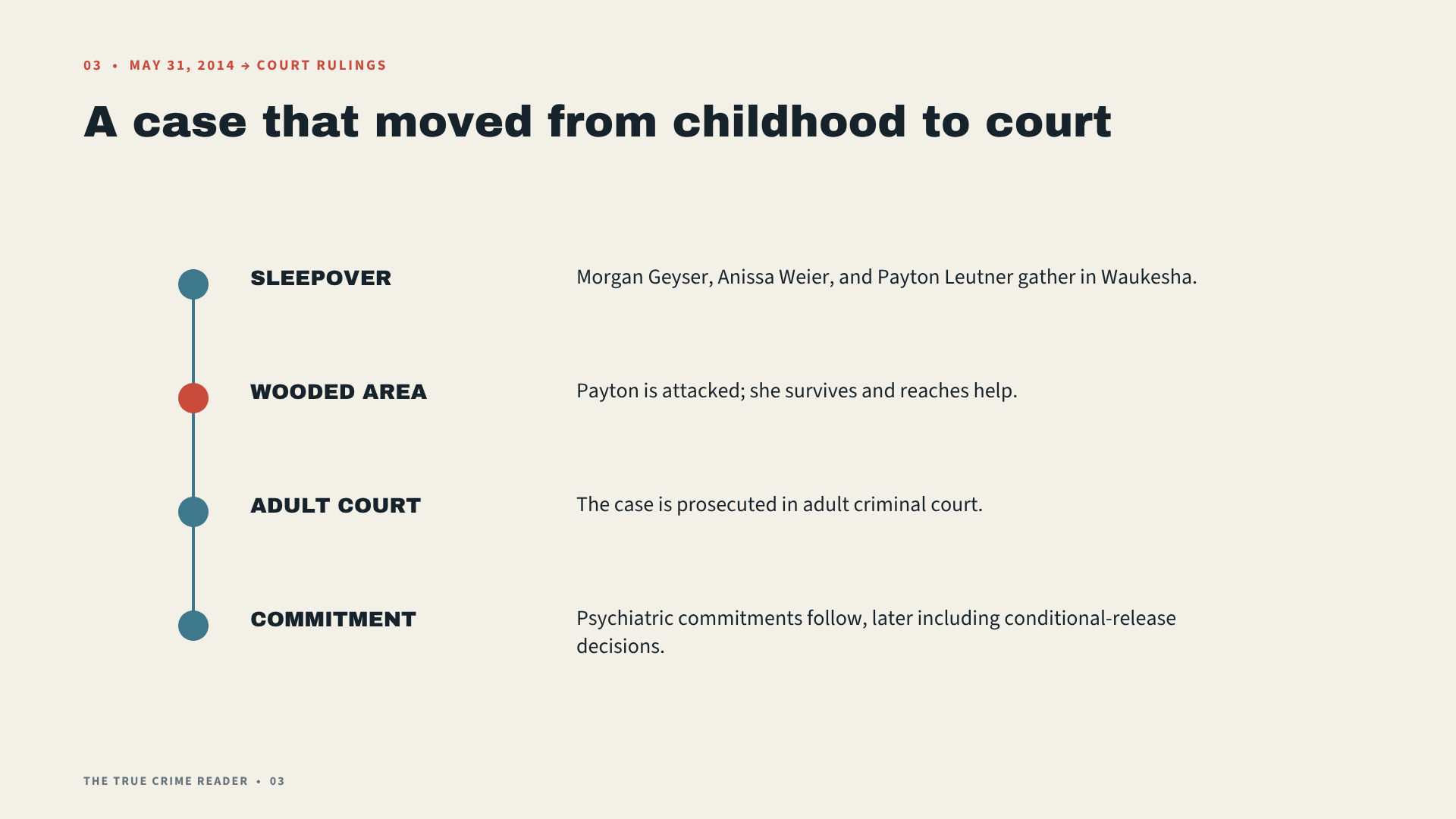
Let's delve into the events of May 31, 2014, a significant and unsettling day that moved from a seemingly innocent childhood gathering to a serious court case.
On this day, three young girls—Morgan Geyser, Anissa Weier, and Payton Leutner—met for a sleepover in Waukesha, Wisconsin. What began as a normal childhood activity tragically turned into a crime scene when Payton was attacked in a wooded area. Despite her severe injuries, Payton's resilience shone through as she managed to survive and seek help.
This case was prosecuted in adult criminal court, highlighting the gravity of the situation and the complexities involved when dealing with minors in such serious legal contexts.
Following the court proceedings, psychiatric evaluations led to commitments for Morgan and Anissa, reflecting the intersection of mental health issues within the legal framework. These commitments eventually included conditional-release decisions, illustrating the ongoing legal and personal consequences of that day.
As we reflect on this case, it's crucial to remember the human impact beyond the legal outcomes, and Payton Leutner's remarkable courage in facing such adversity.
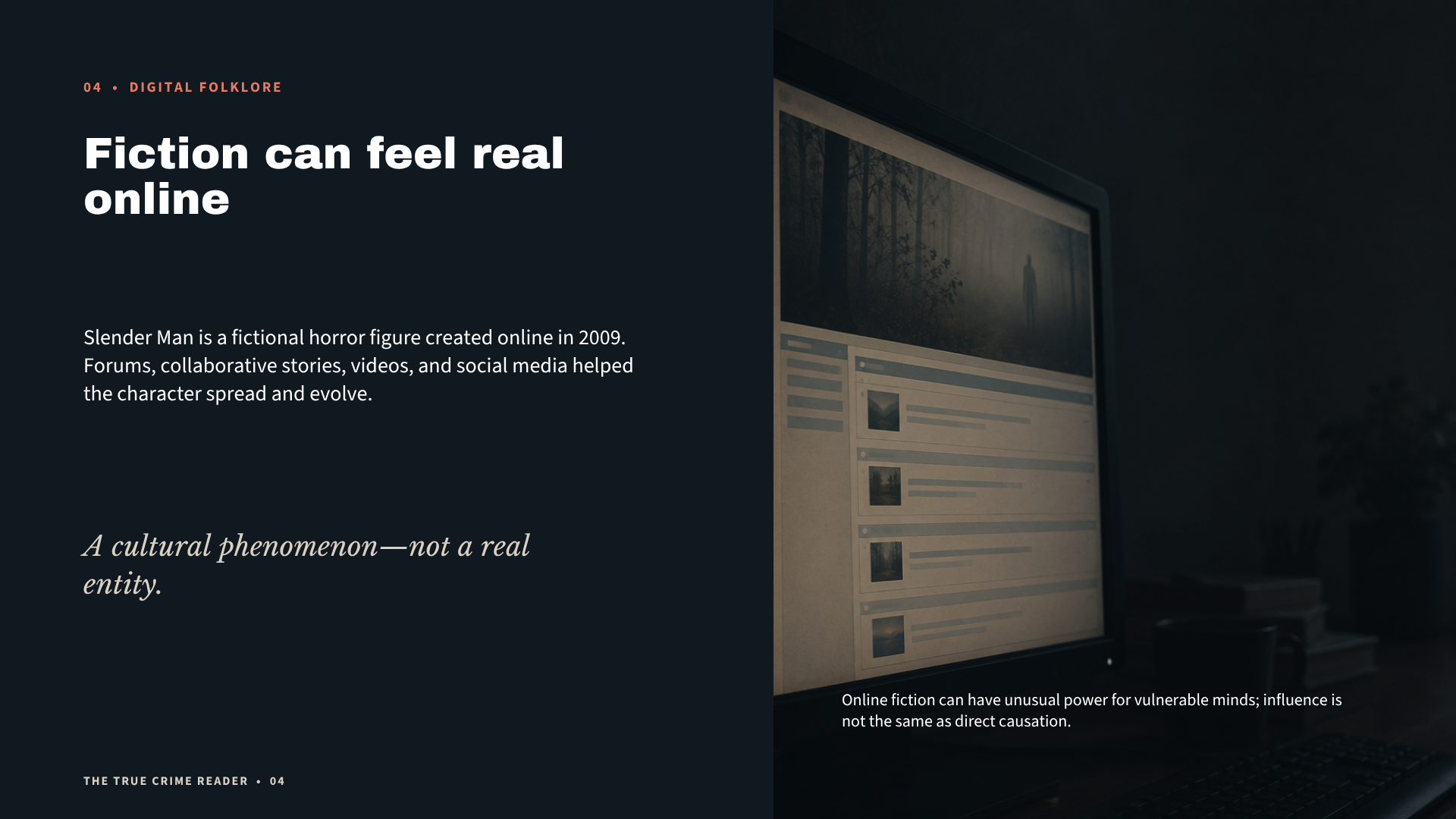
Digital folklore is a fascinating and complex topic, and it's essential to convey how something fictional, like Slender Man, can exert real influence online.
Slender Man was born out of internet creativity in 2009 and quickly became a cultural phenomenon. This fictional horror figure was shaped and spread through forums, collaborative storytelling, videos, and social media. It's important to note that while Slender Man is entirely fictional, the way stories are shared online can make them feel incredibly real, especially to vulnerable individuals.
What we must understand is that online fiction holds a unique power. It can influence, but it doesn't directly cause actions. This distinction is crucial when discussing cases like the one involving Slender Man, where the influence of digital folklore was significant but not singular.
As we move forward, keep in mind the broader implications of digital culture and its capacity to impact real-life situations.
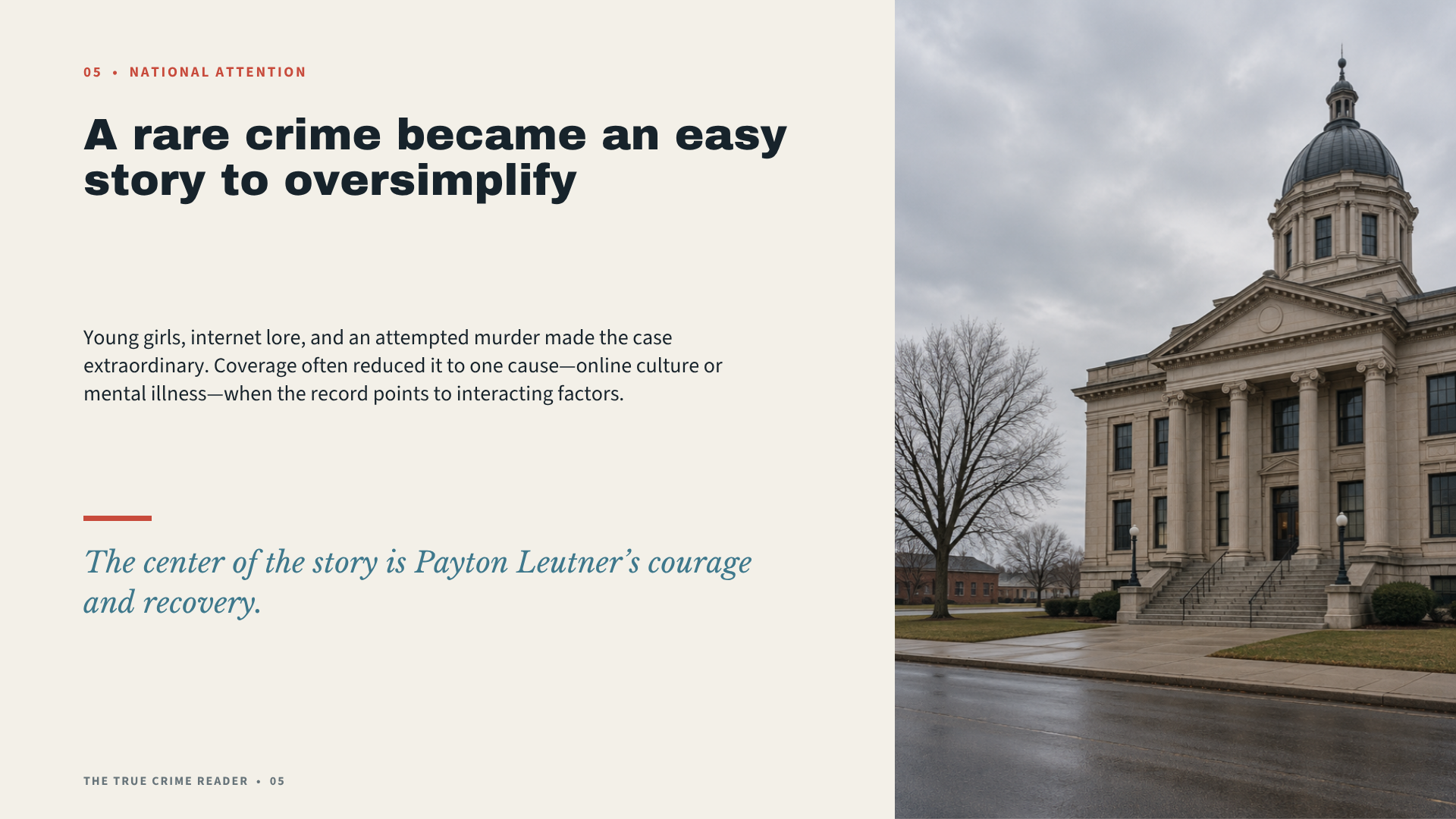
Today, we're diving into how a rare crime captured national attention, but also how it was easily oversimplified by media coverage.
This case involved young girls, internet lore, and an attempted murder, setting it apart as extraordinary. However, the media often reduced the narrative to a single cause—either online culture or mental illness. Yet, the truth is more nuanced; it’s a combination of interacting factors that truly shaped the events.
At the heart of this story, though, is not just the crime itself but the resilience and courage of Payton Leutner, the survivor. Her recovery is a testament to her strength and serves as a focal point amidst the complex layers of this case.
As we move forward, remember that stories like these are multi-faceted. Let’s continue to explore the intricacies and avoid the trap of simplification.
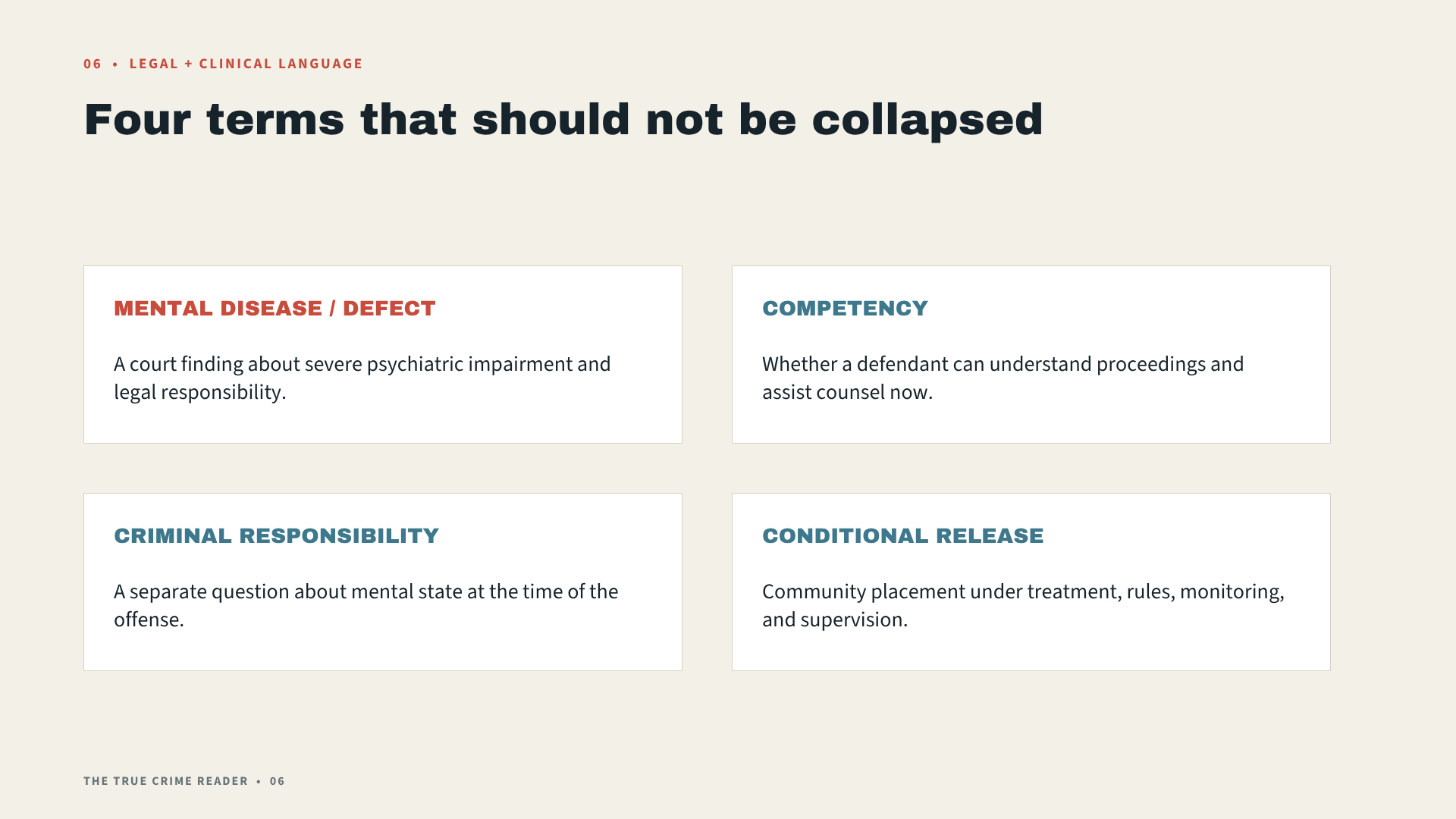
Let's delve into the nuances of legal and clinical language, focusing on four distinct terms that are often misunderstood or oversimplified.
First, we have "Mental Disease or Defect." This is a legal term used to determine severe psychiatric impairment and how it affects legal responsibility. It’s important to remember that this is a court finding, not a clinical diagnosis.
Next is "Competency." This term addresses whether a defendant can comprehend the court proceedings and effectively collaborate with their legal counsel at the present time. It's a crucial assessment to ensure fair trial practices.
Then there's "Criminal Responsibility," which is distinct from competency. This term involves evaluating the defendant's mental state at the time of the offense to determine if they were capable of understanding their actions.
Finally, "Conditional Release" refers to a scenario where an individual is allowed to live in the community under specific conditions. This involves ongoing treatment, adherence to rules, and constant supervision to ensure both the individual's and the community's safety.
Understanding these terms individually helps in appreciating the complexities involved in legal and clinical assessments. Each plays a unique role in the justice system, and collapsing them into one can lead to misunderstandings or misrepresentations.
As we move forward, we’ll explore how myths in media can oversimplify these issues and why it’s crucial to restore complexity with factual understanding.
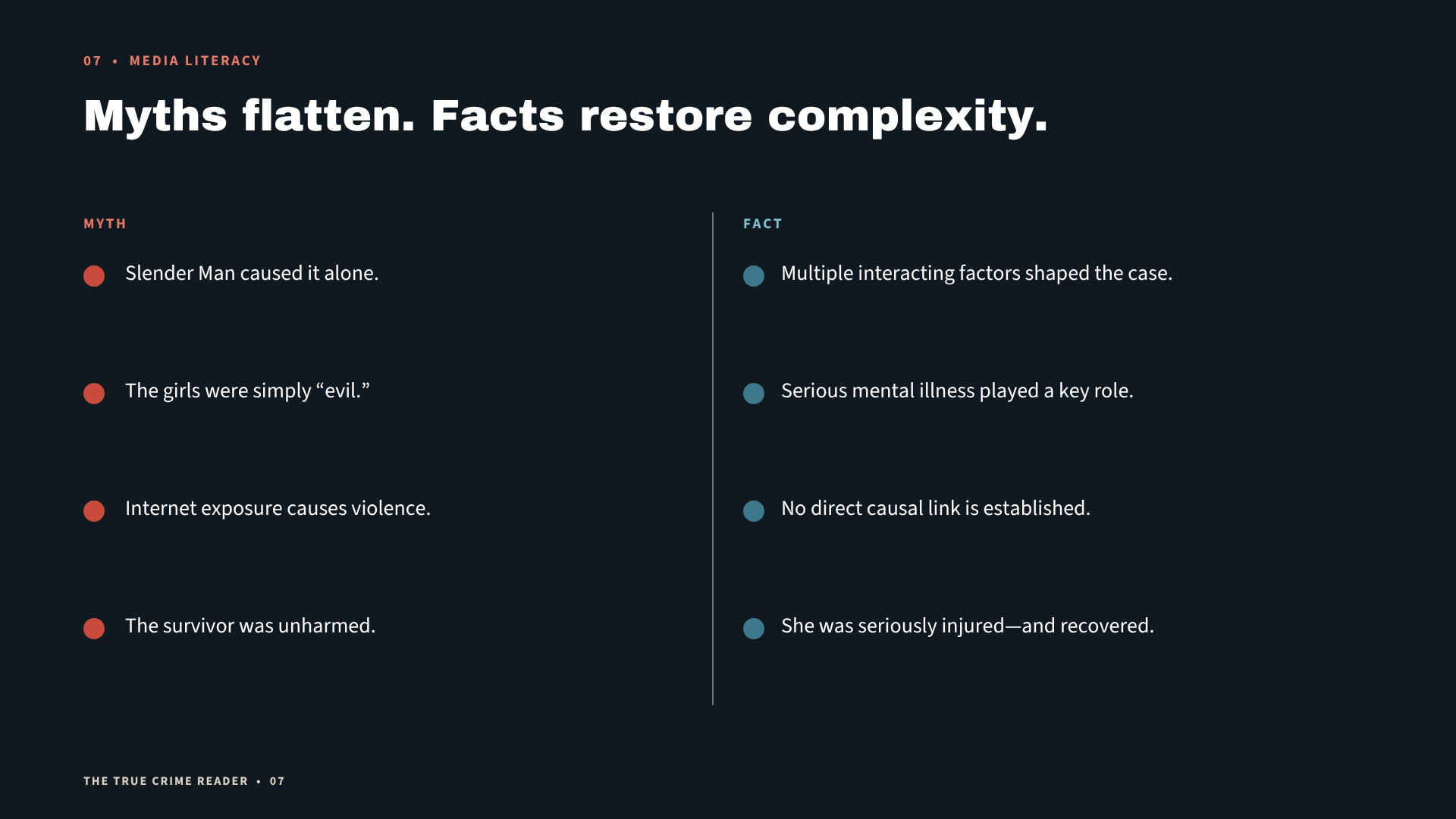
As we delve into the topic of media literacy, let's explore how myths can simplify complex situations, but facts bring depth and understanding.
Firstly, one prevalent myth is that Slender Man was the lone cause of this incident. However, the truth is more nuanced, with multiple factors contributing to the case's development. It's crucial to recognize these interacting elements to grasp the full narrative.
Another misconception is the characterization of the girls as merely "evil." In reality, serious mental illness significantly influenced their actions. By acknowledging this, we emphasize the importance of understanding mental health in these contexts.
Lastly, it's a dangerous assumption that internet exposure directly causes violence. There's no established causal link. Instead, it's essential to see the internet as part of a broader set of influences.
And importantly, Payton Leutner, the survivor, was indeed seriously injured. Her incredible recovery is a testament to her strength and resilience.
Understanding these facts helps restore the complexity of the case, challenging oversimplified narratives and encouraging a more informed perspective.
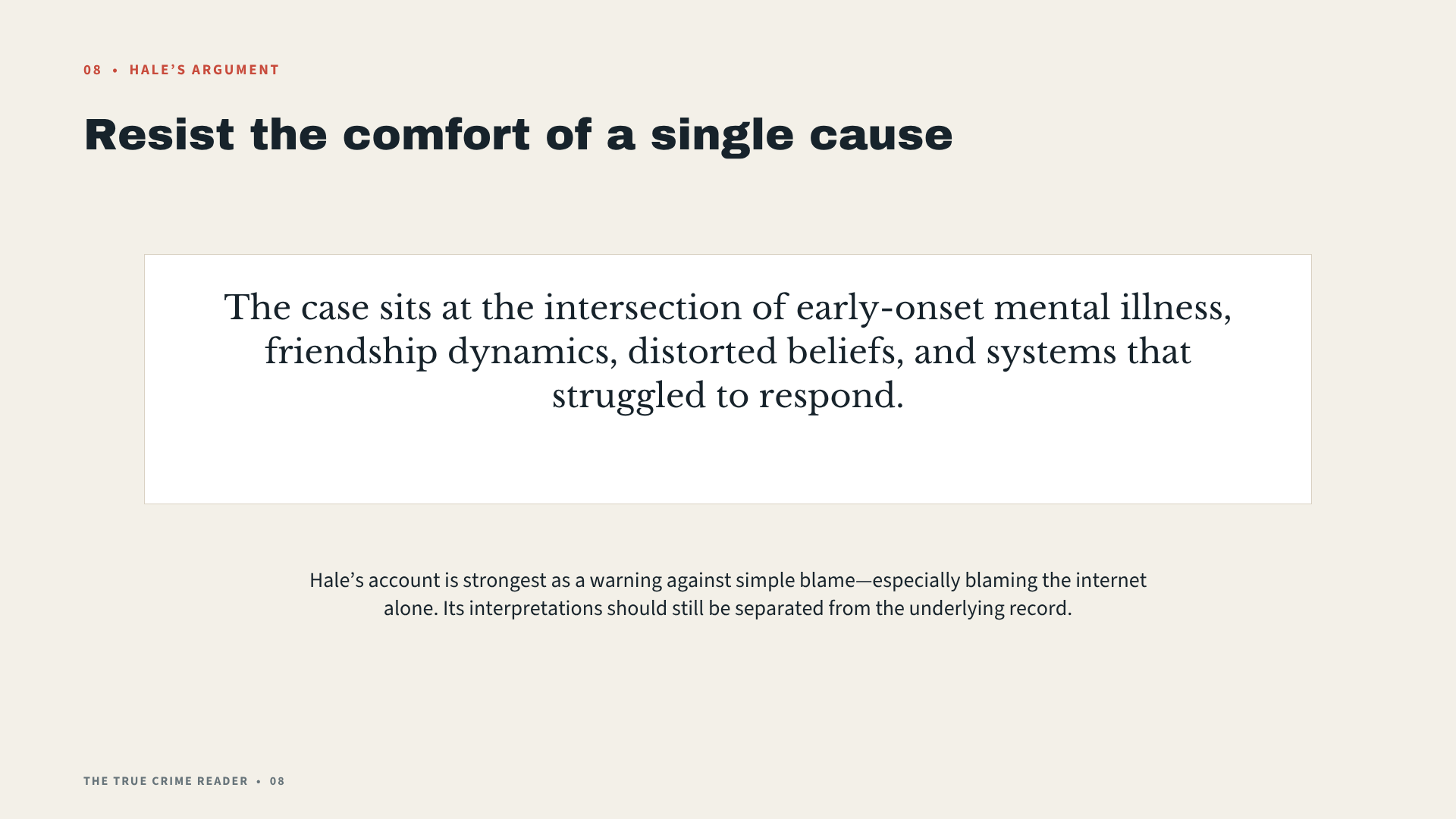
Hale’s argument invites us to resist the allure of attributing the complexities of the case to a single cause. It's crucial to recognize that this case exists at a complex intersection—early-onset mental illness, the dynamics of friendship, distorted beliefs, and the inadequacies of systems designed to respond.
The strength of Hale’s account lies in its caution against oversimplifying blame, such as pointing fingers solely at the internet. This underscores the importance of maintaining a critical distinction between interpretations and the actual facts documented in the record.
As we delve into this nuanced understanding, remember that simplifying the narrative does a disservice to the truth. Let's prioritize complexity over comfort in our interpretations.
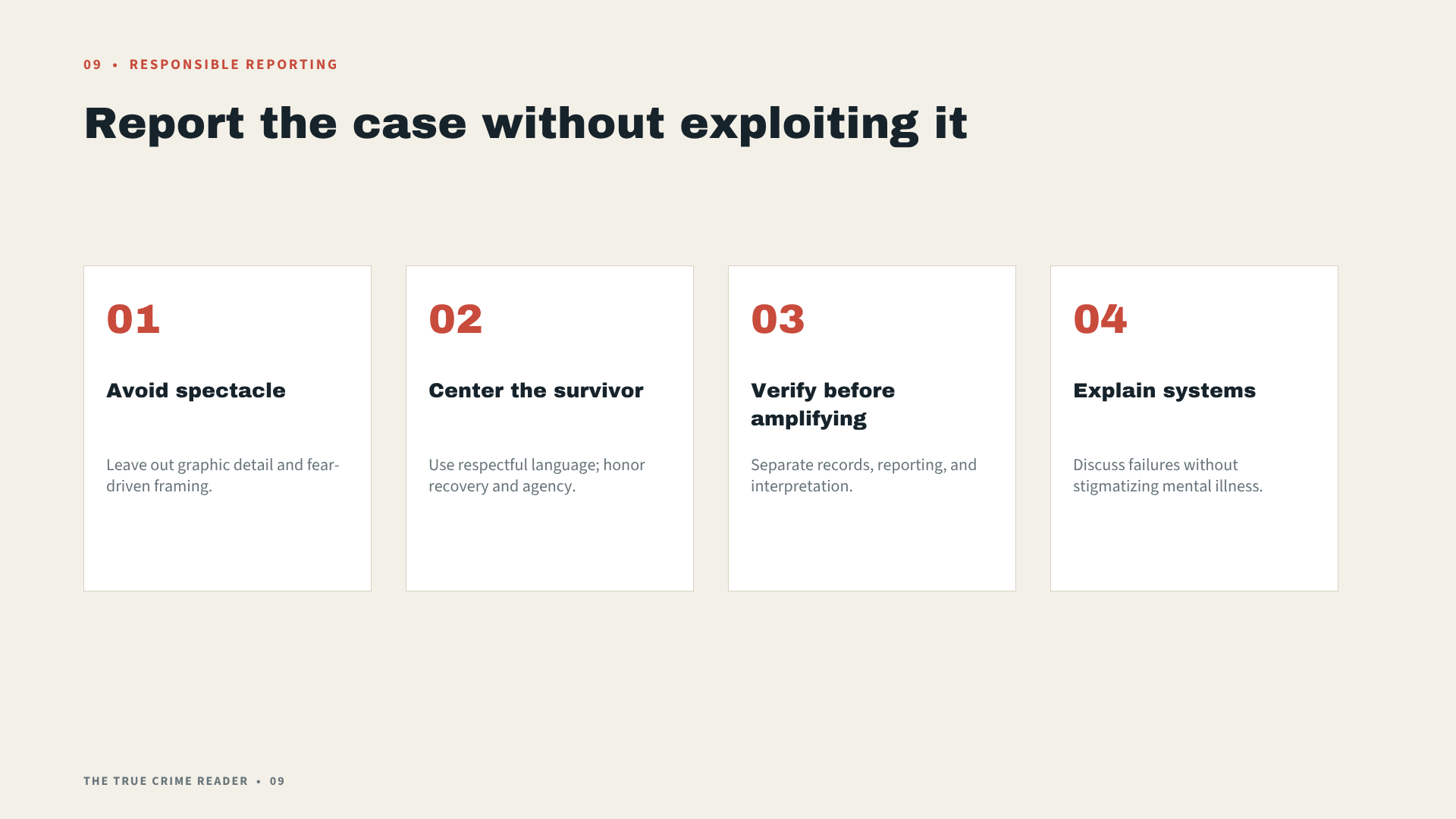
When discussing responsible reporting, it’s crucial to maintain integrity and sensitivity.
First, let's focus on avoiding spectacle. It's important to steer clear of graphic details or fear-driven narratives. This helps prevent sensationalism and respects the dignity of everyone involved.
Next, we should center the survivor in our reporting. Use language that is respectful and acknowledges their journey of recovery and agency. This not only humanizes the story but also empowers the survivor.
Verification is another critical aspect. Before amplifying any information, ensure that records, reporting, and interpretations are clearly separated. This preserves accuracy and trust in journalism.
Finally, explain systemic failures without stigmatizing mental illness. Discuss how systems can fail without casting blame on individuals, particularly those with mental health challenges. This approach promotes understanding and avoids perpetuating harmful stereotypes.
By adhering to these principles, reporting can be both responsible and impactful, shedding light on the complexities of the case without exploitation.
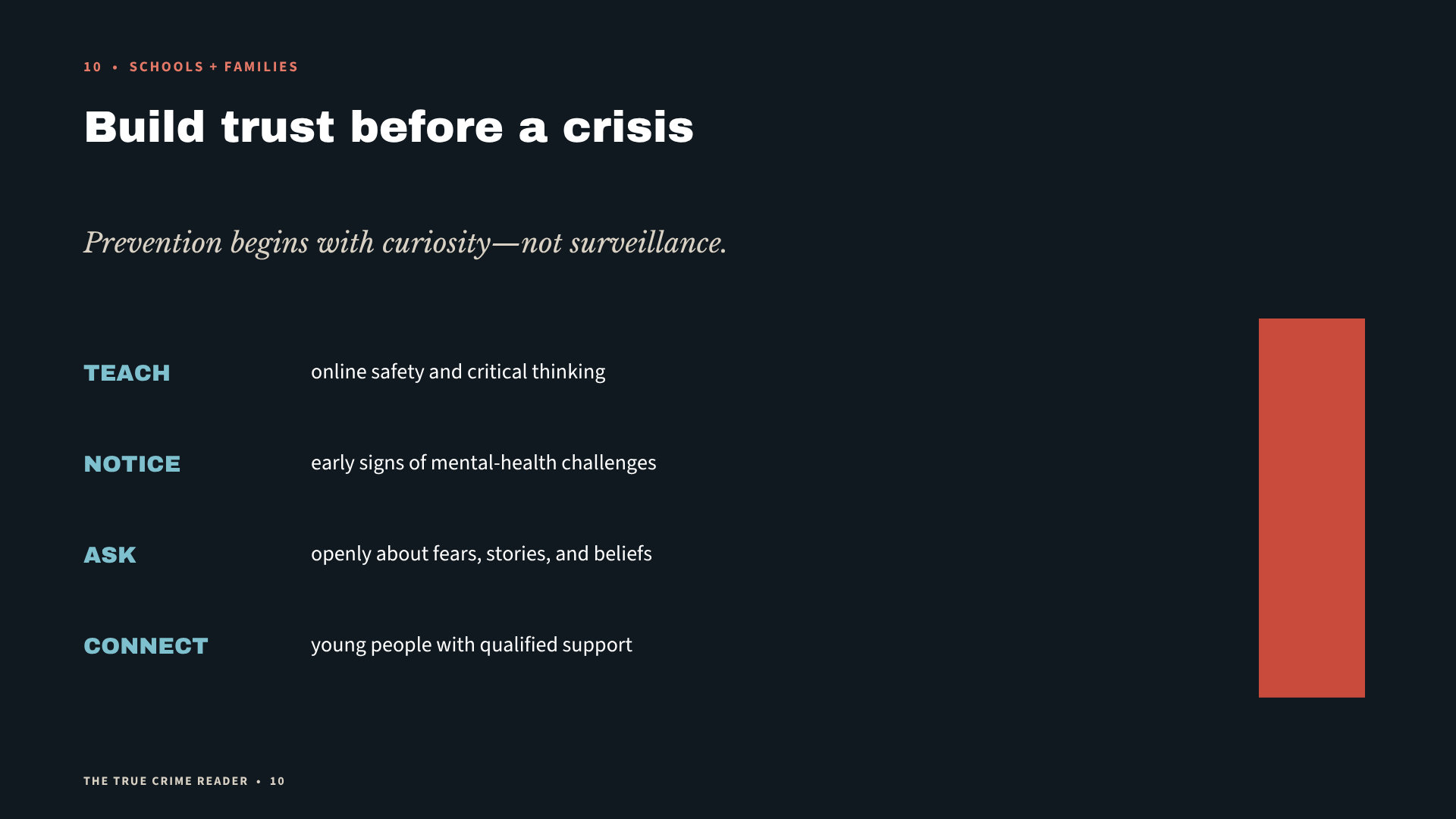
In this slide, we're focusing on the crucial roles that schools and families play in preventing crises. Let's break down the key ways they can proactively engage with young people.
Firstly, prevention isn't about surveillance—it's about fostering curiosity. Encourage an environment where questions are welcomed, and critical thinking is nurtured. Teach online safety and empower young people to navigate the digital world thoughtfully.
Next, pay close attention to early signs of mental health challenges. These can often be subtle, so it’s important that educators and parents are observant and informed.
Additionally, promoting open dialogue is essential. Ask young people about their fears, stories, and beliefs. This can help build trust and ensure they feel heard and supported.
Lastly, it's vital to connect them with qualified support. This means ensuring access to mental health resources and professionals who are equipped to provide guidance and assistance.
By taking these steps, we can create a supportive network that not only responds to crises but helps prevent them from occurring in the first place.
Remember, building trust before a crisis is not only possible but imperative.
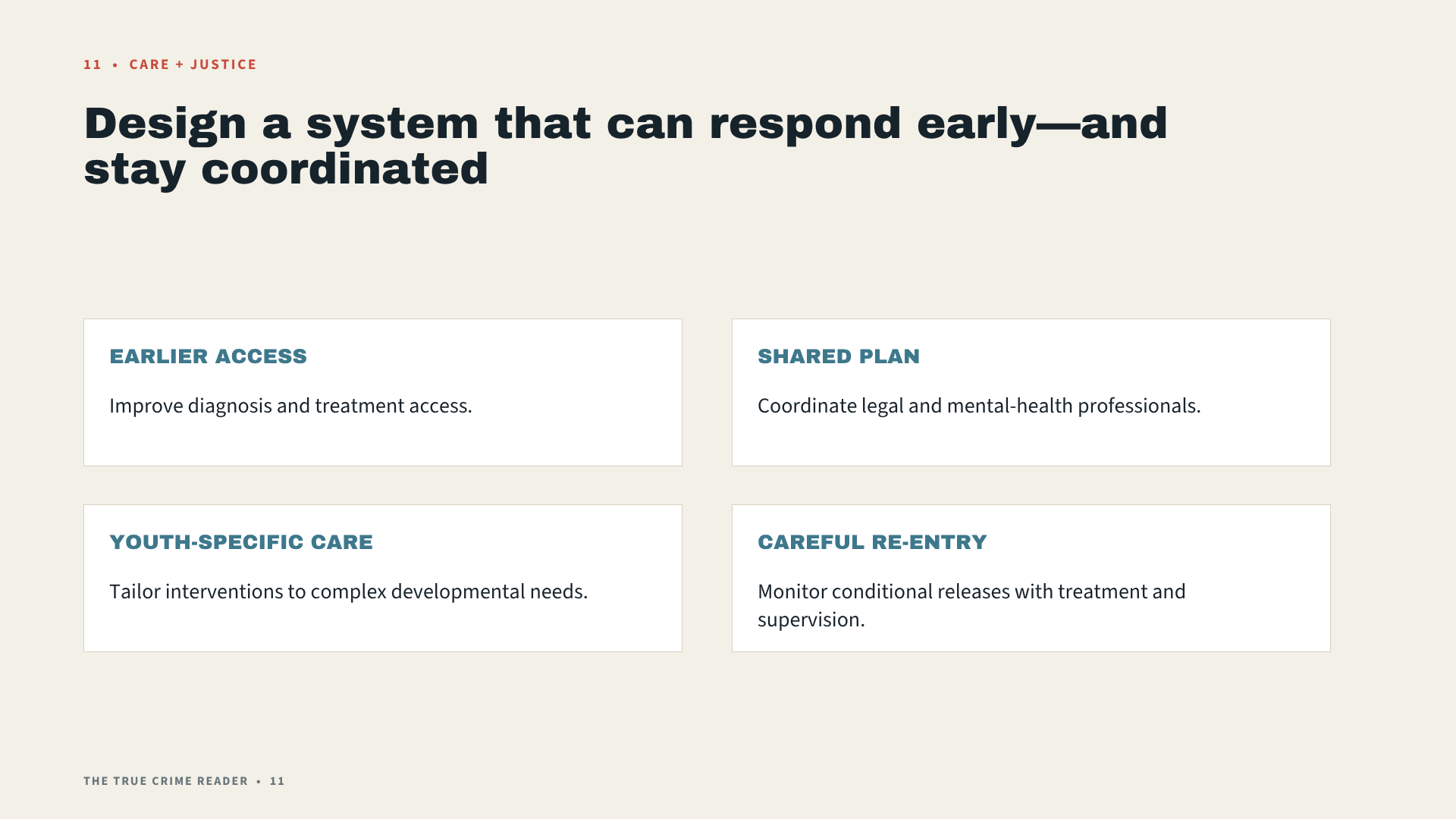
Today's focus is on designing a system that effectively integrates both care and justice, particularly when addressing the needs of young individuals.
First, let's highlight the importance of earlier access to diagnosis and treatment. By improving these systems, we can intervene before issues escalate, providing the necessary support that can lead to better outcomes.
Next, consider the value of a shared plan. Coordination between legal and mental-health professionals ensures that responses are comprehensive and consistent. This collaboration is crucial for creating a supportive network around those in need.
Finally, youth-specific care is essential. Interventions must be tailored to the unique developmental needs of young people. This approach helps in addressing their challenges more effectively and supports their growth into healthy adults.
Additionally, careful re-entry planning is vital for those transitioning back into society. Monitoring conditional releases with a balance of treatment and supervision can help prevent recidivism and promote successful reintegration.
By focusing on these key areas, we can create a system that not only responds early but also stays coordinated and supportive throughout the process.
Let’s continue to think about how we can improve and implement these strategies for the benefit of all involved.
As we wrap up, I want to thank you for your attention throughout this presentation.
Let's take a moment to reflect on what this case asks us to consider simultaneously about several critical issues: childhood, mental health, online culture, survival, and justice. Each of these elements is complex on its own, but when intertwined, they present a multifaceted challenge that requires a nuanced understanding and approach.
Now, I invite you to engage in questions and discussion. Your insights and experiences are invaluable to deepening our collective understanding.
Feel free to share your thoughts, raise questions, or provide additional perspectives on how we can better address these intertwined issues.
About the Creator
Kristen Barenthaler
Curious adventurer. Crazed reader. Librarian. Archery instructor. True crime addict.
Instagram: @kristenbarenthaler
Facebook: @kbarenthaler
Enjoyed the story? Support the Creator.
Subscribe for free to receive all their stories in your feed. You could also become a paid subscriber, letting them know you appreciate their work.
Comments
There are no comments for this story
Be the first to respond and start the conversation.