
"UNSOLVED MYSTERIES".
The Eerie Disappearances That Have Stunned the World.
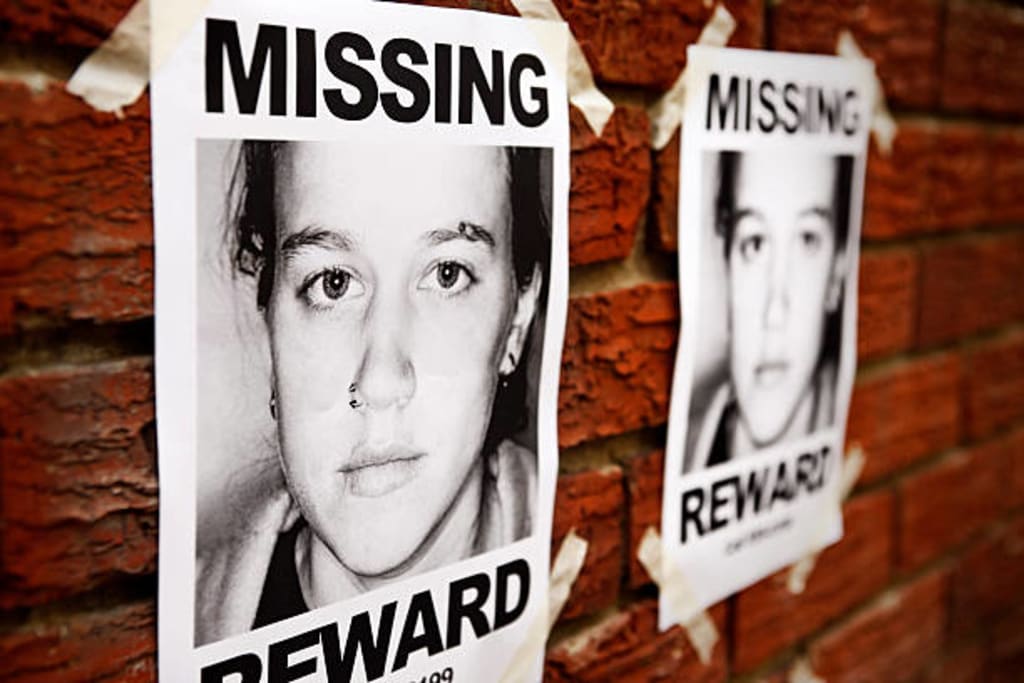
The Dyatlov Pass Incident, the Black Dahlia murder, and the true identity of the Zodiac Killer—these are just a few of the world's mysteries that keep us awake at night, pondering endless possibilities. However, some of the most unsettling mysteries involve ordinary people who vanish without a trace. Whether they went for a hike, a bike ride, a cruise, or spent a quiet evening alone at home, they disappeared, never to be seen again. We like to think it couldn't happen to us, but didn't those who went missing likely believe the same thing? These unsolved disappearances are the stuff of nightmares, yet we can't seem to look away. We theorize, investigate, and even compile lists for YouTube videos. Today, we're exploring some of the most disturbing cases of people who have gone missing.
If you've ever found yourself late at night browsing lists of the most unsettling real images captured on film, you might have come across a photograph of a young woman and a boy, bound and gagged with black tape over their mouths. You may not know that this chilling image is linked to the disappearance of a young woman named Tara Calico. On the morning of September 20, 1988, 19-year-old Tara Calico left her home in Valencia County, New Mexico, for a bike ride. She followed the same route daily along New Mexico State Road 47. Sometimes her mother, Patty, accompanied her, but after an incident where a car drove dangerously close, Patty decided it was safer for Tara to ride alone. She suggested that Tara carry mace for self-defense, but Tara didn't think it was necessary. She'd been biking that route for years without issue.
As she left that day, Tara joked with her mother that she should come looking for her if she wasn't back by noon, as she had a tennis date with her boyfriend at 12:30 and didn't want to miss it. What was meant as a joke turned ominous when noon came and went without Tara's return. She had vanished in broad daylight along a familiar route. Patty drove up and down the road that afternoon, searching for any sign of her daughter, but found nothing. She called the police, and a search party was organized. However, neither Tara nor her bike was found. Witnesses reported seeing Tara and a light-colored pickup truck on the road around the same time, but there were no signs of foul play. The only evidence that Tara had ever been there was her broken Walkman and a cassette tape found on the ground.
Initially, police suspected Tara might have run away. However, her stepfather, John Doel, and her mother, Patty, insisted that Tara was a happy girl with no reason to run away. The couple was devastated, waiting for any clues that might lead them to Tara. Nearly nine months after she disappeared, on June 15, 1989, an unexpected and disturbing clue surfaced. A Polaroid picture was discovered in the parking lot of a convenience store in Port St. Joe, Florida, roughly 1500 miles from where Tara Calico had been cycling. The photograph showed a teenage girl and a young boy lying on sheets and a pillow, bound and with duct tape over their mouths. The woman who found the picture notified the police, mentioning that she had seen a white Toyota van parked in the spot earlier, driven by a man in his thirties with a mustache. Although police set up a roadblock to intercept the vehicle, they were unable to locate it or its driver. The photo quickly gained national attention, catching the eye of Patty's friends, who thought the girl could be Tara.
There was some debate over the girl's identity, but certain details made Patty believe it was her daughter. The girl in the photo had a discolored mark on her thigh, resembling a scar Tara had from a car accident, and a V.C. Andrews paperback was visible in the shot—Tara's favorite author. Authorities were split on the photo's authenticity. The Los Alamos National Laboratory did not think the girl was Tara, while the FBI couldn't reach a definitive conclusion. Conversely, Scotland Yard in the United Kingdom believed the girl in the photo was Tara. Regardless of her identity, the photograph appeared to have been taken recently, no later than May of that same year.
Shortly after, the young boy in the Polaroid was identified as nine-year-old Michael Henley, who had gone missing during a hunting trip with his father in New Mexico in April 1988. His family believed the photo depicted him. However, in 1990, Michael's body was found seven miles from the campsite where he disappeared, and it was determined that he had died from exposure before the Polaroid was taken. Tara Calico's disappearance remains unsolved to this day.
In 2008, the Valencia County Sheriff claimed to know what had happened to Tara, stating that two men, teenagers at the time, were following her on her bike when an accident occurred. Panicked, they disposed of her body and covered it up. However, without a body, no arrests could be made, and there has been little evidence to support these claims since 2008.
Over the years, additional Polaroid photographs have surfaced, possibly depicting Tara Calico. One photo, a blurry image of a girl's face with tape over her mouth, was found near a construction site in Montecito, California, and was taken sometime after May 1989. Patty believed this might be another picture of her daughter. Another photo, showing a woman bound and with her eyes covered, sitting next to a man on an Amtrak train, was taken around February 1990. Patty did not think this was Tara.
More than thirty years after her disappearance, Tara's case remains unsolved, with only a few uncertain pieces of evidence and a haunting Polaroid picture. However, in June 2023, there was a potential breakthrough. The Valencia County Sheriff’s Office announced that they had made progress in the case, with Sheriff Denise Vigil stating, "At this time, law enforcement believes there is sufficient evidence to submit this investigation to the district attorney's office for review of potential charges. Currently, the identities and specifics of the persons of interest are sealed by the court and will remain so until a court order otherwise." We are still awaiting updates on this development.
When we think of disappearances, we often imagine them happening in remote places, like dense forests in a national park or a ship in the middle of the ocean. But sometimes, a person can disappear even from within the walls of a place considered holy, sacred, and presumably safe by millions. Such was the case with Emanuela Orlandi, the fifteen-year-old daughter of a Vatican official, who left home on June 22, 1983, to attend a flute lesson. She arrived at her class safely and called her sister after it ended, but she never made it back home. Emanuela was declared missing the next day, and the search began for the girl who vanished in the Vatican.
On June 25, a tip was received describing a girl with a flute, wearing clothing similar to what Orlandi had on at the time of her disappearance. According to the caller, she was in Rome, calling herself Barbarella, and had run away from home to sell Avon products—a dream she had previously mentioned to her sister. Another tip on June 28 came from a man who claimed to have met a runaway named Barbara at a bar near the music school where Orlandi had her lessons. However, despite these leads, the girl could not be found, and the theories surrounding the case grew increasingly bizarre.
Some tips suggested that a Turkish terrorist group, the Grey Wolves, had kidnapped Orlandi as part of a conspiracy to exchange her for an assassin. Other theories implicated the Mafia's presence in the area, as well as the Vatican itself. The ex-girlfriend of Enrico De Pedis, the leader of the Rome-based crime syndicate Banda della Magliana, claimed that De Pedis had confided in her about kidnapping Orlandi to hold her for ransom. However, no concrete evidence has linked him to the disappearance.
An even more disturbing theory came from Father Gabriele Amorth, the Vatican's chief exorcist. He suggested that Orlandi was taken as part of a plot involving the Vatican, police, and local lawmakers to sexually traffic young women. He stated, "This was a crime with a sexual motive. Parties were organized, with a Vatican gendarme acting as the ‘recruiter’ of the girls. The network involved diplomatic personnel from a foreign embassy to the Holy See. I believe Emanuela ended up as a victim of this circle." Despite these claims, no definitive proof has been found to support any of the theories.
Since her disappearance, Emanuela's family has primarily sought closure by finding her remains. In 2019, the Orlandi family's lawyer, Laura Sgro, received an unusual letter containing a photograph of a tomb beneath the Vatican, along with the cryptic instruction, "Look where the angel is pointing," referring to a marble angel statue at the site. When the tomb was searched, however, no human remains were found; the tomb was empty, as confirmed by Vatican spokesman Alessandro Gisotti. The Vatican's unexpected cooperation in this part of the investigation came as a surprise to Orlandi's brother, Pietro. When Pietro sought Pope Francis' help in 2013, he received only the brief and cryptic response that his sister was "in heaven." Despite this, the Orlandi family remains steadfast in their quest for answers about what happened to Emanuela all those years ago.
Moving from holy sites to places reputedly cursed, some locations seem to attract misfortune. Many people are familiar with the Bermuda Triangle, but have you heard of the Bennington Triangle? This term was coined in 1992 by New England author Joseph A. Citro during a radio appearance. It refers to an area in southwestern Vermont where several people disappeared between 1945 and 1950. The name draws a deliberate parallel between these disappearances around Bennington, Vermont, and Bennington College, and the mysterious vanishings in the Bermuda Triangle.
One of the most infamous cases associated with the Bennington Triangle is the disappearance of a young woman named Paula Welden. Paula, 18, was a sophomore at Bennington College. She led an ordinary, quiet student life until December 1, 1946, when she decided to go for a hike on the Long Trail, a five-mile section of a 272-mile trail that runs up Glastenbury Mountain. After working a double shift at her job in the university's dining hall, she told her roommate, Elizabeth Johnson, that she was going for a long walk, saying, "I'm all through with studies. I'm taking a long walk." These would be the last words Johnson would ever hear from Paula.
It was around 2:45 PM, a cold afternoon likely to get colder than the sunset. Paula was dressed in blue jeans, a red parka with a fur-lined hood, and Top-Sider sneakers. Shortly after leaving her dorm, she was seen by Danny Fager, the owner of a local gas station across the street from the college. About fifteen minutes later, a local man named Louis Knapp saw a girl in a red parka hitchhiking along Route 67A near the college. Believing she was a Bennington student needing a ride, he stopped and picked her up. Aside from her distinctive red coat, Knapp noted her clumsiness as she tripped while getting into his truck, prompting him to advise her to be careful. Paula mentioned she was heading to hike the Long Trail, so Knapp dropped her off on Route 9, near the trail's entrance, before heading home. A few minutes after Knapp left, his daughter stepped outside but saw no sign of Paula, which struck her as odd, given the visibility along the flat Route 9. However, Knapp and his daughter were not the last people to see Paula. Just before 4 PM, Paula Welden encountered Ernest Whitman, the owner of a nearby cabin in Bickford Hollow. She reportedly asked him how far she could go on the trail, to which he responded, "It's four miles to the fork," while warning her that she was dressed too lightly for the winter weather. Paula either didn't hear him or chose not to respond and continued along the trail. This may have been the last time anyone spoke to her.
As the afternoon turned into evening and then night, Paula's roommate Elizabeth grew concerned about her prolonged absence. Initially, she dismissed her worry, thinking Paula might be studying late elsewhere on campus. However, when Paula had not returned by morning, Elizabeth contacted the College President, Lewis Webster Jones. He then called Paula's parents with a chilling question: Had Paula gone home for the weekend? Paula's mother fainted upon hearing the news that her daughter was missing, and her father immediately left their home in Connecticut for Bennington. There, he organized a search party comprising students from Bennington and Williams College, as well as local community members. College President Jones canceled classes to assist in the search, sending groups of 20 along the Long Trail. These groups dropped confetti to mark areas they had already checked.
Despite a day of searching, no new leads emerged, prompting Mr. Welden to call in the New York and Connecticut State Police. Vermont had no state police force at the time, but the state's sole investigator offered a $5,000 reward for information on Paula's whereabouts. Several potential leads surfaced during the investigation, yet none provided answers. A waitress in Fall River, Massachusetts, reported serving a distressed young woman matching Paula's description, accompanied by a drunk and angry man around 25 years old. Mr. Welden suspected a boyfriend might have been involved in Paula's disappearance, but no evidence supported this theory.
A year later, a woman named Mary Welden was spotted at a South Carolina campground, but after speaking with her on the phone, Mrs. Welden confirmed she was not her daughter. Nine years after Paula went missing, a lumberjack claimed he was in Bickford Hollow at the time of her disappearance and knew where her body was buried. He later admitted to fabricating the story. In 1968, a skeleton was discovered near where Paula had vanished, but the remains were determined to be too old to be hers. Paula Welden's disappearance remains unsolved to this day.
Paula was not the only person to disappear in the Bennington Triangle. In December 1949, 68-year-old James Tedford vanished while on a bus headed to Bennington. He had briefly left the bus in Burlington, where he chatted with an old friend, before continuing his journey. When the bus reached Bennington, Tedford's belongings and bus schedules were still there, but he was not. He was never found. In October 1950, 8-year-old Paul Jepson was at the Bennington town dump with his mother when he wandered away from their truck. When she noticed his absence, she called the police. Bloodhounds tracked Paul's scent to the highway, where the trail abruptly ended in the middle of the road near Glastenbury Mountain. He was never found. Just a few weeks later, 53-year-old Freda Langer disappeared while camping with her family. She and her cousin went swimming in a stream, and Langer left to fetch dry clothes from the campsite but never arrived. Unlike the other disappearances in the "Bennington Triangle," Langer's body was discovered seven months later, and her death was ruled an accidental drowning. Additionally, in November 1950, 16-year-old Martha Jeannette Jones was reported missing. Her family thought she was at seminary school, while the school assumed she was with her family, leading to a delayed report.
In just five years, six people disappeared near Bennington and Glastonbury, with only one body ever found. The rest remain mysteries, with theories ranging from Bigfoot and UFOs to a serial killer or the confusing nature of the Long Trail. However, it is unlikely the true cause will ever be known.
Cave diving is considered one of the most dangerous underwater activities, and it isn't unusual for it to result in fatalities. However, it is rare for divers to disappear without a trace, which is what happened to Ben McDaniel. On Wednesday, August 18, 2010, Ben went diving in Vortex Spring Cave, the largest diving facility in Florida. While the upper areas are accessible to divers of all levels, the cave itself is restricted to certified cave divers. The cave entrance is located at a depth of 115 feet, blocked by a steel rebar gate that requires a key from the dive shop. Ben was not certified, but dive shop employees suspected he had been forcing the gate open and diving in the cave regardless. He had done so without incident, so they allowed him to continue.
On the day Ben disappeared, a dive shop employee accompanied him to the gate and unlocked it for him. The employee watched as Ben entered the cave and disappeared. That night, Ben's truck remained in the parking lot, unnoticed by most. However, by Friday, people realized that the truck hadn't moved, and no one had seen Ben since Wednesday. Sensing something was wrong, they called the police. Inside the truck, police found Ben's wallet, phone, and dive logs, which included a map of the cave areas he had explored. When they checked Ben's family beach house, they found his dog unfed for two days, suggesting that Ben had drowned in the cave.
As news of Ben's disappearance spread, cave divers volunteered to help search for his body. However, the case proved to be far more complex. Divers scoured the cave's tunnels and crevices, assuming Ben might have become trapped. They found nothing except for Ben's air tanks in the outer cavern and inside the cave. Unusually, all three tanks contained regular air, not the specialized gas mix needed for deep cave dives. Ben, who had explored much of the cave before, should have known better than to use regular air, as it could lead to nitrogen narcosis.
To investigate further, the search party brought in legendary diver Ed Sorenson, a recovery specialist. Ed conducted three dives, exploring 1,700 feet of the cave—200 feet more than Ben had mapped. Despite his expertise, Edd found nothing—no body, no equipment, and no signs of increased fish activity that might indicate a decaying body. There were no clues to indicate what had happened to Ben. There were no markings on the cave walls or silt disturbances, which would be expected if Ben had squeezed into tighter, more dangerous tunnels. Additionally, Ben was significantly larger than Edd, making it unlikely he could have ventured further into the cave than Edd did. The situation made no sense. To find answers, Ben's parents funded a remotely operated underwater vehicle to search the cave. However, the vehicle couldn't navigate any farther than the human divers had. It started to seem like Ben might not be in the cave at all.
If Ben wasn't in the cave, where could he have gone? Police interviewed the two divers who saw Ben on the night of his disappearance and gave them lie detector tests, suspecting that Ben might have drowned earlier and the divers might have removed his body to avoid attracting attention. The divers passed the tests, and the theory was dismissed. Investigators also considered the possibility that Ben had been washed out through one of the cave's outlets. However, searches of the surrounding swamps and other bodies of water, including Blue Creek, Sandy Creek, and the Choctawhatchee River, found no trace of him. Water tests for bacteria, which would spike with a decomposing body, showed no increase.
Another theory was that Ben had staged his disappearance to escape financial troubles. However, his parents and girlfriend rejected this theory, noting that he had seemed optimistic recently. With no new evidence emerging, Ben's parents suspected foul play and hired a private investigator. The investigator found that the dive shop owner faced criminal charges for assault and kidnapping related to a debt dispute. Unfortunately, the shop owner died after a fall, potentially taking any secrets with him.
To this day, there is no sign of Ben McDaniel or any conclusive answers about his fate. He might still be hidden in a deep, dark crevice of the cave, or perhaps he staged his disappearance or fell victim to foul play. The truth remains elusive.
Disaster can strike not only beneath the water but also on the deck of a cruise ship. This was the case for Amy Lynn Bradley in 1998. On March 21 of that year, Amy Lynn, her brother Brad, and their parents, Ron and Iva, boarded the cruise ship Rhapsody of the Seas in Puerto Rico. Amy Lynn Bradley's disappearance from the cruise ship Rhapsody of the Seas was marked by a series of puzzling and distressing events. After Amy and her brother Brad went dancing on the night of March 23, 1998, Brad last saw her at around 1 AM. The next morning, at about 5:30 AM, her father Ron saw her on the balcony of their family cabin, but when he looked back, she was gone. Despite extensive searches, the ship's crew was reluctant to page Amy until they docked at port, fearing it would disturb other passengers. The search did not extend to passenger cabins or staff areas, which frustrated the Bradley family.
The initial theory was that Amy might have fallen overboard, but this seemed unlikely given her strong swimming skills and the lack of any signs of a body in the water. A witness reported seeing Amy with a man named Alister Douglas near the dance club at around 6 AM, but Douglas denied this.
In the months following her disappearance, several potential sightings were reported. In August 1998, Canadian tourists claimed they saw a woman matching Amy's description on a beach, complete with her tattoos. In 1999, a Navy officer encountered a woman in a brothel in Curacao who identified herself as Amy Lynn Bradley. This was reported only after he saw her face in People magazine. In 2005, a woman claimed to have met Amy in a department store bathroom in Barbados, where she introduced herself as "Amy from Virginia." Additionally, in 2005, the Bradleys received an unsettling email from an organization tracking sex trafficking victims on pornographic websites. The email contained a photo of a woman who resembled Amy.
Despite these leads, Amy's disappearance remains unsolved, with the FBI offering a reward of up to $25,000 for information about her whereabouts.
In contrast to the solo disappearances we've discussed, the case of the Jamison family involved the mysterious disappearance of three people at once. On October 8, 2009, Bobby Dale Jamison, his wife Sherilynn, and their six-year-old daughter Madyson vanished from their home in Eufaula, Oklahoma. Their pickup truck was found in Latimer County, about an hour from their home, with their IDs, wallets, phones, Sherilynn's purse, and $32,000 in cash inside. This was especially puzzling since Bobby Dale and Sherilynn were both on disability, and no one knew where they had obtained such a large amount of money or what their plans were.
The family’s disappearance was a mystery until November 16, 2013, when hunters discovered partial skeletal remains of two adults and one child three miles from where the truck was found. The remains were identified as the Jamison family’s, but the cause of death could not be determined due to decomposition.
The case took another turn when security footage showed the Jamison family packing their belongings into the truck and returning to the house multiple times before their disappearance. Bobby Dale had expressed fears to his pastor about the house being haunted and reported seeing "two to four ghosts" on the roof. Additionally, there were rumors of a Satanic bible purchased by Sherilynn and suggestions that they might have been involved with a cult, according to Sherilynn's mother.
Despite having the remains, many questions about the Jamison family's disappearance remain unanswered, including the reasons for their sudden disappearance and the mysterious circumstances surrounding their deaths.
Jamison Family Disappearance. The disappearance of the Jamison family in 2009 left many unanswered questions:
1. Murder-Suicide Theory: One theory suggested that Bobby Dale might have driven his family into the woods, killed his wife and daughter, and then taken his own life. This theory was partly based on an angry letter Sherilynn wrote to Bobby Dale. However, there was no concrete evidence supporting this theory, and it did not explain the presence of the large sum of cash found in the truck.
2. Bob Dean Theory: Another theory implicated Bobby Dale's father, Bob Dean, who had previously threatened the family. However, Bob Dean died two months after the Jamison family vanished, and his brother, Jack Jamison, confirmed that Bob Dean had been in hospitals or rest homes, making it unlikely he could have been involved.
Despite these theories, the true circumstances of the Jamison family’s disappearance remain a mystery.
Fort Worth Trio Disappearance. The case of Rachel Trlica, Renee Wilson, and Julie Ann Mosley, who vanished on December 23, 1974, is equally perplexing:
1. Car and Letter: The girls’ car was found locked and abandoned in the mall parking lot, with their purchases still inside. A suspicious letter, supposedly from Rachel and addressed oddly, claimed they had gone to Houston. Rachel’s husband, Tommy, doubted the authenticity of the letter.
2. Unidentified Phone Call: Weeks after their disappearance, Julie’s mother received a phone call from a girl who called her “Mama,” which led to false hope that Julie might be alive. However, no concrete evidence was found to support this lead.
3. False Leads: Over the years, various leads and possible remains were investigated, but none were conclusively linked to the missing girls.
These cases underscore the eerie and often unresolved nature of missing persons investigations, where numerous theories and false hopes can often overshadow the search for truth. The Disappearance of Cherrie Mahan: A Case That Changed How We Handle Missing Persons.
The heart-wrenching disappearance of eight-year-old Cherrie Mahan in 1985 remains one of the most poignant cases in missing persons history. Her story not only captivated the nation but also led to significant changes in how such cases are managed.
On February 22, 1985, Cherrie Mahan got off her school bus at 4:10 PM, just fifty feet from her home in rural Pennsylvania. After waving goodbye to friends, she was last seen heading toward her house. The only lead in the case was an old van with a mural of a skier on the side. Despite an extensive search and a $40,000 reward, Cherrie was never found. In 1998, she was declared legally dead, though no body was ever recovered.
Cherrie Mahan’s disappearance was pivotal in changing the approach to missing persons cases. It was one of the first to be highlighted by the “Have You Seen Me?” poster campaign, which became a crucial tool in raising awareness for missing children. This new approach aimed to ensure that such cases remained in the public eye and that every possible effort was made to locate the missing.
In 2011, Pennsylvania State Police Officer Robert McGraw speculated that Cherrie was abducted by someone she knew well, who could have lured her into their vehicle without raising suspicion. He expressed the deep emotional impact of the case, stating, “I can’t imagine if that was my child. I can’t imagine the pain her mother must wake up with every day.” Her mother, Janice McKinney, has publicly shared her ongoing anguish. In 2019, she stated, “I just wish someone would come forth and tell me what happened. That’s all I pray for, all the time, is just to know.”
Cherrie Mahan’s case continues to affect her family and community, illustrating how unresolved disappearances can leave lasting scars. The pain of not knowing what happened to a loved one endures long after the initial disappearance, and the case of Cherrie Mahan serves as a somber reminder of the importance of continued vigilance and support for missing person investigations.
About the Creator
Enjoyed the story? Support the Creator.
Subscribe for free to receive all their stories in your feed.
Comments
There are no comments for this story
Be the first to respond and start the conversation.