
Top 15 Most Dangerous Prisoners Inside Stateville Correctional Center
This maximum security state prison held some of the most dangerous inmates in the state of Illinois and some have already met their end.

15 - Larry Hoover
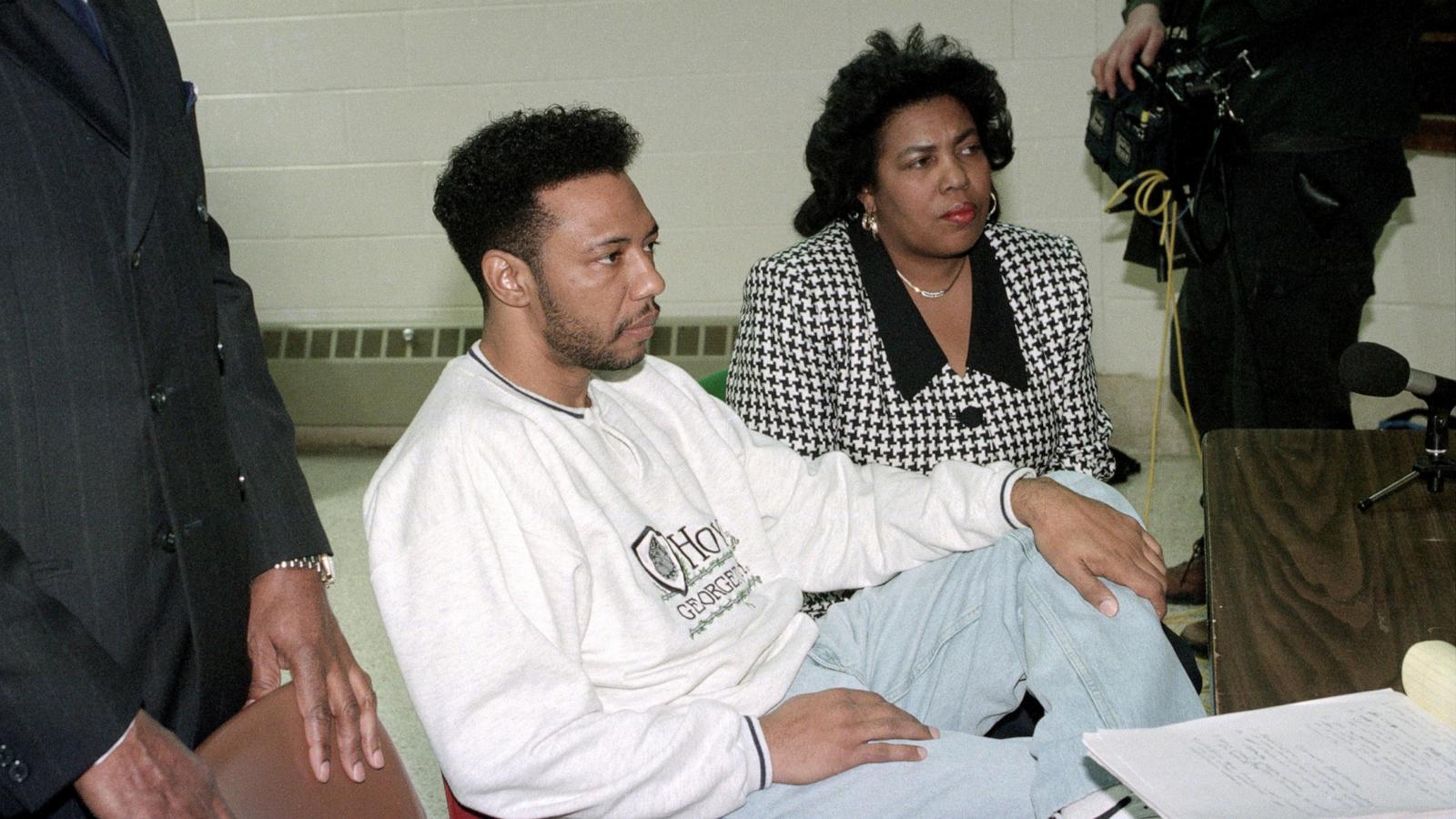
Hoover's criminal history is divided into two distinct eras and include his initial violent rise, all the way to his later leadership of a multi-million-dollar drug empire from behind bars.
On February 26th, 1973, William "Pooky" Young, a 19-year-old drug dealer, was abducted and shot to death in a Chicago alley with prosecutors proving that Hoover had ordered the hit.
Following the death of William Young, Hoover was arrested and tried in Illinois state court, was found guilty and sentenced to 150 to 200 years in prison.
While in state prison, Hoover rebranded the Gangster Disciples "Growth & Development" with him claiming to be a community leader promoting non-violence and political activism.
However, federal investigators found he was actually running a "monolithic" criminal organization with 30,000 members in 35 states, generating roughly $100 million annually in drug sales.
In May 2025, President Donald Trump commuted Hoover's federal life sentences to "time served," however, despite the federal commutation, Hoover remains incarcerated.
Because his state crime occurred before 1978, when Illinois abolished discretionary parole, he is technically eligible for parole and his legal team is currently petitioning the Illinois Prisoner Review Board and for his release.
14 - Joseph Czuba
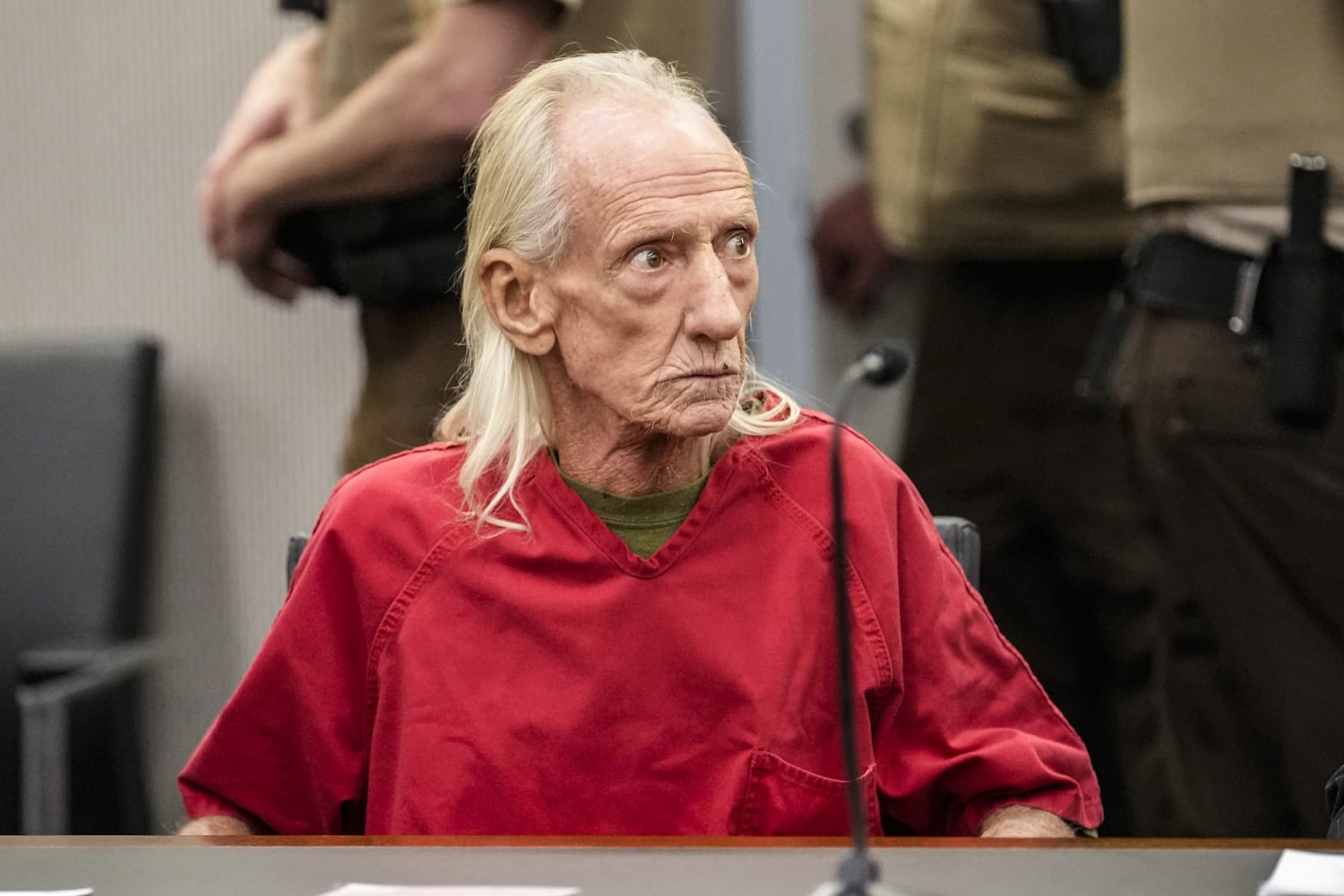
On October 14th, 2023, in Plainfield Township, Illinois, the 71-year-old landlord attacked his tenants, 32-year-old Hanan Shaheen and her 6-year-old son, Wadea Al-Fayoume.
Prosecutors stated that Czuba, fueled by anti-Muslim sentiment and paranoid rhetoric regarding the conflict in Gaza, forced his way into the apartment and strangled Shaheen also stabbing her over a dozen times.
While Shaheen escaped to a bathroom to call 911, Czuba turned his attention to Wadea and the young boy was stabbed 26 times with a 7-inch serrated military-style knife, later dying from his injuries, but his mother survived.
Evidence showed Czuba had become "obsessed" with the war in Israel and feared a "national day of jihad," and, during the attack, he reportedly shouted, "You Muslims must die!"
Czuba’s trial in Will County lasted five days and featured harrowing evidence that deeply affected the jury, who deliberated for less than 90 minutes before finding Czuba guilty on all counts, including first-degree murder, attempted murder, and hate crimes.
During sentencing, it was revealed that Czuba was suffering from Stage 4 cancer and less than three months after his sentence began he died in the custody of the Illinois Department of Corrections.
13 - Paul Modrowski
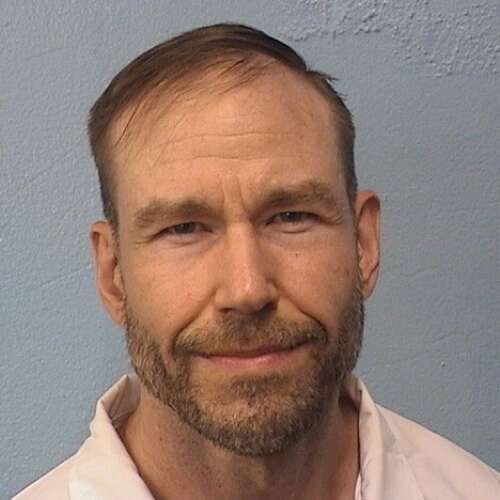
The case centers on the brutal killing of 22-year-old Dean Fawcett, a man who was part of a check-fraud scheme in late 1992 with Paul Modrowski and a man named Robert Faraci.
In December 1992, Fawcett disappeared and his body was discovered in January 1993 along railroad tracks in Barrington, Illinois, with Robert Faraci’s wife implicating Modrowski claiming he killed Fawcett to silence him about the check-fraud scheme.
Modrowski, however, maintained that he was not present during the murder that occurred near the site and time of the infamous 1993 Brown’s Chicken massacre that he was also suspected of having involvement in.
Modrowski and Faraci were tried simultaneously but with two separate juries with Faraci's jury finding him not guilty despite the fact that he was the one actually accused of pulling the trigger.
Modrowski’s jury found him guilty of first-degree murder under the theory of accountability meaning they believed he didn't necessarily kill Fawcett but provided the gun and car used in the crime.
In a rare move, the judge sentenced Modrowski to life in prison without the possibility of parole even though he had noted that he was not the shooter, but believed the "cold" nature of the crime warranted the maximum penalty.
After years of exhausted appeals, Modrowski’s legal team filed a motion for post-conviction relief in 2022, arguing that his life sentence was unconstitutionally excessive.
His sentence was later reduced from life to 60 years, and under Illinois "day-for-day" credit rules for time already served, Modrowski was deemed to have completed his sentence immediately.
Paul Modrowski was released on July 2nd, 2024 and he is currently a free man at age 51, though his conviction for the murder still stands.
12 - William Heirens
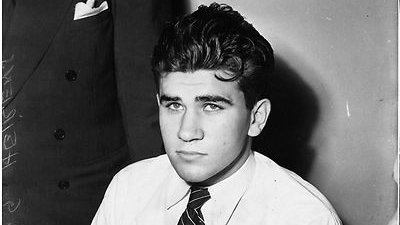
Known infamously as the "Lipstick Killer," Heirens was a 17-year-old University of Chicago student when he was arrested in 1946 with his case labeled as one of the most controversial in American history.
He was accused of three high-profile murders in Chicago that terrified the city and included the deaths of Josephine Ross, Frances Brown and 6-year old Suzanne Degnan who was kidnapped from her bedroom.
Heirens was caught in June 1946 while committing a burglary and his path to conviction is a textbook example of pre-Miranda rights police tactics where he was hit over the head with three clay flowerpots, causing a skull fracture.
Without a warrant or parental consent, police injected the 17-year-old with sodium pentothal, and, under its influence, he spoke of an alter-ego named "George" who committed the murders.
Heirens was held for six days without access to an attorney and later claimed he only pleaded guilty to avoid the electric chair, a threat his own lawyers reportedly pressured him with given the intense public outcry.
On September 4, 1946, Heirens pleaded guilty to the three murders and 26 additional counts of burglary and assault, was given three consecutive life sentences and became the first Illinois inmate to earn a four-year college degree.
At the time of his death, he was reputedly the longest-serving prisoner in American history, having spent over 65 years behind bars.
11 - James Files
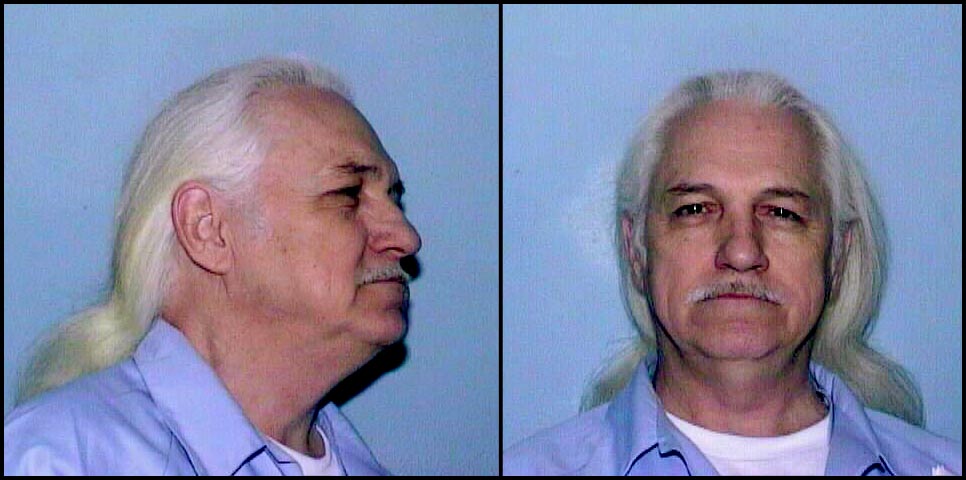
Files and an accomplice, David Morley, were confronted by two detectives, David Ostertag and Gary Bitler, while in possession of a stolen vehicle.
During a roadside gun battle, Detective Ostertag was shot in the chest and seriously wounded with Files and Morley fleeing the scene on foot, but they were apprehended a few hours later.
Files was found to be in possession of a 9mm pistol and an AK-47, though the rifle jammed during the encounter and he was charged with two counts of attempted murder, aggravated battery with a firearm, and armed violence.
A jury found him guilty on all counts and the judge sentenced Files to 30 years for the shooting of Detective Ostertag and 20 years for the attempted murder of Detective Bitler, to be served consecutively.
This 50-year sentence was viewed as a virtual life term given his age at the time and while serving his sentence at Stateville Correctional Center, Files became a household name among conspiracy theorists.
In 1994, Files gave a televised interview claiming he was a CIA/Mob contract killer and stated he fired the fatal headshot that killed JFK from behind the fence on the Grassy Knoll.
To support his story, a shell casing was "discovered" at the site in 1987 with distinctive teeth marks on it with Files claiming that he bit his casings as a "signature."
The FBI investigated his claims in 1994 and officially labeled them "not credible," with most historians and ballistics experts dismissing his story as a fabrication intended to gain notoriety while in prison.
Files spent 25 years in the Illinois Department of Corrections before he was paroled in May 2016 due to Illinois sentencing laws.
10 - Martin James Durkin
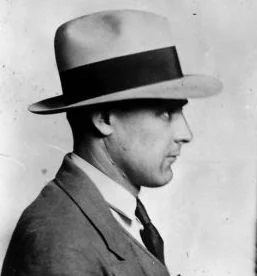
Born in Ireland and raised in Chicago, Durkin was a career criminal by his early 20s, but, unlike the rough-and-tumble street thugs of the era, Durkin was a specialist, a high-end automobile thief.
Durkin would pose as a wealthy prospective buyer at luxury dealerships, and after inspecting an expensive car and promising to return with cash the next day, he would burglarize the garage that night.
He was an expert at "cold-plated" cars, meticulously changing serial numbers, motor stamps, and assembly parts to make stolen vehicles untraceable.
Before his interaction with federal agents, he had already shot and wounded four police officers who had attempted to interfere with his operations and became known as a "desperate gunman."
In late 1925, the FBI was tracking Durkin for violating the Dyer Act, and Special Agent Edwin C. Shanahan received a tip that Durkin was hiding a stolen car in a Chicago garage.
Thinking the tip was a dud, the local officers left to find their relief, but minutes later, Durkin drove into the garage and Shanahan, now alone, stepped out to make the arrest.
Durkin utilized a "ruse" to distract the agent, suddenly drawing a revolver from the front seat and shooting Shanahan through the chest, with Shanahan managing to fire back but collapsing and dying almost instantly.
On January 20, 1926, federal agents and local police surrounded a train just outside St. Louis and stormed Durkin’s private compartment, arresting him before he could reach the two loaded revolvers he kept by his side.
Prosecutors fought for the death penalty, however, the jury compromised, and Durkin was sentenced to 35 years for murder with him given an additional 15 years, ordered to run consecutively after his murder sentence for the interstate auto thefts.
Durkin served nearly 20 years at Stateville Prison before he was immediately handed over to federal authorities to serve his theft sentence at Leavenworth Federal Penitentiary.
9 - Juan Luna
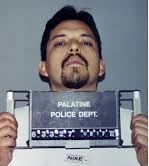
On a frigid Friday night in Palatine, Illinois, 18-year-old Juan Luna and his high school friend, James Degorski, entered the Brown’s Chicken & Pasta restaurant just before its 9:00 p.m. closing time.
Luna, a former employee of the restaurant, knew the layout and the closing procedures and the duo reportedly wanted to do "something big" and chose the restaurant for a robbery.
After ordering a four-piece chicken dinner to ensure no other customers were present, they forced the seven people inside into the walk-in cooler and freezer before systematically murdering everyone in the building.
Before fleeing with less than $2,000, the killers mopped up blood, collected shell casings, and cut the power, with the bodies of the deceased discovered by police at 3:00 a.m. after family members reported the victims had not returned home.
The Palatine Police Department followed thousands of leads, but with no murder weapon and few witnesses the case went cold for years and the restaurant was eventually razed in 2001.
The breakthrough came in March 2002 when Anne Lockett, an ex-girlfriend of James Degorski, finally went to the police and claimed that on the night of the murders, two men had confessed to her while also providing unpublished details.
Forensic investigators had also preserved a piece of partially eaten chicken found in a trash can at the crime scene in 1993 and, using DNA technology, scientists matched the saliva on the bone to Juan Luna.
On May 16, 2002, both Luna and Degorski were taken into custody with Luna providing a videotaped confession, though he later tried to recant it, claiming it was coerced.
Luna’s trial began in April 2007 with the prosecution using both the DNA evidence and a palm print found on a napkin, with the jury finding Luna guilty on all seven counts of first-degree murder.
While the prosecution sought the death penalty, a single juror voted against it, which spared Luna's life and he was sentenced to life in prison without the possibility of parole.
Juan Luna has spent the last two decades in the Illinois Department of Corrections and was held at the Stateville Correctional Center until it closed in 2025, when he was moved to the Danville Correctional Center.
8 - Robert Crimo III
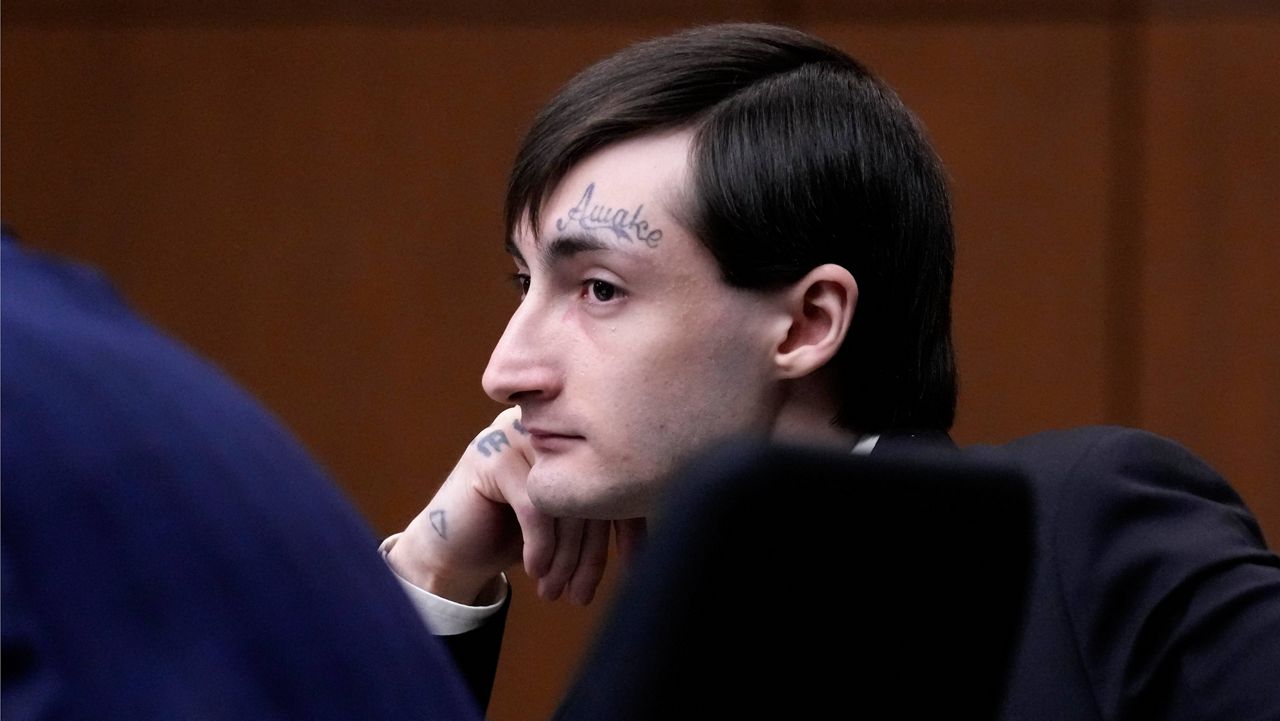
On the morning of Independence Day in Highland Park, Illinois, the community gathered for its annual parade, but, unknown to them, 21-year-old Robert Crimo III had positioned himself on the roof of a local business overlooking the parade route.
Disguised in women's clothing to hide his facial tattoos and blend into the fleeing crowd afterward, Crimo opened fire with a high-powered Smith & Wesson rifle, firing more than 80 rounds into the spectators.
Seven people were killed, ranging in age from 35 to 88 years old, and dozens of others were wounded, including an 8-year-old boy who was left paralyzed.
Crimo dropped the rifle and walked away from the scene, blending into the panicked crowd before travelling to Madison, Wisconsin, and reportedly contemplated a second attack before returning to Illinois.
Apprehended during a traffic stop later that evening, Crimo’s path to justice was marked by significant delays with him maintaining a "not guilty" plea and even briefly attempting to represent himself in late 2023.
On March 3rd, 2025, as the jury selection was concluding and opening statements were imminent, Crimo abruptly changed his plea to guilty on all 55 counts against him, including 7 counts of first-degree murder.
Crimo was sentenced to 7 consecutive life sentences on April 24th, 2025, and was also sentenced to an additional 50 years for each of the 48 attempted murder counts.
He is currently serving a 2,400 year sentence in the Illinois Department of Corrections.
7 - Raymond Lee Stewart
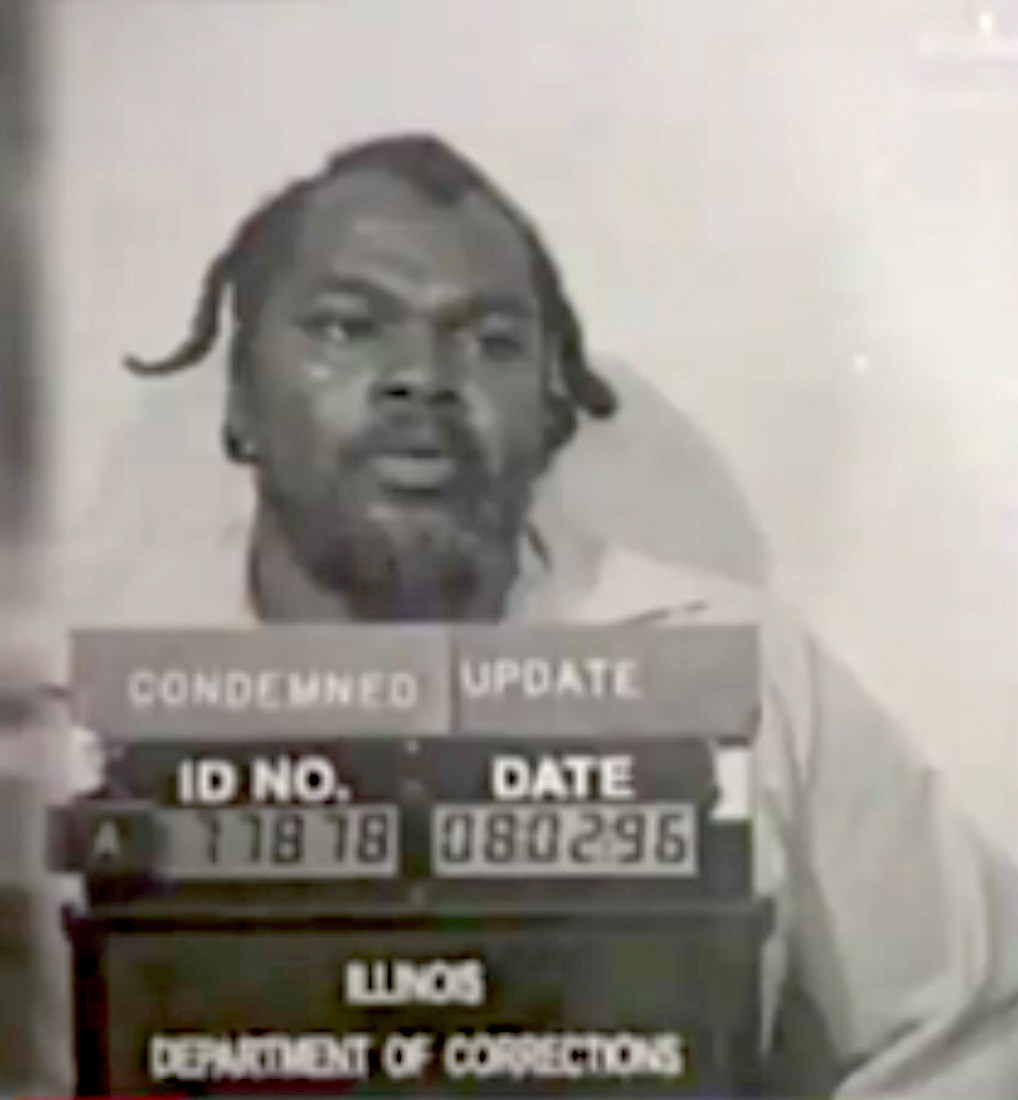
Born in North Carolina in 1952, Stewart’s early life was defined by extreme deprivation and brutality with his father an alcoholic who physically abused him and he was kicked out of his home at age of 14.
By 1981, Stewart was living in Rockford and spiraling, reportedly enraged by several events that included a landlord refusing to return a $50 security deposit and discovering that his girlfriend had undergone a tubal ligation without telling him.
His six-day rampage began on January 27th 1981, when entered Fredd’s Groceries in Rockford, shot and killed the owner, Willie Fredd, and and a stock boy, Albert Pearson who was just 20-years old.
Next he moved to a Clark gas station and shot Kevin Kaiser, a young attendant five times before he robbed an E-Z Go station and murdered the attendant, Kenny Foust.
On February 2nd, the killing spree crossed state lines into Wisconsin, where at a RadioShack, Stewart forced two men, Richard Boeck and Donald Rains to the back of the store and shot them both in the head.
The manhunt ended in North Carolina on February 21, 1981, after Stewart's own father provided information to the police in exchange for a $4,400 reward and he was later convicted of three of the murders and sentenced to death.
During his 1982 trial, Stewart made a daring attempt to flee the courtroom, but he was shot in the shoulder by a deputy and was later found hiding in a large oil drum nearby.
During his appeals, Stewart claimed he targeted white victims out of rage for the assassinations of JFK and Martin Luther King Jr, however, prosecutors noted his first two victims, Willie Fredd and Albert Pearson, were Black.
Stewart spent 15 years on death row at Stateville Correctional Center before his execution by lethal injection on September 18th 1996.
6 - Michael Alfonso
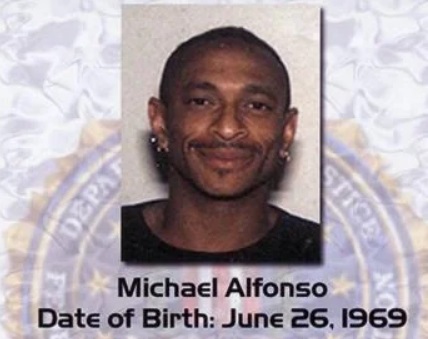
Alfonso’s criminal history is defined by extreme violence against women who tried to leave him, including Sumanear Yang, his 23-year-old former girlfriend who he shot and killed in 1992.
Following the murder, he fled to Texas, where he was eventually caught, however, due to a series of legal maneuvers and name changes he served only a fraction of his potential time before being released and returning to Illinois.
On June 5th, 2001, Alfonso confronted another ex-girlfriend, 28-year-old Genoveva Velasquez, in the parking lot of a restaurant where she worked in Wheaton and shot her to death in broad daylight, fueled by jealousy.
Immediately after the 2001 murder, Alfonso vanished, and his ability to evade capture for over three years made him a priority for federal authorities before he was named the 476th person added to the FBI’s Ten Most Wanted.
Alfonso had fled across the border into Mexico and investigators later discovered that he had moved through Guatemala and Belize, frequently changing his appearance and using various aliases to blend in with local populations.
The case was featured on America’s Most Wanted and local Mexican television networks and, in July 2004, a viewer in Mexico, recognized Alfonso from a broadcast and contacted the FBI.
On July 15, 2004, Mexican federal agents, working in coordination with the FBI, arrested Alfonso without incident and he was extradited back to Illinois to face justice for both the 1992 and 2001 killings.
Charged with two counts of first-degree murder, intentional homicide of an unborn child, aggravated stalking, and kidnapping, Alfonso entered a guilty plea to the murders to avoid the death penalty.
On July 11th, 2007, a County judge sentenced Michael Alfonso to the rest of his natural life in prison without the possibility of parole where he is currently serving two consecutive life terms.
5 - Richard Speck
A 24-year-old drifter and merchant seaman with a "Born to Raise Hell" tattoo, Speck broke into a townhouse in Chicago's Jeffery Manor neighborhood that served as a dormitory for student nurses from South Chicago Community Hospital.
Around 11:00 p.m., armed with a pistol and a pallet knife, Speck entered the back door and initially claimed he only wanted money to go to New Orleans.
He herded the women into a bedroom and bound their hands and feet with strips of bedsheets before leading the women out one by one and murdering them in different rooms.
Speck was caught because Corazon Amurao, a 23-year-old student nurse managed to crawl under a bunk bed and Speck believed there were only eight women in the house.
Because Mary Ann Jordan was an unexpected guest, he lost count and left the house at 3:30 a.m. without checking under the last bed, with Amurao waiting until 6:00 a.m. to ensure he was gone.
After a massive manhunt, Speck was identified via fingerprints left on a bedroom door and the description of his tattoo provided by Amurao, later attempting suicide by slashing his wrists and elbow at a "skid row" hotel.
He was taken to Cook County Hospital, where a young surgical resident recognized the "Born to Raise Hell" tattoo from newspaper reports and alerted the police.
The jury deliberated for only 49 minutes before finding him guilty and he was originally sentenced to death in the electric chair, but his sentence was commuted to eight consecutive life terms after a Supreme Court Ruling.
On December 5th, 1991, the day before his 50th birthday, Richard Speck died of a massive heart attack.
4 - Girvies Davis
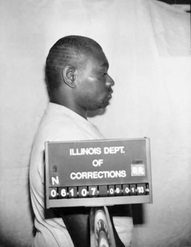
Between 1978 and 1979, a series of robberies and murders terrorized the St. Louis metropolitan area and Southern Illinois, with the perpetrators targeting both elderly individuals in rural homes.
Four people were murdered, mostly during the home invasions and Davis often committed these crimes with Richard "Ricky" Holman, who was 17 at the time.
Police claimed that after his arrest, Davis provided a handwritten note admitting to 11 murders and eventually signed a total of 20 confessions for other various crimes.
Because Holman was a minor, he was ineligible for the death penalty and received a life sentence, but Davis was sentenced to death and spent over 15-years on death row at the Stateville Correctional Center.
Davis was believed to be the first death row inmate to use the Internet to advocate for his life, but Governor Jim Edgar refused to intervene and Davis became the fifth person executed in Illinois after the reinstatement of the death penalty.
His case is frequently cited as a prime example of why Illinois eventually abolished the death penalty in 2011, as the state recognized the high risk of executing the wrongly convicted.
3 - Charles Albanese
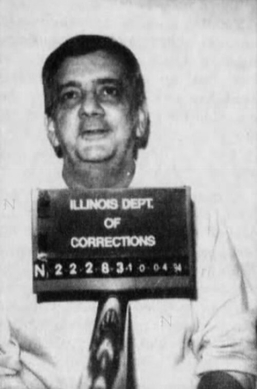
In 1980, Charles Albanese appeared to be a successful family man and professional while living in McHenry, Illinois, he worked as an executive at his family’s business, Allied Die Casting, in nearby Spring Grove.
But behind the scenes, Albanese was drowning in debt and living an extravagant lifestyle he couldn't afford, while embroiled in a bitter dispute over the future of the family company.
He realized that by eliminating his father and his wife's elderly relatives, he could gain control of the business and inherit a significant amount of money that was estimated at over $500,000 in the 1980's.
Albanese chose arsenic as his weapon because its symptoms that included nausea, vomiting, and diarrhea, mimicked the "stomach flu" or general decline in the elderly, making it easy to overlook.
Albanese’s mother-in-law was the first to die and her death was initially attributed to natural causes, but after Charles’ father suddenly died from a mysterious illness, Charles immediately took over the company.
His wife’s grandmother died under similar circumstances three months later and Charles also began poisoning his brother, Michael Albanese, but he survived, albeit with permanent neurological damage.
The "luck" of Charles Albanese ran out when Michael’s doctors grew suspicious of his sudden, unexplained paralysis and hair loss, classic signs of heavy metal poisoning.
Tests revealed Michael had lethal levels of arsenic in his system and authorities immediately exhumed the bodies of M.J. Albanese and Mary Reitz, with both found to be riddled with arsenic.
Investigators found that Charles had purchased a large quantity of arsenic from a chemical supply house, claiming he needed it to "kill pests" at the family business.
In a bizarre and cold-blooded twist, it was discovered that Charles had been placing the arsenic in homemade cookies and food he brought to his family members during their "recovery" from previous bouts of illness.
He was found guilty of the murders of his father and mother-in-law, as well as the attempted murder of his brother and was sentenced to death.
2 - John Wayne Gacy
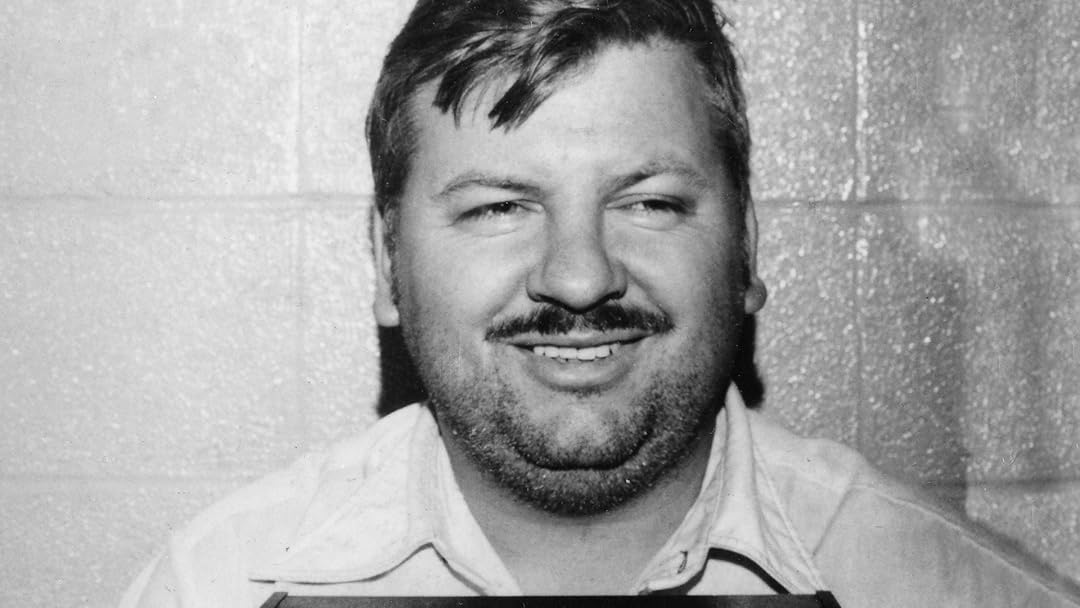
In the 1970s, John Wayne Gacy was a respected figure in suburban Norwood Park, Illinois, and ran PDM Contractors, a successful construction firm that employed many local teenagers.
He was a Democratic precinct captain and was famously photographed with First Lady Rosalynn Carter in 1978, while frequently dressing as a clown to perform at children’s hospitals and neighborhood block parties.
Beneath the civic-minded exterior, Gacy was a predator who had the terrifying ability to project the image of a model citizen that fundamentally changed the public’s understanding of the "serial killer next door."
His victims were almost exclusively young men and teenage boys, many of whom he lured to his home with promises of construction work or by posing as a police officer to "arrest" them for minor infractions.
Gacy utilized what he called the "handcuff trick" where he would persuade victims to put on handcuffs to see how they worked, then reveal he had no key.
Once they were restrained, he subjected them to hours of assault and most of his victims were killed by strangulation using a "garrotte" and 29 of his victims were buried in the crawl space beneath his house.
When police visited Gacy's home, they noticed a faint, sickening odor of putrefaction and they also found Robert Piest's photo receipt in Gacy's trash with Piest having vanished on December 11th, 1978.
On December 21st, 1978, investigators obtained a second search warrant where they then began digging in the dirt floor of the crawl space and discovered a human bone.
Seeing his charade was over, Gacy confessed to his lawyers and then to the police, famously stating that there were 33 victims, some dumped in the river, and that he was the 34th.
Gacy’s trial began in February 1980 and was a sensation, featuring testimony about his "alter egos" and his attempts to plead insanity, but the jury saw right through it and found him guilty of 33 counts of murder.
He was sentenced to death on March 13th, 1980, a sentence that was carried out after 14 years on death row at Menard Correctional Center where he was moved after his trial.
Gacy was executed by lethal injection at Stateville Correctional Center on May 10th, 1994, famously eating a last meal of KFC and a pound of strawberries.
1 - Edward Spreitzer
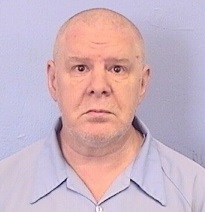
Inseparable from the "Chicago Ripper Crew," a satanic cult-like quartet that committed some of the most grisly and ritualistic murders in American history, Edward Spreitzer was implicated in the abduction and murder of several women.
The total number of the crew's victims is estimated to be between 10 and 20, with Spreitzer, who was brought in for questioning, soon breaking down under interrogation and providing voluntary, videotaped confessions.
He admitted to his role in several murders and, perhaps most importantly, implicated the Kokoraleis brothers Andrew and Thomas.
Spreitzer was tried for multiple murders and his defense focused on his low intelligence and his alleged "brainwashing" by the charismatic and dominant Robin Gecht, the gangs leader.
The jury was unmoved by the "follower" defense and he was convicted of several counts of first-degree murder and sentenced to death in 1984.
In a historic move just before leaving office, Illinois Governor George Ryan commuted the death sentences of all 167 inmates on death row to life in prison, citing his "grave concerns" about the fundamental fairness of the Illinois capital punishment system.
Edward is currently one of the few members of the Ripper Crew still alive and incarcerated while serving at least 120 years.
Thanks for watching, if you enjoyed Stateville Correctional Center you will love two more of our videos, Louisiana State Penitentiary on the left and USP Hazelton on the right, we will see you in the next article.
About the Creator
Vidello Productions
My name is William Jackson, a YouTube content creator and crypto enthusiast with over 167,000 subscribers and I make videos that are focused on the billionaire lifestyle and crime.
I make top list videos in true crime and lifestyles.
Enjoyed the story? Support the Creator.
Subscribe for free to receive all their stories in your feed.
Comments
There are no comments for this story
Be the first to respond and start the conversation.