
Top 10 Brutal True Crimes That Shocked Chicago
From the horrific murders of The Lipstick Killer, to the terrifying killing spree of the Serial Killing Clown,these top 10 brutal true crimes shocked the city of Chicago to its core.

10 - The Lipstick Killer
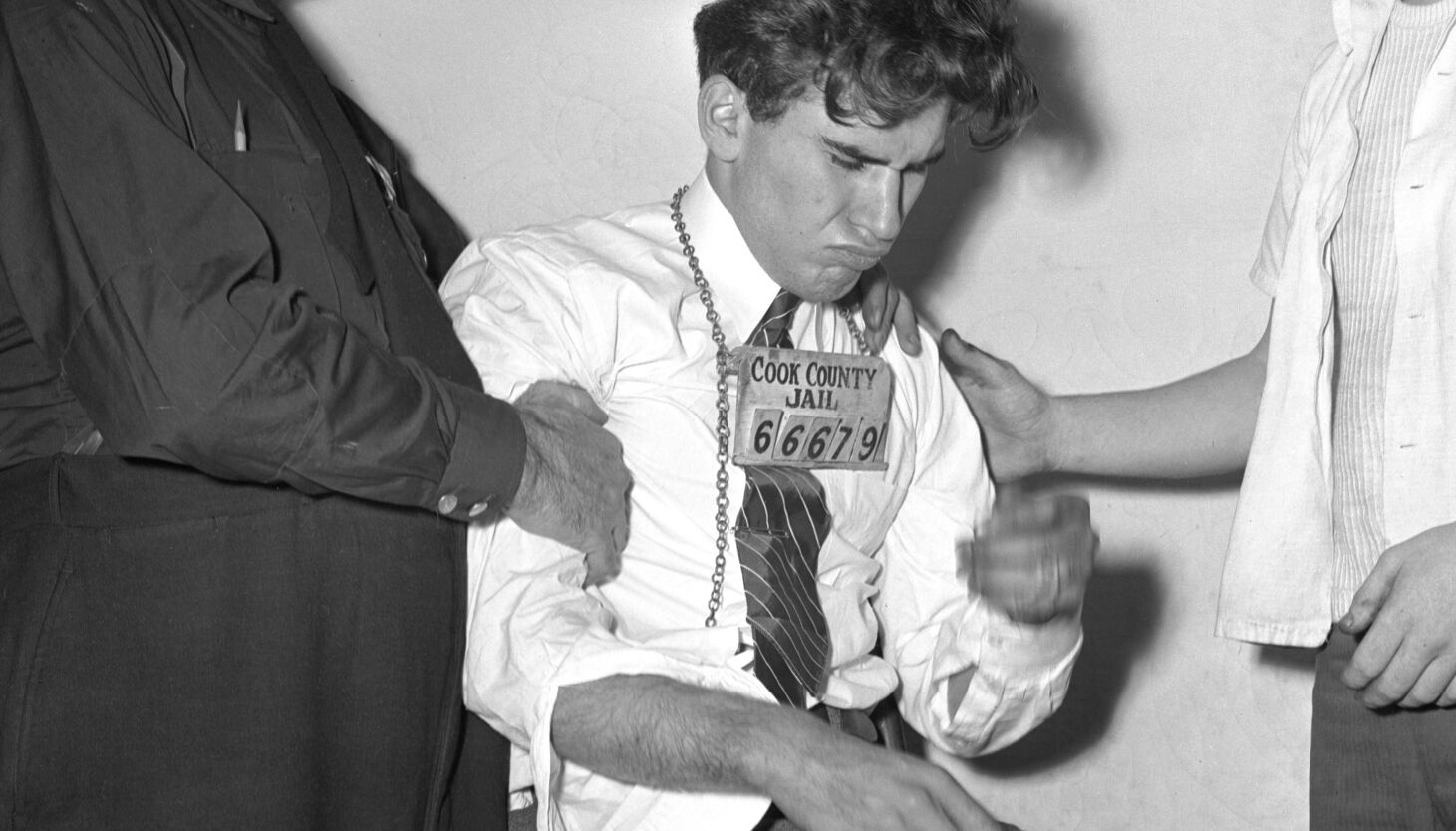
In the mid-1940s, Chicago was a city already weary from war when it was plunged into a state of panic by a series of brutal murders and a haunting message scrawled on a bedroom wall.
The spree began in June 1945. Chicago police were called to the apartment of Josephine Ross, a 43-year-old woman found stabbed to death. While there were no signs of robbery, the brutality suggested a personal or manic motive.
Months later, the killer struck again, but this time he left a signature that would define the case with a message written in lipstic that said "For heavens sake catch me before I kill more I cannot control myself."
The message transformed a series of local murders into a national sensation, however, the worst was yet to come and in January 1946, 6-year-old Suzanne Degnan was abducted from her bedroom.
The pressure on the Chicago Police Department was immense and, in June 1946, they arrested 17-year-old William Heirens, a student at the University of Chicago, after he was caught during a burglary.
Heirens wasn't your typical hardened criminal, he was a bright, clean-cut teenager and the interrogation that followed became a point of massive legal and ethical controversy.
Heirens was interrogated for six days without a lawyer, was allegedly beaten and injected with sodium pentothal and, while under the influence, reportedly spoke of a "George Murman," an alter ego who committed the crimes.
Facing the threat of the electric chair, Heirens eventually pleaded guilty to the murders of Ross, Brown, and Degnan to secure a life sentence.
Heirens died in prison in 2012 at the age of 83, and was, at the time, the longest-serving inmate in United States history while never loosing the nickname of "The Lipstick Killer"
9 - The Englewood Strangler
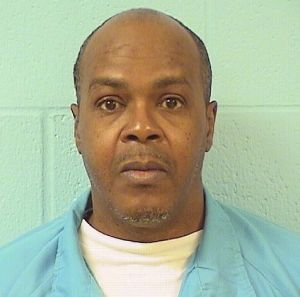
A grim reminder of how serial killers often prey on the most marginalized members of society, the crimes of the Englewood Strangler went unnoticed by the public for far too long.
Between 1990 and 1995, the Englewood neighborhood of Chicago became a dumping ground for a predator with most victims were almost exclusively African American women.
Because of the victims' lifestyles and the high crime rate in the area at the time, these disappearances and deaths were often treated as isolated incidents or "misadventures" and ignored.
Victims were typically strangled sometimes with bare hands, other times with articles of their own clothing and the bodies were left in abandoned buildings, weed-choked lots, or garbage dumpsters.
By 1995, the body count had risen to at least 12 women and the community, which had finally began to take notice of the mounting body count, began to whisper about a "Boogeyman."
In 1999, DNA technology, which was rapidly evolving, finally provided the breakthrough the Chicago Police Department needed and evidence from several crime scenes was linked to a single man, Andre Crawford.
Crawford was not a mastermind, he was a local man who lived within the very neighborhood he terrorized and when he was arrested in January 2000, he gave a confession that was as graphic as it was cold-blooded.
Crawford admitted to the murders of 11 women with some neighbors describing him as a quiet, unremarkable man who blended completely into his local community.
Crawford was eventually convicted in 2009 and sentenced to life in prison without the possibility of parole with him passing away behind bars in 2017, but the community believed that if these women had been from wealthier, whiter neighborhoods, the Task Force would have been formed years earlier.
8 - The Grant Park Serial Killer

Lester Harrison’s criminal history began long before his infamous spree in the 1970's when he was serving time for robbery at the Southern Illinois Penitentiary and beat a fellow inmate to death with an iron rod.
He was found not guilty by reason of insanity and sent to a psychiatric hospital, a decision that would later be viewed as a fatal error, he was eventually deemed "restored to sanity."
Released back into society in the late 1960's, Harrison settled in Chicago and became a fixture in Grant Park, the city’s massive lakefront green space, a place he would later use to hunt his victims.
In July 1970, the body of Agnes Lehmann was found beaten in Grant Park and, that same night, a factory worker named Wilbur McDonald was found unconscious nearby, having been mugged by an unknown assailant.
In a rush to solve the case, police focused on McDonald and despite his protests of innocence, he was convicted of Lehmann's murder and sentenced to 150 years in prison.
Harrison struck several more times over the next three years, murdering Judith Bettelley in 1972 and Lee Alexis Wilson in 1973.
The spree ended on August 13th, 1973 when Harrison attacked Judith Elaine Ott, a visitor from Seattle, in a public restroom in Grant Park but she fought back and her screams alerting her husband, David.
David Ott rushed into the restroom and saw Harrison standing over his wife with a knife, chased him through the park and managed to tackle and hold him until police arrived.
Once in custody, Harrison didn't just confess to the Ott murder, he unburdened himself of the others and police later found newspaper clippings of the murders in his apartment.
Despite his detailed confessions, Harrison’s long history of mental illness took center stage and in 1978, he was again found unfit to stand trial and was committed to a maximum-security mental health facility.
Lester Harrison spent the remainder of his life in institutional custody and he died in 1986 having never actually been convicted of his crimes.
7 - The Crimes of Richard Speck
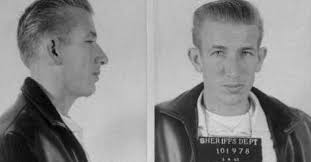
In the Jeffery Manor neighborhood, a large townhouse served as a shared residence for student nurses from the South Chicago Community Hospital and that night, nine women were in the home.
At approximately 11:00 p.m., Richard Speck, a 24-year-old drifter and merchant seaman with a "Born to Raise Hell" tattoo on his arm, broke in through a back window armed with a gun and a knife.
Speck initially told the women he only wanted money for a trip to New Orleans, then herded them into a single bedroom and used nautical knots to bind their hands and feet with torn bedsheets.
Over the next several hours, Speck led the women out of the room one by one and murdered them in a methodical display of depravity, but thanks to a night of heavy drinking, he lost count when one woman vanished.
Corazon Amurao, a 23-year-old exchange student from the Philippines, survived by crawling under a bunk bed while Speck was out of the room and remained under the bed for hours, paralyzed by fear.
The scene inside the townhouse was so gruesome that several veteran officers were visibly shaken and the sole survivor provided a hauntingly accurate description, specifically mentioning the "Born to Raise Hell" tattoo.
On July 17th, Speck was admitted to Cook County Hospital after a failed suicide attempt and a young surgical resident, Dr. LeRoy Smith, recognized the tattoo on the patient’s arm and alerted the authorities.
The trial, which took place outside Chicago, due to the intense media circus, saw Speck found guilty and he was sentenced to death but this was later commuted to eight consecutive life terms, totaling several hundred years.
Speck died of a heart attack in prison sometime during 1991 and this event revealed he was living a life of luxury inside prison, having even obtained female hormones while locked up.
6 - The Crimes of Paul Runge
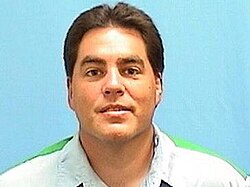
To the outside world, Runge was a blue-collar worker, a handyman and sometimes a delivery driver with his jobs giving him the perfect "mask of sanity, able to enter homes or approach victims under the guise of being a harmless service provider.
What many never saw was the methodical predator who operated primarily in the Chicago area during the mid-to-late 1990s, using his tactics to bypass the natural defenses of his targets.
For years, the Chicago Police Department dealt with a series of unsolved, gruesome murders and for nearly six years, Paul Runge lived as a free man while the families of his victims languishing without answers.
The "cold cases" finally heated up in 2001 due to DNA technology and parole records with investigators re-examining biological evidence which put out a hit on Paul Runge who was already in the system due to a previous 1987 conviction.
When police arrested Runge, the dam broke and he eventually confessed to the murders of seven women and girls, providing details that only the killer could have known.
The legal proceedings against Runge were lengthy and complex, but, in 2006, he was convicted for the murders of Stacey Frobel and Darya Pashkova and sentenced to death.
His story took a final turn in 2011, when then-Governor Pat Quinn abolished the death penalty in Illinois and he is currently serving live without parole in the Menard Correctional Center.
5 - The Serial Clown Killer
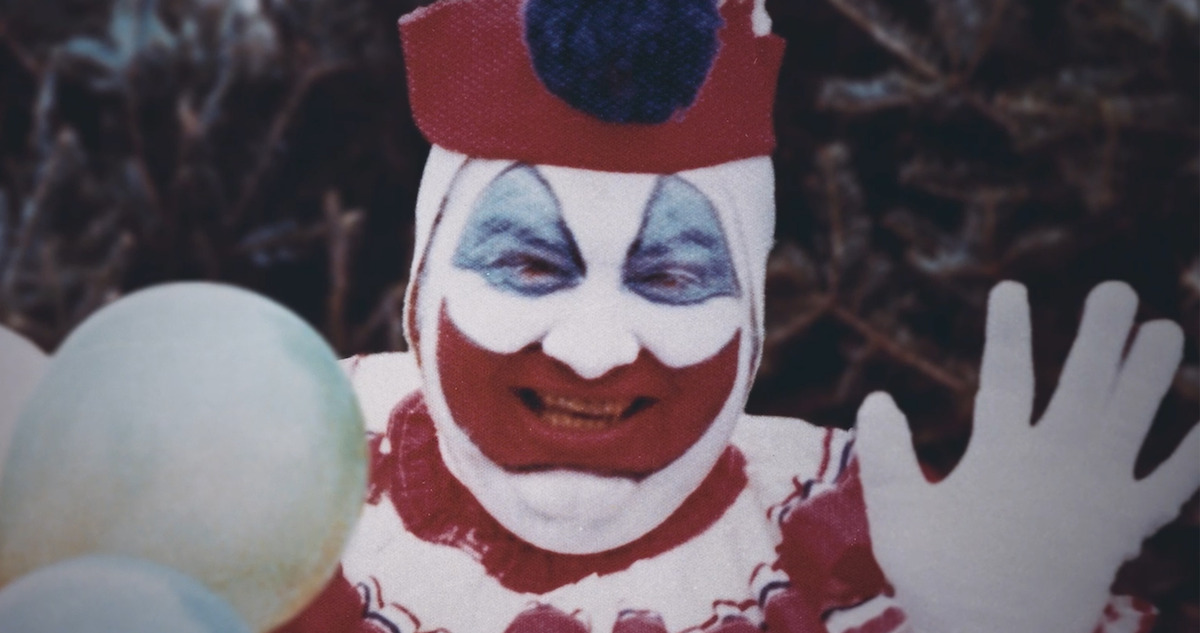
In the 1970's, John Wayne Gacy was a pillar of the Norwood Park community, running a successful remodeling business called PDM Contracting and hosting elaborate neighborhood "summer bashes."
To the public, he was a friendly, overweight man who loved to laugh and famously portrayed his "Pogo the Clown" and "Patches" characters at children's hospitals and community parades.
The highlight of his career came when he had his photograph taken with First Lady Rosalynn Carter in 1978, but behind his charming looks and jolly persona, hid one of the most evil crimes of the 20th century.
Gacy was a predator with a history of violence and had been sentenced to ten years in prison in Iowa for attacking a teenage boy, but was paroled after only 18 months, a failure of the system that would prove fatal for dozens more.
Gacy’s hunting ground was the streets of Chicago and his own business payroll, targeting runaways, hitchhikers, and young men looking for construction work.
Gacy would lure victims to his home and show them a set of handcuffs, claiming he could show them a "magic trick" to escape, but once the victim was restrained, Gacy would reveal his true nature.
By late 1978, the crawl space beneath Gacy’s ranch-style house at 8213 West Summerdale Avenue had become a mass grave and unbeknownst to his neighbors, held over 29 bodies.
The beginning of the end came on December 11th, 1978, when 15-year-old Robert Piest had been working at a pharmacy and told his mother he was going to talk to a contractor but never returned.
Des Plaines detectives focused on Gacy almost immediately and while under 24-hour police surveillance, Gacy’s mental state began to crumble eventually confessing to his lawyers and then to police telling them another four were in the river.
Inside his home they found a receipt for a roll of film belonging to a friend of Robert Piest along with jewelry and ID cards belonging to other missing young men before finding the mass grave.
Gacy’s trial in 1980 was a media circus and his defense team attempted an insanity plea, arguing that Gacy suffered from multiple personality disorders but the jury found him guilty on all counts.
On May 10th, 1994, John Wayne Gacy was executed by lethal injection at Stateville Correctional Center, but it is believed that Gacy may have killed more victims in other states.
4 - The Crimes of HH Holmes
While attending medical school at the University of Michigan, Herman Mudgett began his first profitable crime, insurance fraud, where he would steal corpses from the lab and claim they were victims of accidents to collect life insurance payouts.
In 1886, Holmes arrived in Chicago and adopted the alias of Dr. Henry Howard Holmes, took over a pharmacy in the Englewood neighborhood and and began constructing the building that would secure his place in infamy.
Holmes’ building was a massive, three-story fortress that occupied an entire city block with a first floor holding legitimate storefronts and the upper floors were a labyrinth of horror designed specifically for murder.
Holmes frequently fired contractors so that no one person understood the building's full layout with it containing soundproof rooms, doors that opened to brick walls, and staircases leading nowhere.
Some rooms were fitted with gas lines controlled from Holmes’ bedroom, allowing him to asphyxiate guests at will and trapdoors led to secret chutes that dropped bodies directly into the basement.
The basement was equipped with acid vats and a crematorium where many unsuspecting victims, most of them women, would meet a grisly end without anyone even knowing at the time.
While Holmes later confessed to 27 murders, some estimates suggest the true number could be as high as 200, though modern historians believe the confirmed count is closer to nine.
Holmes wasn't actually caught for his "Castle" murders, instead, he and his longtime associate, Benjamin Pitezel planned to fake Pitezel’s death for a $10,000 insurance payout, but Holmes killed him instead.
A relentless Pinkerton detective named Frank Geyer tracked Holmes across the U.S. and Canada, eventually discovering that Holmes has also murdered three of Pitezel’s children in Toronto and Indianapolis.
Holmes was arrested in Boston in 1894, his trial, was a media sensation and on May 7th, 1896, H.H. Holmes was hanged at Moyamensing Prison in Philadelphia and he was buried 10 feet deep in a coffin encased in concrete.
In 2017, this was confirmed during an exhumation at Holy Cross Cemetery in Yeadon, Pennsylvania, where they found Holmes, still wearing his original clothes and he still even had his mustache.
For years, rumors had persisted about his escape after trial and it was said he had bribed officials to hang a lookalike in his place, but an examination of his teeth proved this to be false.
3 - The Tylenol Murders

Beginning on the morning of September 29th, 1982, in Elk Grove Village, Illinois, 12-year old Mary Kellerman woke up with a head cold for which her parents gave her one Extra-Strength Tylenol capsule, but within hours, Mary was dead.
The mystery deepened later that day in Arlington Heights when 27-year-old postal worker Adam Janus suffered a sudden, fatal "heart attack."
While his family gathered to mourn him that evening, his brother Stanley and sister-in-law Theresa both developed headaches from the stress and reached for the same bottle of Tylenol Adam had used.
Stanley collapsed and died that night and Theresa died two days later, with the connection later pointing to potassium cyanide packed into Tylenol capsules killing seven people overall.
Investigators quickly realized the tampering didn't happen at the factory, with the tainted bottles all coming from different manufacturing plants but sold in the same geographic area of Chicago.
The killer didn't need to be present to see the results, they shoplifted the bottles from stores, took them home, replaced the white powder with deadly cyanide, and then sneakily returned them to the store shelves.
It was a crime targeted directly at those who happened to reach for the most popular painkiller in America, young or old, and the FBI’s hunt eventually narrowed the suspects down to James William Lewis.
Shortly after the murders, Lewis sent a handwritten letter to Johnson & Johnson demanding $1 million to "stop the killing," but he was a "chameleon" with a dark past.
Police caught Lewis in New York City and he admitted to writing the extortion letter but only because he wanted to "draw attention" to the company’s vulnerability and no physical evidence ever linked Lewis to the actual poisonings.
James Lewis died in July 2023 at the age of 76, taking whatever secrets he held to his grave and the murders led to Johnson & Johnson pioneering its "triple-seal" packaging that still exists to this day.
The Tylenol killer was never officially caught, but over the years hundreds of copycat poisonings from other over-the-counter medications followed the murders.
2 - Public Enemy Number One
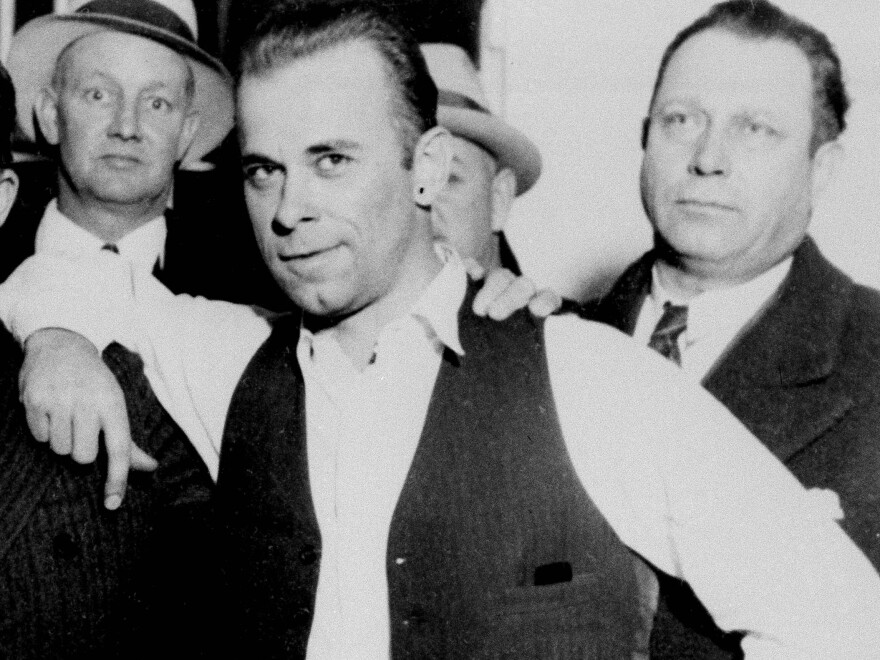
To a desperate public, he was a charismatic rebel who robbed the banks that were foreclosing on their homes, to the FBI, he was a cold-blooded killer and the nation’s first "Public Enemy No. 1.
John Herbert Dillinger wasn't born a mastermind, his first prison stretch was earned after a botched 1924 grocery store robbery in Indiana saw him serve 9-years.
It was behind bars that he "graduated" from a petty thief to a professional criminal, learning the ropes from seasoned bank robbers and when he was paroled in May 1933, he hit the ground running.
In just one year, Dillinger and his rotating "Terror Gang," which at times included Baby Face Nelson and Handsome Jack Klutas, pulled off a string of high-profile heists that embarrassed local police across the Midwest.
He was famous for vaulting over high bank railings with athletic ease, often cracked jokes with tellers and allegedly told customers to keep their own money, saying, "We only want the bank’s."
He used the newest Ford V8 engines to outrun police cruisers and utilized "bulletproof" vests before they were common with his legendary status built on his ability to slip through the fingers of the law.
Shortly after his parole, Dillinger smuggled guns into the prison where his mentors were still held, facilitating a mass escape that became known as The Michigan City Breakout.
In March 1934, while held in the "escape-proof" Crown Point Jail in Indiana, Dillinger allegedly used a piece of wood carved into a pistol to bluff his way past guards.
He stole the Sheriff’s personal car and drove across state lines, a move that finally gave the newly formed FBI federal jurisdiction to hunt him down with F.B.I Director, J. Edgar Hoover declaring he was wanted dead or alive.
After a shootout in Wisconsin, where the FBI botched an ambush, allowing Dillinger to escape into the woods, the hunt became a personal vendetta for Hoover, who had been humiliated.
By July 1934, Dillinger was hiding in Chicago under the alias "Jimmy Lawrence," and had undergone crude plastic surgery to alter his fingerprints and face, but couldn't hide from his own social circle.
A Romanian brothel owner facing deportation, struck a deal with the F.B.I and lured Dillinger to the movies on July 22nd, 1934 to watch the gangster film Manhattan Melodrama.
After leaving the theatre, Dillinger sensed a trap, reaching for his pistol, he ran toward an alley, but federal agents opened fire, hitting him three times and he died in the alleyway at the age of 31.
Dillinger’s death marked the end of the era known as "The Golden Age of Gangsters," and within months, Pretty Boy Floyd and Baby Face Nelson were also killed and the era of the modern, high-tech federal agent began.
1 - The St. Valentine’s Day Massacre
The bloodiest and most iconic entry in the history of American organized crime, the "Beer Wars" of Prohibition-era Chicago were being run by legendary gangster Al "Scarface" Capone.
By 1929, Chicago was a divided city, ruled Capone's terrifying South Side Gang, they controlled the bulk of the city's illegal booze, gambling, and prostitution with the North Side Gang, their rivals, led by George "Bugs" Moran.
Moran had been hijacking Capone’s liquor shipments and had even attempted to assassinate Capone’s top lieutenants, but Capone, who was operating from his winter home in Florida, decided it was time to "exterminate" the North Side leadership.
The plan was orchestrated by Capone’s "enforcer," Jack "Machine Gun" McGurn who lured Moran’s gang to a garage at 2122 North Clark Street under the guise of a hijacked shipment of high-quality Old Log Cabin whiskey.
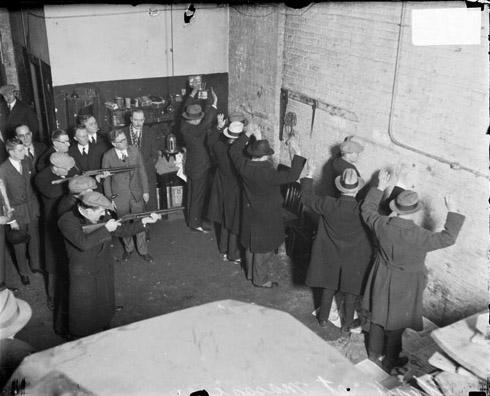
At approximately 10:30am, seven members of the North Side Gang were waiting inside the garage when a black Cadillac pulled up outside with four men stepping out of the car.
Two were dressed in full police uniforms, and two were in civilian suits with the North Side members ordered to line up against the brick wall with their backs turned.
The four executioners then opened fire with two Thompson submachine guns, a shotgun, and a pistol with all seven members of the North side killed instantly and only a German Shepard living through the execution.
The primary target, Bugs Moran, escaped after he had been running late that morning and, seeing the "police car" outside the garage, ducked into a nearby coffee shop to avoid arrest.
When Bugs Moran was told about the carnage he instantly knew that Capone was to blame and while he was never actually charged with the massacre, it was the beginning of the end for Chicago's most brutal criminal.
Two years later, Eliot Ness and the "Untouchables" along with IRS agent Frank Wilson, finally took Capone down for income tax evasion and the infamous warehouse where the massacre occured was demolished.
The infamous "massacre wall" was disassembled, and the bricks were eventually sold to a Canadian businessman who briefly displayed them in a nightclub restroom.
The original bricks from the wall are currently owned by the Mob Museum in Las Vegas, Nevada, where they are exhibited behind a glass pane.
Thanks for watching, you can check out more shocking crime videos with two on this page, on the right we have a top 50 on the UK and on the left a top 50 on the USA, we will see you in the next video!
About the Creator
Vidello Productions
My name is William Jackson, a YouTube content creator and crypto enthusiast with over 167,000 subscribers and I make videos that are focused on the billionaire lifestyle and crime.
I make top list videos in true crime and lifestyles.
Enjoyed the story? Support the Creator.
Subscribe for free to receive all their stories in your feed.
Comments
There are no comments for this story
Be the first to respond and start the conversation.