
The Woman Who Slept Through the End of the World
A survivor's account of the last hours of Jonestown

The tent glowed gold at dusk. Somewhere near the front, a choir rose into harmony, and hundreds of voices answered it, swaying together under strings of bare bulbs. Children chased each other between the benches. Elderly women fanned themselves and traded plates of rice and stewed greens with strangers who felt, by then, like family. A man near the stage called out a promise about a world where skin color carried no weight, where the old and the poor received care instead of neglect, where everybody ate.
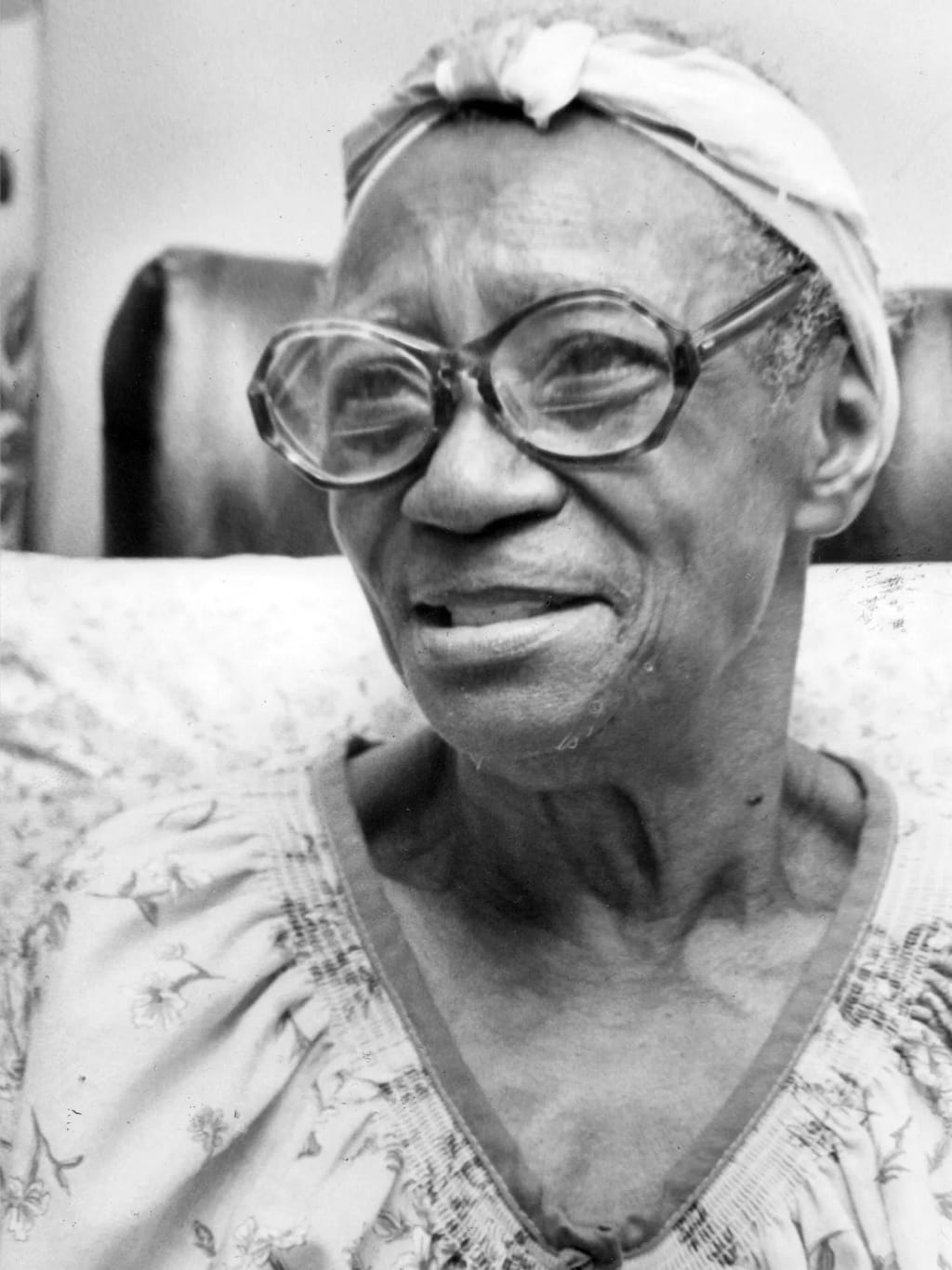
Hyacinth Thrash sat among them, her hands placed in her lap, her heart full.
She had come to Peoples Temple in Indianapolis during the early 1950s, drawn by a preacher who welcomed Black congregants into a church where white members knelt beside them as equals. That alone felt radical enough to build a life around. Jim Jones spoke of integration and justice at a time when many pulpits offered silence instead. He organized soup kitchens, nursing homes, job placement for the desperate. To an aging Black woman who had lived through decades of exclusion, the Temple looked like the answer to a prayer she'd stopped expecting God to hear.
She and her sister Zipporah followed the church west to California, then further still, all the way to a patch of jungle in Guyana that the members called the Promised Land.
This is where the story usually begins with the ending already written into it — the cyanide, the syringes, the nine hundred bodies found among the pavilion. Yet the people who walked into that jungle in 1977 and 1978 carried genuine hope with them. Understanding what happened at Jonestown means starting where they started: inside a dream, before anyone could see where it led.
The compound rose fast from cleared jungle, a settlement of a thousand people cut into land an hour from the nearest town by boat. Cottages lined muddy paths. A sawmill hummed. Rows of cassava and citrus stretched toward the trees. For a while, the settlement functioned as advertised — a self-sustaining agricultural community, a haven from the racism and poverty many members had spent their lives escaping.
Isolation crept in slowly enough that few members noticed the exact hour it arrived.
Guyana sat thousands of miles from anyone who might intervene. Passports collected into a single locked cabinet. Letters home passed through Temple censors before mailing, and letters arriving from outside underwent the same screening in reverse. The nearest town required a full day's travel by truck and boat, and few members held the means or permission to attempt it. Loudspeakers wired throughout the camp carried Jones's voice around the clock — sermons, propaganda, paranoid warnings about mercenaries and CIA agents supposedly circling the jungle, all broadcast at volumes loud enough to reach every cottage, every field, every dream.
The heat pressed down constantly, thick and wet, and mosquitoes thrived in the humidity. Sickness spread through the crowded dormitories. Food grew scarce as the population outpaced the fields' yield, and members who once ate freely found themselves rationed onto watery servings of rice.
Then came the drills Jones called White Nights.
An alarm would sound, sometimes near midnight, and members gathered at the pavilion half-asleep to hear Jones warn of imminent attack. He described mercenaries approaching through the trees, informants among them, a government closing in to destroy what they'd built. He asked members to demonstrate loyalty through a rehearsal: drink from a vat, understand this represents the ultimate sacrifice a community might one day face together. Some nights the liquid held nothing more than fruit punch. The rehearsal itself mattered more than the contents.
By the fall of 1978, White Nights had become routine enough that members grew weary rather than afraid of them. Weariness, it turned out, served the same function as fear. Either emotion kept people quiet.
Hyacinth, seventy-six years old by then and slowed by a bad hip, watched the settlement change around her from inside a small cabin she shared with Zipporah. She'd traveled too far and given too much to consider leaving. Where would an elderly Black woman with little money go, alone, an ocean away from home? The Temple had become the only family she possessed.
On November 17, 1978, Congressman Leo Ryan arrived at Jonestown's airstrip, accompanied by journalists and a handful of relatives worried about family members inside the compound. Ryan had come to investigate reports of abuse and captivity, allegations the Temple denied at every turn.
For a day, the visit proceeded almost cordially. Members performed for the cameras, insisting on their happiness, their freedom to leave whenever they chose. Yet as Ryan prepared to depart on November 18, a small group of Temple members approached him quietly, asking to leave with his party. Their defection, witnessed by Jones and the wider community, cracked something open that could hardly close again.
At the airstrip, Temple gunmen opened fire on Ryan's departing group. The congressman died there, along with three journalists and one defector, while others scrambled into the brush wounded.
Back at the pavilion, Jones gathered his community and told them the end had arrived. This White Night carried no rehearsal in it.
A vat of grape-flavored punch, laced with cyanide and sedatives, passed among the crowd. Parents fed it to their children first. Armed guards ringed the pavilion's edges, and few among the nine hundred present found any path toward escape, even among those unwilling to drink.
Hyacinth heard the commotion from her cabin — the amplified instructions, the screaming that followed, gunfire cracking somewhere near the pavilion. Zipporah, unable to move quickly given her own frailty, urged her sister toward safety. Hyacinth lowered herself to the floor and slid beneath her bed, pressing herself against the boards, and stayed there through the noise and the silence that eventually replaced it.
She remained under that bed for close to a full day.
Morning arrived on November 19 with a stillness that felt wrong before Hyacinth understood why. The birds sang as they always had. The insects hummed. Yet the voice that had filled the camp for a year and a half through crackling speakers had gone quiet, and its absence pressed on the air like a held breath.
Hyacinth crawled from beneath the bed on hands that trembled from a night spent pressed against the floorboards. Her hip screamed against her, and still she pulled herself upright, holding the doorframe, and stepped outside into humidity already thickening under the morning sun.
She called for Zipporah. Nothing answered her.
She made her way toward the pavilion, expecting, perhaps, to find the community gathering for morning announcements as it always had, expecting the ordinary rhythm of camp life to resume around her the moment she rounded the path. Instead, bodies covered the ground in every direction, family groups collapsed together, arms still wrapped around one another in final embraces that death had frozen in place.
She searched among them for her sister and found her.
For hours, Hyacinth wandered the settlement she had called home, one of perhaps only a handful of people left breathing among more than nine hundred who lay in the grass and the mud around her. Guyanese soldiers arrived eventually, discovering her seated near the pavilion, and she gave them the only explanation she carried: she had hidden, and she had survived, and she understood no more of the reasoning behind it than they did.
Hyacinth Thrash lived another decade after Jonestown, eventually settling back in Indianapolis, where she spent her final years telling her story to anyone willing to listen. She insisted, until she died in 1995, that she held no regrets about joining the Temple in its early years — the civil rights vision it once represented had felt real to her, worth the life she'd built around it. What came later, she believed, belonged to Jim Jones alone, a betrayal of everything the community first promised its members.
Her account resists the version of Jonestown reduced to a punchline about drinking the Kool-Aid, a phrase that flattens nine hundred individual lives into a single act of mass delusion. Hyacinth's story insists on something harder and truer: that ordinary people, hopeful and searching for dignity the world had withheld from them, walked willingly into a tragedy they never could have predicted from where they started. Her survival, born from an old woman's aching hip and a hiding place beneath a mattress, offers no lesson beyond the plainest one — that history often turns on the smallest, most unremarkable choices, and that the people who lived through its worst chapters deserve to be remembered as more than a headline.
About the Creator
Nolan Reed
I write true stories, including unsolved mysteries and events that actually happened.
Enjoyed the story? Support the Creator.
Subscribe for free to receive all their stories in your feed.
Comments
There are no comments for this story
Be the first to respond and start the conversation.