
The Setagaya Family Murders: Japan's Most Puzzling Unsolved Crime
The Unanswered Questions of the Setagaya Murders


It’s a story that sounds like the plot of a crime thriller—meticulously planned murder, eerie evidence, and a trail of clues that seem to lead nowhere. Yet this tale isn’t fiction. It’s the chilling, real-life mystery of the Setagaya Family Murders, a case so bizarre and haunting that even decades later, it continues to baffle investigators, inspire theories, and leave an entire nation unsettled.
On the surface, Setagaya, a quiet neighborhood in Tokyo, seems like the last place you’d find such a gruesome tale. But in the early hours of December 31, 2000, a family of four was brutally murdered in their home, and the killer—who left behind more evidence than any amateur would—seemingly vanished into thin air. Who was this person? Why did they target the Miyazawa family? And how is it possible that, with DNA evidence, fingerprints, and even the killer’s belongings, justice still hasn’t been served?
Pour yourself a strong cup of tea—this mystery only gets stranger the deeper you dig.
The Miyazawa Family: Ordinary Lives, Shattered Forever
The victims at the center of this unspeakable tragedy were the Miyazawa family. Mikio Miyazawa was a 44-year-old father who worked for a marketing company. His wife, Yasuko, was 41, a loving homemaker and a dedicated mother. Their two children, Rei, a 6-year-old boy, and Niina, an 8-year-old girl, were full of life and innocence.
The Miyazawas lived in a small but cozy home in the Setagaya ward of Tokyo. Their house was located in an area that had once been bustling with families, but by the year 2000, many nearby properties were abandoned or earmarked for demolition to make room for new developments. This left the Miyazawa house isolated, creating the perfect setting for a crime no one would see coming.
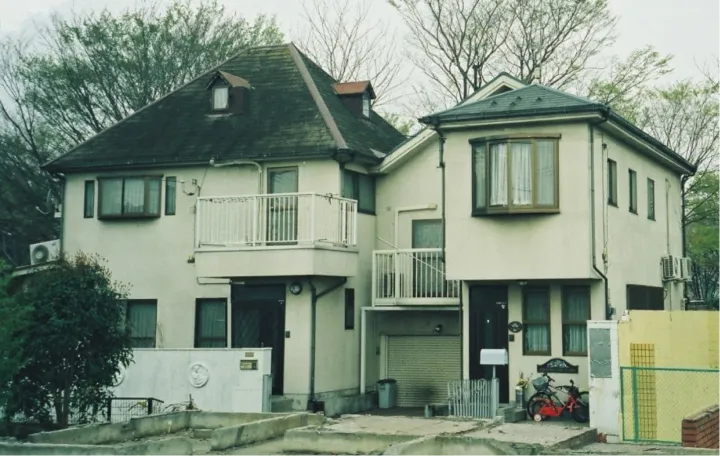
December 30, 2000: The Calm Before the Horror
On the evening of December 30th, everything appeared normal. The family went about their routines. Mikio used the computer while Yasuko and Niina likely spent time relaxing. Little Rei was already asleep. Nothing seemed amiss.
Sometime during the night, however, the unthinkable happened. An intruder broke into the Miyazawa home, brutally murdered all four family members, and then—here’s where it gets chilling—spent hours in the house afterward, as if completely unbothered by what he’d just done.
The Crime Scene: A Killer Who Didn’t Cover His Tracks
The next day, on December 31st, Yasuko’s mother, unable to reach the family, visited their home. What she discovered was a nightmare. All four family members had been killed. Mikio was found downstairs, having been stabbed multiple times and possibly strangled. Yasuko and Niina were upstairs, also stabbed to death in the children’s room. Rei, the youngest, appeared to have been strangled in his sleep.
If the brutality wasn’t unsettling enough, the details of the scene added a surreal layer to the crime. The killer, for reasons no one can explain, stayed in the house for hours. Evidence suggests he ate ice cream from their refrigerator, used their bathroom, leaving traces of his feces unflushed, and scattered documents and belongings throughout the house. He even used their computer, accessing websites and attempting to book theater tickets.
And as if that wasn’t enough, he left behind his clothes. Yes, the killer not only wore clothes during the attack but stripped some of them off afterward and left them neatly behind, including a sweater, a hat, gloves, and a fanny pack.
The killer also left bloodstains, fingerprints, and even DNA. It was as though he wanted to leave a calling card, confident that no one would ever find him.
The Evidence: A Treasure Trove That Leads to Nowhere
In most murder cases, a single strand of DNA or fingerprint is enough to send investigators chasing down leads. In the Setagaya case, police had enough evidence to start their own crime lab. Blood samples at the scene revealed both the victims’ blood and the killer’s blood, indicating the attacker had injured himself during the stabbing. The intruder left fingerprints all over the house—on surfaces, papers, and even the ice cream packaging.
The killer’s clothing was analyzed and found to be highly unusual. The sweater, for instance, was made in Korea and sold in only a handful of Japanese stores. Investigators tracked the sweater’s sales and discovered that only a few dozen had been sold. Despite this, they hit a dead end.
To make things even stranger, the killer’s DNA indicated mixed Asian and European ancestry. Investigators deduced that he may have had a connection to Korea, possibly living there at some point, or had heritage that pointed to a Eurasian family background.
How Japan's Biggest Murder Investigation Changed the Country Forever
Theories: Who Was the Killer?
The baffling evidence has sparked countless theories over the years. Some believe the killer was a drifter or a foreigner passing through Japan, explaining why no one recognized him. Others suggest he may have been a local who blended in so well that he escaped detection.
There’s also speculation about the motive. Was this a robbery gone wrong? It seems unlikely since the killer didn’t take valuables from the home. Was it personal? Investigators found no evidence of a grudge or known enemies.
Then there’s the theory that the killer was mentally disturbed, which might explain his bizarre behavior—eating food, browsing the computer, and leaving clothes behind. But even this doesn’t fully explain the precision of the crime itself.
Decades Later: A Haunting Legacy
Despite having more evidence than most murder cases in history, the Setagaya Family Murders remain unsolved. Over 280,000 officers have worked on the case, making it one of the largest investigations in Japanese history. The Miyazawa home was eventually demolished, but the memory of what happened lingers like a shadow over the neighborhood.
The family’s relatives continue to seek answers, and every year, the case resurfaces in Japan’s media, reigniting hope that one day, justice will be served. Until then, the Setagaya Family Murders remain a chilling reminder of how a mystery can leave a lasting mark—not just on a family, but on an entire nation.
The killer walked into a house, committed a heinous crime, and walked right back out into the world, leaving behind enough clues to fill a detective novel. So, who was he? Why did he do it? And most importantly, how did he manage to slip away into the night, never to be seen again?
About the Creator
Marveline Merab
“The only impossible journey is the one you never begin.”
― Anthony Robbins
Enjoyed the story? Support the Creator.
Subscribe for free to receive all their stories in your feed.
Comments
There are no comments for this story
Be the first to respond and start the conversation.