
The Murder of Rachel Nickell
a review of the new Netflix documentary
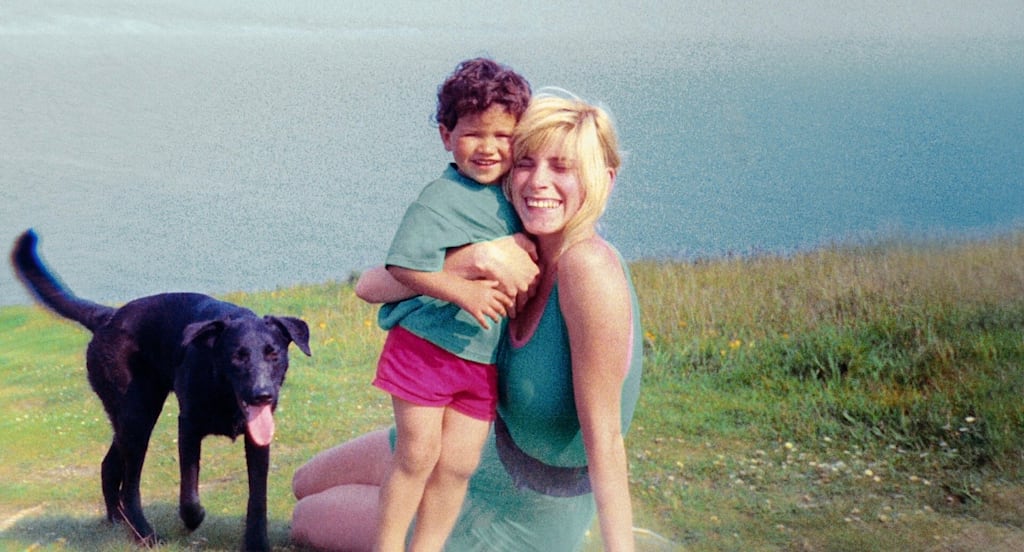
This is, without a doubt, one of the most heartbreaking documentaries I've ever watched. Going into this completely blind, with no prior knowledge of the real-life case, made the experience of watching it ten times better, but it also made it ten times more devastating.
Rachel Nickell was a 23-year old woman who was stabbed to death in southwest London, specifically in Wimbledon Common, on the 15th of July 1992. Rachel was walking through the common with her two-year-old son, Alexander, when she was murdered. According to the passer-by who discovered the scene, Alexander was found clinging to his mother's lifeless body.
At the time of her death, Rachel lived with her partner Andre Hanscombe. Andre was away at work that day, so Rachel decided to take Alexander and walk the family dog through the common, something they did together on a regular basis. While the circumstances of Rachel's murder (being attacked while walking through a well-known safe area in broad daylight) were deeply unsettling, the nature of the attack itself was even more shocking: she was stabbed forty-nine times in the neck and torso, and was sexually assaulted.
She died at the scene.
Alexander was, surprisingly, physically unharmed.
This left investigators facing a unique challenge: not only were they trying to identify the person who had brutally murdered a young woman in the middle of the morning in a safe, well-respected area, but the only eyewitness they had was the victim's two-year-old son.
The circumstances surrounding the murder sparked immediate public outrage and intense media scrutiny, placing significant pressure on the Metropolitan Police to identify the person responsible. Investigators questioned thirty-two men in connection with the killing, but their focus soon narrowed to Colin Stagg, a Roehampton resident known to walk his dog on the common. With no forensic evidence linking him to the crime scene, detectives turned to criminal psychologist Paul Britton to develop an offender profile of the killer. Convinced that Stagg matched it, they enlisted Britton’s help in designing a covert operation, code-named Operation Edzell, intended to test whether he might implicate himself or eliminate himself as a suspect. The operation later drew heavy criticism from both the media and the trial judge, who described it as little more than a “honeytrap.”
As part of the operation, an undercover policewoman made contact with Stagg while posing as the friend of a woman he had previously corresponded with through a lonely hearts’ column. Over five months, she tried to elicit incriminating information by cultivating what appeared to be a romantic relationship, meeting him, speaking with him by telephone, and exchanging letters containing explicit sexual fantasies. During one meeting in Hyde Park, the conversation turned to the Nickell murder. Stagg later maintained that he only engaged with the topic because he was interested in pursuing a relationship and did not want to jeopardise it.
When the case reached the Old Bailey in September 1994, Mr Justice Ognall ruled that the police had shown “excessive zeal” and attempted to incriminate Stagg through “deceptive conduct of the grossest kind.” He excluded all evidence from the operation, finding that Stagg’s alleged descriptions of the murder were not as consistent with the reality of the crime as investigators had claimed. With no evidence left to rely on, the prosecution withdrew its case, and Stagg was ultimately acquitted.
So, time continued to pass with no further suspects identified and no justice served for the murder of Rachel Nickell.
Then, sixteen months later, a shocking development occurred. Single mother Samantha Bisset and her four-year-old daughter, Jazmine, were murdered in their flat in Plumstead, London. Police quickly recognised similarities between the Bisset murders and the killing of Rachel Nickell. At the scene, they recovered a man’s fingerprints, which were later identified as belonging to Robert Napper. In 1995, Napper was convicted of the Bisset murders.
On 28 November 2007, fifteen years after Rachel Nickell’s death, Napper was formally charged with her murder.
The most disturbing part of the documentary comes in its final ten minutes. It is revealed that, a couple of years before Rachel Nickell was murdered, Robert Napper’s mother contacted the police to report that her son had confessed to her that he had raped a woman. However, the police never followed up on that information.
Had they done so, they may have been able to arrest and convict him, preventing him from going on to harm anyone else. Had they done so, three more people might not have lost their lives. Had they done so, two-year-old Alexander would not have had to grow up without a mother.
About the Creator
Enjoyed the story? Support the Creator.
Subscribe for free to receive all their stories in your feed.
Comments
There are no comments for this story
Be the first to respond and start the conversation.