
The Court Got It Right. That’s the Problem.
A routine ruling in a hair-salon death case made people cheer. When basic fairness feels like a surprise, something deeper is broken.
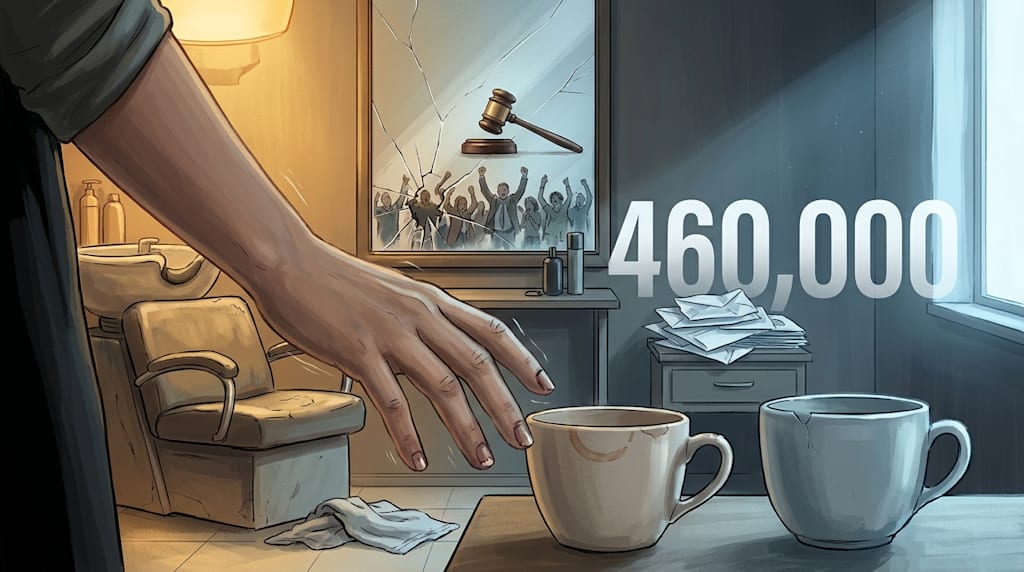
When the old man was carried out of the hair salon, the employee’s hands were still shaking. He had just pinched the man’s philtrum, leaving a faint crescent-shaped mark on the man’s upper lip. The family later cited that mark in its lawsuit as evidence of “improper rescue.”
The family demanded 460,000 yuan. They gave three reasons: the salon did not wait for the old man to adjust to the temperature difference before washing his hair; the employee did not respond promptly when the old man showed discomfort; and pinching the philtrum was the wrong rescue method. Neither the first-instance nor the second-instance court supported the claim.
The judgment was clear. Hair washing is a normal service, and the old man took part voluntarily. The salon could not have foreseen his special physical condition or the risk of sudden illness. After the incident, the employee and the owner met their duty of safety within reasonable limits. Pinching the philtrum is not a standard emergency procedure, but it was a good-faith response by an ordinary person in a sudden crisis. It did not amount to fault.
The second-instance court added one more point. A business owner’s duty of safety is not unlimited liability. It has to match the industry and the owner’s capacity to control risk. The old man died from a sudden onset of an underlying disease. The salon had no way to foresee it, prevent it, or avoid it. The employee’s rescue was voluntary and urgent. The method had flaws, but there was no intent and no gross negligence. Under the Civil Code’s emergency-rescue immunity clause, he did not have to bear civil liability.
The reasoning holds. The court did not follow the emotion of “whoever dies is in the right.” It returned to the basic elements of tort liability: fault, causation, whether liability exists, and whether the duty of safety stayed within reasonable limits. The old man’s death is a tragedy. The family’s grief is understandable. Grief still cannot become a reason to shift liability.
What does 460,000 yuan mean to a salon employee? It could be more than a decade of work with nothing spent on food or rent. If the court had ruled the other way, it would have destroyed more than one ordinary worker’s life. It would have damaged the public’s basic sense of whether doing a good deed is safe.
So the ruling deserves support. What makes it hard to feel happy is that it had to be treated as a surprise.
On the day the judgment came out, people cheered online. Someone posted a screenshot with three words: “We won.” But what did anyone win? A normal judgment should not make people cheer. You do not post about walking down a street without being beaten up. But if people are beaten up on that street every day, one safe walk might make you breathe a sigh of relief. Breathing a sigh of relief is normal. Posting about it means the street has a problem.
The street has a problem. People no longer assume the law protects good faith. They treat “the law did not wrong a good person” as unexpected luck. That cheer is the relief of surviving a disaster. When a society expects justice to sink to the level of “not wronging good people,” the society is in crisis. “Not wronging good people” is the minimum. It should not be a trending victory.
One popular claim needs correction. The Peng Yu case did not have “too little influence.” It left a shadow that has not faded, and judicial credibility has not recovered enough. People do not remember the complex facts that came later. They remember the line: “If you didn’t knock him down, why did you help him up?” That line sits in public memory like a thorn. Whenever a similar case appears, it aches. The thorn distorts what people expect from courts. A ruling that follows the law and imposes no liability should be ordinary. Instead, people treat it as a rare case of “good people finally being protected.” Nobody won anything here. The system simply failed to punish a good deed, and everyone exhaled.
Francis Bacon said: “One unjust judgment does more harm than many unjust acts. For those unjust acts merely pollute the stream, while an unjust judgment corrupts the source.” If the source is corrupted, the stream cannot stay clean. Judicial credibility builds unevenly. Bad news hits harder than good news. One unjust ruling can shake people more than a thousand fair ones can reassure them. In the internet age, any case can spread fast, and individual injustice gets multiplied. Public trust often forms through the cases people happen to see. Case by case, distrust accumulates until judicial credibility faces habitual doubt. People will not believe the whole system is fair because of one good ruling. They will suspect the whole system because of one bad one.
That is why cases like this keep trending. Each one carves another crack in the mirror of judicial credibility. The cheering over this hair-salon ruling shows how overdrawn public trust has become. Under the Peng Yu shadow, people’s expectations for these cases are badly distorted. They no longer expect the law to protect good faith as a matter of course. They treat “the law did not wrong a good person” as luck. The louder the relief, the weaker the baseline.
The hidden cost of “whoever makes the loudest fuss is in the right” matters more. On the surface, it is one unreasonable claim. In practice, it changes how people expect to behave. The judgment will not record that cost. The cost shows up at the next emergency. The next time an old person collapses in a salon, will the employee dare to pinch the philtrum right away? He may first take out his phone to record. He may ask, “Are you okay? Say something.” He may turn to the manager and ask, “Is this our responsibility?” By then, the golden rescue window may be gone. He may also remember the number 460,000. He may remember his monthly pay and how many years he would need to save that much. Then his hands slow down. That is not coldness. It is rational self-protection frightened into people by individual cases.
The law should protect the vulnerable. Protecting the vulnerable does not mean handing out damages to whoever makes the most noise. The law should provide relief for harm. Relieving harm does not mean making the faultless pay. Tort liability should depend on fault, causation, and whether liability exists. It should not depend on who is more miserable, who makes more noise, or who claims more money. Otherwise, the punishment falls on everyone willing to lend a hand in a crisis.
Some people will say: if the risk is this high, then “a gentleman does not stand under a crumbling wall.” Mind your own business. Be less of a good person. As personal advice, that is understandable. As a rule for society, it is dangerous. The modern rule of law should tear down the crumbling wall and lower the risk of rescue. Court reasoning should be public. Standards for similar cases should be unified. Typical cases should be released. The emergency-rescue immunity clause should be printed in employee manuals and posted on salon walls. Business liability insurance and social rescue funds should be in place. Media should stop using headlines like “Good Samaritan Saves Person, Gets Sued.” Those headlines attract clicks, but each one drives another thorn into public memory. Mencius said a gentleman does not stand under a crumbling wall. A civilized society must also ask why the wall is still standing and who should tear it down.
The court’s ruling is admirable because it returned to the law. Hair washing is a normal service. The owner could not foresee a sudden illness caused by a special physical condition. After the incident, the owner met the duty of safety within reasonable limits. Pinching the philtrum was not professional, but it was a good-faith emergency response, with no intent and no gross negligence. Under the Civil Code’s emergency-rescue immunity clause, there was no civil liability. Article 184 establishes emergency-rescue immunity. Article 1198 sets the “reasonable limits” of the duty of safety. Both point in the same direction. The law encourages good-faith rescue without pressing unlimited liability onto rescuers. Business owners have a duty of safety, but that duty is not unlimited. It must match the industry and the owner’s capacity to control risk.
Supporting this ruling does not mean denying the family’s grief. The old man’s death is a tragedy. The family’s pain is real. The law still cannot infer liability backward from a tragedy. It cannot find someone to pay just because the family makes a scene. Fairness, justice, reasonableness, and legality mean deciding liability by law. If there is liability, bear it. If there is none, do not. Pay what should be paid. Do not pay a cent more. That is fairness to the dead, the family, the employee, and the owner.
The salon employee went back to work. With the next customer, he tested the water with the back of his hand and asked, “Is this temperature okay?” The customer said yes. He started washing. Everything was normal. That normal should not need a court to confirm it. One day, a ruling like this should fail to trend, because everyone will think: that is how it should have been all along.
About the Creator
Jin
Writer of reamstories
https://reamstories.com/jin
Enjoyed the story? Support the Creator.
Subscribe for free to receive all their stories in your feed. You could also become a paid subscriber, letting them know you appreciate their work.
Comments
There are no comments for this story
Be the first to respond and start the conversation.