tv review
Big crimes, small screen; true crime television series and TV documentaries that recreate and reexamine some of the mystifying and grisliest cases in history.
Fourth Wing
What if your biggest fear becomes the path to your greatest destiny? In Fourth Wing, bestselling author Rebecca Yarros brings you into a thrilling world of dragons, battles, secrets, and strength a story filled with adventure, danger, love, and a heroine who refuses to back down.
By Muhammad Hayatabout a year ago in Criminal
Never Lie
Never Lie by Frieda McFadden is a psychological thriller that will keep readers on the edge of their seats from the first page to the last. With a story full of twists, secrets, and psychological tension, this book takes readers on a wild ride into the minds of its complex characters. Packed with suspense and mystery, Never Lie is the perfect choice for anyone who loves a story filled with shocking revelations and heart stopping moments.
By Muhammad Hayatabout a year ago in Criminal
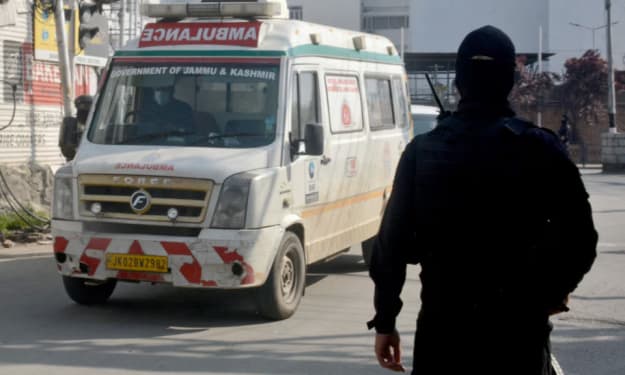
Deadly Attack on Tourists in Kashmir: 26 Killed, 17 Injured. Content Warning. AI-Generated.
A Tragic Blow to Peace and Tourism.In a shocking incident that has shaken the nation, a brutal attack in the Anantnag district of Jammu and Kashmir left 26 tourists dead and 17 others seriously injured. The assault, which occurred in April 2025, has once more brought to light the precarious security situation in the area and raised serious concerns about the safety of the valley's civilian population, particularly tourists.
By IKRAM POLOKabout a year ago in Criminal
The Dancing Boys of Afghanistan. Content Warning. AI-Generated.
Introduction: An Ancient Evil Resurfaces In the shadow of Afghanistan’s rugged landscapes and war-torn cities, a centuries-old tradition has reemerged with a modern-day brutality: bacha bazi, or “boy play.” This practice, which involves the sexual exploitation of young boys by powerful men, thrives in a climate of lawlessness and corruption. The 2010 documentary The Dancing Boys of Afghanistan, directed by Afghan journalist Najibullah Quraishi, pulls back the curtain on this horrifying reality, exposing a world where children are commodified, abused, and silenced. Through undercover footage, survivor testimonies, and chilling encounters with perpetrators, the film reveals how poverty, impunity, and cultural complicity enable this systemic abuse. This article delves into the documentary’s revelations, the historical roots of bacha bazi, and the urgent call for global action to protect Afghanistan’s most vulnerable.
By David Snamabout a year ago in Criminal
Walk the Plank. AI-Generated.
It had rained all night in the city of Fairview. The streets still shimmered under the morning haze, the scent of wet asphalt hanging in the air. At precisely 6:47 AM, the body of Terrence Hall—a respected community leader and activist—was discovered lying face-down near the old shipyard, a rotting plank from a cargo crate splintered beside him. His skull had been crushed. No signs of a struggle. No weapon in sight. Detective Nathan Boone stood over the yellow tape, sipping lukewarm coffee. He’d known Hall. Everyone had. A loud, fearless man who’d rallied youth programs, taken on corrupt councilmen, and cleaned up the notorious 9th Ward. Hall had made enemies, no doubt—but murder? Boone examined the scene with his usual sharpness. The plank wasn’t from any structure nearby—it was aged, warped, likely driftwood. There were no security cameras in that forgotten part of the city. Whoever did this had planned it well. Hall’s phone was found shattered nearby, but his watch and wallet were untouched. Not a robbery, then. Boone made note of the time and left the scene. His first stop: Hall’s office. It was a modest space filled with protest posters, community flyers, and photos of youth events. His assistant, Carla, was already crying when Boone entered. “Terrence got a threat two nights ago,” she whispered. “Someone slipped a note under the door. It said, ‘Keep pushing, and you’ll fall off the plank.’ He thought it was a joke.” Boone stared at her. “Did he mention any names?” She shook her head. “He just said some people didn’t want him to testify next week.” Boone’s brow furrowed. He remembered reading about a pending court case. Hall was scheduled to testify against Fairview’s largest private contractor, Larkridge Development, accused of fraud and bribery. Hall had proof—documents tying Larkridge to falsified safety reports and kickbacks to city officials. It was supposed to be his biggest stand. Boone drove to City Hall. He knew Councilman Briggs would be there—one of Hall’s loudest critics and a known supporter of Larkridge. The man greeted Boone with a practiced smile. “Terrible news,” Briggs said, voice hollow. “A real loss for the city.” “Tell me about your last interaction with Hall,” Boone asked casually. Briggs leaned back in his leather chair. “We disagreed often, but I respected the man. We had a heated meeting last week, but that’s nothing new.” Boone nodded. “Do you know anything about a threat he received?” Briggs raised an eyebrow. “I don’t traffic in threats, detective.” Boone left with a gnawing feeling. Briggs was lying, but he couldn’t prove it—yet. By evening, Boone met with forensics. The plank had traces of industrial oil and sea barnacles—likely from a shipping container, not the local docks. It had one clue: a faded serial number burned into the wood’s underside. The team traced it back to a closed Larkridge site on the east pier. Boone drove there under the cover of dusk. The pier was silent, rusted, and half-sunk in tidewater. Inside the main warehouse, dust and old tools littered the floor. And then he saw them—planks identical to the one used in the murder, stacked by a wall. The match was perfect. Someone had brought Hall here. Killed him. Dumped him feet away from the riverbank like a warning. As Boone turned to leave, he heard a sound behind him. Footsteps. He drew his weapon. “Fairview PD. Step out!” A man in coveralls emerged from the shadows—thin, pale, trembling. “Don’t shoot! I—I used to work here.” Boone lowered his gun slightly. “Did you see anything?” The man hesitated. “I was here two nights ago, just sleeping. I—I saw a black SUV pull in. Three men dragged someone out. One hit him with something—it sounded like wood. They were yelling about ‘shutting him up.’ Then they left him there. I was too scared to move.” Boone took a statement, recorded the witness’s ID, and rushed back to headquarters. By morning, surveillance logs from nearby traffic lights confirmed the SUV. It was registered to a shell company—one later traced back to Larkridge’s legal department. Boone confronted Larkridge’s lawyer, Jordan Mayes, in his uptown office. “You’re in deep now,” Boone said, dropping a folder of evidence on his desk. Mayes scoffed, but his hands shook. “You don’t have anything solid.” “I’ve got a witness. Forensics. Footage. And a dead man who trusted the law more than fear. You can take the fall, or give me the men who did this.” Mayes crumbled. Within hours, three Larkridge employees—including a security chief—were arrested. The motive: Hall had refused a $500,000 bribe to withdraw his testimony. So they silenced him the only way they knew. A week later, Boone stood silently at Hall’s memorial service. Hundreds gathered. Children, families, even former enemies. The man had moved a city. In his pocket, Boone still carried a copy of the note that started it all: “Keep pushing, and you’ll fall off the plank.” They’d meant it as a threat. But Hall had walked the plank willingly—for justice. And Boone made sure he didn’t fall in vain.
By Abdurrahman Abdurrahmanabout a year ago in Criminal