travel
True crime tourism; travel to infamous crime scenes and questionable locales from throughout history.
The Epstein Files: Power, Secrets, and the Questions That Remain
The Epstein Files: Power, Secrets, and the Questions That Remain The name Jeffrey Epstein has become one of the most disturbing symbols of power, secrecy, and unanswered questions in modern history. What began as a criminal case involving sexual abuse and trafficking soon turned into a global scandal that touched politics, finance, intelligence agencies, and elite social circles. Even years after Epstein’s death, the so-called “Epstein files” continue to raise serious concerns about justice, accountability, and how powerful people are protected.
By Wings of Time 9 months ago in Criminal
The New Battlefield: Sovereignty in the Age of Secrets
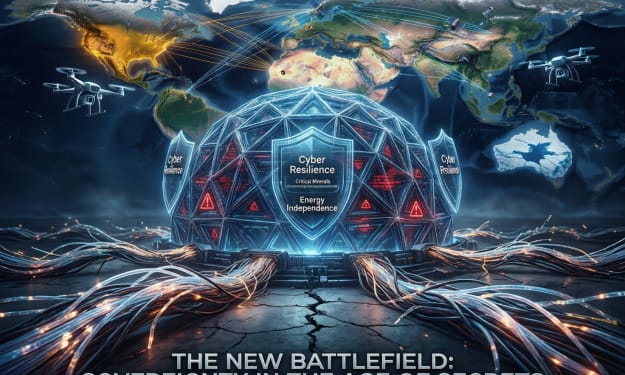
The New Battlefield: Sovereignty in the Age of Secrets As we look deeper into modern global conflicts, it becomes clear that the battlefield has changed. Wars are no longer fought mainly on physical borders or traditional frontlines. Instead, the real fight now happens inside a nation itself, within its financial systems, digital networks, infrastructure, and even public thinking. This internal structure can be compared to a human nervous system. If it is damaged, the entire body becomes weak, even if no physical attack takes place.
By Wings of Time 9 months ago in Criminal
The Race for Resources: The Final Frontier of Power
The Race for Resources: The Final Frontier of Power As the struggle for influence intensifies, the world is entering a new era of resource competition that will define the next century. While the previous chapters of this story focused on cyber security and political interference, the next major shift is happening on the ground—and under the ice. The "Race for Resources" is no longer just about oil and gas; it is about the rare materials needed for the next generation of technology and the strategic routes that connect the East and the West. As nations like China expand their reach through massive investment projects, the Western world is waking up to a new reality: if you do not own the supply chain, you do not own your future.
By Wings of Time 9 months ago in Criminal
The Silent Struggle for Control
The Silent Struggle for Control In the world we live in today, the lines between business, politics, and our personal safety are starting to disappear. From the government offices in Canada and the United States to the growing power of China, a complex game of control is being played at the highest levels. This is no longer a world where power is only measured by the size of an army. Instead, power is measured by who controls the information, who owns the technology, and who can influence the mind of a nation. To understand our future, we must look closely at the hidden tactics used to influence nations and the digital systems we use every single day. One of the most serious warnings for any modern country is how easily its foundation can be hurt through invisible means. Experts believe that a national collapse does not always start with a physical war or a visible invasion. Instead, it begins quietly within our banking systems and our digital infrastructure.
By Wings of Time 9 months ago in Criminal
Global Implications If Nuclear Command Systems Weaken
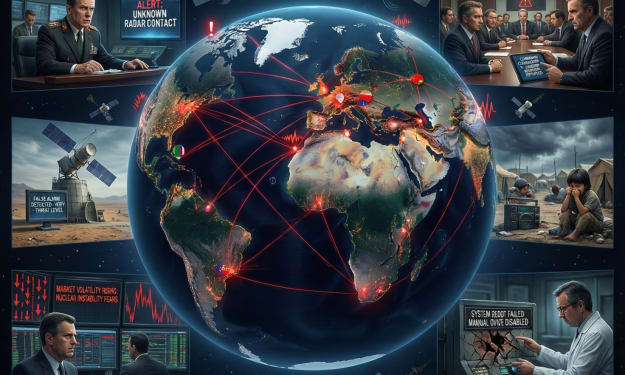
Global Implications If Nuclear Command Systems Weaken Nuclear weapons are often described as the ultimate tools of deterrence. They are meant to prevent war, not start it. But this balance depends on one critical factor: strong and stable command systems. If these systems weaken, the danger is not limited to one country. The impact spreads across the entire world.
By Wings of Time 9 months ago in Criminal
Nuclear Command Risks in a Time of Internal Tension
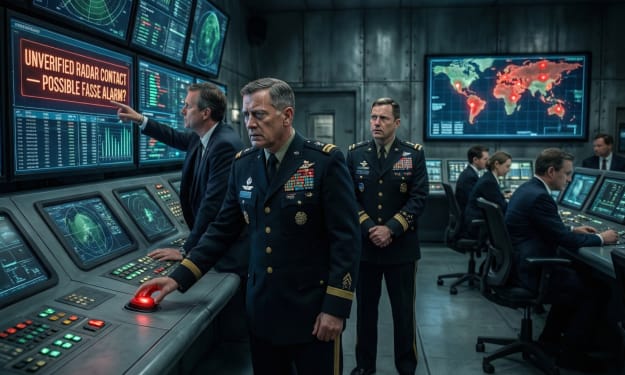
Nuclear Command Risks in a Time of Internal Tension When people think about nuclear power, they often focus on missiles, warheads, and military strength. But the most important part of any nuclear system is not the weapon itself—it is the command structure behind it. Clear leadership, trusted decision-making, and reliable communication are what prevent disasters. When these systems face internal tension, the risks grow quietly but dangerously.
By Wings of Time 9 months ago in Criminal
Can Aircraft Carriers Survive the Drone Age?
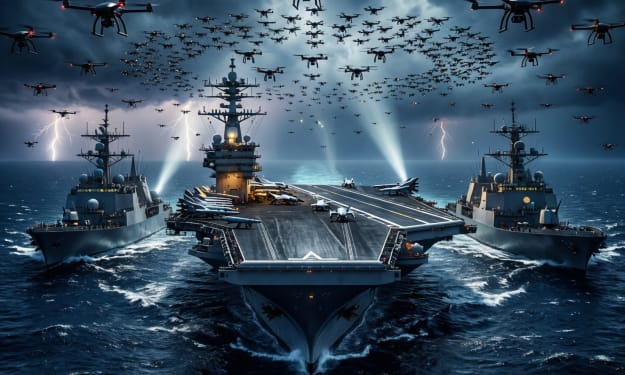
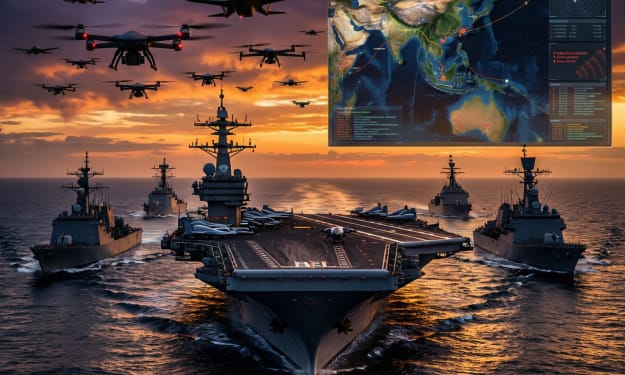
Can Aircraft Carriers Survive the Drone Age? For more than seventy years, aircraft carriers have stood at the center of global military power. They are mobile airbases, capable of projecting force anywhere on the planet without relying on foreign soil. Their presence alone can alter diplomacy, deter rivals, and reassure allies. But a new challenge is rising—quietly, cheaply, and rapidly. The age of drones is forcing militaries to confront an uncomfortable question: are aircraft carriers becoming vulnerable giants in a world of unmanned warfare?
By Wings of Time 9 months ago in Criminal
Drones vs Aircraft Carriers
Drones vs Aircraft Carriers For decades, aircraft carriers have symbolized ultimate military power. They are floating cities, armed with fighter jets, guided missiles, radar systems, and layered defenses. A single carrier strike group represents not just military strength, but political will. Wherever it sails, it sends a message: power has arrived.
By Wings of Time 9 months ago in Criminal
Floating Power and Fragile Diplomacy
Floating Power and Fragile Diplomacy In recent weeks, renewed attention on U.S. naval movements, particularly carrier strike groups operating across strategic waterways, has highlighted a deeper shift in how global power is projected. From the South China Sea to the Indian Ocean, the presence of American naval assets is no longer just a show of strength—it is a message shaped by technology, deterrence, and fragile diplomacy.
By Wings of Time 9 months ago in Criminal
Speed, Greed, and the Dangerous Game of Revenge
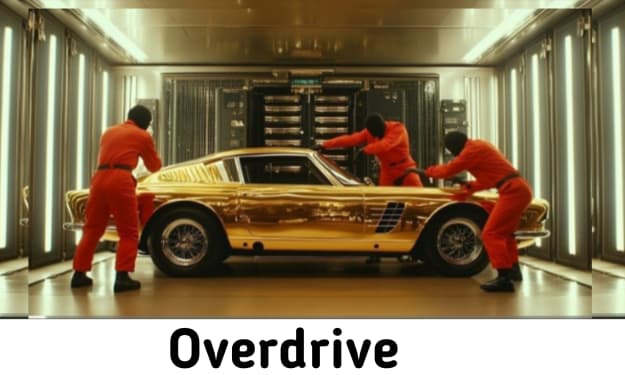
There are some things in the world that are not just symbols of wealth, but become identities of power, arrogance, and obsession. The rare 1937 Bugatti is one of those things. The film begins with a grand and luxurious auction, where this legendary car stands on stage as the center of everyone’s attention. The auctioneer announces that it is one of the rarest cars in the world, with only two models existing globally. This announcement ignites greed in the hearts of every wealthy person present in the crowd. The bidding starts at thirty million dollars and keeps increasing moment by moment. Someone bids thirty-two, someone thirty-four, and finally the bid reaches forty-one million dollars. This final bid is placed by a man named Jack, who is in contact with his boss. On the surface, he appears to be a rich buyer, but in reality, he is working for a powerful and dangerous criminal. The Bugatti is not going to belong to him, but to his boss. At the same time, the film introduces us to two brothers—Andrew and Garrett. Both are world-famous and highly skilled car thieves. Luxury and supercars are their obsession, and they have stolen some of the best cars in the world. The reason both brothers are connected to the Bugatti’s path is because they want to steal this rare car. The Bugatti theft on the highway is one of the most thrilling scenes of the film. High-speed vehicles, jumping onto a truck using ropes, a shower of bullets, and the shadow of death—Andrew and Garrett risk their lives to steal the Bugatti. This is not just a theft, but a practical demonstration of skill, nerves, and madness. After the theft, both brothers celebrate, but this happiness does not last long. When they go to a man named Jimmy to sell the Bugatti, he refuses to buy it. Jimmy knows that this car does not belong to an ordinary person, but to a very powerful and dangerous businessman named Morrier. Morrier is not only a wealthy man, but also runs an entire criminal empire. Soon, Andrew and Garrett are captured and presented before Morrier. Morrier tells them his story—a journey that started from poverty, an empire built through crime, and an obsession with rare cars. For him, these cars are not just a hobby, but symbols of his power and ego. The theft of the Bugatti becomes a personal insult to him. Morrier gives both of them one chance to stay alive, but his condition is extremely dangerous. They must steal a 1962 Ferrari belonging to a man named Max—a car that is one of a kind in the world and worth more than millions of dollars. Max is a young but exceptionally intelligent business tycoon, and also Morrier’s old enemy. From here, the story moves beyond a simple theft and turns into a battle of minds. Andrew and Garrett form an entire team, including Stephanie, Devon, bomb expert Lane, and skilled race drivers. Every person has a specific role, and every mistake can lead to death. The character of Max adds more depth to the story. He appears to be a polite and successful businessman, but behind him is an extremely sharp mind. He is both impressed by Andrew and Garrett’s abilities and cautious of them. His Ferrari is not just a car, but his identity. The story takes a new turn when it is revealed that the real plan was never to steal the Ferrari. The Bugatti was merely a move, a trap—used to ensnare Morrier along with his arrogance. Andrew, Garrett, and Max were actually playing the same game from the very beginning, where the real target was Morrier’s treasure of rare and valuable cars. In the climax, speed, explosions, and intelligence collide together. A collapsing bridge, long car chases, betrayal, sacrifices, and finally Morrier’s fate—all symbolize that the game of power and greed ultimately ends in destruction. In the end, Andrew proposes marriage to Stephanie, Garrett finds love, and the team completes an impossible mission. But the biggest lesson remains that in this world, the most dangerous weapon is not a gun or speed, but the mind, patience, and the final move played at the right time. Final Question Is power really found only in money and weapons, or is true power hidden in the mind that silently turns the entire game around?
By Filmon Ke Raaz | Movie Mysteries Explained9 months ago in Criminal
Tensions at Sea: The Russian Oil Tanker Seized by the United States in 2026
Tensions at Sea: The Russian Oil Tanker Seized by the United States in 2026 In early 2026, a Russian-flagged oil tanker was seized by the United States in the North Atlantic, attracting global attention. The vessel, originally called *Bella 1* and later renamed *Marinera*, had been monitored for weeks as it attempted to evade U.S. sanctions enforcement. This event has raised questions about international maritime law, geopolitical tensions, and the enforcement of economic restrictions on oil shipments. **Why Did the United States Target This Specific Tanker?** The primary reason the United States seized this tanker was due to its involvement in transporting oil from countries under sanctions, including Venezuela and Iran. The vessel had repeatedly changed flags and attempted to conceal its identity to avoid detection, making it part of what experts call a “shadow fleet.” U.S. authorities viewed these actions as deliberate attempts to bypass sanctions, threatening the effectiveness of economic restrictions and national security policies. The tanker became a high-priority target because its capture sends a message to other operators engaged in illicit oil transport. **Was the Tanker Carrying Oil at the Time of Seizure?** Reports indicate that the tanker was empty when intercepted. While this minimized immediate economic losses, it did not reduce the symbolic and strategic significance of the operation. The seizure demonstrated the U.S.’s determination to enforce sanctions rigorously and highlighted the risks faced by vessels attempting to circumvent international restrictions. Analysts note that even empty, the vessel represented a potential threat because of its history of sanctioned shipments. **Is the Seizure Legal Under International Law?** International maritime law generally protects ships under a nation’s flag. However, vessels operating under false registrations or engaged in illegal activities such as sanctions evasion may be subject to interception. U.S. authorities justified the seizure by citing the tanker’s use of a false flag and its history of sanction violations. Critics, including Russian officials, have condemned the action as an overreach that violates international norms. The legal debate underscores the tension between enforcing economic sanctions and respecting international maritime law. **Who Owns the Tanker, and Does Russia Claim It?** Ownership of the tanker is complex. The ship had been previously registered under another flag and operated under a different name before adopting Russian registration. Moscow publicly supported the vessel’s claim of affiliation, yet experts argue the flag change was largely strategic to avoid capture rather than a straightforward declaration of ownership. This situation complicates legal responsibility and emphasizes how vessel registrations can be manipulated to evade sanctions enforcement. **What Are the Geopolitical Implications of the Seizure?** The capture of the tanker has heightened tensions between the United States and Russia. It occurred amid ongoing debates over U.S. sanctions on Venezuela and other countries, demonstrating the willingness of the U.S. to act decisively against perceived sanction violations. The incident has drawn international scrutiny, with other nations closely monitoring how maritime sanctions are enforced and whether similar actions could escalate conflicts or provoke diplomatic disputes. **Could This Seizure Be Part of a Larger Pattern?** Yes. Observers note that the U.S. has increasingly pursued vessels suspected of sanctions evasion, tracking them across international waters. This is part of a broader strategy to limit revenue streams to sanctioned countries and entities while disrupting networks involved in illicit oil transport. Experts suggest that similar operations could continue, particularly against vessels suspected of moving oil illegally or attempting to conceal cargo from authorities. **What Happens to the Crew of the Tanker?** The fate of the tanker’s crew is another common question. U.S. authorities typically detain crews for questioning to determine involvement in illegal activity, but in many cases, they are treated according to international law and may be released after investigation if no direct wrongdoing is found. The crew’s experience underscores the personal risks associated with operating vessels engaged in sanctioned or illicit activities. **How Does This Affect Global Oil Markets?** Although the tanker was empty, its capture sends a clear signal to operators worldwide. It may deter other vessels from attempting to evade sanctions and reinforce the United States’ enforcement measures. While there is minimal immediate impact on global oil supply, the strategic message could influence future trading behaviors, shipping decisions, and compliance with international sanctions. In conclusion, the 2026 seizure of the Russian oil tanker reflects a complex intersection of maritime law, sanctions enforcement, and geopolitics. The operation highlights the challenges of regulating global oil shipments, the legal ambiguities of vessel registration and ownership, and the strategic importance of controlling revenue flows to sanctioned entities. As this story develops, it continues to spark debate and attention worldwide, illustrating the evolving nature of international sanctions enforcement and maritime security.
By America today 10 months ago in Criminal