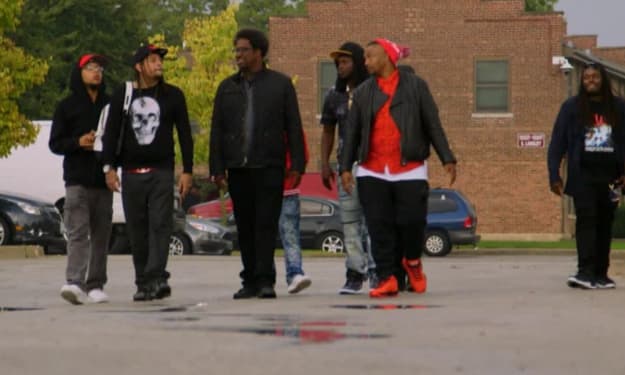
racial profiling
Racial profiling in law enforcement is a deep-rooted issue with far-reaching ramifications; voice your take on 'broken-windows' policing and controversies surrounding race and crime.
Supreme Court temporarily blocks new deportations under Alien Enemies Act
In a significant legal development, the U.S. Supreme Court has temporarily halted new deportations under the Alien Enemies Act, an obscure and rarely invoked law dating back to 1798. The decision comes amid ongoing legal challenges and debates over the scope of presidential power in matters of immigration and national security. Background: What is the Alien Enemies Act? The Alien Enemies Act is one of four laws collectively known as the Alien and Sedition Acts, passed during the administration of President John Adams. It grants the president broad authority to detain, arrest, or deport non-citizens from nations deemed hostile to the U.S. during times of war or declared emergency Unlike other immigration laws, the Alien Enemies Act does not require due process protections typically afforded in deportation cases, raising concerns about civil liberties. Historically, it has been used sparingly- -most notably during World War Il to detain and deport citizens of Axis powers. The high court acted overnight following an emergency appeal from the American Civil Liberties Union, contending that immigration authorities appeared to be moving to restart removals under the Alien Enemies Act (AEA) of 1798. The Supreme Court had said earlier in April that deportations could proceed only if those about to be removed had a chance to argue their case in court and were given "a reasonable time" to contest their pending removals.
By ANIK MONDOLabout a year ago in Criminal
Chicago's Deadly Streets: The Reign of the City's Most Dangerous Gangs. AI-Generated.
Chicago, a city known for its cultural vibrancy, has long struggled with the deep and pervasive influence of dangerous street gangs. These gangs control large swaths of the city’s neighborhoods, and their criminal activities are a constant threat to public safety, community stability, and law enforcement. While many gangs have been around for decades, their operations continue to fuel violence, fear, and destruction. Here's a closer look at the dangerous gangs of Chicago and the dangers they pose to residents and the city as a whole.
By Faizan Afrazabout a year ago in Criminal
Deputy's son kills 2, injures 6 in shooting at Florida State University: Updates
Tallahassee, FL- A tragic shooting erupted at Florida State University (FSU) late last night, leaving two dead and six injured. The suspected gunman, identified as the son of a local sheriff's deputy, was later shot and killed by responding officers. What Happened? The shooting occurred near the university's student union building around 11:30 p.m. on [insert date], sending panic across campus as students and faculty scrambled for safety. Witnesses reported hearing multiple gunshots before law enforcement arrived. The suspect, whose name has not yet been officially released, was reportedly armed with a handgun and began firing indiscriminately. Police engaged the shooter, who was fatally wounded in the exchange. Victims and Response • Two fatalities: The identities of the deceased have not yet been released pending family notification. . • Six injured: Victims were transported to nearby hospitals, with at least two in critical condition • Lockdown lifted: FSU issued an emergency alert urging students to shelter in place, which was lifted hours later after authorities confirmed no additional threats. Everyone started freaking out," Sam Swartz told the Tallahassee Democrat, part of the USA TODAY Network. He was working on a project with a group in the basement of the student union when the students heard about 10 shots. They used trashcans and plywood to barricade themselves in a corner, hoping the shooter wouldn't want to take the extra time to get to them, Swartz said.
By ANIK MONDOLabout a year ago in Criminal
Walk the Plank. AI-Generated.
It had rained all night in the city of Fairview. The streets still shimmered under the morning haze, the scent of wet asphalt hanging in the air. At precisely 6:47 AM, the body of Terrence Hall—a respected community leader and activist—was discovered lying face-down near the old shipyard, a rotting plank from a cargo crate splintered beside him. His skull had been crushed. No signs of a struggle. No weapon in sight. Detective Nathan Boone stood over the yellow tape, sipping lukewarm coffee. He’d known Hall. Everyone had. A loud, fearless man who’d rallied youth programs, taken on corrupt councilmen, and cleaned up the notorious 9th Ward. Hall had made enemies, no doubt—but murder? Boone examined the scene with his usual sharpness. The plank wasn’t from any structure nearby—it was aged, warped, likely driftwood. There were no security cameras in that forgotten part of the city. Whoever did this had planned it well. Hall’s phone was found shattered nearby, but his watch and wallet were untouched. Not a robbery, then. Boone made note of the time and left the scene. His first stop: Hall’s office. It was a modest space filled with protest posters, community flyers, and photos of youth events. His assistant, Carla, was already crying when Boone entered. “Terrence got a threat two nights ago,” she whispered. “Someone slipped a note under the door. It said, ‘Keep pushing, and you’ll fall off the plank.’ He thought it was a joke.” Boone stared at her. “Did he mention any names?” She shook her head. “He just said some people didn’t want him to testify next week.” Boone’s brow furrowed. He remembered reading about a pending court case. Hall was scheduled to testify against Fairview’s largest private contractor, Larkridge Development, accused of fraud and bribery. Hall had proof—documents tying Larkridge to falsified safety reports and kickbacks to city officials. It was supposed to be his biggest stand. Boone drove to City Hall. He knew Councilman Briggs would be there—one of Hall’s loudest critics and a known supporter of Larkridge. The man greeted Boone with a practiced smile. “Terrible news,” Briggs said, voice hollow. “A real loss for the city.” “Tell me about your last interaction with Hall,” Boone asked casually. Briggs leaned back in his leather chair. “We disagreed often, but I respected the man. We had a heated meeting last week, but that’s nothing new.” Boone nodded. “Do you know anything about a threat he received?” Briggs raised an eyebrow. “I don’t traffic in threats, detective.” Boone left with a gnawing feeling. Briggs was lying, but he couldn’t prove it—yet. By evening, Boone met with forensics. The plank had traces of industrial oil and sea barnacles—likely from a shipping container, not the local docks. It had one clue: a faded serial number burned into the wood’s underside. The team traced it back to a closed Larkridge site on the east pier. Boone drove there under the cover of dusk. The pier was silent, rusted, and half-sunk in tidewater. Inside the main warehouse, dust and old tools littered the floor. And then he saw them—planks identical to the one used in the murder, stacked by a wall. The match was perfect. Someone had brought Hall here. Killed him. Dumped him feet away from the riverbank like a warning. As Boone turned to leave, he heard a sound behind him. Footsteps. He drew his weapon. “Fairview PD. Step out!” A man in coveralls emerged from the shadows—thin, pale, trembling. “Don’t shoot! I—I used to work here.” Boone lowered his gun slightly. “Did you see anything?” The man hesitated. “I was here two nights ago, just sleeping. I—I saw a black SUV pull in. Three men dragged someone out. One hit him with something—it sounded like wood. They were yelling about ‘shutting him up.’ Then they left him there. I was too scared to move.” Boone took a statement, recorded the witness’s ID, and rushed back to headquarters. By morning, surveillance logs from nearby traffic lights confirmed the SUV. It was registered to a shell company—one later traced back to Larkridge’s legal department. Boone confronted Larkridge’s lawyer, Jordan Mayes, in his uptown office. “You’re in deep now,” Boone said, dropping a folder of evidence on his desk. Mayes scoffed, but his hands shook. “You don’t have anything solid.” “I’ve got a witness. Forensics. Footage. And a dead man who trusted the law more than fear. You can take the fall, or give me the men who did this.” Mayes crumbled. Within hours, three Larkridge employees—including a security chief—were arrested. The motive: Hall had refused a $500,000 bribe to withdraw his testimony. So they silenced him the only way they knew. A week later, Boone stood silently at Hall’s memorial service. Hundreds gathered. Children, families, even former enemies. The man had moved a city. In his pocket, Boone still carried a copy of the note that started it all: “Keep pushing, and you’ll fall off the plank.” They’d meant it as a threat. But Hall had walked the plank willingly—for justice. And Boone made sure he didn’t fall in vain.
By Abdurrahman Abdurrahmanabout a year ago in Criminal