racial profiling
Racial profiling in law enforcement is a deep-rooted issue with far-reaching ramifications; voice your take on 'broken-windows' policing and controversies surrounding race and crime.
Floating Power and Fragile Diplomacy
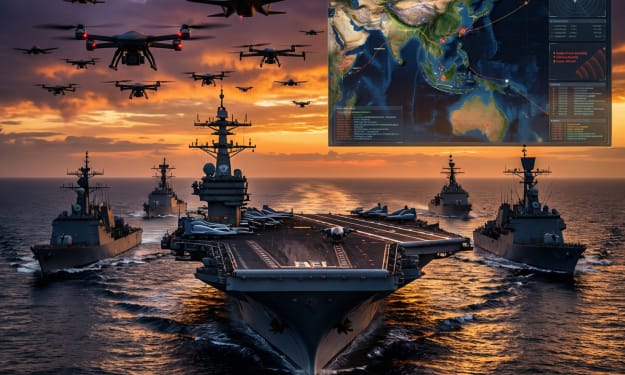
Floating Power and Fragile Diplomacy In recent weeks, renewed attention on U.S. naval movements, particularly carrier strike groups operating across strategic waterways, has highlighted a deeper shift in how global power is projected. From the South China Sea to the Indian Ocean, the presence of American naval assets is no longer just a show of strength—it is a message shaped by technology, deterrence, and fragile diplomacy.
By Wings of Time 8 months ago in Criminal
Speed, Greed, and the Dangerous Game of Revenge
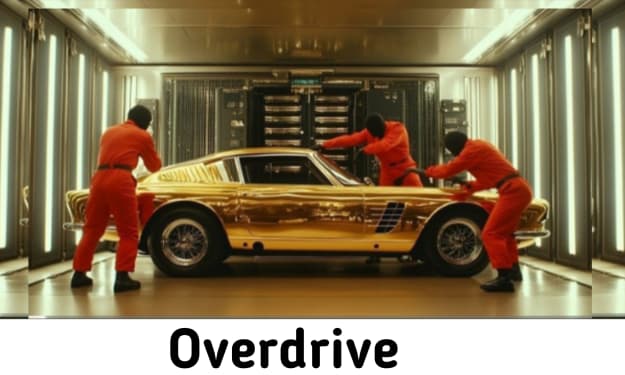
There are some things in the world that are not just symbols of wealth, but become identities of power, arrogance, and obsession. The rare 1937 Bugatti is one of those things. The film begins with a grand and luxurious auction, where this legendary car stands on stage as the center of everyone’s attention. The auctioneer announces that it is one of the rarest cars in the world, with only two models existing globally. This announcement ignites greed in the hearts of every wealthy person present in the crowd. The bidding starts at thirty million dollars and keeps increasing moment by moment. Someone bids thirty-two, someone thirty-four, and finally the bid reaches forty-one million dollars. This final bid is placed by a man named Jack, who is in contact with his boss. On the surface, he appears to be a rich buyer, but in reality, he is working for a powerful and dangerous criminal. The Bugatti is not going to belong to him, but to his boss. At the same time, the film introduces us to two brothers—Andrew and Garrett. Both are world-famous and highly skilled car thieves. Luxury and supercars are their obsession, and they have stolen some of the best cars in the world. The reason both brothers are connected to the Bugatti’s path is because they want to steal this rare car. The Bugatti theft on the highway is one of the most thrilling scenes of the film. High-speed vehicles, jumping onto a truck using ropes, a shower of bullets, and the shadow of death—Andrew and Garrett risk their lives to steal the Bugatti. This is not just a theft, but a practical demonstration of skill, nerves, and madness. After the theft, both brothers celebrate, but this happiness does not last long. When they go to a man named Jimmy to sell the Bugatti, he refuses to buy it. Jimmy knows that this car does not belong to an ordinary person, but to a very powerful and dangerous businessman named Morrier. Morrier is not only a wealthy man, but also runs an entire criminal empire. Soon, Andrew and Garrett are captured and presented before Morrier. Morrier tells them his story—a journey that started from poverty, an empire built through crime, and an obsession with rare cars. For him, these cars are not just a hobby, but symbols of his power and ego. The theft of the Bugatti becomes a personal insult to him. Morrier gives both of them one chance to stay alive, but his condition is extremely dangerous. They must steal a 1962 Ferrari belonging to a man named Max—a car that is one of a kind in the world and worth more than millions of dollars. Max is a young but exceptionally intelligent business tycoon, and also Morrier’s old enemy. From here, the story moves beyond a simple theft and turns into a battle of minds. Andrew and Garrett form an entire team, including Stephanie, Devon, bomb expert Lane, and skilled race drivers. Every person has a specific role, and every mistake can lead to death. The character of Max adds more depth to the story. He appears to be a polite and successful businessman, but behind him is an extremely sharp mind. He is both impressed by Andrew and Garrett’s abilities and cautious of them. His Ferrari is not just a car, but his identity. The story takes a new turn when it is revealed that the real plan was never to steal the Ferrari. The Bugatti was merely a move, a trap—used to ensnare Morrier along with his arrogance. Andrew, Garrett, and Max were actually playing the same game from the very beginning, where the real target was Morrier’s treasure of rare and valuable cars. In the climax, speed, explosions, and intelligence collide together. A collapsing bridge, long car chases, betrayal, sacrifices, and finally Morrier’s fate—all symbolize that the game of power and greed ultimately ends in destruction. In the end, Andrew proposes marriage to Stephanie, Garrett finds love, and the team completes an impossible mission. But the biggest lesson remains that in this world, the most dangerous weapon is not a gun or speed, but the mind, patience, and the final move played at the right time. Final Question Is power really found only in money and weapons, or is true power hidden in the mind that silently turns the entire game around?
By Filmon Ke Raaz | Movie Mysteries Explained8 months ago in Criminal
Kendrick Simpson's Downfall
On January 15th, 2006, an insult was answered by a bullet. Tempers were hot on that cold winter night in Oklahoma City. Fritzi’s Hip Hop night club was a happening place in the city back in 2006. It was a place that attracted all kinds of interesting and sometimes very dangerous individuals. In this case it had attracted some hurricane survivors. Ok, folks, let me back up and explain a little bit.
By Cassie Moore9 months ago in Criminal
Take it to the Bank. Content Warning.
The most vulnerable of us can take a care ride to the mall. We might go for that shopping trip as though it were a normal, everyday trip. On August 31st,1999, Mary Bowles, was a retiree who just wanted to go to Promenade Mall in Tulsa. She was there to do a little shopping and do some walking because it was too hot to walk outside. Our gal, Mary, wanted to get some afternoon walking in, and the Promenade Mall in Tulsa was a good place to go. Benches spread out and good air conditioning along with lots of places to get something cold to drink, she would have a safe time walking in there. If she had only made it inside the mall. The mall often had walkers throughout the day, so this was her way of keeping up with her exercise as a number of seniors did.
By Cassie Moore9 months ago in Criminal
Shooting Involving ICE Agents in Portland: What We Know So Far
## Shooting Involving ICE Agents in Portland: What We Know So Far A shooting involving Immigration and Customs Enforcement agents, commonly known as ICE, took place in Portland, Oregon and quickly drew national attention. The incident raised serious questions about federal law enforcement operations, use of force, and the relationship between federal agencies and local communities. As details emerged, the event became a focal point for public debate, political reaction, and calls for transparency. The shooting happened during a law enforcement operation that involved federal officers attempting to stop a vehicle. Gunfire was exchanged, leaving two people injured and triggering an immediate response from emergency services and local authorities. While no local police officers fired shots, Portland officials confirmed that federal agents were responsible for the use of force. **What Happened During the Portland ICE Shooting?** According to official statements, federal agents attempted to stop a vehicle as part of a targeted operation. During the encounter, agents claimed that the situation escalated rapidly and that they felt threatened. Gunfire was then discharged, striking two individuals inside the vehicle. Both victims were later transported to a hospital for medical treatment. Authorities stated that the vehicle was able to move away from the immediate scene after the shots were fired, and emergency responders were called shortly afterward. The area was temporarily secured as investigators began gathering evidence and interviewing witnesses. **Who Was Involved in the Incident?** The shooting involved federal immigration enforcement officers operating in Portland. These agents were conducting an operation that did not include the Portland Police Bureau. City officials later confirmed that local law enforcement did not participate in the shooting itself. The individuals who were shot were civilians inside the vehicle that ICE agents attempted to stop. Their identities were not immediately released, and officials limited early details as the investigation began. **Why Did ICE Agents Open Fire?** Federal officials stated that agents opened fire because they believed their lives were in danger. According to their account, the driver of the vehicle allegedly attempted to use the car in a way that posed a threat to officers. This claim became a central point of scrutiny, as community leaders and civil rights advocates called for clear evidence and transparency. Critics argued that the use of lethal force raised concerns, especially in a city where tensions between federal agencies and residents have existed for years. The justification for the shooting remains under investigation. **What Is the Condition of the Injured Individuals?** Both people who were shot were taken to a hospital for treatment. Officials confirmed that they survived the incident, but specific details about the severity of their injuries were not immediately disclosed. Medical staff focused on stabilizing the victims while law enforcement agencies continued their review. Updates on their condition were limited in the early stages, fueling public concern and demands for more information. **How Did Local Officials Respond?** Portland city leaders reacted quickly, emphasizing that they were not informed in advance about the federal operation. The mayor and other officials expressed concern about the presence and actions of federal agents in the city. They called for a full and independent investigation to determine whether the use of force was justified. Local leaders also urged residents to remain calm while facts were gathered. Statements from city officials highlighted the importance of accountability and clear communication between federal agencies and local governments. **How Did the Public React to the Shooting?** The shooting sparked strong public reaction across Portland. Demonstrations formed as residents gathered to protest federal law enforcement actions and demand answers. Many protesters expressed frustration over what they viewed as aggressive tactics used by ICE and a lack of transparency surrounding the incident. Community groups and activists called for peaceful protests while urging authorities to respect civil rights. The incident reignited long-standing debates in Portland over immigration enforcement and federal involvement in local affairs. **What Investigations Are Underway?** A federal investigation was launched to examine the actions of the ICE agents involved. Investigators are reviewing body camera footage, witness statements, and physical evidence to reconstruct the sequence of events. The goal is to determine whether proper procedures were followed and whether the use of force complied with federal guidelines. State officials also signaled interest in reviewing the incident to ensure that all legal standards were met. Results of these investigations are expected to play a key role in shaping public understanding and potential policy responses. **Why Is This Incident Significant?** The Portland ICE shooting is significant because it highlights broader national issues surrounding immigration enforcement, federal authority, and public trust. It occurred at a time when scrutiny of law enforcement practices is high, and it added to ongoing discussions about the limits of federal power in local communities. For many residents, the incident reinforced concerns about safety, accountability, and transparency. For others, it raised questions about how federal agents operate and how such operations can be conducted without escalating into violence. **What Happens Next?** As investigations continue, officials are expected to release more information about the incident. Public pressure remains strong, with calls for clear explanations and potential reforms. The outcome of the investigations may influence future federal operations in Portland and shape discussions about law enforcement practices nationwide. The shooting involving ICE agents in Portland remains a developing story, one that reflects deeper tensions and challenges facing modern law enforcement in the United States.
By America today 9 months ago in Criminal
Donald Trump Threatens to Strike Mexico: A New Escalation in Political Rhetoric
Donald Trump Threatens to Strike Mexico: A New Escalation in Political Rhetoric Recent statements attributed to former US President Donald Trump have sparked widespread debate after he suggested the possibility of military action against Mexico. The comments, framed around combating drug cartels and cross-border crime, immediately drew attention from media outlets, political analysts, and the public. While such remarks are not entirely new in Trump’s political style, the idea of striking a neighboring sovereign nation has raised serious concerns about diplomacy, international law, and regional stability. WHY DID TRUMP THREATEN TO STRIKE MEXICO Trump’s threat is rooted in his long-standing criticism of Mexico’s handling of drug trafficking and illegal immigration. He has repeatedly accused Mexican authorities of failing to stop powerful drug cartels that smuggle fentanyl and other narcotics into the United States. According to Trump, these cartels represent a direct national security threat, and extraordinary measures may be necessary to confront them. By floating the idea of military action, he positions himself as tough on crime and uncompromising on border security, themes that strongly resonate with his political base. IS TRUMP SERIOUS ABOUT MILITARY ACTION Many experts believe Trump’s comments are more rhetorical than operational. Historically, Trump has used provocative language to dominate headlines and frame himself as a decisive leader. However, even rhetorical threats carry weight, especially when they involve military force. While launching strikes against Mexico would face enormous legal, political, and logistical barriers, the seriousness lies in how such statements normalize extreme solutions and shift public discourse toward confrontation rather than cooperation. HOW DID MEXICO RESPOND TO THE THREAT Mexican officials have firmly rejected any suggestion of foreign military intervention. Leaders emphasized national sovereignty and stated that security challenges must be addressed through bilateral cooperation, intelligence sharing, and economic development. Mexico has consistently argued that drug consumption within the United States is a major driver of cartel power, making it a shared responsibility rather than a unilateral failure. Trump’s remarks were viewed by many in Mexico as disrespectful and politically motivated. WHAT WOULD A STRIKE MEAN FOR US MEXICO RELATIONS Any military action against Mexico would severely damage diplomatic relations between the two countries. The United States and Mexico share one of the most important trade relationships in the world, along with deep cultural, economic, and security ties. A strike would likely end security cooperation agreements, disrupt trade, and fuel anti-American sentiment across Latin America. Even discussing such a move creates uncertainty that can affect markets, migration policy, and regional alliances. CAN A US PRESIDENT LEGALLY ATTACK MEXICO Under international law, attacking another country without its consent or a clear act of self-defense would violate established norms. Domestically, a US president would face strong opposition from Congress, the military, and the intelligence community. Mexico is not officially considered an enemy state, and launching attacks on its territory would require extraordinary justification. Legal experts argue that targeting cartels inside Mexico without approval would set a dangerous precedent. HOW DID AMERICANS REACT TO TRUMP’S COMMENTS Public reaction in the United States has been sharply divided. Supporters praised Trump’s aggressive stance, arguing that traditional approaches have failed to stop drug trafficking. Critics, however, warned that such threats are reckless and could lead to unnecessary conflict. Many Americans expressed concern about escalating violence and the potential loss of life, both civilian and military. The comments also reignited debates about border policy, immigration, and the limits of presidential power. WHAT DOES THIS MEAN FOR THE 2024 ELECTION AND BEYOND Trump’s threat fits into a broader campaign strategy focused on law and order, national strength, and border control. By proposing extreme measures, he distinguishes himself from political rivals and keeps media attention focused on his agenda. Regardless of whether such actions ever materialize, the rhetoric itself influences public opinion and international perceptions of US foreign policy. It signals a willingness to challenge norms and could shape future debates about how the United States addresses transnational crime. In conclusion, Trump’s threat to strike Mexico represents more than a controversial soundbite. It highlights deep frustrations over drug trafficking, exposes fragile diplomatic balances, and underscores how powerful political language can be. Even without action, the consequences of such statements ripple far beyond campaign speeches, affecting trust, stability, and the future of US-Mexico relations.
By America today 9 months ago in Criminal
Iran Protests: Causes, Dynamics, and Their Impact on Society and Politics
**Iran Protests: Causes, Dynamics, and Their Impact on Society and Politics** Iran has experienced recurring waves of protests over the past years, reflecting deep social, economic, and political tensions within the country. These demonstrations are not isolated events but part of a broader pattern of public frustration that has emerged as Iranians respond to rising living costs, restrictions on personal freedoms, political grievances, and dissatisfaction with governance. The protests vary in size, intensity, and duration, yet they share common roots that reveal much about the challenges facing Iranian society today. One of the main drivers behind protests in Iran is economic pressure. Inflation, unemployment, and currency devaluation have placed a heavy burden on ordinary citizens. Many families struggle to afford basic necessities, and young people in particular face limited job opportunities despite high levels of education. Economic grievances often act as a spark for protests, especially when sudden price increases or policy changes directly affect daily life. In many cases, demonstrations that begin over economic concerns gradually evolve into broader expressions of political discontent. Another significant factor behind the protests is the issue of social and personal freedoms. Restrictions on expression, dress codes, and lifestyle choices have long been a source of tension, especially among younger generations and urban populations. For many protesters, demonstrations are not only about economic survival but also about dignity, autonomy, and the desire for greater individual rights. Social media and digital communication have played an important role in amplifying these voices, allowing protesters to share experiences and mobilize support despite state controls. Political dissatisfaction is also central to understanding Iran’s protest movements. Many protesters express frustration with the political system, feeling that their voices are not adequately represented and that meaningful reform is difficult to achieve through official channels. Election outcomes, perceived lack of transparency, and limited political competition have fueled skepticism about institutional change. As a result, protests become one of the few visible ways for citizens to express dissent and demand accountability. The response of authorities to protests has a major influence on how these movements develop. Security measures, arrests, and restrictions on communication are often used to contain demonstrations. Such responses can discourage participation in the short term, but they may also deepen public resentment and reinforce the sense of injustice among protesters. In some cases, strong crackdowns have drawn international attention and intensified debates about human rights and state power. Iran’s protest movements are notable for their diversity. Participants come from different social classes, regions, and age groups. While urban centers often see the largest gatherings, smaller towns and rural areas have also witnessed demonstrations, particularly when economic conditions worsen. Women and young people frequently play a visible role, highlighting generational shifts in attitudes and expectations. This diversity makes the protests difficult to characterize as a single unified movement, yet it also demonstrates the widespread nature of dissatisfaction. International factors indirectly shape the protest landscape as well. Economic sanctions, diplomatic tensions, and regional conflicts affect Iran’s economy and political environment, influencing public perceptions of both domestic leadership and foreign powers. While protests are largely driven by internal issues, external pressures can intensify hardships and contribute to public anger. At the same time, authorities often frame protests within a narrative of foreign interference, which resonates with some segments of the population but is rejected by others. The long-term impact of protests in Iran remains uncertain. Some movements fade after a period of intense activity, while others leave lasting marks on public discourse and policy. Even when immediate demands are not met, protests can shift social norms, raise awareness, and gradually influence how people think about rights, governance, and participation. They also reveal underlying tensions that continue to shape the relationship between the state and society. In conclusion, protests in Iran are a complex and evolving phenomenon rooted in economic hardship, demands for social freedom, and political dissatisfaction. They reflect a society in which many citizens are seeking change, recognition, and a better quality of life. While the outcomes of these protests vary, their persistence suggests that the issues driving them remain unresolved. Understanding these movements provides insight into the challenges facing Iran today and the aspirations of its people for the future.
By America today 9 months ago in Criminal
The Silence Between Sirens
M Mehran The first thing Detective Aaron Cole noticed was the silence. Not the peaceful kind—the kind that wraps around a crime scene like a lie. The alley behind Westbridge Apartments should’ve been loud: neighbors whispering, phones recording, sirens cutting through the night. Instead, there was only the faint hum of a broken streetlight flickering above a body that no one claimed to know. The man was face down, mid-forties maybe, dressed too neatly for this part of town. No wallet. No phone. One clean gunshot wound to the back of the head. Execution style. Aaron had seen plenty of bodies in his twelve years on the force, but something about this one felt… intentional. Personal. As if the killer wanted the world to know the man was erased. “Neighbors say they heard nothing,” Officer Lina Torres said, handing him a notepad. “No arguments. No shots. Nothing.” Aaron exhaled slowly. “That’s never true.” They never heard anything until someone made them afraid to speak. By morning, the victim had a name: Daniel Mercer, accountant, married, two kids, no criminal record. A man who lived quietly, worked honestly, and paid his taxes on time. Which made no sense. Aaron sat in the interrogation room across from Daniel’s wife, Emily. Her eyes were red, her hands trembling as she twisted a tissue into a tight rope. “He was late coming home,” she whispered. “That’s all. Daniel never stayed out. Never.” “Did he mention anyone following him? Any trouble at work?” Aaron asked gently. She shook her head. “He said accounting was boring. That was his joke. He hated excitement.” Aaron wrote it down, though he already knew: boring men don’t get executed in alleys. The break came from an unexpected place. A junior analyst from Daniel’s firm called it in anonymously. Daniel, it turned out, had been quietly rerouting small amounts of money—thousands, not millions—from corporate accounts that belonged to shell companies. Someone powerful was laundering money. And Daniel Mercer had noticed. Aaron dug deeper. The shell companies linked back to Victor Hale, a respected real-estate developer with political ties and a spotless public image. Hale was untouchable. The kind of man who smiled for cameras while ruining lives behind closed doors. Aaron took the file to his captain. “Drop it,” the captain said after a long pause. “Hale’s lawyers will bury us.” “So we let a murderer walk?” Aaron snapped. The captain’s eyes hardened. “This isn’t a movie, Cole. Pick your battles.” But Aaron couldn’t. Not this time. Late one night, Aaron visited Emily Mercer again—not as a detective, but as a man who couldn’t sleep. “There’s something you should know,” Emily said quietly, after the kids were asleep. She pulled a flash drive from a kitchen drawer. “Daniel gave this to me two weeks ago. He said if anything happened to him, I should give it to someone I trusted.” Aaron’s stomach dropped. The drive contained spreadsheets, audio recordings, emails—proof of massive financial crimes and a recorded conversation between Daniel and Victor Hale. In the recording, Hale’s voice was calm. Almost bored. “You’re very smart, Daniel,” Hale said. “Smart people understand consequences.” Daniel’s reply was shaking. “I just want out.” “You already are,” Hale answered. The recording ended. Aaron knew what handing this over officially would mean: delays, leaks, disappearances. Evidence had a way of vanishing when powerful people got nervous. So he made a decision that would cost him his badge—or his life. He leaked everything. Journalists. Federal investigators. Independent watchdogs. He sent copies until his hands cramped and his phone overheated. Within forty-eight hours, the story exploded. Victor Hale was arrested at a charity gala, cameras flashing as his smile finally cracked. His empire unraveled under the weight of public scrutiny. Bribes, threats, murders—plural. Daniel Mercer wasn’t the first. Internal Affairs came for Aaron two weeks later. “You violated protocol,” they said. “You compromised an investigation.” Aaron didn’t argue. He handed over his badge without ceremony. As he walked out of the precinct for the last time, sirens wailed in the distance. This time, they didn’t sound hollow. Months later, Aaron received a letter with no return address. Inside was a simple note: Thank you for hearing the silence. No name. No signature. Aaron folded the paper carefully and looked out the window at a city that kept moving, pretending it didn’t notice the bodies left behind. Justice, he’d learned, wasn’t loud. Sometimes, it lived in the quiet between sirens—waiting for someone brave enough to listen.
By Muhammad Mehran9 months ago in Criminal
Why the World Is Watching Iran, Israel, and the United States So Closely
Why the World Is Watching Iran, Israel, and the United States So Closely In recent days, many people around the world have felt uneasy after seeing news headlines about Iran, Israel, and the United States. Words like “missiles,” “retaliation,” and “support for action” have appeared repeatedly in political statements. While no official war has been declared, the situation has reached a level where global attention is fully focused on what might happen next.
By Wings of Time 9 months ago in Criminal