mafia
Don’t mess with the mob; a look into organized crime networks and mafia families, the real-life gangsters that inspired The Godfather.
The Central Park Five: A Case of Injustice and Redemption
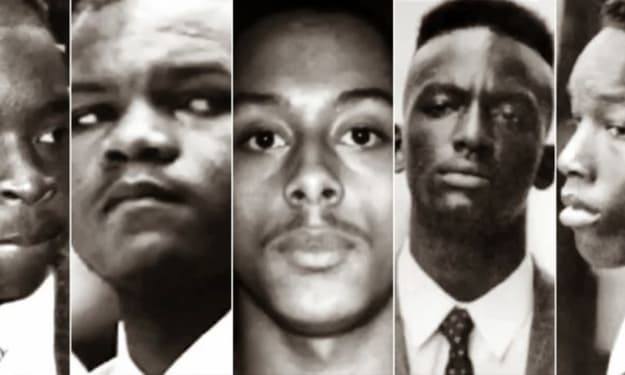
In 1989, the nation was gripped by the harrowing story of a brutal assault and rape in New York City's Central Park. What followed would become one of the most egregious miscarriages of justice in recent memory, as five teenagers—Antron McCray, Kevin Richardson, Yusef Salaam, Raymond Santana, and Korey Wise—were wrongfully convicted of the crime in what became known as the Central Park Five case. The incident shook the city to its core, igniting fear and outrage as the media sensationalized the case, painting the teenagers as a "wolf pack" responsible for the heinous attack on Trisha Meili, a young investment banker who was jogging in the park. Despite a lack of physical evidence tying them to the crime scene, the five boys, aged between 14 and 16, were coerced into giving false confessions after hours of intense interrogation by law enforcement. Their trials were marked by racial tensions and public outcry, fueled by a climate of fear and prejudice. Despite inconsistencies in the prosecution's case and the absence of DNA evidence linking them to the crime, all five were found guilty and sentenced to prison terms ranging from 5 to 15 years. However, their nightmare was far from over. It wasn't until 2002, more than a decade later, that the truth began to emerge. Matias Reyes, a convicted serial rapist serving a life sentence, came forward and confessed to the attack on Trisha Meili. DNA evidence subsequently confirmed his involvement, leading to the exoneration of the Central Park Five. The revelation sparked a renewed public interest in the case, shining a spotlight on the systemic flaws within the criminal justice system—flaws that had allowed the wrongful convictions of five innocent teenagers. It also brought attention to the issue of coerced confessions, particularly among vulnerable youth, and the impact of racial bias on legal proceedings. Despite their exoneration, the Central Park Five had already paid a steep price for a crime they did not commit. Their youth stolen, their reputations tarnished, and their families shattered by years of wrongful imprisonment. Yet, their story is one of resilience and redemption. In the years since their release, the Central Park Five have become advocates for criminal justice reform, speaking out against injustices within the system and advocating for the rights of the wrongfully convicted. Their journey from victims of injustice to agents of change serves as a powerful reminder of the resilience of the human spirit and the enduring quest for truth and justice in the face of adversity. The Central Park Five case remains a sobering reminder of the dangers of rushing to judgment, the importance of due process, and the need for reforms to ensure that such injustices are not repeated. As we reflect on their story, let us not forget the lessons learned and the ongoing struggle for justice for all. While the exoneration brought some measure of closure to the Central Park Five, it did not erase the trauma and stigma they endured. Rebuilding their lives after years of wrongful imprisonment proved to be a daunting task. Many faced challenges finding employment, housing, and reintegrating into society. Despite these obstacles, they have persevered, demonstrating remarkable resilience and determination. Their case also sparked important conversations about racial profiling, prejudice, and the criminalization of young black and Latino men. It highlighted the ways in which the justice system disproportionately targets marginalized communities and perpetuates cycles of injustice. The Central Park Five became symbols of the systemic injustices that plague the criminal justice system and inspired calls for reform. In 2014, their story received renewed attention with the release of the critically acclaimed documentary "The Central Park Five," directed by Ken Burns, Sarah Burns, and David McMahon. The film delves into the events surrounding the case, shedding light on the injustices faced by the five teenagers and the impact of their wrongful convictions on their lives. The Central Park Five's fight for justice continues to resonate today, serving as a powerful reminder of the importance of accountability, transparency, and equity in our legal system. Their courage in the face of adversity has inspired countless individuals to speak out against injustice and advocate for meaningful change. As we reflect on the Central Park Five case, let us not only remember the injustices suffered by Antron, Kevin, Yusef, Raymond, and Korey but also honor their resilience and commitment to creating a more just and equitable society. Their story serves as a testament to the power of perseverance, the pursuit of truth, and the enduring hope for a better future.
By Deji Akomolafe3 years ago in Criminal
The Central Park Five: A Case of Injustice and Redemption
In 1989, the nation was gripped by the harrowing story of a brutal assault and rape in New York City's Central Park. What followed would become one of the most egregious miscarriages of justice in recent memory, as five teenagers—Antron McCray, Kevin Richardson, Yusef Salaam, Raymond Santana, and Korey Wise—were wrongfully convicted of the crime in what became known as the Central Park Five case. The incident shook the city to its core, igniting fear and outrage as the media sensationalized the case, painting the teenagers as a "wolf pack" responsible for the heinous attack on Trisha Meili, a young investment banker who was jogging in the park. Despite a lack of physical evidence tying them to the crime scene, the five boys, aged between 14 and 16, were coerced into giving false confessions after hours of intense interrogation by law enforcement. Their trials were marked by racial tensions and public outcry, fueled by a climate of fear and prejudice. Despite inconsistencies in the prosecution's case and the absence of DNA evidence linking them to the crime, all five were found guilty and sentenced to prison terms ranging from 5 to 15 years. However, their nightmare was far from over. It wasn't until 2002, more than a decade later, that the truth began to emerge. Matias Reyes, a convicted serial rapist serving a life sentence, came forward and confessed to the attack on Trisha Meili. DNA evidence subsequently confirmed his involvement, leading to the exoneration of the Central Park Five. The revelation sparked a renewed public interest in the case, shining a spotlight on the systemic flaws within the criminal justice system—flaws that had allowed the wrongful convictions of five innocent teenagers. It also brought attention to the issue of coerced confessions, particularly among vulnerable youth, and the impact of racial bias on legal proceedings. Despite their exoneration, the Central Park Five had already paid a steep price for a crime they did not commit. Their youth stolen, their reputations tarnished, and their families shattered by years of wrongful imprisonment. Yet, their story is one of resilience and redemption. In the years since their release, the Central Park Five have become advocates for criminal justice reform, speaking out against injustices within the system and advocating for the rights of the wrongfully convicted. Their journey from victims of injustice to agents of change serves as a powerful reminder of the resilience of the human spirit and the enduring quest for truth and justice in the face of adversity. The Central Park Five case remains a sobering reminder of the dangers of rushing to judgment, the importance of due process, and the need for reforms to ensure that such injustices are not repeated. As we reflect on their story, let us not forget the lessons learned and the ongoing struggle for justice for all. While the exoneration brought some measure of closure to the Central Park Five, it did not erase the trauma and stigma they endured. Rebuilding their lives after years of wrongful imprisonment proved to be a daunting task. Many faced challenges finding employment, housing, and reintegrating into society. Despite these obstacles, they have persevered, demonstrating remarkable resilience and determination. Their case also sparked important conversations about racial profiling, prejudice, and the criminalization of young black and Latino men. It highlighted the ways in which the justice system disproportionately targets marginalized communities and perpetuates cycles of injustice. The Central Park Five became symbols of the systemic injustices that plague the criminal justice system and inspired calls for reform. In 2014, their story received renewed attention with the release of the critically acclaimed documentary "The Central Park Five," directed by Ken Burns, Sarah Burns, and David McMahon. The film delves into the events surrounding the case, shedding light on the injustices faced by the five teenagers and the impact of their wrongful convictions on their lives. The Central Park Five's fight for justice continues to resonate today, serving as a powerful reminder of the importance of accountability, transparency, and equity in our legal system. Their courage in the face of adversity has inspired countless individuals to speak out against injustice and advocate for meaningful change. As we reflect on the Central Park Five case, let us not only remember the injustices suffered by Antron, Kevin, Yusef, Raymond, and Korey but also honor their resilience and commitment to creating a more just and equitable society. Their story serves as a testament to the power of perseverance, the pursuit of truth, and the enduring hope for a better future.
By Deji Akomolafe3 years ago in Criminal
The Lazarus Case
Detective Inspector Amelia Johnson stared at the crime scene photos on her desk. The victim, a wealthy socialite named Elizabeth Thorne, was sprawled across her living room floor, a single bullet wound to the chest. The room was in disarray, suggesting a struggle, but there were no signs of forced entry.
By Bilal Ansari3 years ago in Criminal
Making terrorism from terrorist?
In the intricate tapestry of human behavior, the motivations driving individuals to embrace terrorism remain among the most perplexing and troubling threads. From the depths of poverty to the corridors of power, the reasons behind such radical choices often defy simplistic explanations. Delving into the minds of those who have succumbed to extremist ideologies unveils a complex interplay of personal grievances, ideological indoctrination, and societal dynamics. Through real-life examples, we embark on a journey to comprehend the multifaceted nature of what inspires terrorism.
By Sahil Lathwal3 years ago in Criminal
How Cocaine Is Made In Colombia
In the verdant depths of Colombia's vast jungle, a clandestine industry thrives, hidden from the prying eyes of law enforcement. These are the illegal oil refineries, the murky heart of an operation that fuels not just vehicles but also the insatiable appetite for cocaine, the dark currency of the global drug trade. Led by Jorge Moreno, a seasoned commander, a special police force embarks on a perilous mission to dismantle these illicit operations, confronting not only criminal syndicates but also the environmental devastation left in their wake.
By Hassaan Khalid3 years ago in Criminal
The Green River Killer
In the annals of criminal history, few names evoke as much dread and revulsion as that of Gary Ridgway, infamously known as the Green River Killer. His reign of terror in the Pacific Northwest during the 1980s and 1990s left a trail of devastation, claiming the lives of numerous young women and sending shockwaves through communities across Washington state. As one of America's most prolific serial killers, Ridgway's story is a chilling reminder of the darkest depths of human depravity.
By iadh gdouda3 years ago in Criminal
Hitler's Lost Diary
In a startling revelation, historians have unearthed what appears to be a lost diary belonging to one of history's most infamous figures, Adolf Hitler. This unprecedented discovery offers a chilling insight into the inner workings of the man responsible for orchestrating one of the darkest chapters in human history.
By Sahil Lathwal3 years ago in Criminal
The last Kiss. Content Warning.
It was a cold and rainy night in New York City. The flickering lights of the skyscrapers reflected off the wet streets, creating a dancing light show. In a small apartment in the Bronx, a woman lay dead, her face still showing the surprise of the last kiss she received.
By Hendrik SancheZ3 years ago in Criminal
America's Initial Female Terror Group
Introduccion: In the chronicles of American history, stories of rebellion, struggle, and activism frequently highlight the courage of pioneers advocating for noble causes. However, lurking beneath the facade of progress is a seldom-examined chapter—the shadowy history of America's inaugural female terrorist faction. Empowered by steadfast convictions and a quest for righteousness, these women secured their places in history through a series of violent and coercive actions. Shedding light on this veiled narrative unveils a multifaceted interplay of societal forces, political turmoil, and unwavering commitment to transformation.
By khayam wazir3 years ago in Criminal
The Ruthless Rise of Baltimore's Half-Breed Killer
In the spring of 1997, residents of Baltimore's working-class neighborhoods began living in fear. A shadowy predator was on the prowl, cunningly luring women from local bars and clubs with the pretense of casual sex before robbing and coldly executing them. Each crime scene bore the same disturbing signature - the victim's body discarded like trash, brutalized by vicious beatings and gunshots at point-blank range.
By Birwula Aaron3 years ago in Criminal
The Disappearance of the Diamond District Don. Content Warning.
The Antwerp fog clung to the cobblestone streets like a spectral shroud, its tendrils reaching for the imposing facade of the De Biers Diamond Exchange. Inside, a hush fell over the usually boisterous throng of traders as news of the Don's disappearance rippled through the air. Don Rafael Moretti, the undisputed king of the Antwerp diamond trade, had vanished without a trace.
By Ahmed Mohammed3 years ago in Criminal