jury
The right to trial by an impartial jury is a defendant's constitutional right; explore this pivotal duty to assess the evidence, deliberate and deliver a verdict.
He Confessed to a Crime That Never Happened
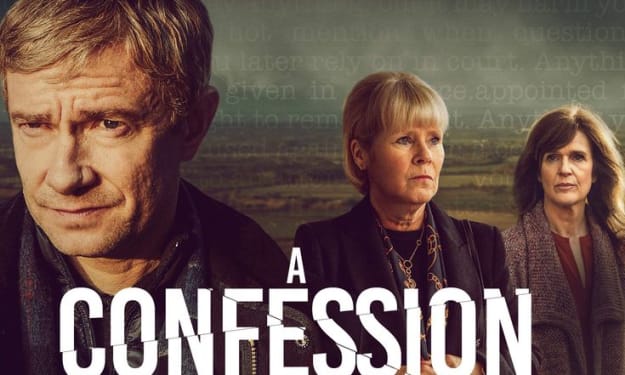
M Mehran At exactly 6:40 p.m., the man walked into Central Police Station and confessed to a murder that didn’t exist. “I killed my wife,” he said calmly. Officer Lena Brooks looked up from her desk, already tired of false alarms and drunken lies. But something about his voice stopped her. No shaking. No panic. Just certainty. “What’s her name?” she asked. “Sarah Collins.” Lena checked the system. No missing persons report. No recent deaths. No emergency calls from that address. Still, she called homicide. A Perfectly Normal House Detective Marcus Hale arrived an hour later. He had solved enough crimes to recognize when something felt wrong—and this felt very wrong. The man’s name was Noah Collins. Accountant. Clean record. Married for twelve years. They drove to his house. Everything inside was perfect. No blood. No struggle. Dinner dishes still in the sink. A half-folded blanket on the couch. Sarah’s phone charging on the counter. “She’s not here,” Marcus said. Noah nodded. “I know.” “Then where is the body?” Noah looked straight into his eyes. “That’s the problem.” The Confession That Made No Sense Back at the station, the interrogation room felt tighter than usual. “I planned it for months,” Noah said. “I memorized her schedule. I imagined every detail.” Marcus frowned. “Imagined?” Noah swallowed. “I poisoned her tea.” “Forensics found nothing.” “I cleaned the cup.” “No trace in the sink.” “I was careful.” Marcus slammed his hand on the table. “You can’t erase a body, Noah.” Noah whispered, “I didn’t need to.” A Marriage Built on Silence Noah explained his life in slow, painful detail. A quiet marriage. No fights. No love either. “Sarah stopped existing years ago,” he said. “She lived beside me, not with me.” Marcus leaned back. “That’s not murder.” “But it feels like one,” Noah replied. “Every day.” Noah claimed the guilt became unbearable. The fantasy of killing her grew louder than reality. “So you confessed to something you only imagined?” Marcus asked. Noah shook his head. “No. I confessed to something I prevented.” The Hidden Truth Marcus paused the recorder. “What do you mean?” Noah’s voice dropped. “Sarah was planning to kill me.” The room went silent. “She had insurance papers hidden in her laptop,” Noah continued. “Search history. Poison dosage. She was patient. Smarter than me.” Marcus didn’t believe him—until digital forensics confirmed it. Sarah Collins had been researching undetectable poisons for over a year. And then came the twist. “She left,” Marcus said. “Yesterday morning.” Noah nodded. “Because I switched the cups.” A Crime That Changed Its Mind Noah explained everything. The night Sarah planned to poison him, Noah already knew. He had replaced the tea cups—giving her the poisoned one instead. But at the last second, he stopped. “I watched her hand shaking,” Noah said. “She wasn’t evil. She was desperate.” So he poured the tea down the sink. And let her leave. “She thinks I never knew,” Noah whispered. “But now I do.” Why Confess Then? Marcus leaned forward. “If no one died, why are you here?” Noah’s eyes filled with tears. “Because I crossed the line in my head,” he said. “I became capable of murder.” “That’s not a crime,” Marcus replied quietly. “It should be,” Noah said. “Because people like me don’t stop.” The Psychological Trap Psychologists later explained it as pre-criminal guilt—the mind punishing itself before the law ever could. Noah wasn’t arrested. But his confession became a case study taught in criminal psychology courses across the country. A man who turned himself in—not for what he did, but for what he almost became. The Final Twist Three months later, Sarah Collins was arrested in another state. She had tried again. This time, the poison worked. Her new husband didn’t survive. When Marcus read the report, he closed the file slowly. Noah Collins had saved a life—by confessing to a crime that never happened. Why This Criminal Story Matters Not all crimes involve blood. Some happen in silence. Some are stopped by fear. And some criminals turn themselves in before the crime is real. Because the most dangerous place for a crime to begin… is the human mind. SEO Keywords: criminal story, psychological crime story, crime fiction, murder confession, true crime style, dark crime story, Vocal Media criminal story, suspense crime
By Muhammad Mehran9 months ago in Criminal
He Was Innocent Until Midnight
M Mehran At exactly 11:59 p.m., the prison loudspeaker crackled to life. “Inmate 3021, prepare for transfer.” Jacob Reeves stopped breathing. Transfer meant only one thing on death row. Execution. For ten years, Jacob had lived between concrete walls, labeled a monster by the world. Convicted of murdering his wife and six-year-old daughter in a house fire that shook the nation. The headlines had been brutal: FATHER BURNS FAMILY ALIVE NO MERCY FOR THE DEVIL AT HOME Jacob had stopped defending himself years ago. No one listened anyway. But tonight—one minute before midnight—everything was about to change. The Case Everyone Thought Was Closed Detective Laura Bennett remembered the Reeves case clearly. It had launched her career. Clean evidence. Quick conviction. Public applause. Too clean. Jacob’s house had burned down in 2015. Investigators found traces of accelerant. Jacob’s fingerprints were on the gas can. Motive? Insurance money. An open-and-shut criminal case. At least, that’s what they wanted it to be. Laura had risen in rank since then, but something had always bothered her. The fire report. The witness statements. The speed. Crimes were never that simple. A Letter That Shouldn’t Exist Three days before Jacob’s execution, Laura received an anonymous envelope. Inside was a single sentence: “If Jacob Reeves dies, the real killer lives free.” And a USB drive. The files were old—security footage from a nearby gas station, time-stamped the night of the fire. Footage that had never made it into evidence. Laura’s stomach dropped. At 10:41 p.m., a man filled a gas can. At 10:44 p.m., he drove away—toward Jacob’s neighborhood. Jacob was at work until 11:10 p.m. The fire started at 10:55 p.m. Jacob physically couldn’t have done it. The Criminal Inside the System Laura dug deeper. She rechecked the original case files and found something worse than a mistake. Tampering. The accelerant report had been altered. Witness statements rewritten. Evidence “lost.” Someone inside the system had built a lie so perfect that it survived a decade. And Laura knew exactly who. Captain Henry Wallace. Her mentor. The man who trained her to “protect justice.” A Race Against Time Laura stormed into Wallace’s office. “Jacob Reeves is innocent,” she said. Wallace didn’t flinch. “You should let the past stay buried.” “Why?” Laura demanded. “Why frame him?” Wallace sighed. “Because the real killer was untouchable.” The truth spilled out like poison. Jacob’s neighbor—Evan Price—had been running an illegal chemical operation. Jacob discovered it and threatened to expose him. The fire was meant to silence him. But Evan Price was an informant. Protected. Valuable. “So you sacrificed an innocent man?” Laura whispered. Wallace’s eyes hardened. “I protected the city.” Midnight Approaches Laura ran. She sent the footage to the district attorney. Contacted the media. Filed an emergency injunction. At 11:57 p.m., Jacob was strapped to the execution table. His final words echoed through the chamber. “I forgive you,” he said calmly. “All of you.” Laura burst into the room screaming, waving the court order. “STOP!” The clock hit 12:00 a.m. The needle never dropped. The Real Criminal Exposed Within hours, Evan Price was arrested trying to flee the country. Captain Wallace resigned “for health reasons” before formal charges could be announced. The media turned savage. INNOCENT MAN NEARLY EXECUTED JUSTICE SYSTEM BUILT ON A LIE Jacob Reeves walked out of prison at dawn—a free man with nothing left to return to. No house. No family. No decade. Laura stood beside him as reporters shouted questions. “Do you hate them?” someone asked. Jacob shook his head. “Hate doesn’t bring back the dead,” he said. “Truth might save the living.” The Quiet After the Storm Months later, Laura visited the burned land where Jacob’s house once stood. Jacob was there, planting a small tree. “For my daughter,” he said. Laura swallowed hard. “I’m sorry.” Jacob looked at her. “You were brave when it mattered.” As Laura walked away, she understood something chilling. The most dangerous criminals don’t carry weapons. They carry authority. Final Thought Jacob Reeves was innocent—until midnight. And the system almost killed him to protect itself. SEO Keywords: criminal story, crime fiction, death row story, false conviction, justice system crime, psychological crime story, true crime inspired, Vocal Media criminal stories, murder mystery
By Muhammad Mehran9 months ago in Criminal
Trump Sues the IRS: A Detailed Look at the High-Profile Legal Battle
**Trump Sues the IRS: A Detailed Look at the High-Profile Legal Battle** Former U.S. President Donald Trump has launched a major lawsuit against the Internal Revenue Service and the U.S. Department of the Treasury, turning a long-running controversy over leaked tax records into a full-scale legal confrontation. The case centers on claims that federal agencies failed to protect highly confidential tax information, leading to unauthorized disclosures that Trump argues caused serious personal, financial, and reputational harm. The lawsuit, filed in federal court, seeks billions of dollars in damages and includes Trump, members of his family, and entities connected to his business empire. It has quickly become one of the most closely watched legal disputes involving a former president and the federal government. **What Is the Core Issue in the Lawsuit?** At the heart of the case is the allegation that Trump’s tax returns were unlawfully accessed and shared with third parties. According to the complaint, sensitive tax information was leaked without authorization, violating strict federal laws designed to protect taxpayer privacy. Trump argues that the IRS and Treasury Department failed to properly supervise employees and contractors, creating conditions that allowed the breach to occur. **Why Did Trump Decide to Sue Now?** Trump’s legal team argues that the damage caused by the tax leaks has been ongoing. The disclosures fueled years of political debate, media scrutiny, and public controversy. By filing this lawsuit, Trump aims to hold federal agencies accountable and to seek compensation for what he describes as long-term harm to his reputation, businesses, and political standing. **Who Are the Plaintiffs and Defendants in the Case?** The plaintiffs include Donald Trump, his adult sons, and organizations tied to the Trump business brand. The defendants are the Internal Revenue Service and the U.S. Department of the Treasury. The lawsuit claims that these agencies bear responsibility because they are legally obligated to safeguard taxpayer information and failed to do so. **How Were the Tax Records Allegedly Leaked?** The lawsuit references a former government contractor who had access to IRS systems and is accused of unlawfully obtaining and distributing tax data. Trump’s complaint argues that while the individual may face criminal responsibility, the agencies themselves are also liable for failing to prevent the breach through proper oversight, security measures, and internal controls. **Why Is This Case Considered Unusual?** It is rare for a former president to sue major federal agencies, especially ones that operate within the executive branch. The case raises complex questions about accountability, immunity, and whether government institutions can be held financially responsible for actions taken by individual employees or contractors. **What Damages Is Trump Seeking?** Trump is seeking at least ten billion dollars in damages. The lawsuit claims that the amount reflects the scale of harm caused by the disclosures, including damage to personal privacy, business relationships, and public trust. The complaint also suggests that the court could consider additional penalties if it finds gross negligence or systemic failure by the agencies. **Were Trump’s Tax Returns Public Before the Leak?** Trump famously declined to voluntarily release his tax returns during his presidency, breaking with modern political tradition. As a result, his tax information became a subject of intense public interest. The lawsuit emphasizes that this interest did not justify illegal disclosures and that tax privacy laws apply equally to public figures and private citizens. **How Has the Government Responded So Far?** As is common in high-profile legal cases, government agencies have not offered detailed public responses at the early stages. Legal teams representing the IRS and Treasury are expected to challenge the claims, potentially arguing that the agencies themselves were not directly responsible for the actions of an individual contractor. **What Legal Questions Does the Case Raise?** The lawsuit raises broader legal issues beyond Trump himself. These include how taxpayer data is protected, what standards federal agencies must meet to prevent leaks, and whether victims of data breaches can successfully sue government institutions for monetary damages. The outcome could influence how future privacy violations are handled across federal agencies. **Could This Case Set a Precedent?** If the court allows the lawsuit to proceed and awards damages, it could set an important precedent regarding government liability for data breaches. It may also prompt stricter internal controls, enhanced cybersecurity measures, and greater scrutiny of contractors who handle sensitive information. **What Happens Next in the Legal Process?** The case is expected to move through several legal stages, including motions to dismiss, evidence discovery, and potentially a trial. Given the complexity and political sensitivity of the lawsuit, the process could take a significant amount of time. A settlement is also possible, though not guaranteed. ed by Donald Trump against the IRS and the Treasury Department represents a dramatic escalation in the debate over tax privacy, government accountability, and the treatment of high-profile individuals under federal law. Whether the case succeeds or fails, it underscores the importance of safeguarding sensitive information and highlights the legal consequences that can follow when those protections break down.
By America today 9 months ago in Criminal
Global Implications If Nuclear Command Systems Weaken
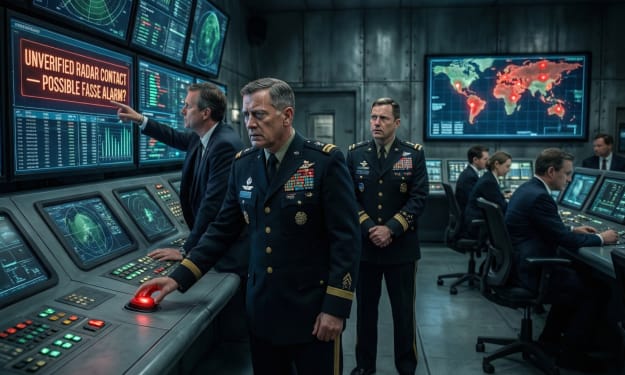
Global Implications If Nuclear Command Systems Weaken Nuclear weapons are often described as the ultimate tools of deterrence. They are meant to prevent war, not start it. But this balance depends on one critical factor: strong and stable command systems. If these systems weaken, the danger is not limited to one country. The impact spreads across the entire world.
By Wings of Time 9 months ago in Criminal
Nuclear Command Risks in a Time of Internal Tension
Nuclear Command Risks in a Time of Internal Tension When people think about nuclear power, they often focus on missiles, warheads, and military strength. But the most important part of any nuclear system is not the weapon itself—it is the command structure behind it. Clear leadership, trusted decision-making, and reliable communication are what prevent disasters. When these systems face internal tension, the risks grow quietly but dangerously.
By Wings of Time 9 months ago in Criminal
Can Aircraft Carriers Survive the Drone Age?
Can Aircraft Carriers Survive the Drone Age? For more than seventy years, aircraft carriers have stood at the center of global military power. They are mobile airbases, capable of projecting force anywhere on the planet without relying on foreign soil. Their presence alone can alter diplomacy, deter rivals, and reassure allies. But a new challenge is rising—quietly, cheaply, and rapidly. The age of drones is forcing militaries to confront an uncomfortable question: are aircraft carriers becoming vulnerable giants in a world of unmanned warfare?
By Wings of Time 9 months ago in Criminal
Drones vs Aircraft Carriers
Drones vs Aircraft Carriers For decades, aircraft carriers have symbolized ultimate military power. They are floating cities, armed with fighter jets, guided missiles, radar systems, and layered defenses. A single carrier strike group represents not just military strength, but political will. Wherever it sails, it sends a message: power has arrived.
By Wings of Time 9 months ago in Criminal
Floating Power and Fragile Diplomacy
Floating Power and Fragile Diplomacy In recent weeks, renewed attention on U.S. naval movements, particularly carrier strike groups operating across strategic waterways, has highlighted a deeper shift in how global power is projected. From the South China Sea to the Indian Ocean, the presence of American naval assets is no longer just a show of strength—it is a message shaped by technology, deterrence, and fragile diplomacy.
By Wings of Time 9 months ago in Criminal
The ICE Shooting in Minneapolis A Closer Look at Federal Enforcement and Rising Tensions
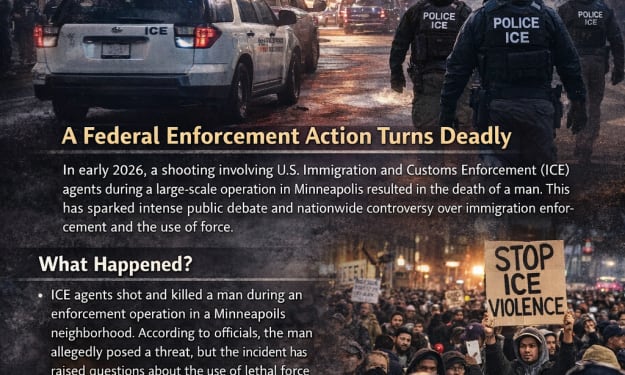
The ICE Shooting in Minneapolis A Closer Look at Federal Enforcement and Rising Tensions In early 2026, Minneapolis found itself at the center of national attention following a shooting involving agents from U.S. Immigration and Customs Enforcement, widely known as ICE. The incident quickly moved beyond a single law enforcement encounter and became a symbol of broader debates surrounding immigration policy, federal authority, and the use of force in American cities. As details emerged, the shooting sparked intense public discussion, protests, and renewed scrutiny of federal operations carried out within local communities. The incident occurred during a large-scale immigration enforcement effort that brought a significant number of federal agents into Minneapolis. The stated goal of the operation was to locate and detain individuals suspected of immigration violations and other related offenses. While federal officials described the mission as necessary for public safety and law enforcement, many local residents experienced it as sudden, aggressive, and disruptive to everyday life. According to official accounts, the shooting happened during an encounter between ICE agents and a civilian in a residential area of the city. The situation escalated rapidly, ending with an agent firing a weapon and killing the individual. Federal authorities stated that the agent acted in response to a perceived threat, while community members questioned whether lethal force was necessary and whether alternative actions could have been taken. The lack of immediate clarity surrounding the event fueled public anger and distrust. What intensified the reaction was the fact that this shooting did not occur in isolation. It followed other recent incidents involving federal agents using firearms during enforcement actions in the same metropolitan area. The close timing of these events led many observers to describe the situation as part of a troubling pattern rather than a single tragic mistake. For residents of Minneapolis, especially those in immigrant and minority communities, the repeated use of force deepened fears and heightened anxiety. Local leaders responded swiftly. City officials and state representatives expressed concern about the scale and tactics of federal enforcement in Minneapolis. Some argued that the operations were carried out with little coordination with local authorities and insufficient understanding of neighborhood dynamics. Others warned that aggressive federal actions risked undermining years of efforts to build trust between law enforcement and the communities they serve. At the same time, federal agencies defended their presence and actions. Officials emphasized that ICE agents are trained to handle dangerous situations and that officers must make split-second decisions when they believe their lives or the lives of others are at risk. From this perspective, the shooting was portrayed as a defensive response during a volatile encounter rather than an act of excessive force. This divide in narratives became a defining feature of the public debate. Public reaction in Minneapolis was immediate and intense. Demonstrations erupted across the city, with protesters calling for accountability, transparency, and an end to what they described as militarized immigration enforcement. Marches and rallies drew attention not only to the shooting itself but also to larger questions about who controls public safety and how immigration laws are enforced in urban environments. For many protesters, the incident symbolized systemic problems rather than an isolated failure. Civil rights advocates also weighed in, arguing that federal enforcement actions should be subject to stronger oversight, especially when they involve lethal force. They called for independent investigations and clearer rules governing when agents may use weapons during arrests. These voices emphasized that accountability is essential for maintaining public trust and preventing future tragedies. Beyond Minneapolis, the shooting reignited a national conversation about immigration enforcement in the United States. Supporters of strict enforcement argued that federal agencies must be allowed to operate decisively to uphold the law. Critics countered that aggressive tactics often produce fear rather than safety and can damage relationships between communities and authorities. The Minneapolis case became a focal point for these competing views. As investigations continue, the city faces difficult questions about the future. How should federal agencies operate within local jurisdictions. What limits should exist on the use of force. And how can governments balance enforcement priorities with respect for human life and civil liberties. The answers to these questions will shape not only the outcome of this case but also the broader direction of immigration policy and law enforcement practices. The ICE shooting in Minneapolis stands as a powerful reminder of the human impact of policy decisions. It illustrates how quickly enforcement actions can escalate into tragedy and how deeply such events can affect communities. Whether this moment leads to meaningful reform or deeper division will depend on the willingness of leaders to confront hard truths, listen to affected communities, and pursue solutions rooted in accountability and justice.
By America today 9 months ago in Criminal
Kendrick Simpson's Downfall
On January 15th, 2006, an insult was answered by a bullet. Tempers were hot on that cold winter night in Oklahoma City. Fritzi’s Hip Hop night club was a happening place in the city back in 2006. It was a place that attracted all kinds of interesting and sometimes very dangerous individuals. In this case it had attracted some hurricane survivors. Ok, folks, let me back up and explain a little bit.
By Cassie Moore9 months ago in Criminal