investigation
Whodunnit, and why? All about criminal investigations and the forensic methods used to search for clues and collect evidence to get to the bottom of the crime.
How TikTok Sleuths Helped Solve a Real Crime
In an age where social media connects billions in real time, platforms like TikTok have become more than just a source of entertainment. While dancing challenges and trending audio clips dominate the app, another powerful phenomenon has emerged — the rise of the TikTok sleuth. These are everyday users with a sharp eye for detail and a strong sense of justice, using their digital influence to uncover facts, analyze evidence, and, in some cases, assist in solving real crimes. One of the most fascinating and controversial stories of this new trend unfolded during the disappearance of Gabby Petito — a case that gripped the world and highlighted both the potential and pitfalls of digital detective work.
By Muhammad Asimabout a year ago in Criminal
Famous Courtroom Dramas That Changed Legal History
Some court cases are so powerful they leave a permanent mark on society. These famous courtroom dramas were not just legal battles; they were turning points in history. They raised crucial questions, challenged old ideas, and often changed the course of laws, culture, or even human rights. Whether it was a fight for justice, freedom, or truth, these cases stirred public emotion and forced society to look inward. What follows are some of the most impactful courtroom dramas that changed the legal landscape forever.
By Muhammad Asimabout a year ago in Criminal
Thomas Partey, former Arsenal footballer, charged with rape and sexual assault
Five charges of rape and one charge of sexual assault Partey denies all the charges against him The former Arsenal footballer Thomas Partey has been charged with five counts of rape and one count of sexual assault, the Crown Prosecution Service said.
By SHYAKA MARSabout a year ago in Criminal
“A Mother’s Lie”
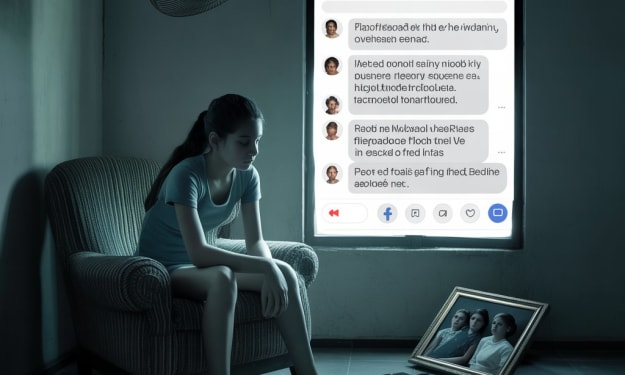
In 2016, in the quiet streets of Abohar’s Govind Nagar colony, a mother’s secret life collided with her daughter’s innocence—ending in tragedy that left a community in shock. Manju lived with her husband, Rajendra Kumar, the son of a respected jeweler named Ramchandra. Rajendra’s family was known for their successful jewelry and bangle business in Anariwala. It was at this shop that Rajendra first met Manju—a beautiful, confident, and clever woman who would come in often to browse. Rajendra, taken by her charm, soon fell in love. He later discovered she was from his aunt’s village, which made approaching her easier. Their love blossomed quickly. After a period of secret meetings and emotional connection, Rajendra mustered the courage to tell his family about her. At first, they resisted the match, but Rajendra’s insistence eventually won them over. The couple got married and began their new life together. But the love story soured not long after the wedding. Manju, who had dreamed of freedom and independence, found the traditional, joint family lifestyle stifling. Rajendra, by contrast, was a simple man rooted in family values. She soon convinced him to separate from the family and start fresh. Rajendra agreed, thinking it would make her happy. He opened a small tanki-making shop about 15 kilometers away in a village called Ballwana. However, with little experience in the trade, the shop failed. Financial pressures began to mount. They moved into a small rented house in Nanak Nagri, and Rajendra began driving someone’s vehicle for income. During this period, Manju gave birth to two children: a daughter, Deeksha, and a son, Nakul. Raising children was expensive, and their financial troubles grew. To help support the household, Manju took up work at a local shop. But once Manju started working outside, everything changed. She began mingling with new people. Her behavior at home shifted—she grew distant from Rajendra and the children. She stayed out late, ignored her family, and took little interest in home life. Rajendra, stressed and helpless, turned to alcohol for solace. Eventually, Manju and her mother threw Rajendra out of the house. Humiliated and broken, he left without protest—and never returned. A few weeks later, he passed away under unknown circumstances. Manju now bore the sole responsibility of raising their children. To escape gossip and societal pressure, she moved into a new rented home in Panjpir Nagar. There, her lifestyle changed dramatically. She started riding a scooter, bought a high-end phone, and became active on social media. She longed for companionship. She created a Facebook account and soon connected with Vijay Kumar, a construction worker from Haryana working in Saudi Arabia. They began chatting, and a long-distance friendship blossomed into a romantic attachment. Despite having a three-year overseas work contract, Vijay broke it after just two years, returned to India, and moved in with Manju. To avoid suspicion, she introduced him to neighbors as her “aunt’s son.” But not everyone believed it—especially her 17-year-old daughter, Deeksha. Deeksha, sharp and observant, grew suspicious. She knew her mother’s relatives well and had never heard of Vijay. More troubling, she noticed the closeness between her mother and Vijay. The relationship didn’t feel like that of cousins—it felt like something more. Deeksha began to observe carefully. She watched how her mother behaved around Vijay. But what she didn’t know was that Vijay, too, had taken a disturbing interest in her. After meeting Deeksha, he grew infatuated. In time, Deeksha began to respond to Vijay’s attention. Emotionally vulnerable and yearning for love, she believed Vijay truly cared for her. What began as a lie had now spiraled into a dangerous love triangle: a mother in love with a man, and her teenage daughter caught in the middle. The household became a battleground. Arguments erupted frequently between Manju and Deeksha. The tension grew unbearable. On the evening of May 24, 2016, everything fell apart. A bitter argument between mother and daughter escalated out of control. Manju, overwhelmed with jealousy and rage, grabbed Deeksha’s dupatta and strangled her in a fit of fury. Vijay, who stood nearby, did nothing to stop her. After the murder, they tried to cover it up. They hung Deeksha’s body from the ceiling fan to make it look like a suicide. Then they left the house and went shopping, hoping to create an alibi. When the police arrived later that evening, Manju quietly slipped them a note she claimed was a suicide letter written by Deeksha. But forensic handwriting analysis later proved it was forged. Investigators also noted inconsistencies in the timeline, witness statements, and the condition of the crime scene. Suspicion grew. The police interrogated both Manju and Vijay. Eventually, faced with mounting evidence, they both confessed. Vijay admitted he had fallen in love with Manju online but had grown distant after meeting Deeksha. He regretted everything. Manju, however, showed no remorse. She believed her daughter had become an obstacle to her happiness—and justified her actions. Both were arrested and remanded into police custody. The case drew national media attention and shocked the community. What began as a Facebook friendship ended in betrayal, manipulation, and murder.
By SHAFIQ UR RAHMAN about a year ago in Criminal
The Vanishing of Rida Khan: A Real-Life Crime That Shook Lahore
On the humid evening of July 18, 2022, 23-year-old Rida Khan, a final-year psychology student at Punjab University, left her hostel in Lahore for a quick trip to a nearby supermarket. She never returned. Initially, her disappearance seemed like just another case of a runaway girl. Even the police hesitated to register an FIR, claiming “she must have gone to a friend’s place.” But Rida’s roommate and close friend, Mehak, insisted otherwise. “She had an important seminar the next day. She wouldn’t vanish like this,” Mehak told the local media, her eyes swollen from sleepless nights. Three days passed with no sign of Rida. Her phone was switched off. CCTV footage from the market revealed a crucial lead — Rida was seen getting into a white Toyota Corolla with tinted windows around 7:52 PM. The case caught the attention of a local crime reporter, Tariq Mehmood, who published an article titled "Where is Rida Khan?" The headline went viral. Public pressure mounted. Eventually, the Lahore Police’s Crime Investigation Agency (CIA) took over the case. --- The Investigation Begins Detectives began analyzing CCTV footage throughout the city. They identified the car’s license plate: LEA-0932. The car was registered to a Shahid Bashir, a 42-year-old businessman who ran a chain of mobile shops in Anarkali Bazaar. When police visited his residence, they found something odd — Shahid had left the city the very next day after Rida’s disappearance. He told his wife he was going to Karachi for a business meeting but never reached. Through call data records, investigators discovered Shahid’s phone had last pinged in Okara, a city 120 km away. A deeper probe revealed Shahid had a history of harassment complaints by female employees in his shops — none of which had been taken seriously until now. Rida’s parents were devastated. Her father, Iqbal Khan, a retired railway officer, told reporters, “I gave my daughter the freedom to study and dream. I never thought the city would eat her alive.” --- A Breakthrough Ten days after the disappearance, Shahid’s car was found abandoned near a canal outside Kasur. Forensics uncovered hair strands, a broken earring, and traces of blood on the backseat. DNA tests confirmed the blood belonged to Rida. The public erupted in outrage. Candlelight vigils were held. The hashtag #JusticeForRida trended on Pakistani Twitter for days. News anchors debated the negligence of law enforcement in such cases. The Chief Minister Punjab announced a special task force. Using mobile triangulation, the police finally tracked Shahid Bashir to a guest house in Multan, where he had registered under a fake identity. On August 3, 2022, he was arrested. --- The Truth Unfolds Under interrogation, Shahid at first denied everything. But when confronted with the CCTV footage, DNA evidence, and car records, he broke down. He confessed: > “I didn’t plan to harm her. I offered her a ride that day, thinking she looked distressed. But when she recognized me from the university workshops we had sponsored and said she’d report me for past harassment... I panicked. I slapped her, and she hit her head. She was bleeding... I didn’t mean to kill her.” Shahid claimed Rida died accidentally and that he dumped her body in the canal near Changa Manga forest. A 14-hour search by divers recovered her body — badly decomposed, weighted down with bricks tied by her own dupatta. The autopsy revealed signs of blunt trauma, strangulation, and evidence of sexual assault. His "accidental" claim was a lie. --- The Courtroom Drama Shahid Bashir was charged with kidnapping, rape, murder, and destruction of evidence. The trial began in October 2022 and lasted six months. Over 25 witnesses were brought forward — including former female employees who testified how he preyed on vulnerable girls. Mehak, Rida’s roommate, gave a powerful statement in court: > “She wasn’t just a friend. She was a sister. A future therapist. A light in a dark world. And he extinguished it like it was nothing.” Shahid’s defense lawyers tried every trick — claiming he was mentally unstable, that the evidence was circumstantial, that Rida had a personal grudge. But the judge wasn’t swayed. --- Justice Served On April 18, 2023, Shahid Bashir was convicted on all counts and sentenced to death by hanging under Section 302 of the Pakistan Penal Code. He was also fined Rs. 1 million, to be given to Rida’s family as compensation. As he was led away in handcuffs, the courtroom erupted with claps and tears. Rida’s father stood quietly, a framed photo of his daughter in his hand. “She got justice. But it cost us our entire world.” --- Aftermath The case sparked a series of reforms in Punjab: A “Women’s Protection Hotline” was launched. Police stations were instructed to register all missing women’s complaints within 24 hours. Punjab University introduced self-defense workshops for female students. A new bill called “Rida’s Law” was proposed to monitor individuals with a past record of harassment and prevent them from running businesses near educational institutions. Rida’s mother, Shamim Bibi, now runs a small NGO helping victims of harassment and abuse. “My daughter’s story should not repeat. I will not let her death be forgotten.” --- Final Words Rida Khan’s murder was not just another crime. It became a symbol of resistance, a wake-up call to a society that often silences its daughters in the name of “honor,” “shame,” or “fear.” But this time, the criminal was caught.And justice, though delayed, was not denied.
By Muhammad Usamaabout a year ago in Criminal
Liberty on Trial
The courtroom was silent, save for the ticking of the old clock hanging above the judge’s bench. The symbol of the eagle, claws gripping arrows and olive branches, loomed high on the wall — a reminder of what the Constitution was meant to protect.
By Sana Ullahabout a year ago in Criminal
Darkroom for the Damned
The sign above the narrow alleyway flickered in neon blood-red: Darkroom for the Damned. It didn’t appear on any map, nor did anyone seem to remember when it had opened. Those who stumbled upon it claimed they hadn’t been looking for it—only that they were… drawn. By guilt, by curiosity, or by the unbearable weight of memory.
By Said Hameedabout a year ago in Criminal
The Locksmith Died Twice
The locksmith died twice — once in the fire, and once when the truth came out. His name was Ansel Merrin. In the town of Delmere, everyone simply called him "Locks." For thirty-five years, he kept a small shop wedged between an old bakery and a tailor who never smiled. His windows were dusty, his hair whiter than bone, and his keys jingled like wind chimes when he walked. He never married, never left town, never said more than needed.
By Said Hameedabout a year ago in Criminal
The Bryan Kohberger Motive That Just Makes SENSE
The case that gripped a nation still leaves us asking the same question: Why? Why would someone walk into a quiet off-campus home in the dead of night and end four lives in such a brutal, personal way? Bryan Kohberger’s name may forever be attached to this horrific crime, but his motive—if he is guilty—remains murky. And that’s what this article is about: the murk.
By Lawrence Leaseabout a year ago in Criminal