investigation
Whodunnit, and why? All about criminal investigations and the forensic methods used to search for clues and collect evidence to get to the bottom of the crime.
South Korean Christian Abusers, Exploiters, and Frauds are Historically Common
This chronological overview traces seven decades of major crimes committed by South Korean Christian leaders, from Park Tae-seon’s 1950s fraud convictions to Jung Myung-seok’s 2025 sexual-violence sentence. It details embezzlement, fraud, tax evasion, sexual assault, and coercive control cases involving figures such as Sun Myung Moon, David Yonggi Cho, and Shin Ok-ju. The analysis links these patterns to the professional limitations of theology-only education and rigid gender expectations in conservative Christianity, suggesting that such environments may exacerbate vulnerability to corruption. It closes by urging stronger transparency, regulation, and ethical oversight within South Korea’s religious institutions.
By Scott Douglas Jacobsenabout a year ago in Criminal
The Disappearance of Elisa Lam — The Hotel Cecil Mystery
In early 2013, the world was captivated by the mysterious disappearance of 21-year-old Canadian student Elisa Lam in Los Angeles, California. Her story remains one of the most chilling and puzzling cases in recent memory, involving a historic hotel, unexplained behavior, and a tragic ending.
By Daniel morkaabout a year ago in Criminal
Bad to the Bone A Psychopathic Killer with No Remorse. AI-Generated.
They called him Eli Cross — a name whispered in the hallways of every police department across the East Coast. No fingerprints. No DNA. Just the echo of his work — methodical, clean, precise.
By shakir hamidabout a year ago in Criminal
The White House Warns of “Difficult Days Ahead” in Ukraine
### The White House Warns of “Difficult Days Ahead” in Ukraine The White House issued a somber warning this week, signaling that the conflict in Ukraine may be entering one of its most challenging phases yet. During a press briefing, officials cautioned that “difficult days are ahead,” hinting at possible escalations both on the battlefield and within the diplomatic arena. The statement immediately captured the world’s attention, reigniting debates about how long the war can continue and what the next chapter might look like. For months, Ukraine has been fighting to maintain control of its eastern territories while seeking additional international support. The warning from Washington, while not entirely unexpected, has sent a clear message: the situation remains volatile, and Western allies are bracing for new developments that could shift the course of the war. Behind the brief words of caution lies a web of political and military realities. Analysts believe the statement reflects growing concerns inside the White House about the sustainability of the current strategy. As the conflict drags on, questions about resources, military fatigue, and the limits of international aid are becoming increasingly urgent. Washington’s latest message appears designed to prepare both allies and the public for a potentially turbulent period ahead. Observers also note that this warning may serve as a subtle nudge to European partners. Some countries within NATO have begun to show hesitation about maintaining long-term support, particularly as domestic economic pressures grow. By describing the coming period as “difficult,” U.S. officials might be emphasizing the need for continued unity, even as the cost of involvement rises. The phrase “difficult days ahead” also resonates emotionally, signaling empathy for the Ukrainian people who continue to endure the daily realities of war — displacement, shortages, and uncertainty. It acknowledges not just the military struggle, but the humanitarian toll that has become impossible to ignore. Each winter brings new challenges for millions of civilians living near the front lines, and the coming months are expected to test their resilience once again. Meanwhile, on the diplomatic front, there are signs that talks about possible ceasefire frameworks have stalled. Russian officials continue to insist on conditions that Kyiv finds unacceptable, while Western negotiators maintain that any lasting peace must begin with a full withdrawal of Russian forces. This deadlock, combined with the ongoing intensity of combat operations, leaves little room for optimism in the short term. Experts in Washington believe the White House is trying to balance two messages: reassurance and realism. On one hand, the administration wants to show continued commitment to Ukraine’s sovereignty. On the other, it must acknowledge the mounting difficulties that both sides face as the conflict stretches into another winter. The phrase “difficult days” could therefore be seen as a diplomatic way of saying that progress may slow, and that expectations for quick resolutions should be tempered. Public reaction to the warning has been mixed. Supporters of Ukraine view it as a responsible acknowledgment of reality — a reminder that the struggle for freedom and stability is long and costly. Critics, however, argue that the administration is preparing the ground for reduced involvement, or perhaps even an eventual shift in U.S. priorities as domestic issues demand more attention. Regardless of interpretation, the warning reflects a broader truth about modern conflicts: wars rarely end cleanly or predictably. As Ukraine braces for another round of fighting and negotiations, the global community watches closely, aware that any escalation could have ripple effects far beyond Eastern Europe. Energy markets, food supply chains, and regional security arrangements all remain sensitive to the slightest change on the battlefield. In the coming weeks, all eyes will be on how Ukraine responds to this warning — and how the White House backs up its words with action. Whether through increased military aid, new diplomatic initiatives, or humanitarian assistance, Washington’s choices will shape not only the fate of the conflict but also its own credibility on the world stage. For now, one thing is clear: the phrase “difficult days ahead” is not just a prediction. It is a statement of reality — a sober acknowledgment that, even after years of fighting, the road to peace remains long, uncertain, and fraught with challenges
By America today about a year ago in Criminal
Tragedy in Jacksonville: The Shocking Case of Maddie Clifton
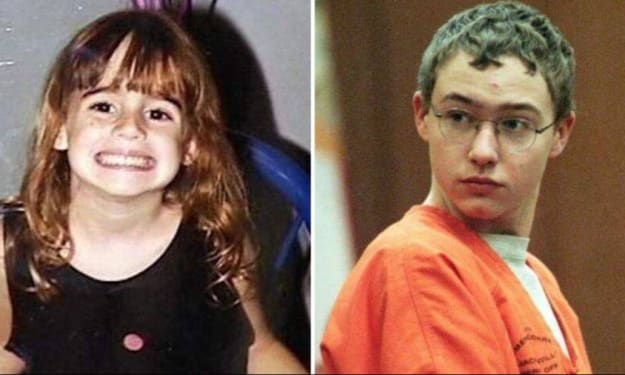
In November 1998, Jacksonville, Florida, witnessed one of the most disturbing cases of juvenile crime in recent history. Joshua Earl Patrick Phillips, a 14-year-old boy, became infamous for the murder of his 8-year-old friend and neighbor, Madelyn Rae Clifton, also known as Maddie. The friendship between Phillips and Clifton had seemed ordinary and innocent, but it would end in tragedy and shock the local community.
By Faeze Gholamiabout a year ago in Criminal
The Short Man Who Set the World on Fire
The Short Man Who Set the World on Fire — Without Meaning To In the heart of the Balkans, where mountains meet rivers, the city of **Sarajevo** awoke to a quiet summer morning in 1914. No one knew that this would become one of the bloodiest days in human history. On a narrow street near the market stood a thin young man in a faded coat, his small hands trembling around a pistol hidden in his pocket. His name was **Gavrilo Princip**, the son of a poor farmer from a small Bosnian village. He was short — barely 1.60 meters tall — frail, and overlooked by everyone. But inside him burned a fire of pride, anger, and humiliation. Since childhood, he had dreamed of becoming a soldier, fighting for a free “Greater Serbia.” But every time he applied to the army or for a government job, he heard the same words: > “You’re too small. Too weak. You don’t fit.” Rejection after rejection turned his frustration into hatred, and his hatred into a thirst for revenge. To him, the **Austro-Hungarian Empire**, which ruled Bosnia and Herzegovina, was the embodiment of oppression. He secretly joined a nationalist underground group called **The Black Hand**, whose goal was to drive out the Austrians and unite all Serbs under one flag. One night, the group decided on a daring plan: **to assassinate Archduke Franz Ferdinand**, heir to the Austro-Hungarian throne, during his visit to Sarajevo. On the morning of **June 28, 1914**, the royal motorcade rolled through the city streets lined with flags and cheering crowds. Gavrilo and his comrades waited along the route, each armed with bombs or pistols. The first attempt failed — a bomb missed the car and exploded behind it. The conspirators scattered, convinced the plan had failed. Disheartened and exhausted, Gavrilo sat at a nearby café, thinking his mission was over. But fate had other plans. An hour later, by sheer accident, the Archduke’s car took a wrong turn and stopped right in front of the café where the young man sat. Without hesitation, Gavrilo stood, pulled out his pistol, and fired **two shots**. The first struck **the Archduke**, the second hit **his wife, Sophie**. Both died instantly. Gavrilo Princip could not have known that those two bullets would ignite a war that would consume all of Europe. Within weeks, **Austria-Hungary** declared war on **Serbia**. **Russia** rushed to defend Serbia, **Germany** supported Austria, and soon **France** and **Britain** joined the fight. The assassination of one man had exploded into **World War I**, which lasted four long years and took the lives of more than **20 million people**. Gavrilo was captured within minutes. At his trial, he said calmly: > “I wanted freedom for my people. I never wished for a world war.” > He died of tuberculosis in prison two years later, at just twenty-three. But the fire he lit did not die with him. When the war ended in **1918**, **Germany** emerged defeated and humiliated by the **Treaty of Versailles**, forced to pay enormous reparations and disarm completely. Hunger, poverty, and anger swept through the nation. And from the ashes of defeat, another short man rose — one with fierce eyes and a tiny mustache: **Adolf Hitler**. He had been a soldier in the Great War, and like millions of Germans, he carried the bitterness of loss. But he possessed something more dangerous — a gift for stirring crowds. He told the people that Germany had not been defeated on the battlefield but **betrayed from within**. He promised to restore their pride, rebuild their army, and make Germany great again. While the world was distracted by economic crises, Hitler rose to power in **1933**, openly defying the Treaty of Versailles and rebuilding his forces. Then, on **September 1, 1939**, his troops invaded **Poland**, and **World War II** began — a conflict far deadlier and more devastating than the first. Over **70 million people** would perish, cities would crumble, and the map of the world would change forever. And so, it all began with a short man rejected because of his height, and ended with another short man who demanded the world bow before him. Between the first bullet fired by **Gavrilo Princip** in Sarajevo, and the last bullet fired by **Adolf Hitler** into his own head in Berlin, lay thirty years of war, fire, and ruin — a tragedy born from pride, pain, and the desperate need of two small men to feel tall before the world.
By America today about a year ago in Criminal
Louvre Museum Robbery: How Came into Place?
When we hear the name “Louvre Museum”, what first comes to mind is the grand pyramid standing proudly in the heart of Paris, holding within it the treasures of human civilization — from Leonardo da Vinci’s Mona Lisa to the Greek Venus de Milo. It is the largest and most visited museum in the world, welcoming over 7 million people annually. But on a calm Sunday morning of October 19, 2025, this world-famous cultural symbol became the stage of one of the most shocking robberies in modern European history.
By Keramatullah Wardakabout a year ago in Criminal