investigation
Whodunnit, and why? All about criminal investigations and the forensic methods used to search for clues and collect evidence to get to the bottom of the crime.
Trump Sues the IRS: A Detailed Look at the High-Profile Legal Battle
**Trump Sues the IRS: A Detailed Look at the High-Profile Legal Battle** Former U.S. President Donald Trump has launched a major lawsuit against the Internal Revenue Service and the U.S. Department of the Treasury, turning a long-running controversy over leaked tax records into a full-scale legal confrontation. The case centers on claims that federal agencies failed to protect highly confidential tax information, leading to unauthorized disclosures that Trump argues caused serious personal, financial, and reputational harm. The lawsuit, filed in federal court, seeks billions of dollars in damages and includes Trump, members of his family, and entities connected to his business empire. It has quickly become one of the most closely watched legal disputes involving a former president and the federal government. **What Is the Core Issue in the Lawsuit?** At the heart of the case is the allegation that Trump’s tax returns were unlawfully accessed and shared with third parties. According to the complaint, sensitive tax information was leaked without authorization, violating strict federal laws designed to protect taxpayer privacy. Trump argues that the IRS and Treasury Department failed to properly supervise employees and contractors, creating conditions that allowed the breach to occur. **Why Did Trump Decide to Sue Now?** Trump’s legal team argues that the damage caused by the tax leaks has been ongoing. The disclosures fueled years of political debate, media scrutiny, and public controversy. By filing this lawsuit, Trump aims to hold federal agencies accountable and to seek compensation for what he describes as long-term harm to his reputation, businesses, and political standing. **Who Are the Plaintiffs and Defendants in the Case?** The plaintiffs include Donald Trump, his adult sons, and organizations tied to the Trump business brand. The defendants are the Internal Revenue Service and the U.S. Department of the Treasury. The lawsuit claims that these agencies bear responsibility because they are legally obligated to safeguard taxpayer information and failed to do so. **How Were the Tax Records Allegedly Leaked?** The lawsuit references a former government contractor who had access to IRS systems and is accused of unlawfully obtaining and distributing tax data. Trump’s complaint argues that while the individual may face criminal responsibility, the agencies themselves are also liable for failing to prevent the breach through proper oversight, security measures, and internal controls. **Why Is This Case Considered Unusual?** It is rare for a former president to sue major federal agencies, especially ones that operate within the executive branch. The case raises complex questions about accountability, immunity, and whether government institutions can be held financially responsible for actions taken by individual employees or contractors. **What Damages Is Trump Seeking?** Trump is seeking at least ten billion dollars in damages. The lawsuit claims that the amount reflects the scale of harm caused by the disclosures, including damage to personal privacy, business relationships, and public trust. The complaint also suggests that the court could consider additional penalties if it finds gross negligence or systemic failure by the agencies. **Were Trump’s Tax Returns Public Before the Leak?** Trump famously declined to voluntarily release his tax returns during his presidency, breaking with modern political tradition. As a result, his tax information became a subject of intense public interest. The lawsuit emphasizes that this interest did not justify illegal disclosures and that tax privacy laws apply equally to public figures and private citizens. **How Has the Government Responded So Far?** As is common in high-profile legal cases, government agencies have not offered detailed public responses at the early stages. Legal teams representing the IRS and Treasury are expected to challenge the claims, potentially arguing that the agencies themselves were not directly responsible for the actions of an individual contractor. **What Legal Questions Does the Case Raise?** The lawsuit raises broader legal issues beyond Trump himself. These include how taxpayer data is protected, what standards federal agencies must meet to prevent leaks, and whether victims of data breaches can successfully sue government institutions for monetary damages. The outcome could influence how future privacy violations are handled across federal agencies. **Could This Case Set a Precedent?** If the court allows the lawsuit to proceed and awards damages, it could set an important precedent regarding government liability for data breaches. It may also prompt stricter internal controls, enhanced cybersecurity measures, and greater scrutiny of contractors who handle sensitive information. **What Happens Next in the Legal Process?** The case is expected to move through several legal stages, including motions to dismiss, evidence discovery, and potentially a trial. Given the complexity and political sensitivity of the lawsuit, the process could take a significant amount of time. A settlement is also possible, though not guaranteed. ed by Donald Trump against the IRS and the Treasury Department represents a dramatic escalation in the debate over tax privacy, government accountability, and the treatment of high-profile individuals under federal law. Whether the case succeeds or fails, it underscores the importance of safeguarding sensitive information and highlights the legal consequences that can follow when those protections break down.
By America today 9 months ago in Criminal
The Elevator Killers: The Chilling Case of the Parents Who Butchered Their Children. Content Warning.
In the prestigious Ekbatan neighborhood of North Tehran, life usually follows a predictable, quiet rhythm. In this massive residential complex, Akbar and Iran Khorramdin lived a life that seemed defined by peace and devotion. To their neighbors, they were the quintessential elderly couple—polite, soft-spoken, and always ready with a gentle greeting in the elevator. No one could have imagined that behind their wrinkled faces and the polished metal of that elevator, a dark, repetitive ritual was unfolding. For years, the building's security cameras captured a chilling image: the couple frequently leaving the elevator carrying heavy, black trash bags, moving with a terrifying calmness, without a hint of panic. They weren't taking out the trash; they were disposing of their own children.
By Mayar Younes9 months ago in Criminal
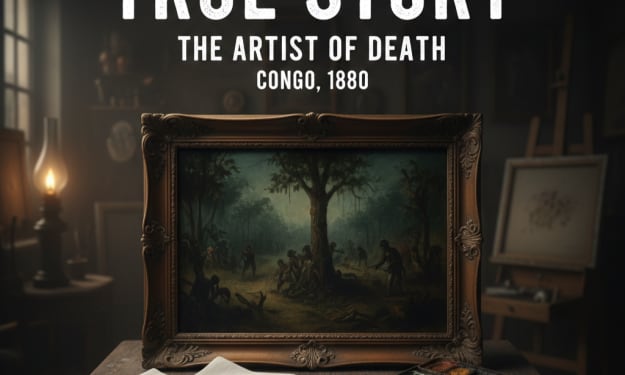
The Brush of Death: The Haunting Tale of James Jameson and the Six-Handkerchief Girl.. Content Warning.
We often believe that human evil has a limit, a floor beyond which no one can sink. But history, in its darkest corners, proves us wrong. The story of James S. Jameson, heir to the famous Irish whiskey dynasty, is a descent into a madness so profound it defies words Introduction: When Evil Knows No Bounds For those who immerse themselves in the annals of true crime and historical atrocities, there often comes a feeling of desensitization. We tend to believe we have seen the worst of human nature—the serial killers, the tyrants, and the madmen. However, history occasionally reveals a "basement" of human depravity that we never knew existed. The story of James Sligo Jameson is not that of a common criminal from the fringes of society; it is the story of a man from the pinnacle of the British aristocratic elite. The heir to the world-renowned Jameson Irish Whiskey empire, he was a man who turned the agony of a child into a "work of art." Historical Context: Into the Heart of Darkness In 1887, Jameson joined one of the most famous and controversial expeditions of the 19th century: the Emin Pasha Relief Expedition. Led by the legendary—and often brutal—explorer Henry Morton Stanley, the mission's public goal was to rescue the besieged governor of Equatoria. Yet, beneath this humanitarian veneer lay a world of colonial greed and darkness. Accompanying the mission was a Syrian translator named Assad Farran, whose eventual testimony would shock the Victorian world by revealing the horrors hidden within the Congo’s dense rainforests. A Diabolical Curiosity: The Cheapest Bargain in History Jameson was not driven by the thrill of discovery or the nobility of the rescue mission. Instead, he possessed a morbid, voyeuristic obsession: he wanted to witness cannibalism with his own eyes. As a self-proclaimed naturalist and artist, he didn't just want to hear the legends; he wanted to document the act through his sketches and watercolors. In a moment where humanity completely evaporated, Jameson approached the notorious slave trader Tippu Tib in the town of Ribakiba. With chilling composure, he asked if he could witness a cannibalistic feast. In a time and place where the lives of the indigenous people were treated as disposable, Jameson struck the most horrific bargain in the history of exploration. He purchased a ten-year-old African girl. The price? Six cotton handkerchiefs. Six pieces of cloth were all it took for this aristocrat to buy a human life for the sake of a "scientific experiment." The Macabre Scene: A Brush Painting the Bleeding Jameson took the terrified child to a hut belonging to a local tribe. Through the translator, Assad Farran, he delivered a message that remains etched in the halls of infamy: "This girl is a gift from the white man; he wishes to see her eaten." What followed defies the capacity of the human mind to comprehend. The men tied the child to a tree. In those final moments, the girl reportedly looked toward Jameson—the well-dressed white man—with eyes pleading for mercy, perhaps believing in her innocence that he would intervene. He did not. Instead, he opened his sketchbook, prepared his watercolors, and sharpened his pencils. The tribesmen began to disembowel the girl while she was still alive. Her screams, which echoed through the jungle, did not move a single muscle in Jameson's body. He watched the flow of blood and the rhythmic tremors of her small frame, meticulously transferring every detail to his paper. He sketched her as she was slaughtered, he sketched her as she was butchered into pieces, and he sketched the preparations for the feast. By the end of the session, Jameson had completed six detailed watercolors, each documenting a different stage of a human being's destruction.
By Mayar Younes9 months ago in Criminal
The Murder of James Bulger: The Case That Shook Britain
Little James was with his mother Denise in the New Strand shopping centre in Bootle that day. Shortly before 3:40 p.m., Denise let go of James's hand for a moment to pay at the butcher's. When she turned back, James was gone.
By Elvira Diggory9 months ago in Criminal
Global Implications If Nuclear Command Systems Weaken
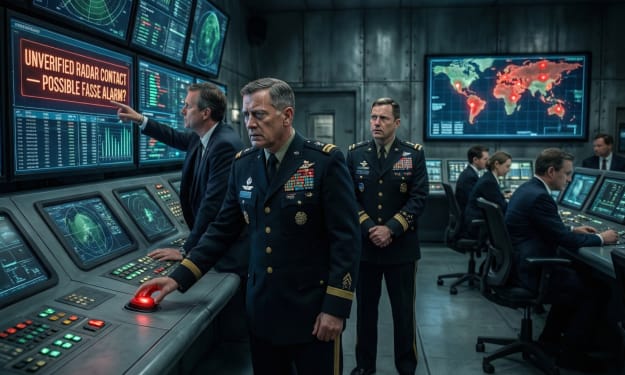
Global Implications If Nuclear Command Systems Weaken Nuclear weapons are often described as the ultimate tools of deterrence. They are meant to prevent war, not start it. But this balance depends on one critical factor: strong and stable command systems. If these systems weaken, the danger is not limited to one country. The impact spreads across the entire world.
By Wings of Time 9 months ago in Criminal
Nuclear Command Risks in a Time of Internal Tension
Nuclear Command Risks in a Time of Internal Tension When people think about nuclear power, they often focus on missiles, warheads, and military strength. But the most important part of any nuclear system is not the weapon itself—it is the command structure behind it. Clear leadership, trusted decision-making, and reliable communication are what prevent disasters. When these systems face internal tension, the risks grow quietly but dangerously.
By Wings of Time 9 months ago in Criminal
Can Aircraft Carriers Survive the Drone Age?
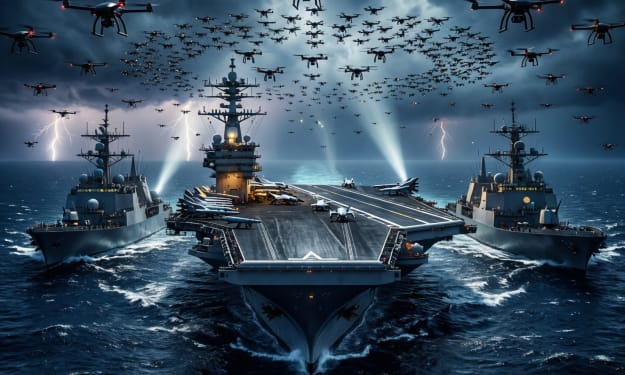
Can Aircraft Carriers Survive the Drone Age? For more than seventy years, aircraft carriers have stood at the center of global military power. They are mobile airbases, capable of projecting force anywhere on the planet without relying on foreign soil. Their presence alone can alter diplomacy, deter rivals, and reassure allies. But a new challenge is rising—quietly, cheaply, and rapidly. The age of drones is forcing militaries to confront an uncomfortable question: are aircraft carriers becoming vulnerable giants in a world of unmanned warfare?
By Wings of Time 9 months ago in Criminal
Drones vs Aircraft Carriers
Drones vs Aircraft Carriers For decades, aircraft carriers have symbolized ultimate military power. They are floating cities, armed with fighter jets, guided missiles, radar systems, and layered defenses. A single carrier strike group represents not just military strength, but political will. Wherever it sails, it sends a message: power has arrived.
By Wings of Time 9 months ago in Criminal
Floating Power and Fragile Diplomacy
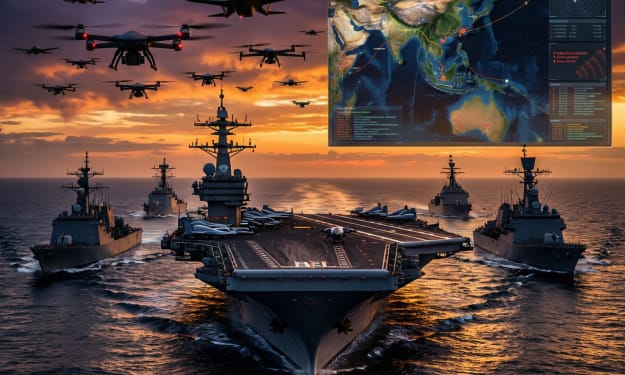
Floating Power and Fragile Diplomacy In recent weeks, renewed attention on U.S. naval movements, particularly carrier strike groups operating across strategic waterways, has highlighted a deeper shift in how global power is projected. From the South China Sea to the Indian Ocean, the presence of American naval assets is no longer just a show of strength—it is a message shaped by technology, deterrence, and fragile diplomacy.
By Wings of Time 9 months ago in Criminal
Speed, Greed, and the Dangerous Game of Revenge
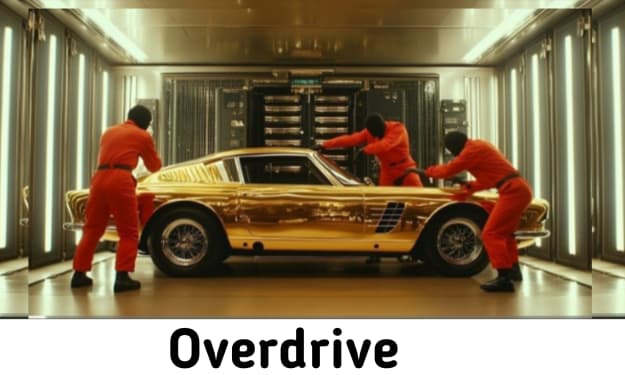
There are some things in the world that are not just symbols of wealth, but become identities of power, arrogance, and obsession. The rare 1937 Bugatti is one of those things. The film begins with a grand and luxurious auction, where this legendary car stands on stage as the center of everyone’s attention. The auctioneer announces that it is one of the rarest cars in the world, with only two models existing globally. This announcement ignites greed in the hearts of every wealthy person present in the crowd. The bidding starts at thirty million dollars and keeps increasing moment by moment. Someone bids thirty-two, someone thirty-four, and finally the bid reaches forty-one million dollars. This final bid is placed by a man named Jack, who is in contact with his boss. On the surface, he appears to be a rich buyer, but in reality, he is working for a powerful and dangerous criminal. The Bugatti is not going to belong to him, but to his boss. At the same time, the film introduces us to two brothers—Andrew and Garrett. Both are world-famous and highly skilled car thieves. Luxury and supercars are their obsession, and they have stolen some of the best cars in the world. The reason both brothers are connected to the Bugatti’s path is because they want to steal this rare car. The Bugatti theft on the highway is one of the most thrilling scenes of the film. High-speed vehicles, jumping onto a truck using ropes, a shower of bullets, and the shadow of death—Andrew and Garrett risk their lives to steal the Bugatti. This is not just a theft, but a practical demonstration of skill, nerves, and madness. After the theft, both brothers celebrate, but this happiness does not last long. When they go to a man named Jimmy to sell the Bugatti, he refuses to buy it. Jimmy knows that this car does not belong to an ordinary person, but to a very powerful and dangerous businessman named Morrier. Morrier is not only a wealthy man, but also runs an entire criminal empire. Soon, Andrew and Garrett are captured and presented before Morrier. Morrier tells them his story—a journey that started from poverty, an empire built through crime, and an obsession with rare cars. For him, these cars are not just a hobby, but symbols of his power and ego. The theft of the Bugatti becomes a personal insult to him. Morrier gives both of them one chance to stay alive, but his condition is extremely dangerous. They must steal a 1962 Ferrari belonging to a man named Max—a car that is one of a kind in the world and worth more than millions of dollars. Max is a young but exceptionally intelligent business tycoon, and also Morrier’s old enemy. From here, the story moves beyond a simple theft and turns into a battle of minds. Andrew and Garrett form an entire team, including Stephanie, Devon, bomb expert Lane, and skilled race drivers. Every person has a specific role, and every mistake can lead to death. The character of Max adds more depth to the story. He appears to be a polite and successful businessman, but behind him is an extremely sharp mind. He is both impressed by Andrew and Garrett’s abilities and cautious of them. His Ferrari is not just a car, but his identity. The story takes a new turn when it is revealed that the real plan was never to steal the Ferrari. The Bugatti was merely a move, a trap—used to ensnare Morrier along with his arrogance. Andrew, Garrett, and Max were actually playing the same game from the very beginning, where the real target was Morrier’s treasure of rare and valuable cars. In the climax, speed, explosions, and intelligence collide together. A collapsing bridge, long car chases, betrayal, sacrifices, and finally Morrier’s fate—all symbolize that the game of power and greed ultimately ends in destruction. In the end, Andrew proposes marriage to Stephanie, Garrett finds love, and the team completes an impossible mission. But the biggest lesson remains that in this world, the most dangerous weapon is not a gun or speed, but the mind, patience, and the final move played at the right time. Final Question Is power really found only in money and weapons, or is true power hidden in the mind that silently turns the entire game around?
By Filmon Ke Raaz | Movie Mysteries Explained9 months ago in Criminal