investigation
Whodunnit, and why? All about criminal investigations and the forensic methods used to search for clues and collect evidence to get to the bottom of the crime.
UNMASKING SHADOWS. Content Warning.
Detective Emily Sullivan sat at her cluttered desk, the eerie silence of the cold case files enveloping her. As a seasoned investigator, she had tackled some of the most baffling cases throughout her career. However, one case had always haunted her—the Oklahoma City Bombing.
By leon shahi3 years ago in Criminal
THE O.J.SIMPSON MURDER CASE. Content Warning.
Welcome, reader, to one of the most sensational and controversial crime cases in modern history—the O.J. Simpson murder case. Prepare to delve into a web of intrigue, celebrity, and a justice system that left the world captivated. Join me as we explore the events, evidence, and enduring mysteries that continue to surround this infamous trial.
By leon shahi3 years ago in Criminal
Do gun buybacks work?
This is a list of countries with the most guns per person. Leading the list is the US, the only place in the world where guns outnumber people. Yemen is second with 53 guns per 100 people. This is primarily because Yemen has been fighting a civil war for a decade. Tied in third place is Serbia. No other country in Europe has more firearms per capita than Serbia. This is also a legacy of conflict, most recently in the former Yugoslavia throughout the nineties. But Serbia is trying to get off the list. To do that, they're trying something big. They're asking Serbians to surrender their guns. And they're not the first to try it. From the end of the Yugoslav wars in 2001 until 2023, there were five mass shootings in Serbia. But then in May of 2023, there were two, just one day apart. First, a seventh grader opened fire at a school and killed eight students and a security guard. The very next day, another mass shooter killed eight people and wounded 15 a few miles away. In response, Serbia's president vowed to disarm the country. His plan included a monthlong program that would allow Serbians to surrender illegal guns, called a "weapons amnesty." These are also sometimes called "gun buybacks." It's not Serbia's first amnesty, but it's been the most successful in the country's history. More than 26,000 weapons, 1.3 million rounds of ammunition and 6000 explosives were surrendered. But will removing all these weapons work? And how do we know? One place to look for answers is a country that's tried something similar: Australia. On April 28th, 1996, a young man drove to the tourist town of Port Arthur, Tasmania, and opened fire with a semi-automatic rifle, killing 35 people and wounding 18. As Australia prepares to mourn the victims, there have been urgent calls for tough new gun laws. Just 12 days later, Australia adopted a national firearms agreement. It centered around ten core measures, including registration, licensing and safety training. But the number one priority was a ban on automatic and semi-automatic weapons, the most dangerous in mass shootings. To retrieve these newly banned weapons already in circulation, the agreement also included a yearlong gun amnesty. Asking Australians to give up their weapons wouldn't be easy. "Are you going to surrender your arms?" But it turns out, the conditions were just right. And looking at the features of Australia's program can help us understand why it worked. First, gun reform in Australia had overwhelming public support. After Port Arthur, thousands took to the streets to demand change. And polls showed that about 90% of Australians backed them up. Second, Australia's weapon amnesty program was national, not just in certain parts of the country. And the government paid fair prices for every item surrendered. Businesses impacted even got government assistance. The amnesty was anonymous, with no consequences. But it was also mandatory, with serious penalties for noncompliance. To facilitate compliance, buyback centers where Australians could drop off their weapons were set up across the country. Finally, once the weapons were collected, they had to be destroyed. That typically meant crushed and then melted. And all of this had to be implemented alongside new firearm restrictions to keep illegal weapons out of the public's hands after the amnesty was over. Australia's 1996 buyback removed more than 640,000 guns from circulation. By some estimates, that was about 20% of all weapons in Australia. So did it make a difference? First we can look at the frequency of mass shootings. From 1980 to 1996, Australia experienced 14 mass shootings, but in the 18 years since Port Arthur there were none. But that was also probably a result of Australia's broader gun reforms. Looking specifically at the gun buyback program, the big impact we find is on suicides. A study found that the states where more firearms were turned in had greater reductions in suicides. Since 1990, all these countries have had weapons collection programs in which at least 10,000 firearms were destroyed. But they haven't all been as successful as Australia's. In the US, it's estimated that since the 80s, more than 500 gun buybacks have been held in 37 states. But in the US buybacks are small locally run programs. They're voluntary, aren't typically accompanied by new firearm restrictions, and while the majority support voluntary buybacks, they have yet to amass overwhelming public support. Nationally, both mass shootings and overall gun deaths continue to rise. Now let's look at Serbia. Serbia's recent weapon amnesty isn't mandatory and doesn't include compensation, but it does have one thing that separates it from Serbia's earlier gun amnesties: the level of public support, and the calls to look beyond policy and examine the culture that got them here in the first place. Most gun amnesties are temporary, and maintaining their effectiveness takes work and consistency. Even in Australia, an increasingly powerful gun lobby is chipping away at gun laws. Still, Australia's world-leading response to gun violence is instructive for other countries on the list. It might be impossible to replicate Australia's exact conditions and apply every single lesson. But if Australia is any indication of what's possible, Serbia could go from topping the list of countries with the most guns per person, to one that is off the list. And if Serbia can do it, maybe other countries that suffer from gun violence can do it too.
By george Gars3 years ago in Criminal
Who Put Bella Down The Wych Elm?
"Who put Bella down the Wych Elm?" is a graffito that appeared in 1944 following the 1943 discovery by four children of the skeletonised remains of a woman inside a wych elm in Worcestershire, England. The phrase, or a variant with the preposition "in" and/or the spelling "Witch", is also used to refer to the unsolved case of the circumstances of her death. The woman—whose death is estimated to have occurred in 1941—remains unidentified, and the current location of her skeleton and autopsy report is unknown.
By Grace Williams3 years ago in Criminal
Caroline Luard
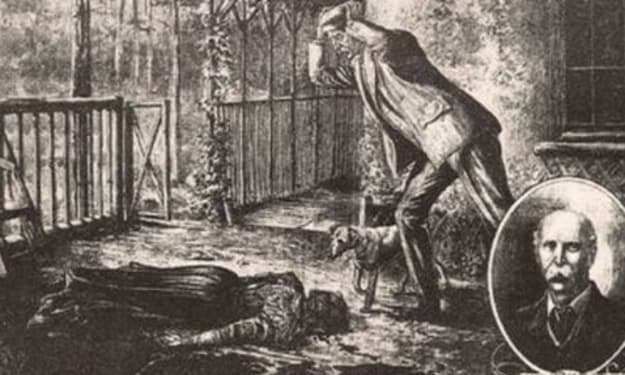
Caroline Mary Luard (née Hartley; 1850 – 24 August 1908) was the victim of an unsolved murder, known as the Seal Chart Murder, after she was mysteriously shot and killed at an isolated summerhouse in a heavily wooded area near Ightham, Kent. Her husband, Major-General Luard, later committed suicide. It has since been suggested that John Dickman, who was hanged for killing a passenger on a train in 1910, may have been involved in her death.
By Grace Williams3 years ago in Criminal
Mind Games
Introduction: Welcome to "Mind Games," an immersive and thought-provoking series that takes you on a captivating journey into the intricate world of criminal psychology. Through the lens of psychological thrillers, we will unravel the complex minds of criminals, explore the inner workings of their motivations, and examine the gripping cat-and-mouse games between law enforcement and perpetrators. Get ready to be engrossed as we navigate the darkest corners of the human psyche.
By umaima ali3 years ago in Criminal
The Enigma of Shadows
Jack Austen, a seasoned detective with a sharp mind and a knack for solving the most perplexing cases, had just finished investigating a string of petty thefts. He received an urgent phone call. The voice on the other end belonged to Commissioner Henderson, known for his stoic demeanor and unruffled composure. "Jack, we've got a case," the Commissioner said, his tone revealing unease.
By Cyprain SUH CHEO 3 years ago in Criminal
Black Dahlia 2
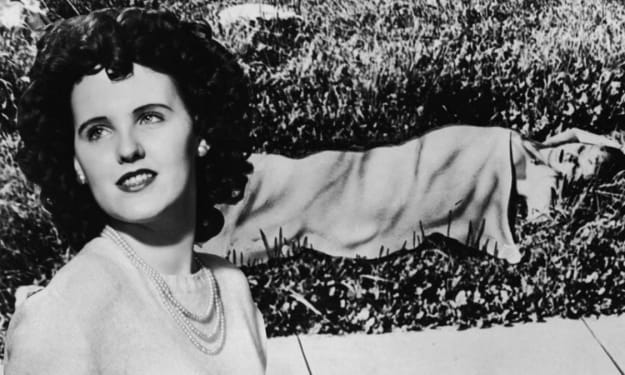
An autopsy of Short's body was performed on January 16, 1947, by Frederick Newbarr, the Los Angeles County coroner. Newbarr's autopsy report stated that Short was 5 feet 5 inches (1.65 m) tall, weighed 115 pounds (52 kg), and had light blue eyes, brown hair, and badly decayed teeth. There were ligature marks on her ankles, wrists, and neck, and an "irregular laceration with superficial tissue loss" on her right breast. Newbarr also noted superficial lacerations on the right forearm, left upper arm, and the lower left side of the chest.
By Grace Williams3 years ago in Criminal
Adrienne Shelly
Born on June, 24, 1966 in Queens, NY, Adrienne Shelly knew she wanted a career in show business from a young age. After graduating from Jericho High School, she moved to Boston and majored in film production at Boston University. Her time receiving a formal education was cut short when she dropped out of school in her junior year.
By E.J. V'Kanty3 years ago in Criminal
How Larry Ely Murillo-Moncada Was Found In The Most Unexpected Place.
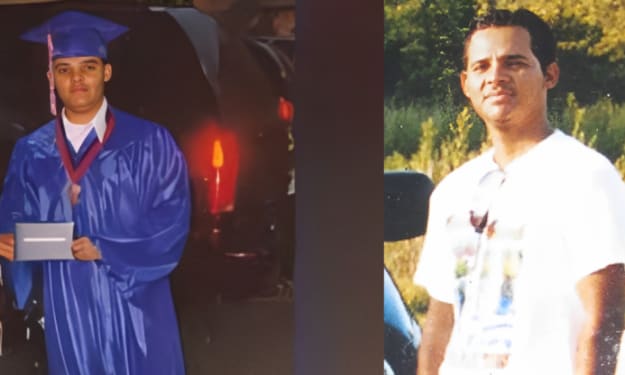
Larry Ely Murillo-Moncada was a 25-year-old supermarket worker who mysteriously disappeared in 2009. He worked at the No Frills supermarket in Council Bluffs, Iowa, where investigators later found his body a decade later behind a freezer in the now-closed supermarket.
By Rare Stories3 years ago in Criminal