investigation
Whodunnit, and why? All about criminal investigations and the forensic methods used to search for clues and collect evidence to get to the bottom of the crime.
The Baffling Disappearance of Sky Metalwala
The early morning of November 6, 2011, was cold and dry in Bellevue, WA. Temperatures hovered around 39 degrees Fahrenheit and the normal Washington rain was nowhere to be seen. 112th St NE parallels State Route 520 near where it meets Interstate 405. A tall concrete sound barrier lines each side of the road making it appear more like a highway itself than a large suburban thoroughfare.
By Alisan Keesee2 years ago in Criminal
The Tragic Case of Ashlee Martinson: Aftermath of child abuse
The story of Ashlee Martinson is one of profound tragedy and complex emotions, a tale that forces us to confront the darkest corners of the human experience. In 2015, Ashlee Martinson made headlines when she was arrested for the brutal murders of her mother and stepfather in the small town of Piehl, Wisconsin. As details of the case emerged, a chilling narrative of abuse, trauma, and desperation began to unfold, shedding light on the harrowing journey that led to this unthinkable act of violence. The Early Years: Ashlee Martinson's childhood was marked by turmoil and instability. Born into a troubled family, she experienced years of abuse and neglect at the hands of her mother's boyfriends. From a young age, Ashlee was subjected to unspeakable acts of violence and exploitation, leaving deep emotional scars that would haunt her for years to come. Despite the horrors she endured, Ashlee's resilience and strength of spirit never wavered, as she sought refuge in her love of writing and poetry, using words to escape the pain of her reality. The Breaking Point: In March 2015, the fragile peace of the Martinson household was shattered when Ashlee's mother, Jennifer Ayers, and stepfather, Thomas Ayers, were found brutally murdered in their home. The details of the crime were shocking and brutal, as Ashlee confessed to stabbing her stepfather multiple times and shooting her mother in a fit of rage. The motive behind the killings remains unclear, but evidence suggests that years of abuse and trauma may have played a role in Ashlee's descent into darkness. The Aftermath: In the aftermath of the murders, Ashlee Martinson's case captivated the nation, as people struggled to comprehend the depths of despair and desperation that could drive a young woman to commit such heinous acts. For those who knew Ashlee, her actions were incomprehensible, as they grappled with the incongruity between the gentle, creative soul they knew and the violent perpetrator she had become. Yet, as details of Ashlee's upbringing and the trauma she had endured came to light, a more nuanced picture began to emerge, one that forced society to confront the systemic failures and injustices that had contributed to her suffering. The Legal Battle: Ashlee Martinson's journey through the criminal justice system was fraught with challenges and obstacles, as she navigated the complexities of her legal defense while grappling with the weight of her actions. In 2016, she was sentenced to 23 years in prison for the murders of her mother and stepfather, a verdict that sparked debate and controversy among those who believed her punishment was too harsh or too lenient. Yet, for Ashlee, the sentence was merely the beginning of a long and arduous road to redemption, as she sought to make sense of her past and find a glimmer of hope amidst the darkness. The Search for Redemption: In the years since her incarceration, Ashlee Martinson has embarked on a journey of self-discovery and healing, seeking to atone for her crimes and find redemption in the eyes of society. Through therapy, education, and self-reflection, she has confronted the demons of her past and sought to make amends for the pain she has caused. While the road to redemption is long and difficult, Ashlee remains determined to reclaim her humanity and find a sense of peace amidst the chaos of her past. Conclusion: The case of Ashlee Martinson is a sobering reminder of the complexities of trauma and the far-reaching impact of abuse and neglect. It forces us to confront uncomfortable truths about the failures of our society to protect the most vulnerable among us and the desperate lengths to which some will go to escape the pain of their reality. Yet, amidst the darkness, there is hope, as Ashlee's story serves as a beacon of resilience and courage, reminding us of the power of the human spirit to overcome even the most unimaginable of circumstances. As we reflect on the tragedy of Ashlee Martinson's life, may we be moved to action, to advocate for those who suffer in silence and to strive for a world where every child is valued, protected, and loved. In honoring Ashlee's journey, may we find the strength and compassion to confront the darkness within ourselves and to work towards a future where healing and redemption are possible for all.
By Deji Akomolafe2 years ago in Criminal
The Mysterious Phantom
Once upon a dark, starless night, inside the peaceful little village of Oakwood, something strange happened that changed the course of the village's history. An infamous figure called "The Phantom" had arrived, and everyone felt a sense of unease in the air.
By Kamal O. Touhami2 years ago in Criminal
Lululemon Murder: A Shocking Crime That Gripped a Community
The Lululemon murder occurred on 2011, at a Lululemon store, when Brittany Norwood, a store employee, murdered her coworker Jayna Murray. Murray sustained 331 injuries from five weapons including a hammer, box cutter and knife. According to medical examiners, she was alive for all of the injuries.
By Deji Akomolafe2 years ago in Criminal
The West Memphis Three: A Story of Injustice, Redemption, and Advocacy
n 1993, the brutal murders of three young boys in West Memphis, Arkansas, shocked the nation and rocked the tight-knit community to its core. What followed would be a decades-long saga marked by allegations of police misconduct, coerced confessions, and the wrongful convictions of three teenagers—Damien Echols, Jason Baldwin, and Jessie Misskelley Jr.—known as the West Memphis Three. The victims—eight-year-olds Stevie Branch, Michael Moore, and Christopher Byers—were found dead in a drainage ditch, bound and mutilated in a horrific manner. The gruesome nature of the crime sparked widespread fear and outrage, and pressure mounted on local law enforcement to bring the perpetrators to justice. In the midst of a fervent search for answers, suspicion quickly fell on Echols, Baldwin, and Misskelley, three teenagers from the area who were known for their unconventional interests and outsider status. Despite a lack of physical evidence linking them to the crime, the West Memphis Three became prime suspects in the eyes of investigators. The case against the teenagers was built on circumstantial evidence and Misskelley's coerced confession, which he later recanted, claiming it had been coerced by police during a marathon interrogation session. Despite the absence of DNA evidence or eyewitness testimony implicating them in the murders, Echols, Baldwin, and Misskelley were convicted in 1994. The convictions sparked a firestorm of controversy, with many questioning the fairness of the trial and the validity of the evidence presented. The case garnered national attention, attracting the interest of advocacy groups, celebrities, and filmmakers who believed in the innocence of the West Memphis Three. In 2007, new developments in the case reignited hope for justice. DNA evidence recovered from the crime scene failed to match any of the three teenagers, raising doubts about their guilt. Amid mounting pressure and public scrutiny, the Arkansas Supreme Court granted the West Memphis Three a new hearing to present evidence of their innocence. In 2011, after nearly two decades behind bars, Echols, Baldwin, and Misskelley entered an Alford plea, a legal maneuver that allowed them to maintain their innocence while acknowledging that prosecutors had enough evidence to convict them. They were subsequently released from prison, bringing an end to a chapter of injustice that had haunted them for years. The release of the West Memphis Three was a bittersweet victory, marked by mixed emotions of relief and lingering injustice. While they were free from the confines of prison, the stain of wrongful conviction remained, casting a shadow over their lives and futures. Since their release, Echols, Baldwin, and Misskelley have worked to rebuild their lives and advocate for criminal justice reform. They have become outspoken critics of the legal system that failed them and have used their platform to raise awareness about wrongful convictions and the plight of the innocent incarcerated. The case of the West Memphis Three serves as a stark reminder of the dangers of rushing to judgment and the flaws within the criminal justice system. It exposes the vulnerabilities of the legal process, from coerced confessions to faulty forensic evidence, and underscores the need for reforms to prevent similar miscarriages of justice in the future. The West Memphis Three's story is one of resilience, perseverance, and the enduring quest for truth and justice. Despite the unimaginable hardships they endured, they refused to lose hope or surrender to despair. Their exoneration stands as a testament to the power of perseverance and the tireless efforts of those who championed their cause. As we reflect on the case of the West Memphis Three, let us not only seek to right the wrongs of the past but also strive to create a more just and equitable future for all. Their journey from wrongful conviction to exoneration serves as a beacon of hope and a reminder that, even in the darkest of times, justice can prevail.
By Deji Akomolafe2 years ago in Criminal
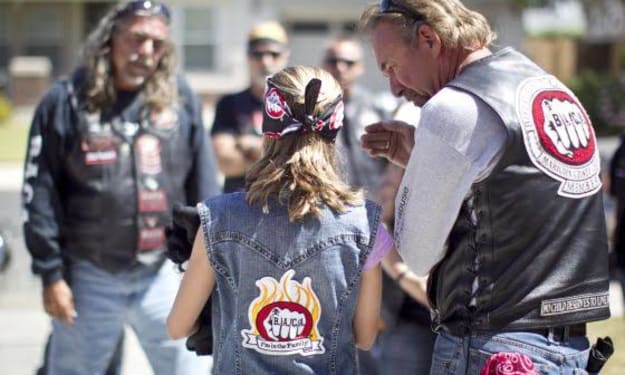
Bike Gang in Arizona Protects Child Abuse Victims
In the rugged landscape of Arizona, amidst the roar of engines and the rumble of steel, there exists a group of individuals who are on a mission unlike any other. They are the Bikers Against Child Abuse (BACA), a formidable force dedicated to protecting the most vulnerable members of society: children who have been victims of abuse. In this blog post, we delve into the inspiring story of BACA, their tireless efforts, and the impact they've made in the fight against child abuse. Founded in 1995 by John Paul "Chief" Lilly, a licensed clinical social worker, Bikers Against Child Abuse emerged from a simple yet powerful idea: to create a safe haven for children who have experienced the trauma of abuse. What began as a small group of bikers in Utah has since grown into an international organization with chapters across the globe, including a strong presence in the sun-drenched deserts of Arizona. At the heart of BACA's mission is a commitment to empowering children and giving them back their sense of control and confidence. When a child joins BACA, they become part of a tight-knit family of bikers who are dedicated to their protection and well-being. These bikers, known as "patched members," undergo extensive training and background checks to ensure they are equipped to handle the delicate needs of the children they serve. One of the most powerful aspects of BACA's approach is their emphasis on solidarity and support. When a child feels scared or threatened, they can call upon their BACA family for assistance. Whether it's accompanying them to court hearings, therapy sessions, or simply offering a reassuring presence, these bikers stand ready to shield the children from further harm. But BACA's impact extends far beyond the individual children they serve. By raising awareness about the prevalence of child abuse and advocating for change at the local, state, and national levels, they are working to create a world where every child can grow up safe and free from harm. In Arizona, BACA has become a beacon of hope for children and families grappling with the aftermath of abuse. Their presence is felt not only in the courtroom or therapist's office but also in the broader community, where they tirelessly work to educate and empower others to join the fight against child abuse. The work of BACA has not gone unnoticed. Their efforts have garnered widespread recognition and support, both within Arizona and beyond. From local news features to national media coverage, the story of Bikers Against Child Abuse has captured the hearts and minds of people across the country. But perhaps the most powerful testament to BACA's impact lies in the stories of the children they have helped. For these children, BACA represents more than just a group of bikers; they are a lifeline in times of darkness, a symbol of strength and resilience in the face of adversity. Take, for example, the story of Sarah*, a young girl who endured years of abuse at the hands of a family member. When Sarah found the courage to speak out and seek help, it was BACA who stood by her side, offering unwavering support and protection. With their help, Sarah was able to navigate the complexities of the legal system and ultimately find justice. Or consider the case of Miguel*, a shy and withdrawn boy who had been bullied and abused by his peers. Through the intervention of BACA, Miguel found a sense of belonging and acceptance among the bikers, who taught him the value of courage and self-respect. Today, Miguel is thriving, his once-quiet voice now filled with confidence and determination. These stories are just a few examples of the countless lives that have been touched by the work of Bikers Against Child Abuse. Theirs is a story of compassion, resilience, and unwavering dedication to the cause of protecting children from harm. As we reflect on the inspiring work of BACA, let us not forget the power of individual action to effect change. Whether it's lending a listening ear to a child in need or speaking out against injustice in our communities, each of us has the ability to make a difference in the lives of others. In the words of Chief Lilly, the founder of Bikers Against Child Abuse, "We may look like tough bikers on the outside, but on the inside, we are just big-hearted individuals who want to make the world a safer place for children." May we all be inspired by the example set by BACA and join together in the fight against child abuse. For in unity, there is strength, and in compassion, there is hope for a brighter tomorrow.
By Deji Akomolafe2 years ago in Criminal
The Brutal Torture and Murder of Shanda Sharer
Shanda Renee Sharer was a 12-year-old girl who was brutally tortured and burned alive by four of her close associates. The story of Sharer's death is perfect for a horror movie because of the sheer brutality of her attackers.
By Rare Stories2 years ago in Criminal