investigation
Whodunnit, and why? All about criminal investigations and the forensic methods used to search for clues and collect evidence to get to the bottom of the crime.
The Unraveling of a Hidden Past: The Story of Julian Hernandez
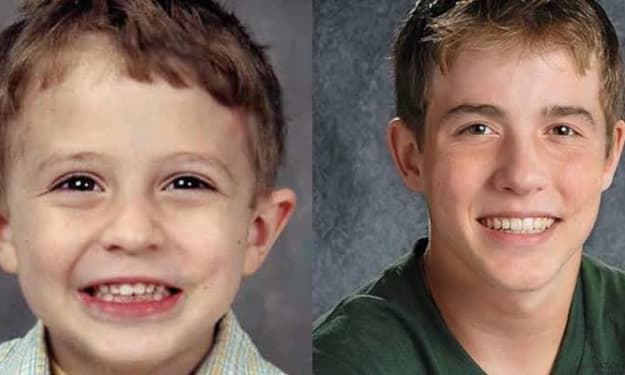
Julian Hernandez's life took an unexpected and dramatic turn when he was 18 years old. What began as a routine step toward independence—applying for college—became the catalyst for a shocking revelation about his past. Julian discovered that he had been kidnapped by his father at the age of five, a truth that had been hidden from him for 13 years. This is the extraordinary story of Julian Hernandez, a young man whose life was profoundly affected by a secret he never knew existed. A Missing Child Julian Hernandez was reported missing by his mother in 2002 when he was just five years old. The circumstances of his disappearance were heart-wrenching: his father, Bobby Hernandez, had abducted him. Julian's mother, distraught and desperate, launched a search for her son that would span more than a decade. Despite exhaustive efforts by law enforcement and family, Julian remained missing, and his case eventually grew cold. A New Life in Ohio Unbeknownst to Julian, his father had taken him to Ohio, where they lived under false identities. Bobby Hernandez had changed their names and created a new life for them, effectively erasing their past. Julian grew up in this fabricated world, unaware of the truth about his origins. He attended school, made friends, and led what appeared to be a normal life, all the while living under a cloud of deception. The College Application Revelation The turning point in Julian's life came when he applied for college in 2015. Like many other teenagers, Julian was eager to take this significant step toward his future. However, during the application process, he encountered an unexpected obstacle: his Social Security number did not match his name. This discrepancy set off a chain of events that would unravel the truth about his past. The Discovery As college officials investigated the mismatch, the situation quickly escalated. They discovered that Julian's Social Security number belonged to a different name entirely. This revelation prompted further investigation, which eventually led to the discovery of Julian's true identity. Law enforcement was alerted, and they confirmed that Julian was the same boy who had been reported missing 13 years earlier. Reuniting with His Mother The news was a profound shock to Julian, who had lived his entire life believing a narrative that was now proven false. However, the revelation also brought a sense of closure and the possibility of reuniting with his biological family. After 13 years of separation, Julian was finally able to reconnect with his mother. The reunion was an emotional and bittersweet moment, marking the end of a long and painful chapter in both their lives. Legal Consequences Bobby Hernandez was arrested and faced serious legal consequences for his actions. In April 2016, he pleaded guilty to charges of kidnapping, interference with custody, and tampering with records. He was sentenced to four years in prison. The legal proceedings brought a measure of justice for Julian and his mother, although the emotional scars of the abduction would linger for years to come. Julian's Journey Forward Julian Hernandez's story is one of resilience and adaptation. After discovering the truth about his past, he faced the daunting task of reconciling his two identities: the life he had lived under his father's false narrative and the reality of his abduction. This process required immense emotional strength and support from his family and friends. Julian chose to maintain a relatively private life following the revelation. He focused on building his future, using the same determination and perseverance that had characterized his approach to his education. Despite the traumatic circumstances of his past, Julian demonstrated an extraordinary ability to move forward and embrace the possibilities of his future. Reflections on Identity and Family Julian Hernandez's story raises profound questions about identity and family. For 13 years, he lived a life based on deception, his identity shaped by a false narrative. The discovery of his true past forced him to reevaluate his sense of self and his understanding of family. The bond between Julian and his mother, despite the years of separation, underscores the enduring nature of familial love. Their reunion was a testament to the strength of their connection, which had persisted even through years of uncertainty and loss. The Role of Law Enforcement and Technology The resolution of Julian's case also highlights the critical role of law enforcement and technological advancements in solving long-term missing persons cases. The persistence of investigators and the use of modern technology were key factors in uncovering the truth about Julian's identity. This case serves as a reminder of the importance of continued efforts to reunite missing children with their families, no matter how much time has passed. Conclusion Julian Hernandez's story is a compelling narrative of loss, discovery, and resilience. It sheds light on the profound impact of parental abduction and the long journey toward healing and reconnection. As Julian continues to build his life, his story remains an inspiring example of the human spirit's capacity to overcome even the most daunting challenges. Through his experience, we are reminded of the importance of truth, the enduring power of family, and the unyielding hope for a brighter future.
By Deji Akomolafe2 years ago in Criminal
The Tragic Death of Rebecca Schaeffer and the Birth of Anti-Stalking Laws in America
On July 18, 1989, the entertainment industry was shaken to its core by the tragic and senseless murder of Rebecca Schaeffer, a promising young actress best known for her role in the CBS sitcom 'My Sister Sam.' Schaeffer's life was abruptly ended when an obsessed fan, who had been stalking her for three years, fatally shot her at the doorstep of her West Hollywood apartment. This devastating event not only brought attention to the dangers faced by celebrities from obsessed fans but also became the catalyst for significant legislative change in the United States. Schaeffer’s death spurred the enactment of America’s very first anti-stalking laws, paving the way for enhanced protection for stalking victims nationwide. The Rise of Rebecca Schaeffer Rebecca Schaeffer was a rising star in Hollywood during the late 1980s. Born on November 6, 1967, in Eugene, Oregon, she began her career as a model before transitioning to acting. Her big break came when she landed the role of Patti Russell on 'My Sister Sam,' a sitcom that aired from 1986 to 1988. Schaeffer's performance as the spirited younger sister quickly endeared her to audiences, making her a household name. Despite her fame, Schaeffer was known for her down-to-earth personality and kind-hearted nature. She was a young actress with a bright future, with ambitions to take on more challenging and diverse roles in the film industry. However, her promising career and life were tragically cut short by a man who had developed a dangerous obsession with her. The Stalker: Robert John Bardo Robert John Bardo, a native of Tucson, Arizona, was an individual with a troubled history of mental illness and a pattern of obsessive behavior. Bardo first became infatuated with Schaeffer after watching her on 'My Sister Sam.' He began to write her letters, expressing his admiration and love. Initially, Schaeffer, like many celebrities, responded with a polite autograph, unaware of the escalating nature of Bardo's obsession. Over the course of three years, Bardo's fixation grew more intense. He made several attempts to meet Schaeffer in person, even traveling to Los Angeles to find her. His obsession reached a dangerous peak when he hired a private investigator to obtain Schaeffer's home address from the California Department of Motor Vehicles (DMV), a practice that was alarmingly easy at the time. The Tragic Day On the morning of July 18, 1989, Bardo arrived at Schaeffer's apartment building in West Hollywood. He rang the doorbell, and when Schaeffer answered the door, Bardo confronted her. The actress, taken aback, attempted to dismiss him. Undeterred, Bardo returned an hour later, and when Schaeffer answered the door again, he shot her point-blank in the chest. She was rushed to Cedars-Sinai Medical Center but succumbed to her injuries. The murder of Rebecca Schaeffer sent shockwaves through Hollywood and the broader public. The brutal nature of her death and the fact that her stalker had easily obtained her address highlighted a severe gap in privacy protection and legal safeguards for stalking victims. Legislative Response: The Birth of Anti-Stalking Laws Schaeffer's murder was a wake-up call that led to immediate action. Advocacy groups, law enforcement, and legislators united in the call for stronger protective measures against stalking. In the aftermath of Schaeffer’s death, California became the first state to enact anti-stalking laws. The California Anti-Stalking Law, passed in 1990, made stalking a criminal offense, with provisions for restraining orders and increased penalties for repeated offenses. This law set a precedent, and within three years, every state in the U.S. had enacted similar legislation. Moreover, Schaeffer's case prompted reforms in privacy laws. The practice of releasing personal information from DMV records without proper cause was scrutinized and changed. The Driver’s Privacy Protection Act (DPPA) was passed in 1994, restricting the dissemination of personal information from motor vehicle records. The Impact and Legacy The impact of these legislative changes cannot be overstated. The establishment of anti-stalking laws provided a legal framework for protecting victims and prosecuting offenders. Before these laws, victims of stalking had little recourse, and law enforcement lacked the tools to intervene effectively. The new laws allowed for the issuance of restraining orders and set penalties for violators, offering a layer of protection that was previously unavailable. Rebecca Schaeffer's tragic death also spurred a broader societal awareness of the dangers of stalking. Her story highlighted the need for vigilance and proactive measures to protect individuals from obsessive and dangerous behavior. The entertainment industry, in particular, became more conscious of the security needs of its stars, leading to enhanced security measures and protocols. Conclusion The tragic murder of Rebecca Schaeffer was a dark moment in Hollywood history, but it also became a catalyst for crucial legal and social change. Her death underscored the urgent need for laws to protect individuals from stalking and invasive behaviors. Today, the anti-stalking laws that were born out of this tragedy continue to provide essential protection to countless individuals across the United States. Schaeffer’s legacy lives on, not only through her work as an actress but also through the enduring impact of the laws that have helped make the world a safer place.
By Deji Akomolafe2 years ago in Criminal
Police Warn: Don't Visit Dark Web
My husband and I invited my uncle (an active duty Police Captain) and his girlfriend over for dinner. I thought an interesting topic of discussion would be the horrific stories I’ve heard about The Dark Web — you know; terrorists doing live Zoom calls, hidden websites where corporate cannibals cook and eat people on camera, gratuitous porn sites, drug deals. That kind of lurid thing.
By HERZ onVocal BLYTHE2 years ago in Criminal
Inside The Chilling Murder of Cassie Jo Stoddart(The Sins of The Scream Killers)
Cassie Jo Stoddart was born in Pocatello, Bannock, Idaho, on December 21, 1989. Sadly, she was still in high school when she lost her life at the hands of two people she considered her friends.
By Rare Stories2 years ago in Criminal
The Long Road to Justice: The Story of Robert DuBoise
In the annals of the American justice system, there are few stories as harrowing and heartbreaking as that of Robert DuBoise. His case is a stark reminder of the fallibility of human judgment and the incredible resilience of the human spirit. Arrested at the age of 18 and initially sentenced to death for a crime he did not commit, DuBoise spent nearly four decades behind bars before DNA evidence finally set him free at the age of 56. This is his story. The Crime and Arrest In 1983, the brutal murder of 19-year-old Barbara Grams shocked the Tampa, Florida community. Grams was found beaten, raped, and left for dead while walking home from work. The crime sparked a frantic investigation by local authorities under immense public pressure to find the perpetrator. Robert DuBoise, an 18-year-old living in the area, became a suspect under dubious circumstances. The key piece of evidence against him was a bite mark on the victim's body, which forensic experts at the time claimed matched DuBoise's dental pattern. This type of evidence was widely accepted then but has since been discredited as highly unreliable. The Trial and Conviction DuBoise’s trial was swift and fraught with issues that would later come under severe scrutiny. Alongside the questionable bite mark evidence, a jailhouse informant testified that DuBoise had confessed to the crime while awaiting trial. This informant’s testimony was later revealed to be incentivized, raising significant doubts about its credibility. Despite the shaky evidence and DuBoise's consistent claims of innocence, he was convicted of murder and sentenced to death. The jury's decision was based heavily on the now-discredited bite mark analysis and the dubious informant's testimony. Life on Death Row and Beyond DuBoise spent three years on death row before his sentence was commuted to life in prison. However, this commutation was little consolation to a young man wrongfully convicted. Over the next several decades, DuBoise would endure the harsh realities of prison life while continually maintaining his innocence. His time in prison was marked by his unwavering commitment to proving his innocence. DuBoise often sought legal assistance and fought tirelessly for access to evidence that could exonerate him. Despite numerous setbacks and the slow grind of the legal system, he never lost hope. The Breakthrough In the early 2000s, advancements in DNA testing began to overturn wrongful convictions across the United States. The Innocence Project, a nonprofit legal organization dedicated to exonerating wrongly convicted individuals through DNA testing, took an interest in DuBoise’s case. In 2020, after years of legal battles and persistent advocacy, DNA evidence from the crime scene was finally tested. The results conclusively proved that Robert DuBoise could not have been the perpetrator. Instead, the DNA pointed to another individual with a history of violent crimes. Freedom and Vindication On August 27, 2020, Robert DuBoise was released from prison after spending 37 years behind bars for a crime he did not commit. His exoneration was a bittersweet moment, highlighting both the profound failures and the eventual capacity for justice within the American legal system. Upon his release, DuBoise expressed a mixture of relief, gratitude, and sorrow. He was grateful for the tireless work of the Innocence Project and his legal team, but he also mourned the lost years and the life experiences he missed. His release was a testament to the importance of perseverance and the relentless pursuit of truth. Reflections on a Broken System Robert DuBoise's case underscores significant flaws within the criminal justice system, particularly concerning the reliance on forensic evidence like bite mark analysis, which has been debunked as scientifically invalid. It also highlights the dangers of incentivized testimony from jailhouse informants, which can lead to wrongful convictions. Moreover, DuBoise’s story raises critical questions about the use of the death penalty. Had his sentence not been commuted, an innocent man could have been executed, an irreversible miscarriage of justice. His case serves as a powerful argument against the death penalty and for comprehensive reforms in forensic science standards and legal practices. Moving Forward Since his release, Robert DuBoise has worked to rebuild his life, reconnecting with family and trying to make up for lost time. His resilience and optimism in the face of unimaginable adversity are truly inspiring. DuBoise's case has also galvanized efforts to review and reform the criminal justice system. Advocacy groups continue to push for the adoption of more reliable forensic methods, better oversight of jailhouse informant testimony, and broader use of DNA testing in criminal cases. Conclusion The story of Robert DuBoise is one of injustice, perseverance, and ultimately, vindication. It reminds us of the profound impact that wrongful convictions have on individuals and their families and underscores the critical need for continual improvement and vigilance in the pursuit of justice. As we reflect on DuBoise’s journey, let us also commit to ensuring that such tragedies are prevented in the future, and that justice is truly served for all.
By Deji Akomolafe2 years ago in Criminal
The Boy in the Box
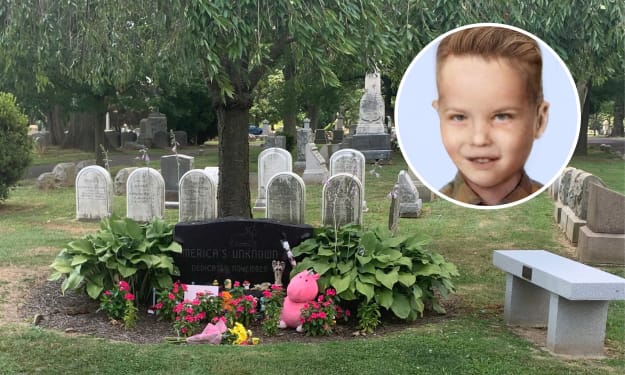
THE BOY IN THE BOX— JOSEPH AUGUSTUS ZARELLI America’s Unknown Child A True Crime publication by Carly Junod I’ve been a true crime fanatic basically from the moment I had access to the internet, so probably mid elementary school age. This specific case has always been a heart wrenches for me, and today I get to share the harrowing details that finally lead to the first solid break in the case.
By Carly Junod2 years ago in Criminal
‘Bad Boys: Ride or Die’ Kicks Off with Impressive $21.6 Million Opening Day"
The boys are back in action. Sony and Columbia’s latest entry in the “Bad Boys” franchise, “Bad Boys: Ride or Die,” has kicked off with a solid $21.6 million from 3,885 locations on its opening day, including preview screenings. The film also received a revenue boost from Imax and other premium large format screens.
By Toyin Olajide2 years ago in Criminal
MYSTERIOUS DB COOPER . Content Warning.
INTRODUCTION : Person disappeared high in the sky from a plane. A mysterious story that you might have read or listen about. But here I am going to reveal some magical facts about that story. DB COOPER’S HIJACKING CASE : DB COOPER hijacked the NORTH WEST ORIENTAL AIRLINE’S FLIGHT 305 PLANE BOEING 727 on 24th November, 1971 that was heading from Portland to the Seattle. It was the very first incident of hijacking American aircraft.
By Aiman Javed2 years ago in Criminal
The Girl Who Predicted Her Own Death. AI-Generated.
Imagine a child, barely in her teens, foreseeing her untimely demise with chilling accuracy and leaving behind a trail of eerie premonitions. This is the haunting story of Angela "Angie" Hammond, a young girl whose tragic end was eerily predicted by herself, leaving her family and community in shock and disbelief.
By Julio Javier2 years ago in Criminal