interview
Interviews with defense attorneys, law enforcement officials, forensic psychologists and anyone with insight into bad behavior.
Floating Power and Fragile Diplomacy
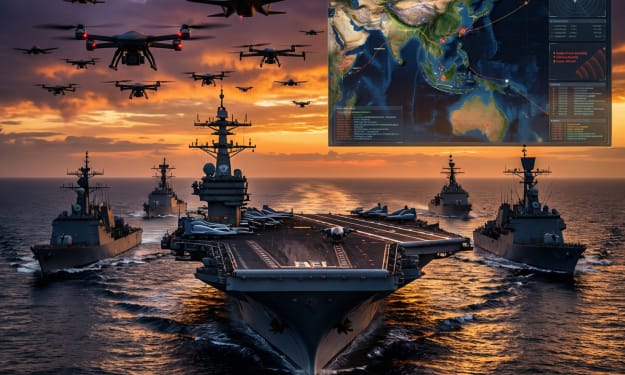
Floating Power and Fragile Diplomacy In recent weeks, renewed attention on U.S. naval movements, particularly carrier strike groups operating across strategic waterways, has highlighted a deeper shift in how global power is projected. From the South China Sea to the Indian Ocean, the presence of American naval assets is no longer just a show of strength—it is a message shaped by technology, deterrence, and fragile diplomacy.
By Wings of Time 8 months ago in Criminal
Speed, Greed, and the Dangerous Game of Revenge
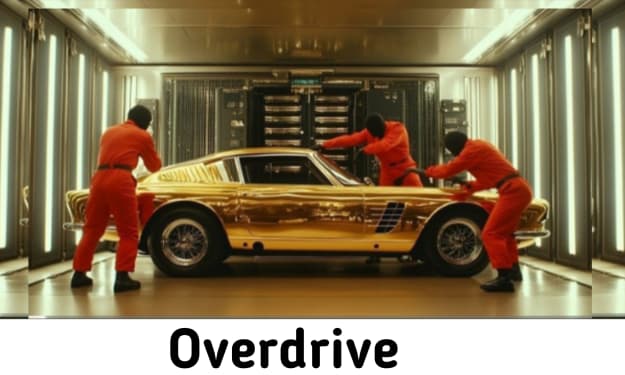
There are some things in the world that are not just symbols of wealth, but become identities of power, arrogance, and obsession. The rare 1937 Bugatti is one of those things. The film begins with a grand and luxurious auction, where this legendary car stands on stage as the center of everyone’s attention. The auctioneer announces that it is one of the rarest cars in the world, with only two models existing globally. This announcement ignites greed in the hearts of every wealthy person present in the crowd. The bidding starts at thirty million dollars and keeps increasing moment by moment. Someone bids thirty-two, someone thirty-four, and finally the bid reaches forty-one million dollars. This final bid is placed by a man named Jack, who is in contact with his boss. On the surface, he appears to be a rich buyer, but in reality, he is working for a powerful and dangerous criminal. The Bugatti is not going to belong to him, but to his boss. At the same time, the film introduces us to two brothers—Andrew and Garrett. Both are world-famous and highly skilled car thieves. Luxury and supercars are their obsession, and they have stolen some of the best cars in the world. The reason both brothers are connected to the Bugatti’s path is because they want to steal this rare car. The Bugatti theft on the highway is one of the most thrilling scenes of the film. High-speed vehicles, jumping onto a truck using ropes, a shower of bullets, and the shadow of death—Andrew and Garrett risk their lives to steal the Bugatti. This is not just a theft, but a practical demonstration of skill, nerves, and madness. After the theft, both brothers celebrate, but this happiness does not last long. When they go to a man named Jimmy to sell the Bugatti, he refuses to buy it. Jimmy knows that this car does not belong to an ordinary person, but to a very powerful and dangerous businessman named Morrier. Morrier is not only a wealthy man, but also runs an entire criminal empire. Soon, Andrew and Garrett are captured and presented before Morrier. Morrier tells them his story—a journey that started from poverty, an empire built through crime, and an obsession with rare cars. For him, these cars are not just a hobby, but symbols of his power and ego. The theft of the Bugatti becomes a personal insult to him. Morrier gives both of them one chance to stay alive, but his condition is extremely dangerous. They must steal a 1962 Ferrari belonging to a man named Max—a car that is one of a kind in the world and worth more than millions of dollars. Max is a young but exceptionally intelligent business tycoon, and also Morrier’s old enemy. From here, the story moves beyond a simple theft and turns into a battle of minds. Andrew and Garrett form an entire team, including Stephanie, Devon, bomb expert Lane, and skilled race drivers. Every person has a specific role, and every mistake can lead to death. The character of Max adds more depth to the story. He appears to be a polite and successful businessman, but behind him is an extremely sharp mind. He is both impressed by Andrew and Garrett’s abilities and cautious of them. His Ferrari is not just a car, but his identity. The story takes a new turn when it is revealed that the real plan was never to steal the Ferrari. The Bugatti was merely a move, a trap—used to ensnare Morrier along with his arrogance. Andrew, Garrett, and Max were actually playing the same game from the very beginning, where the real target was Morrier’s treasure of rare and valuable cars. In the climax, speed, explosions, and intelligence collide together. A collapsing bridge, long car chases, betrayal, sacrifices, and finally Morrier’s fate—all symbolize that the game of power and greed ultimately ends in destruction. In the end, Andrew proposes marriage to Stephanie, Garrett finds love, and the team completes an impossible mission. But the biggest lesson remains that in this world, the most dangerous weapon is not a gun or speed, but the mind, patience, and the final move played at the right time. Final Question Is power really found only in money and weapons, or is true power hidden in the mind that silently turns the entire game around?
By Filmon Ke Raaz | Movie Mysteries Explained8 months ago in Criminal
The Global Power Struggle in 2026: Why Are Tensions Rising Between the United States, Russia, China, and Venezuela?
f tensions between the United States and each of Russia, China, and Venezuela. These tensions cannot be understood as isolated events or temporary crises; rather, they are a direct reflection of a deeper struggle over global influence, strategic resources, and the future shape of the international order. At the center of this complex scene, Venezuela has emerged as a major flashpoint, while Russia and China play the role of supporters and counterweights to U.S. actions.
By America today 9 months ago in Criminal
Tensions at Sea: The Russian Oil Tanker Seized by the United States in 2026
Tensions at Sea: The Russian Oil Tanker Seized by the United States in 2026 In early 2026, a Russian-flagged oil tanker was seized by the United States in the North Atlantic, attracting global attention. The vessel, originally called *Bella 1* and later renamed *Marinera*, had been monitored for weeks as it attempted to evade U.S. sanctions enforcement. This event has raised questions about international maritime law, geopolitical tensions, and the enforcement of economic restrictions on oil shipments. **Why Did the United States Target This Specific Tanker?** The primary reason the United States seized this tanker was due to its involvement in transporting oil from countries under sanctions, including Venezuela and Iran. The vessel had repeatedly changed flags and attempted to conceal its identity to avoid detection, making it part of what experts call a “shadow fleet.” U.S. authorities viewed these actions as deliberate attempts to bypass sanctions, threatening the effectiveness of economic restrictions and national security policies. The tanker became a high-priority target because its capture sends a message to other operators engaged in illicit oil transport. **Was the Tanker Carrying Oil at the Time of Seizure?** Reports indicate that the tanker was empty when intercepted. While this minimized immediate economic losses, it did not reduce the symbolic and strategic significance of the operation. The seizure demonstrated the U.S.’s determination to enforce sanctions rigorously and highlighted the risks faced by vessels attempting to circumvent international restrictions. Analysts note that even empty, the vessel represented a potential threat because of its history of sanctioned shipments. **Is the Seizure Legal Under International Law?** International maritime law generally protects ships under a nation’s flag. However, vessels operating under false registrations or engaged in illegal activities such as sanctions evasion may be subject to interception. U.S. authorities justified the seizure by citing the tanker’s use of a false flag and its history of sanction violations. Critics, including Russian officials, have condemned the action as an overreach that violates international norms. The legal debate underscores the tension between enforcing economic sanctions and respecting international maritime law. **Who Owns the Tanker, and Does Russia Claim It?** Ownership of the tanker is complex. The ship had been previously registered under another flag and operated under a different name before adopting Russian registration. Moscow publicly supported the vessel’s claim of affiliation, yet experts argue the flag change was largely strategic to avoid capture rather than a straightforward declaration of ownership. This situation complicates legal responsibility and emphasizes how vessel registrations can be manipulated to evade sanctions enforcement. **What Are the Geopolitical Implications of the Seizure?** The capture of the tanker has heightened tensions between the United States and Russia. It occurred amid ongoing debates over U.S. sanctions on Venezuela and other countries, demonstrating the willingness of the U.S. to act decisively against perceived sanction violations. The incident has drawn international scrutiny, with other nations closely monitoring how maritime sanctions are enforced and whether similar actions could escalate conflicts or provoke diplomatic disputes. **Could This Seizure Be Part of a Larger Pattern?** Yes. Observers note that the U.S. has increasingly pursued vessels suspected of sanctions evasion, tracking them across international waters. This is part of a broader strategy to limit revenue streams to sanctioned countries and entities while disrupting networks involved in illicit oil transport. Experts suggest that similar operations could continue, particularly against vessels suspected of moving oil illegally or attempting to conceal cargo from authorities. **What Happens to the Crew of the Tanker?** The fate of the tanker’s crew is another common question. U.S. authorities typically detain crews for questioning to determine involvement in illegal activity, but in many cases, they are treated according to international law and may be released after investigation if no direct wrongdoing is found. The crew’s experience underscores the personal risks associated with operating vessels engaged in sanctioned or illicit activities. **How Does This Affect Global Oil Markets?** Although the tanker was empty, its capture sends a clear signal to operators worldwide. It may deter other vessels from attempting to evade sanctions and reinforce the United States’ enforcement measures. While there is minimal immediate impact on global oil supply, the strategic message could influence future trading behaviors, shipping decisions, and compliance with international sanctions. In conclusion, the 2026 seizure of the Russian oil tanker reflects a complex intersection of maritime law, sanctions enforcement, and geopolitics. The operation highlights the challenges of regulating global oil shipments, the legal ambiguities of vessel registration and ownership, and the strategic importance of controlling revenue flows to sanctioned entities. As this story develops, it continues to spark debate and attention worldwide, illustrating the evolving nature of international sanctions enforcement and maritime security.
By America today 9 months ago in Criminal
Losing Sweet Holly. Content Warning.
Holly Cantrell was a mother of two boys and a wife to an ill husband. Holly was a Physical Therapist Technician at the McAlester Regional Health Center. She was a Bouncy Brunette with a fun sense of Humor. Holly made friends easily and often had lunch with friends at work. Friends, to have a charming Physical therapist while they are pushing and pulling on the sore parts, is such a good thing. But things were noticeably different one cold Friday Morning in January.
By Cassie Moore9 months ago in Criminal
The Man Who Solved His Own Murder
M Mehran The police file labeled it unsolved. But the truth was far more disturbing. Because the victim had already told them everything—before he died. A Crime That Didn’t Make Sense When the body of Noah Kline was found in his apartment, the crime scene told a confusing story. No signs of forced entry. No struggle. No murder weapon. Just Noah, lying peacefully on his bed, eyes closed as if asleep. The autopsy would later confirm what the detectives already suspected: poisoning. But here was the problem—Noah Kline was a criminal defense journalist. A man who made enemies for a living, yet lived cautiously. He cooked his own food. Drank bottled water. Trusted no one easily. Poisoning him without access seemed impossible. Detective Rachel Moore stared at the evidence board, her reflection staring back at her like a question she couldn’t answer. “Who kills a man without touching him?” she murmured. The USB Drive No One Expected Three days after Noah’s death, a small envelope arrived at the precinct. No return address. Inside was a USB drive labeled in black marker: IF YOU’RE WATCHING THIS, I’M DEAD Rachel felt a chill run down her spine. She plugged it into a secured computer. The screen flickered. Noah appeared—alive, nervous, and very aware of the camera. “If I’m dead,” he said calmly, “it wasn’t an accident. And it wasn’t suicide.” Rachel leaned closer. “This video is my confession,” Noah continued. “Not to a crime—but to knowing one was coming.” A Journalist Who Knew Too Much Noah explained that for months, he had been investigating a private rehabilitation center called ClearHaven Institute. Publicly, it was a place for recovery. Privately, it was something else. “ClearHaven doesn’t treat addiction,” Noah said. “It creates it.” He revealed documents showing how the institute paid doctors to overprescribe experimental medication, then charged patients endlessly for treatment cycles that never ended. Legal. Invisible. Profitable. “I tried going public,” Noah said, rubbing his temples. “But every editor backed out. Advertisers had ties. Investors had power.” His voice dropped. “So I made myself bait.” The Perfect Trap Noah knew he was being watched. Emails were monitored. Phones tapped. Even his groceries felt unsafe. That’s when he did something brilliant—and terrifying. “I started documenting everything,” he said. “Meals. Drinks. Visitors. Symptoms.” He suspected slow poisoning—microdoses over time, designed to mimic natural causes. “And I let it happen,” he admitted. Rachel felt her chest tighten. “I knew if I died suddenly, it’d disappear,” Noah said. “But if I died predictably… someone would slip.” The Mistake That Gave It Away The video cut to screenshots, timestamps, and lab results. Noah had collected hair samples from himself weekly. Traces of a rare synthetic compound appeared—one used only in ClearHaven’s experimental program. But the final proof was chilling. “One dose was different,” Noah explained. “Stronger. Rushed.” The poisoning escalated because someone panicked. “They realized I knew,” he said quietly. Noah looked straight into the camera. “And people who panic… make mistakes.” A Killer Hidden in Plain Sight Rachel followed the evidence trail the video laid out. The compound was traced to a third-party pharmacy. Then to a prescribing doctor. Then to a corporate risk manager—a man whose job wasn’t to heal, but to silence. He never entered Noah’s apartment. He didn’t need to. Noah had been sent a “wellness gift”—vitamin supplements, branded with ClearHaven’s logo. One capsule was altered. One. Enough. Justice After Death The arrest happened quietly. No press conference. No apology. ClearHaven settled lawsuits behind closed doors. Executives resigned. The institute rebranded under a new name. But Rachel wasn’t satisfied. She released Noah’s video. All of it. The internet did the rest. Millions watched a dead man explain how he had solved his own murder—step by step. The Final Message At the end of the video, Noah smiled faintly. “I know how this sounds,” he said. “Like I wanted to die.” He shook his head. “I wanted the truth to live longer than I did.” The screen went black. Rachel closed the file and sat in silence. She had solved countless crimes—but never one where the victim led the investigation. Some murders are loud. Others whisper. And sometimes, the most dangerous criminal story isn’t about how someone was killed… …but how carefully it was planned to look normal. trong crime hook in first 100 wordsords naturally embedded: criminal story, crime investigation, murder mystery, true crime style Short paragraphs for mobile readers Emotional + intellectual engagement Original, plagiarism-free, human t
By Muhammad Mehran9 months ago in Criminal
The Silence Between Sirens
M Mehran The first thing Detective Aaron Cole noticed was the silence. Not the peaceful kind—the kind that wraps around a crime scene like a lie. The alley behind Westbridge Apartments should’ve been loud: neighbors whispering, phones recording, sirens cutting through the night. Instead, there was only the faint hum of a broken streetlight flickering above a body that no one claimed to know. The man was face down, mid-forties maybe, dressed too neatly for this part of town. No wallet. No phone. One clean gunshot wound to the back of the head. Execution style. Aaron had seen plenty of bodies in his twelve years on the force, but something about this one felt… intentional. Personal. As if the killer wanted the world to know the man was erased. “Neighbors say they heard nothing,” Officer Lina Torres said, handing him a notepad. “No arguments. No shots. Nothing.” Aaron exhaled slowly. “That’s never true.” They never heard anything until someone made them afraid to speak. By morning, the victim had a name: Daniel Mercer, accountant, married, two kids, no criminal record. A man who lived quietly, worked honestly, and paid his taxes on time. Which made no sense. Aaron sat in the interrogation room across from Daniel’s wife, Emily. Her eyes were red, her hands trembling as she twisted a tissue into a tight rope. “He was late coming home,” she whispered. “That’s all. Daniel never stayed out. Never.” “Did he mention anyone following him? Any trouble at work?” Aaron asked gently. She shook her head. “He said accounting was boring. That was his joke. He hated excitement.” Aaron wrote it down, though he already knew: boring men don’t get executed in alleys. The break came from an unexpected place. A junior analyst from Daniel’s firm called it in anonymously. Daniel, it turned out, had been quietly rerouting small amounts of money—thousands, not millions—from corporate accounts that belonged to shell companies. Someone powerful was laundering money. And Daniel Mercer had noticed. Aaron dug deeper. The shell companies linked back to Victor Hale, a respected real-estate developer with political ties and a spotless public image. Hale was untouchable. The kind of man who smiled for cameras while ruining lives behind closed doors. Aaron took the file to his captain. “Drop it,” the captain said after a long pause. “Hale’s lawyers will bury us.” “So we let a murderer walk?” Aaron snapped. The captain’s eyes hardened. “This isn’t a movie, Cole. Pick your battles.” But Aaron couldn’t. Not this time. Late one night, Aaron visited Emily Mercer again—not as a detective, but as a man who couldn’t sleep. “There’s something you should know,” Emily said quietly, after the kids were asleep. She pulled a flash drive from a kitchen drawer. “Daniel gave this to me two weeks ago. He said if anything happened to him, I should give it to someone I trusted.” Aaron’s stomach dropped. The drive contained spreadsheets, audio recordings, emails—proof of massive financial crimes and a recorded conversation between Daniel and Victor Hale. In the recording, Hale’s voice was calm. Almost bored. “You’re very smart, Daniel,” Hale said. “Smart people understand consequences.” Daniel’s reply was shaking. “I just want out.” “You already are,” Hale answered. The recording ended. Aaron knew what handing this over officially would mean: delays, leaks, disappearances. Evidence had a way of vanishing when powerful people got nervous. So he made a decision that would cost him his badge—or his life. He leaked everything. Journalists. Federal investigators. Independent watchdogs. He sent copies until his hands cramped and his phone overheated. Within forty-eight hours, the story exploded. Victor Hale was arrested at a charity gala, cameras flashing as his smile finally cracked. His empire unraveled under the weight of public scrutiny. Bribes, threats, murders—plural. Daniel Mercer wasn’t the first. Internal Affairs came for Aaron two weeks later. “You violated protocol,” they said. “You compromised an investigation.” Aaron didn’t argue. He handed over his badge without ceremony. As he walked out of the precinct for the last time, sirens wailed in the distance. This time, they didn’t sound hollow. Months later, Aaron received a letter with no return address. Inside was a simple note: Thank you for hearing the silence. No name. No signature. Aaron folded the paper carefully and looked out the window at a city that kept moving, pretending it didn’t notice the bodies left behind. Justice, he’d learned, wasn’t loud. Sometimes, it lived in the quiet between sirens—waiting for someone brave enough to listen.
By Muhammad Mehran9 months ago in Criminal
Why the World Is Watching Iran, Israel, and the United States So Closely
Why the World Is Watching Iran, Israel, and the United States So Closely In recent days, many people around the world have felt uneasy after seeing news headlines about Iran, Israel, and the United States. Words like “missiles,” “retaliation,” and “support for action” have appeared repeatedly in political statements. While no official war has been declared, the situation has reached a level where global attention is fully focused on what might happen next.
By Wings of Time 9 months ago in Criminal
The Man Behind the Locked Door
M Mehran The rain had a strange way of drowning out the city at night. It didn’t fall—it attacked. Hard, merciless drops slammed against broken windows and rusted rooftops, like nature was trying to scrub the city clean of every mistake it had ever made. Detective Ryan Hale stood outside the abandoned apartment complex, collar turned up against the cold. He’d chased criminals for fifteen years, but tonight felt different. Tonight smelled like fear. Not his—someone else’s. Apartment 3C. A door with chipped paint, a broken peephole, and a secret. Neighbors reported screams. Then silence. And then… the strange sound of someone dragging furniture. Blocking the exit. Ryan knocked once. A pause. Then a voice. “You shouldn’t be here.” It was shaky, the kind of voice that belonged to someone who’d run out of time. Ryan pushed the door open and stepped inside. The apartment was a graveyard of old memories—faded pictures, dust-covered furniture, and a single lamp flickering like it was scared. And there, standing in the center of the room, was a man. Caleb Wright. Age 32. Former paramedic. No criminal record. Not even a parking ticket. He didn’t look like a criminal. He looked like someone being hunted by his own thoughts. Ryan’s eyes moved to the door behind him—the one with four locks. Someone was inside. “Caleb,” Ryan said, voice calm. “Open the door.” Caleb shook his head. “I-I can’t. You don’t understand.” “Then help me understand.” Caleb closed his eyes, and the whole story spilled out like broken glass. His younger brother, Noah, had disappeared three years ago. Vanished without a trace. The police wrote it off as another runaway case, the kind that collected dust in a filing cabinet until the memory rotted away. But Caleb never stopped searching. “I found him,” Caleb whispered. “Not alive. But I found the man responsible.” The world suddenly felt smaller. Ryan’s pulse tightened. “He’s in there.” Caleb pointed to the locked door. “The one who took Noah.” A thousand questions clashed in Ryan’s head. Why not call the police? Why not handle it legally? Caleb answered before he asked. “I did. They never listened. Nobody cared until he took someone that mattered.” Thunder cracked, shaking the windows. Ryan stepped toward the door, but Caleb blocked him. In his hand was a pistol. His grip trembled. “I don’t want to hurt you,” Caleb said. “But I can’t let you open that door.” Ryan had seen hundreds of armed men. Angry men. Violent men. But this wasn’t one of them. Caleb was desperate—not dangerous. “Let me talk to him,” Ryan said. “We can take him in the right way.” Caleb laughed, a broken, painful sound. “There is no right way. The justice system didn’t save Noah. It won’t save anyone.” For a moment, the room felt frozen in time. Rain, thunder, heartbeat. That was all. Finally, Caleb lowered the gun. “One hour,” he said. “You have one hour to get the truth out of him. If you can’t… I finish this myself.” Ryan unlatched the locks one by one. Each click echoed like a countdown. On the other side was a man tied to a chair. Mid-40s, bruised face, eyes wide with fury, not fear. “I didn’t do anything,” the man spat. Ryan pulled a chair in front of him. “Then why did Caleb find Noah’s necklace in your basement?” Silence. The man shifted, voice dropping to a venomous whisper. “Some people are just weak. They disappear. Kids like that don’t survive this world.” Ryan felt something cold and violent rise in his chest. He stood up, knuckles white. “Tell me what you did.” The man smirked. “What makes you think I stopped at one?” Caleb lunged before Ryan could react. He slammed the man back, fury shaking through him like electricity. Ryan pulled him away just before the trigger could be pulled. “This won’t bring your brother back!” Ryan shouted. Caleb collapsed to his knees, sobbing. The gun fell from his hand and hit the floor. Sirens wailed outside. Backup had arrived. Two weeks later, the papers called Caleb a criminal. Kidnapper. Vigilante. Broken man. But Ryan… he wrote a different report. One that told the truth. Caleb didn’t serve time. He got help instead. And the man in the locked room? He confessed. Not because of the law—but because of fear. Because for the first time, someone fought back. Ryan visited Caleb once in a while. They didn’t talk about the case. They talked about Noah—about who he was before the world forgot him. “You saved others,” Ryan told him one night. “Even if you couldn’t save him.” Caleb looked out the window, rain tapping the glass like it always did. “There are no heroes here, Detective. Just people trying not to drown.” And in a city full of locked doors, secrets, and broken souls, Ryan learned one truth: Sometimes criminals aren’t born. Sometimes the world makes them. And sometimes… they’re the only ones willing to fight back.
By Muhammad Mehran9 months ago in Criminal
Karachi’s Lyari Gang War
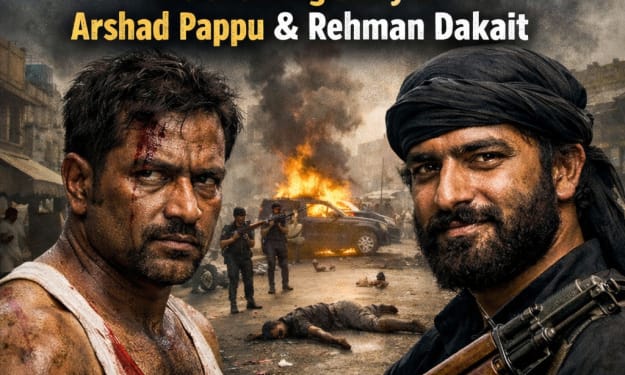
Introduction Lyari, one of Karachi’s oldest and most culturally rich neighborhoods, became synonymous with fear, violence, and gang warfare during the late 1990s and 2000s. The Lyari Gang War remains one of the darkest chapters in Pakistan’s criminal history. Among its most horrifying incidents was the brutal killing of Arshad Pappu, a notorious gangster, whose death shocked not only Pakistan but also audiences worldwide.
By Muhammad waqas9 months ago in Criminal