innocence
The presumption of innocence is a cornerstone of the American legal system and a right that should not be taken for granted.
Was Tesla Murdered? Hidden Truth Behind His Death
Community: Criminal / Futurism / GeeksPrimary Keywords: was tesla murdered, nikola tesla death mystery, who killed nikola tesla, suppressed inventions Was Tesla Murdered? Hidden Truth Behind His Death Nikola Tesla, one of the greatest inventors of the modern era, died alone in Room 3327 of the New Yorker Hotel on January 7, 1943. Official records state that the 86-year-old genius died of coronary thrombosis. But for decades, historians, researchers, and conspiracy theorists have whispered a darker version of the story. What if Tesla didn’t die naturally? What if he was silenced for what he knew—or more chillingly, for what he was about to share with the world? This is the story of a man whose ideas threatened empires, and whose death may not have been the peaceful ending we've been told. The Inventor Who Challenged the World Tesla held over 300 patents. His creations include the AC (alternating current) electrical system, the Tesla coil, remote control, wireless communication, and early versions of X-rays. But his true obsession was free energy — power generated from natural sources like the Earth’s magnetic field or the atmosphere, and delivered wirelessly to everyone, everywhere. Tesla claimed to have developed a "world wireless system" capable not just of communication, but of delivering free energy to the entire planet. He even began constructing a tower on Long Island: Wardenclyffe Tower. But it was mysteriously shut down and destroyed after his primary investor, J.P. Morgan, withdrew funding. Why? "You can't put a meter on it," Tesla reportedly told Morgan about his free energy plans. Tesla’s Final Days By the early 1940s, Tesla was living in near poverty, feeding pigeons and working obsessively from his hotel room. But despite his isolation, he continued to write, patent, and invent. Shortly before his death, Tesla claimed to have completed blueprints for a powerful new technology he called the "Death Ray" or "Teleforce" — a particle beam weapon capable of vaporizing enemy planes from 200 miles away. He tried to sell the plans to multiple governments, including the U.S., Soviet Union, and Britain. He warned: "This invention will make war impossible." But no government ever admitted to purchasing it. Then, on January 7th, Tesla was found dead in his room. Alone. Doors locked from the inside. Enter the FBI: Seizure of the Secrets Within hours of his death, the U.S. Office of Alien Property seized Tesla's belongings. Though Tesla was a naturalized citizen, the agency moved fast to secure every note, journal, and sketch in his hotel room. These were turned over to an MIT professor named Dr. John G. Trump (uncle of former President Donald Trump). Dr. Trump later claimed Tesla's notes contained "speculative and philosophical" ideas, but nothing of military significance. Many experts believe that was a cover-up. So what really happened to Tesla’s most sensitive work? The Murder Theory: Who Would Want Tesla Dead? 1. Government Silencing Tesla was in contact with multiple foreign powers during World War II. His ideas could tip the balance of power. If the U.S. feared his plans might fall into the wrong hands, would it be unthinkable to neutralize him? 2. Corporate Threat Tesla's dreams of wireless power and free energy would have destroyed the business models of oil, gas, and utility companies. J.P. Morgan, who initially funded him, pulled out when he realized there was no profit in Tesla's free energy model. Could industrial forces have intervened to shut him down for good? 3. The Disappearance of Documents After Tesla’s death, multiple trunks of his papers "disappeared." Only some were ever released to the public. What happened to the rest? Did they contain proof of suppressed technologies — or something more dangerous? Recent Discoveries and Renewed Interest Declassified FBI documents (released under FOIA requests) confirm that Tesla was under surveillance, and that the government was deeply interested in his work. In 2016, the FBI declassified nearly 300 pages related to Tesla. Some were redacted. Some hinted that multiple foreign agents were trying to obtain his work after his death. And in 2021, former CIA contractor John Lear suggested that Tesla’s technology was "40 years ahead of its time" and that governments continue to use his theories in classified projects today. Conclusion: Natural Death or Scientific Assassination? Nikola Tesla was a mind generations ahead of his time. Whether he died peacefully in his sleep or was quietly silenced by forces threatened by his genius remains an open question. What is undeniable is this: much of Tesla’s work remains hidden. And when knowledge disappears, so do answers. Until the full truth is revealed, the question remains... Was Nikola Tesla murdered?
By Tech Horizonsabout a year ago in Criminal
OJ Simpson and the Trial of the Century: Fame, Race and the American Justice System. AI-Generated.
In the summer of 1994, America was transfixed by a slow-moving white Ford Bronco. Inside it, former football icon and Hollywood actor Orenthal James “OJ” Simpson was pursued by a convoy of police cars, while millions watched the surreal event unfold live on national television. Just days earlier, Simpson had been named the prime suspect in the brutal murders of his ex-wife Nicole Brown Simpson and her friend Ron Goldman. What followed would be dubbed “The Trial of the Century” a legal, media, and cultural earthquake that would divide the nation and leave a legacy still debated to this day.
By Nowshad Ahmadabout a year ago in Criminal
Dog the Bounty Hunter’s Family Tragedy Explained: Who Was Anthony Zecca and What Went Wrong?
The Heartbreaking Incident On the evening of July 19, 2025, in their Naples, Florida apartment, 13-year-old Anthony Zecca was tragically killed in what authorities are calling a “freak accident”. His father and stepson of reality TV star Duane “Dog the Bounty Hunter” Chapman, Gregory Zecca, accidentally discharged a firearm, resulting in Anthony’s death. Police confirmed the shooting was isolated and no arrests have been made as the investigation continues.
By Bevy Osuosabout a year ago in Criminal
Viral Video of Woman and Man's Killing in Balochistan: "Tribal Chief Ordered the Execution"
In Pakistan’s province of Balochistan, a video has gone viral showing a man and a woman being killed allegedly on the orders of a local tribal chief over accusations of Karo-Kari (a form of honor killing). Following this, the police have registered a case. According to the FIR received from the police, the incident occurred in a remote area called Sanjidi Degar, located about 40 to 45 kilometers from the Hina Police Station in Quetta. The FIR has named 15 individuals. Earlier, Chief Minister Sarfaraz Bugti claimed on social media that the video showing the killing of the man and woman was recorded a few days before Eid. He further stated that 11 suspects have been arrested so far. However, police have not officially confirmed any arrests yet and have said the incident took place three days before Eid and the video surfaced 35 days after the event.
By Ikram Ullahabout a year ago in Criminal
Dog the Bounty Hunter's Stepson Gregory Zecca Accidentally Kills 13-Year-Old Son — A Shocking Family Tragedy
A Family Reeling from Tragedy In a heartbreaking and deeply disturbing incident, Gregory Zecca — the stepson of famed television personality Duane “Dog” Chapman, better known as Dog the Bounty Hunter — accidentally shot and killed his own 13-year-old son, Anthony Zecca, earlier this week. The shocking event has sent waves of grief and disbelief across the internet and devastated a family already marked by tragedy.
By Bevy Osuosabout a year ago in Criminal
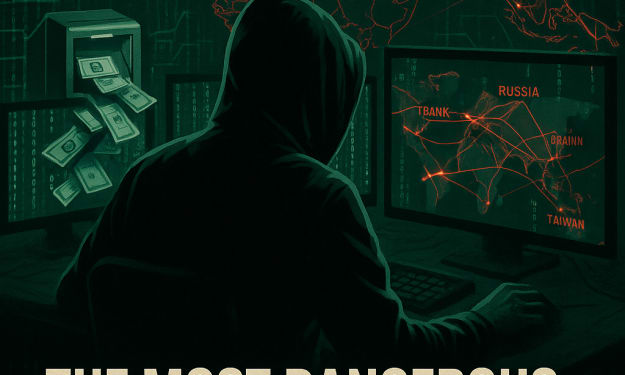
The most dangerous hacking operation in the history of banks | Kings of the Dark Web?
On September 13, 2017, the IT director of a Russian bank was living a normal life with everything going well. But at exactly 3 a.m. on that date, he called the bank’s accounts manager with a trembling voice and said, “Contact the IT team immediately because the situation is very serious.” Without asking for details, the IT employee contacted Kaspersky and requested that they send a specialist to the bank immediately. He told them, “It seems the problem that has baffled the world has now reached Russia.” Indeed, Kaspersky sent an IT expert to the bank within fifteen minutes. The expert met with the bank’s IT employee, and the surprise was that someone had managed to control the primary domain controller—the unit that controls all the bank’s computers. To clarify, if you control this unit, you control everything in the bank. The IT director and Kaspersky expert sat in front of the main server and watched the hacker sending data to China without any logical reason. The Kaspersky expert was shocked by the strength and scale of the breach and initially lost hope of stopping it, but he began searching for malicious software to minimize the damage. After a long search, he found a program that allowed the hacker to monitor and control the computer remotely. At one strange moment, the expert opened Microsoft Word and typed “Hello” in Russian. For minutes, nothing changed, then suddenly the mouse pointer moved, and a message appeared on the screen. The hacker replied in Russian, “You will never catch us.” The expert responded, “We will catch you.” The hacker answered, “No, my friend, you won’t.” This marked the start of a psychological war between professional hackers and the cybersecurity team. This was the beginning of one of the most dangerous hacking operations in history. But who won in the end? The hackers or the banks, security forces, and investigators? The entire story is highly classified, and only limited names and data have been disclosed because revealing the details of such a theft could cause a global economic crisis. The story began in 2014 when the group’s sole mission was to quietly monitor internal banking systems and gather information without carrying out any real hacking—just testing vulnerabilities and waiting for the right moment. On April 8, 2014, they started their plan by sending a phishing email with an infected Word document to a low-level employee at a Ukrainian bank. The document exploited a vulnerability in Microsoft Word, unleashing malware that opened a backdoor into the entire banking system. They were then able to watch everything on that employee’s computer, recording every keystroke and password entered. The employee was unaware his device was compromised. This employee effectively became the gateway to a much larger breach, gradually spreading into all the bank’s servers and devices. After nearly two years of surveillance, the hackers executed their first major theft on July 10, 2016, in Taipei, Taiwan. During this theft, two gang members wearing surgical masks entered a bank. One stood at the entrance observing, while the other stood calmly at an ATM machine without withdrawing cash or entering a PIN. Suddenly, the ATM started dispensing money continuously. The gang member calmly collected the cash into his bag and fled before a stranger approached the ATM. The stranger, who attempted to withdraw money, was shocked to see cash strewn all over the floor but didn’t take any. This wasn’t an isolated event; the exact operation occurred simultaneously at 20 locations worldwide, causing confusion among bank managers who initially thought it was a software glitch or a coincidence. The gang was highly organized with specific teams for each phase: reconnaissance, penetration testing, monitoring, data collection, analysis, planning, and execution. Their theft methods were sophisticated. They transferred money from fake accounts into their own while manipulating balances so the bank’s internal systems wouldn’t notice any suspicious activity. They also collaborated with on-the-ground “cash handlers” who physically collected the money from ATMs. In one month, they stole over $50 million using this method. After stealing billions from over 100 banks in 30 countries, Kaspersky, Taiwanese police, and various international security agencies began tracking the gang. In 2018, authorities raided the home of the gang’s Ukrainian leader, Denis, who lived a lavish life in Spain. They confiscated his possessions, including two BMW cars, half a million dollars in jewelry, and 15,000 bitcoins worth over a billion dollars today. Denis was a programming genius but used his skills more as a personal challenge than just for wealth. Authorities arrested several gang members, but the network remains large and complex. Some sources suggest the gang is part of the Russian cyber army, though no official evidence confirms this. The key lesson: never open suspicious links or log in to unknown websites, even if sent by trusted people, because hackers are everywhere.
By Ink pulse(different angle)about a year ago in Criminal
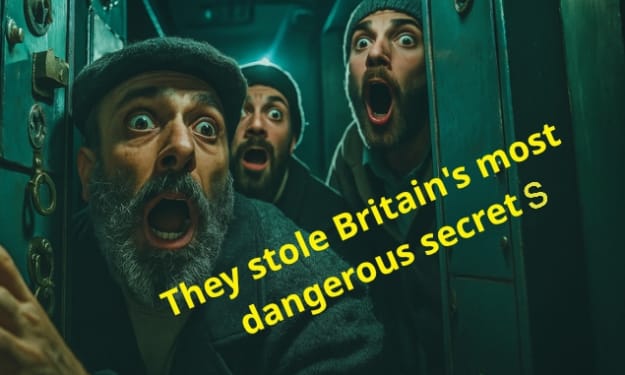
The story of the Lloyds Bank robbery | They stole Britain's most dangerous secrets by accident
On January 13, 2006, in the city of Acassuso near Buenos Aires, the largest bank in Argentina was hit in an armed robbery. The gang stormed the bank and took customers and employees hostage. Just fifteen minutes later, it seemed like the plan had failed: one robber tried to escape with a hostage but was met with a full police blockade. He returned inside, seemingly cornered along with his accomplices. But this was all part of a masterfully crafted illusion. The gang leader was actually executing what would later be known as the most brilliant bank heist ever—“The Heist of the Century.” It began on May 15, 2005, when Fernando Araujo told his psychologist that he wanted to do something to reignite his passion for life. When asked what, he said, “I want to rob a bank.” The psychologist laughed. He wasn’t joking. Araujo was a bright man: a legal assistant and part-time actor. He began riding his motorcycle around Acassuso, scouting banks. Banco Río stood out—a major bank where most Argentines kept their savings, with a secure vault full of safe deposit boxes storing cash, gold, diamonds, and more. He weighed two options: robbing employee safes during a stickup (a risky move with limited payoff), or breaking into the underground vault (high reward but nearly impossible). Cameras and heat sensors connected directly to the police made it seem hopeless. Then he noticed a pattern: manhole covers leading to a large sewer system 160 meters from the vault. If he could reach the bank through there, it might work. For 35 days, he studied every detail. He recruited Sebastián Bolster, an engineer who hated banks after his family’s savings were wiped out. They called each other “The Leader” and “The Engineer.” The Engineer entered the bank pretending to be a wealthy client, using a hidden camera to film the vault. But the operation needed money, so The Leader brought in “The Doctor,” a mysterious mastermind who recruited the rest of the crew: “The Financier,” a silver-tongued con man; “The Fierce One,” a hardened ex-con; and “The Kid,” a trusted operative. The plan was bold: dig a 30-meter tunnel from the sewer to the vault. The Engineer designed a heat-insulated suit to beat the sensors, but it proved too restrictive. So they switched strategies — enter the bank in disguise, fake a failed robbery, then escape with the loot through the sewer. Weapons were required, but they used plastic toy guns. The Engineer also built a special compressed-air tool called “The Gun” to break vault locks in seconds. On the morning of January 13, a vintage Volkswagen pulled up to Banco Río. Four men in gray uniforms, blonde wigs, and ski masks entered and took control. Inside, they acted nervous and clumsy to sell the illusion of a botched job. Outside, the police quickly surrounded the bank. One robber, The Financier, pretended to try and escape with a hostage, only to be "forced" back inside—again, part of the act. Meanwhile, The Engineer emerged in the vault after tunneling through the wall, beginning to crack open hundreds of safe deposit boxes with “The Doctor.” The Leader used the hostages to delay the police, even ordering pizza to buy more time. Once done, they loaded bags of cash, jewelry, and gold into the tunnel. They left toy guns and a fake bomb behind to confuse the police and delay their entry. They floated the loot through the sewer on inflatable rafts to an exit 200 meters away. “The Kid” waited above in the Volkswagen, modified with a hidden trapdoor for the escapees. They drove off, leaving the police still negotiating with ghosts. Hours later, the police stormed the bank—and found nothing. No robbers. No real weapons. Just silence. The crew split the money and agreed to disappear. But betrayal came from within. The Financier’s wife took $100,000 worth of the loot and, after a fight, reported everything to the police. One by one, the gang was arrested: The Financier, The Leader, The Engineer, and The Fierce One. The Doctor and The Kid escaped the country. None of the money was recovered. The bank absorbed the loss. Each received sentences of 9–15 years, but none served more than three thanks to clever legal defenses and public sympathy. Years later, their story became a hit movie. In a surprising twist, they donated 30% of the film’s profits back to the bank. And thus, "The Heist of the Century" became known as the smartest robbery ever pulled off in modern history.
By Ink pulse(different angle)about a year ago in Criminal
The smartest robbery in human history|Rio Argentina Bank / Escape Geniuses (Hello, the police need a pizza)
On January 13, 2006, specifically in the city of Acassuso near the Argentine capital Buenos Aires, an armed robbery took place at the largest bank in Argentina. The gang entered the bank and took employees and customers hostage. After about fifteen minutes, it seemed as if the plan had failed; one of the robbers took a hostage and tried to escape but was surprised to find the police had surrounded the building. With no other option, he returned inside, waiting for his inevitable fate with his accomplices. However, everything was part of a meticulously planned operation, much like the series "La Casa de Papel." The gang leader was orchestrating what later became known as the smartest robbery in history, called “The Heist of the Century.” The story began on May 15, 2005, when Fernando Araujo visited his psychologist and told him he wanted to do something to restore his passion for life. When asked what he planned to do, he said he wanted to rob a bank. The doctor laughed, thinking it was impossible, but Araujo was serious and had already started planning. Araujo was highly intelligent, working as a legal procedures agent and also an actor. He began scouting banks on his motorcycle around Acassuso. The bank that caught his attention was Banco Río, a large and very popular bank where about 80% of Argentines kept their money. The bank offered a special feature: safe deposit boxes to store valuables like gold, jewelry, diamonds, and cash. He considered two methods: a direct armed attack to steal from the employees’ safes, which was limited to $10,000 per safe and carried a high risk with little reward, or breaking into the safe deposit vault at night to steal everything. The latter promised huge gains but seemed nearly impossible due to security cameras and heat sensors directly connected to the city police. Despite these challenges, he kept thinking of a way to enter the bank unnoticed. He first considered digging a tunnel under the bank, but this would require months of work and was likely to be discovered. Then, by chance, he noticed many sewer covers on the road near the bank, spaced about 10 meters apart. Tracing these, he realized that the main sewer ended in a large square opening about 160 meters from the bank’s vault, giving him a direct underground route. He spent 35 days planning the approach and recruiting a team. His first recruit was Sebastián Bolster, an electronics and mechanical engineer who hated banks due to his family losing everything when their bank went bankrupt. They agreed to call each other by nicknames: Araujo became "The Leader," and Sebastián "The Engineer." They studied the sewer and bank layout for a week. The engineer posed as a wealthy client wanting to store 6 kilograms of gold, using a hidden camera to film inside the vault. After realizing they needed significant funding, the Leader contacted a third member known only as "The Doctor," a well-connected intellectual who assembled the rest of the team. The team included "The Financier" (Beto Latorre), a skilled con artist and expert in persuasion; "The Fierce One" (Luis Silans), a former criminal with multiple prison sentences; and finally "The Kid," an unknown but trusted associate. The Doctor provided detailed city maps, and The Fierce One managed to secure the exact floor plans of the bank itself. The plan was to dig a tunnel about 30 meters from the sewer to the vault. The expected digging time was about two months. Meanwhile, the Engineer developed a special heat-insulating suit to avoid detection by heat sensors. However, the suit was too heavy and restricted movement, so the team reconsidered their entry strategy. The Leader proposed a bold and risky plan: enter the bank through the main door wearing disguises and escape through the tunnel. This required carrying weapons, which the Leader initially opposed but later allowed as long as the weapons were fake, which the Financier supplied. The Engineer also invented a device called “The Gun,” a powerful compressed air tool designed to break any lock within seven seconds. On January 13, 2006, their plan began. A vintage Volkswagen arrived at the bank entrance, and four men dressed in gray uniforms with black ski masks and blond wigs entered. Inside, they took control and took everyone hostage, acting nervously to give the impression that the plan was failing. Meanwhile, the Engineer entered through the sewer tunnel with equipment to break through the wall leading to the vault. After about fifteen minutes, the police had surrounded the bank. One of the robbers, The Financier, took a hostage outside, pretending to try to escape but was stopped by the police and forced back inside, reinforcing the illusion that the plan was collapsing. The security guard in the surveillance room was forced out at gunpoint to stop informing the police, and his phone was used to negotiate with the police. Once the cameras were disabled, the Engineer was given the signal to break through the vault wall. Inside the vault, The Engineer and The Doctor started breaking into the safe deposit boxes with their device while The Leader, The Financier, and The Fierce One controlled the hostages and distracted the police. They demanded pizza be delivered to the bank to satisfy the robbers and gain more time. The police agreed, which bought the gang another 40 minutes. Once the robbery was complete, the gang packed the stolen items into large bags and threw them into the sewer tunnel, where The Engineer and The Doctor loaded them onto inflatable boats. They planted a fake bomb at the vault door and left their weapons on a cloth to make it look like a messy exit. They escaped through the sewer to a sewer cover about 200 meters from the bank, where The Kid waited with the modified Volkswagen car with a trapdoor underneath. They drove off and returned to the Financier’s home. They watched the news on TV, surprised that the police had not yet entered the bank. Two hours later, the police finally stormed the bank, only to find the robbers gone. The weapons left behind were children’s toys, and the bomb was fake — all carefully planned to buy time and avoid serious charges. The robbers divided the money and agreed never to meet again. However, the Financier’s wife took three bags worth about $100,000 without permission. After a violent argument, she reported the whole operation to the police. The police arrested the Financier, then The Leader, The Engineer, and The Fierce One. The Doctor and The Kid fled abroad. The total value of the stolen money remains unknown, with none recovered. The bank absorbed the losses. Sentences ranged between 9 and 15 years, but none served more than three years, as public sympathy and legal defense campaigns helped secure their early release. Afterward, their story was turned into a successful action-comedy film. They even donated 30% of the film’s profits to the bank as compensation. Thus, the “Heist of the Century” was recorded as the smartest robbery in human history.
By Ink pulse(different angle)about a year ago in Criminal
Nirbhaya: The Crime That Awoke Nation's Conscience. AI-Generated.
On the chilling night of December 16, 2012, a 23-year-old physiotherapy student boarded a private bus in South Delhi with her male friend. What happened next would shock not just India, but the entire world.
By Nowshad Ahmadabout a year ago in Criminal
💔 A Modern-Day Execution: Couple Murdered in Balochistan in the Name of 'Honour'
By Asad Taizai | July 20, 2025 A haunting video recently surfaced from the coal-mining region of Sanjdi Deghari, near Quetta, Balochistan, sparking shock and outrage across Pakistan and beyond. The footage shows a young couple—later identified as Bano Satgzai and Ehsan Samalani—being executed in what has now been confirmed as an honour-based killing.
By 🕵️♂️ True Crime Enthusiast | Storyteller of the Dark Side 🔍about a year ago in Criminal