innocence
The presumption of innocence is a cornerstone of the American legal system and a right that should not be taken for granted.
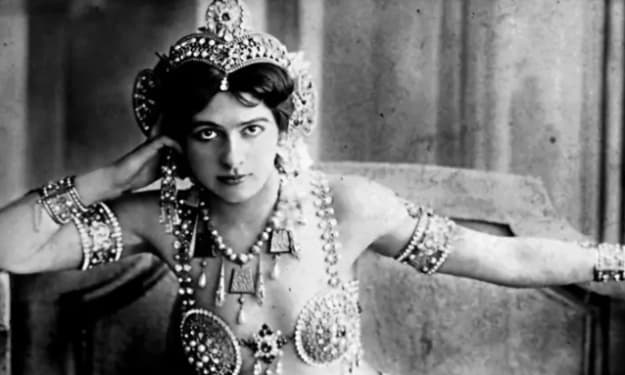
Mata Hari: The Famous Spy Who Refused to Be Blindfolded Before Her Execution
On the morning of October 15, 1917, a grey military vehicle left the main prison of Paris. Inside was a 41-year-old Dutch woman dressed in a long coat and wearing a wide-brimmed hat. A decade earlier, this woman had captivated the capitals of Europe. She was a blazing flame, unmatched in dance, and among her admirers were ministers, industrialists, and military generals. But then World War I broke out, changing the world forever. The woman still believed she could dazzle all of Europe with her charm. But now, the men in high places wanted something else from her — not her affection, but information. Her crime? She was accused of being a spy who seduced Allied officers, extracted secrets from them, and passed them on to the German army. Newspapers sensationalized the stories, claiming that thousands of Allied soldiers had died because of Mata Hari. But the evidence presented in court told a different story. In reality, she was a double agent, made a scapegoat.
By Ikram Ullahabout a year ago in Criminal
The Mastermind Games: Season 01 Episode 03
The corridor bathed in red light was silent—eerily silent—as Clara and Julien walked side by side, tension thick between them. Clara's eyes darted to the corners, scanning for surveillance. Julien, still reeling from the revelation that Clara might have been "recruited" into the game long before it began, couldn’t hide his suspicion.
By Engr. Mansoor Ahmadabout a year ago in Criminal
A Doctor’s Life Lost to ‘Honor’: When Family Becomes the Judge, Jury, and Executioner
Introduction In a heartbreaking incident from Jhang, Pakistan, a young woman—an accomplished doctor who had just returned from Uzbekistan after completing her education—was brutally murdered by her own brother. Her crime? She chose to marry someone she loved, a fellow doctor from Uzbekistan, in an online Nikah. This murder, committed under the shadow of "honor," once again forces society to confront a painful question: Why is a woman’s autonomy considered dishonorable in some families? This article delves into the social, cultural, and moral questions raised by such acts of violence, where women are killed not by strangers, but by their own blood. --- The Incident: A Life Cut Short The victim had recently returned to Pakistan after years of hard work, sacrifice, and perseverance to become a doctor. Her family had supported her financially and emotionally through this journey. However, when she expressed her wish to marry her classmate from Uzbekistan, her brother disagreed. Despite trying to pursue the relationship respectfully and privately—through an online Nikah—her choice enraged her brother, who took her life in the name of so-called honor. This tragedy is not the first of its kind, and unfortunately, it may not be the last. --- What is ‘Honor’? And Who Decides It? In many South Asian and Middle Eastern cultures, "honor" is often tied to the actions of women—particularly around marriage, relationships, and public behavior. A family’s dignity is seen to rest on the "purity" and obedience of its daughters and sisters. In this system, male members of the family are expected to guard this honor, and if it is perceived to be tarnished, they may go to deadly extremes to restore it. But what kind of honor is this, where a brother feels entitled to take the life of a sister for making an independent life choice? Does honor lie in murder or in compassion? Who gave men the right to play God over women’s lives? --- Education Without Empowerment: A Hollow Achievement This case highlights a dangerous contradiction: many families encourage girls to pursue higher education, but with invisible strings attached. Girls are told to become doctors, engineers, or professionals—but only within limits set by the family. The moment they begin to think independently, especially in matters of marriage, those same families feel betrayed. Was her education for her personal growth or just to raise the family’s social status? If a girl is taught to think critically, to make informed decisions, and to build a life of her own, why is she punished when she does exactly that? It seems that for some, a daughter is only valuable as long as she remains obedient. The idea of education is celebrated, but not the empowerment that comes with it. --- Online Nikah: Autonomy or Rebellion? Online marriages are becoming more common among young people, especially those studying or working abroad. They offer a legal and religious way to formalize relationships without the need for elaborate family involvement. In this case, the girl did not run away or enter into a secret relationship. She followed a legitimate route to marry the man she loved. Still, for her brother, this act was a betrayal. It was not the manner of marriage that offended him—it was the loss of control. He, like many others in patriarchal societies, believed that he had the right to decide when, whom, and how his sister should marry. --- Hypocrisy of "Honor": Where Was It Before? One of the most ironic aspects of such cases is the selective morality. The girl was sent to a foreign country to live and study alone for years. At that time, there were no concerns about "honor." She represented pride and progress. But when she made a personal choice in love and marriage, suddenly she became a source of shame? If she had returned and silently accepted a marriage arranged by her family, her brother would have felt proud. But the moment she asserted her right to choose, she became a threat. This is not honor. This is control. And control masked as morality is the most dangerous kind. --- A Murder is a Murder — Not a Justification Religious texts and moral philosophy are clear: “Whoever kills a person... it is as if he had slain all of mankind.” (Qur’an, 5:32) No excuse, no cultural tradition, no anger justifies the killing of another human being—especially not one's own sibling. The brother who committed this act could have chosen dialogue, understanding, or even disagreement. But by choosing murder, he didn't restore his family’s honor—he destroyed it. --- What Needs to Change? 1. Redefining Honor Society must evolve its understanding of honor. Real honor lies in supporting and respecting the choices of others, not in violence or dominance. 2. Family Counseling and Mediation Families should be educated and counseled on how to deal with disagreements without resorting to violence. 3. Legal Consequences Perpetrators of honor killings must be punished strictly under the law. Families should not be allowed to "forgive" the killer to escape justice. 4. Empowering Women Fully Education must come with emotional and legal empowerment. Girls should be taught their rights and how to protect them. 5. Media and Religious Leadership Both media and religious leaders must speak out clearly against honor-based violence. Silence enables further crimes. --- Conclusion The murder of the young doctor in Jhang is not just a personal tragedy—it is a mirror reflecting the flaws in our society. It raises uncomfortable but necessary questions about how we treat women, how we define honor, and whether we truly value education or just use it as a status symbol. Let this not be another forgotten case. Let her memory serve as a wake-up call that a society that kills its daughters in the name of honor has no honor left to protect.
By Ikram Ullahabout a year ago in Criminal
The Disappearance of Madeleine McCann
On the evening of May 3, 2007, three-year-old Madeleine McCann vanished from her family’s holiday apartment in the seaside resort of Praia da Luz, Portugal. Her parents, Kate and Gerry McCann, had been dining with friends at a nearby restaurant, taking turns to check on their children. When Kate returned around 10 p.m., Madeleine’s bed was empty.
By Hassan Janabout a year ago in Criminal
The Robben Island Letter
The cell Nelson Mandela’s cell on Robben Island was 7 feet by 8 feet. A bucket for sanitation. A thin mat for sleep. The walls, damp with sea air, bore no calendars. Time blurred. But every morning, as guards clanged iron bars, Mandela recited a mantra: *“They can take my body, not my mind.”*
By Tariq Pathan about a year ago in Criminal
The Silent Witness
Detective Adrian Blake stared at the latest crime scene, his brow furrowed in confusion. The body of a middle-aged man lay sprawled across the floor of his upscale downtown apartment, the victim of a brutal stab wound to the chest. But it wasn’t the blood, the weapon, or the positioning of the body that caught his attention. No, it was the drawing.
By Solene Hartabout a year ago in Criminal
House Committees Subpoena Epstein Files and Key Figures, Including the Clintons
The U.S. House committees have issued subpoenas demanding Epstein Files and testimony from key individuals, notably Bill and Hillary Clinton. These legal actions mark a pivotal escalation in the congressional investigation of Jeffrey Epstein’s criminal network and political connections.
By Kageno Hoshinoabout a year ago in Criminal
The Underground Ecosystem of human Trafficking & Elite-level Exploitation: Shocking Realities and Global Impacts. Content Warning. AI-Generated.
Introduction to the Hidden World of Human Trafficking Beneath the surface of civilized societies lies a grim undercurrent: the underground ecosystem of human trafficking and elite-level exploitation. This complex network is not confined to shadowy alleys or distant lands—it operates in plain sight, often disguised by status, wealth, and power. From underage trafficking victims to labor slaves and elite perpetrators, this global crime syndicate thrives on secrecy, systemic failure, and societal indifference.
By DJ for Changeabout a year ago in Criminal
The Mastermind Games: Season 01 Episode 02
Theme: Truth Is a Weapon Darkness swallowed Clara and Julien as the corridor sealed behind them. For a moment, there was only silence—until a faint hum rose beneath their feet. The floor shifted again, gliding like a magnetic rail through a hidden tunnel.
By Engr. Mansoor Ahmadabout a year ago in Criminal
The Girl Who Vanished at Midnight
On a cold November night in 2012, 17-year-old Emily Carter walked out of her bedroom window and was never seen again. Her disappearance shook the quiet town of Willow Creek to its core. With only 3,000 residents and a crime rate so low the local paper rarely mentioned arrests, nothing prepared the town—or Emily’s family—for the nightmare that would follow.
By Solene Hartabout a year ago in Criminal
Research My Mind, I’m Sorry
In one sudden, tragic evening, everything changed at 345 Park Avenue—a towering 44-storey building in Manhattan’s busiest commercial district, home to hundreds of employees. As people working nearby were heading home on that hot July evening, employees inside the building were seen running for their lives, barricading conference rooms with tables, and sending farewell messages to their loved ones. Jessica Chin, who works on the second floor of the building, told U.S. media: > "I texted my parents saying I love you." She added, > "The feeling at that moment can’t be put into words." Jessica and others sprang into action after hearing gunshots from the lobby. The shooting resulted in the deaths of four people, including a New York police officer, individuals in the lobby, and someone on the 33rd floor. Rampage in Manhattan’s Busy Streets Just before the attack, around 6:30 p.m., a 27-year-old man arrived in New York after passing through various states including Colorado, Nebraska, and Iowa. Authorities said Shane Tamura, a resident of Las Vegas, double-parked his black BMW on Park Avenue, close to landmarks like Rockefeller Center and St. Patrick’s Cathedral. Wearing a jacket, buttoned shirt, and glasses, and carrying an automatic rifle, he confidently approached the building, which also houses the National Football League (NFL) headquarters—but he never reached that office.
By Ikram Ullahabout a year ago in Criminal
A Trace of Smoke
Detective Elara Vance stood at the edge of the charred ruins, her black boots crunching over shattered glass and soot. The warehouse, once abandoned, was now reduced to a smoldering skeleton of beams and ash. Firefighters were packing up, but she remained still, scanning the wreckage. She wasn’t here for the fire. She was here for the body. “Male, mid-thirties, tied to a chair before the blaze,” the fire chief had said. “Someone torched the place after he was already dead.” A murder, masked as an accident—but sloppily. Elara squatted beside a twisted piece of metal. Something faint lingered in the air, even through the acrid smoke: lavender. Not the scent you’d expect in a warehouse. And not from any man she'd known. She scribbled in her notebook: Lavender. Arson. Male victim. Bound. Pre-mortem bruising. No wallet. Then she paused. There, half-buried in the ash—a cigarette butt. Not fully burned. Carefully, she bagged it. The lab confirmed the obvious: the cigarette had been smoked by someone wearing berry-flavored lipstick. Female DNA. No match in the system. Elara revisited the scene. Nothing new, until she noticed a camera mounted on a building across the alley. It pointed straight at the side door of the warehouse. She pulled the footage. There she was—a tall woman in a black coat and sunglasses. She arrived at 11:52 p.m., walked in calmly. Fourteen minutes later, smoke began curling from the building. The woman never came out. That is, until Elara froze the frame at 12:08 a.m. The same coat. The same sunglasses. But now, her hair was tucked under a hat, her lipstick wiped away. She turned her head slightly as she walked by the camera—revealing a scar above her eyebrow. “Elara,” her partner, Detective Marquez, said the next morning, “the vic was James Rourke. Real estate agent. Recently under investigation for fraud.” “Someone wanted him silenced,” she replied. “And that woman? Any leads?” Elara tapped the scar on her temple. “That’s the key.” They combed through mugshots from old fraud cases, con artists, angry clients. Nothing. Then Marquez found her. Lena Vale. Convicted four years ago for grand larceny. Disappeared after parole. Known for disguises. Known for holding grudges. Rourke had testified against her. Elara knew where to look now. They found Lena in a motel on the outskirts of town. She answered the door like she expected them. “Detective Vance,” she said, smirking. “How long did it take you?” “Long enough,” Elara replied. “You're under arrest for the murder of James Rourke.” Lena didn’t flinch. “Didn’t kill him. Just watched him burn.” “That’s murder.” She shrugged. “He deserved it.” Elara cuffed her, but the scent hit her again—lavender, faint and clinging. A trace of smoke in her hair. --- At the station, Lena confessed. She’d tracked Rourke for weeks, watching him, waiting. She said he ruined dozens of lives, not just hers. “I gave him a choice,” she said. “Confess on camera, or burn.” He laughed. So she lit the fire. Elara watched the footage Lena had recorded on her phone. Rourke was tied up, furious, panicked. He didn’t confess. And then, flames. The case closed, but something nagged at Elara. That cigarette. --- Days later, the DNA came back with a match—not to Lena, but to her younger sister, Ivy Vale, presumed dead five years ago in a boating accident. But Ivy had never died. Elara dug deeper. Security footage from a gas station near the motel the day before the fire showed two women—one clearly Lena, the other nearly identical but scar-free. Ivy. Elara confronted Lena again. “Where’s your sister?” Lena didn’t answer. She just smiled. “She was the one who lit the match, wasn’t she?” Elara asked. “I’m not saying a word.” “You took the fall to protect her.” Still silence. Elara leaned in. “You’re clever. But Ivy’s out there. And she made one mistake.” “What mistake?” Lena asked, unable to help herself. Elara smiled faintly. “She left a trace. A trace of smoke.” Conclusion: The Smoke Always Lingers In the end, the case wasn’t as clean as it seemed. Lena was behind bars, but Ivy was still out there, a ghost behind the flames. And Elara knew she’d be watching. Because murder, like smoke, never disappears. It drifts. It clings. And if you follow it carefully enough, even the faintest trail can lead you straight to the truth.
By Solene Hartabout a year ago in Criminal