innocence
The presumption of innocence is a cornerstone of the American legal system and a right that should not be taken for granted.
The Shadow on Bramble Street
M Mehran The night Mrs. Ellery disappeared, Bramble Street held its breath. Detective Rowan Pierce arrived at the scene just past 11 p.m., greeted by the glow of porch lights and neighbors gathered like moths. The Ellery house—small, yellow, immaculate—looked painfully ordinary for the horrors whispered about it. “What do we have?” Rowan asked the responding officer. “Fifty-nine-year-old school librarian, Margaret Ellery. Neighbor reports hearing a crash. Came over to check, door was wide open, house is a mess, and she’s gone.” “Any signs she left willingly?” The officer shook his head. “None. Her purse is still inside. Keys too.” And that’s when Rowan saw it: a single thin line of muddy footprints leading down the hallway. One set. Bare feet. A kidnapping, maybe. Or something worse. Inside, the house told a strange story. The living room was undisturbed—blankets folded, candles unlit, books stacked by the armchair. But the hallway looked like panic had ripped through it: a toppled lamp, shattered glass, scratch marks along the wall. “Where do these footprints lead?” Rowan asked. “To the basement.” The officer’s tone carried unease. Basements always meant trouble. Rowan followed the trail down the creaking wooden steps. His flashlight skimmed over dust, cobwebs, and paint cans—then stopped. Something else was on the floor. A message. Written shakily in what looked like charcoal: “HE’S BACK.” Rowan’s stomach tightened. Mrs. Ellery had no husband, no children. No “he.” Not living ones, anyway. But she did have a past. And Rowan knew it. Years ago, Margaret Ellery testified against a serial burglar who broke into homes, studying families for weeks before striking. Calm. Precise. Nearly invisible. They called him The Shadow. He vanished before trial. Never caught. Never resurfaced. Until now? --- Upstairs, Rowan found a photo frame knocked over. Inside was a picture of Margaret holding a small boy—maybe eight years old—with sandy hair and bright eyes. But Margaret had no children. The back of the frame was labeled: “Aiden — Summer Program, 2021.” A student. Someone she had loved enough to keep a photo of. Rowan frowned. “Where are the neighbors who first reported it?” he asked. The officer pointed to a porch across the street. A wiry man in his forties leaned against the railing, pretending he wasn’t eavesdropping. His wife hovered behind him, arms crossed tightly. Rowan approached. “You called it in?” The wife nodded. “I heard something—like furniture crashing.” “Did you see anyone leave the house?” The husband hesitated. “I saw… someone. A man. Hooded. Walking fast down the street.” “Tall? Short?” “Tall. Limped, I think. And he kept—” The man swallowed. “He kept looking behind him, like he expected someone to follow.” “Which direction?” He pointed toward the woods at the end of Bramble Street. Of course. Rowan had grown up in a neighborhood just like this: quiet streets, nosy neighbors, dense forests perfect for hiding. Perfect for disappearing people. --- Rowan stepped into the treeline, letting the darkness close around him. The ground was soft from recent rain—good for tracking. He scanned with his flashlight. There. A faint drag mark. And next to it: a footprint deeper on one side. A limp. He followed the trail until he reached a clearing—and froze. A cabin. Old, rotting, half swallowed by vines. Light glowed inside. Rowan approached silently, weapon drawn. He edged up to a window and peered through. Margaret Ellery sat tied to a wooden chair, tears streaking down her face. Standing over her was the hooded man. But when he lifted his head, Rowan’s breath stalled. He wasn’t old. He wasn’t the Shadow. He was the boy from the photograph. Aiden. But grown. Early twenties now, scar slashing down his left cheek, eyes hollow and wild. Aiden knelt in front of Margaret, voice cracking. “You lied to me. You promised you’d come back.” Margaret sobbed. “Aiden, you don’t understand—” “You left me in that house,” he hissed. “You left me with him.” Rowan’s heartbeat thudded painfully. Aiden wasn’t the Shadow’s victim. He was the Shadow’s son. Margaret must have found him during the summer program. Recognized the signs. Tried to help him escape. But something had prevented it. Now trauma had twisted into obsession. Rowan moved quickly. He kicked open the cabin door. “Aiden! Police! Don’t move!” Aiden spun, eyes wild, grabbing Margaret by the shoulders. “No! She’s all I had!” “Aiden,” Rowan said softly, lowering his gun slightly. “Look at me. You survived something unimaginable. What happened to you wasn’t your fault.” Aiden shook violently. “He’s coming back. My father. I saw him.” “Your father is gone,” Rowan said. “And Mrs. Ellery wasn’t lying to you. She tried to save you then—and she’s trying to save you now.” Margaret choked out, “Aiden, please. Let me help you. I never stopped looking for you.” Aiden’s grip loosened. His eyes filled with tears. But then footsteps crackled outside. Heavy. Confident. Another voice echoed through the woods: “Aiden!” Rowan’s blood ran cold. A shadowy figure moved beyond the doorframe. Tall. Limping. Alive. Aiden’s father. The true Shadow. Rowan raised his weapon. “Aiden, get down—now!” In a single, lucid moment, Aiden made a choice. He shoved Margaret out of the way, stepped between Rowan and the doorway, and shouted: “Run!” The Shadow lunged into the cabin. Chaos exploded. Rowan fired. Aiden screamed. Margaret cried out. And the Shadow fell—dead—at last. When the dust settled, Aiden lay bleeding but conscious. Margaret held him, sobbing into his hair. Rowan exhaled the breath he’d been holding. The night on Bramble Street finally broke. But Rowan knew the echoes of this case would haunt him forever.
By Muhammad Mehran11 months ago in Criminal
The Girl in Apartment 4B
M Mehran The first thing Officer Lena Hale noticed about Apartment 4B was the silence. Not the normal kind—the heavy, suffocating kind that felt staged. Manufactured. She knocked again. “Police. Ms. Carter, are you inside?” No answer. A neighbor had called dispatch an hour earlier, reporting “terrifying screams” from 4B, followed by a crash. Domestic dispute, maybe. Break-in, possibly. In this building? Very likely. Lena tested the doorknob. Locked. “4B, this is your last warning.” Still nothing. She slid her pick from her belt—old-school tool, but faster than waiting for backup—and worked the lock. The door clicked open. The smell hit her first. Bleach. Sharp and recent. “Ms. Carter?” she called, stepping inside. The apartment was immaculate. Too immaculate. A couch perfectly aligned with the rug. A coffee mug washed and turned upside-down to dry. A half-finished jigsaw puzzle on the table—blue sky, white sailboat—each piece arranged with almost obsessive care. Normal on the surface. Wrong underneath. Her radio buzzed: “Unit 12, backup in ten minutes.” “Copy,” Lena murmured. She moved deeper into the apartment. Photos lined the hallway—portraits of a woman in her early thirties, smiling. Camille Carter. Teacher, single, never caused trouble. The kind of person neighbors described with words like “sweet” and “quiet” and “kept to herself.” But on the last frame, the glass was cracked. The picture inside had been removed. Only the cardboard backing remained. Lena’s pulse jumped. She reached the bedroom door. That’s when she heard it. A faint thump. Then another. Muffled. “Camille?” she whispered. No response. Lena pushed the door open with the barrel of her weapon. The bedroom was empty. Except for the closet. A thin line of light glowed beneath the door. She approached slowly, listening. A breath. Soft. Fragile. She swung the door open. And froze. A girl—maybe nine or ten years old—huddled inside the closet, knees tucked to chest, arms wrapped tight around them. Her eyes were wide, terrified, darting instantly to the gun. “It’s okay,” Lena said gently, lowering it. “I’m here to help.” The girl didn’t speak. “Where’s Camille? Is she your mother?” The girl shook her head so subtly Lena almost missed it. “Did something happen to her?” Another tiny shake. Lena crouched. “What’s your name?” The girl opened her mouth, hesitated, and whispered, “Lily.” “Hi, Lily. Can you tell me why you’re hiding?” Lily swallowed hard. “He told me to.” “Who?” But the girl just pressed her lips together, trembling. Lena scanned the closet. A small stuffed rabbit. A notebook. A pair of children’s sneakers. Children’s belongings, in an apartment of a woman who lived alone. Her stomach twisted. “Lily… do you live here with Camille?” Lily hesitated. Then, with a broken little voice: “She saved me.” Lena’s breath caught. This was no ordinary case. “Saved you from what?” Lily lifted her shirt sleeve. Faded bruises. Patterned. Repetitive. Lena felt heat burn behind her eyes. Before she could say another word, the apartment’s front door creaked. Someone had entered. Lily’s eyes went wide with pure terror. She darted out of the closet and clung to Lena’s arm. “He’s back,” she breathed. Lena rose and guided Lily behind her. Footsteps—heavy, confident—moved through the kitchen. “Police!” Lena shouted. “Identify yourself!” Silence. Then—a man’s voice. Smooth. Cold. “You shouldn’t be here.” Lena stepped into the hallway, gun raised. A tall man stood in the living room, rain dripping from his coat, face carved with quiet fury. He carried a leather duffel bag that sagged with weight. “Hands where I can see them,” Lena commanded. He smiled, slow and amused. “You think you’re the first officer she’s called? Camille never learned.” “Step away from the bag.” His eyes flicked down to the hallway—toward the bedroom. Toward Lily. Lena noticed the recognition in his gaze. Too sharp. Too intimate. He knew her. And Lily knew him. “Lily,” Lena murmured, “is that—” “My father,” Lily whispered, voice small as ash. “He killed Camille.” Lena didn’t have time to react. The man dropped the duffel. But not because he surrendered. Because something inside rolled out with a soft thud. A woman’s hand. Camille’s hand. Lena fired. The man lunged. A blur of movement. He barreled toward her, grabbing her wrist, slamming her against the wall. Pain shot up her arm. The gun clattered away. Lily screamed. Lena twisted, fighting his grip. He was strong—too strong—but desperation lent her force. She drove her knee into his ribs. He grunted, loosening enough for her to shove him back. He reached for the gun on the floor. She dove after him. They collided, scrambling. Fingers brushing the weapon. Breath ragged. His elbow smashed into her jaw—stars burst behind her eyes. Then a sound cut through the chaos. A crack. Like wood hitting bone. The man collapsed forward. Behind him stood Lily—holding the heavy ceramic sailboat piece from Camille’s puzzle. Her small hands trembled, but her eyes—her eyes were steady. Lena grabbed the gun and cuffed the man while he writhed. Backup burst through the door moments later. Lily ran into Lena’s arms and clung to her with every ounce of strength she had left. “It’s okay,” Lena whispered into the girl’s hair. “He’ll never hurt you again.” Outside, rain began to fall. But inside Apartment 4B, for the first time that night, the silence finally broke. It wasn’t eerie anymore. It was safe.
By Muhammad Mehran11 months ago in Criminal
The Last Witness
M Mehran Rain fell in needles the night Detective Mara Vance realized she was being followed. She’d left the precinct after midnight, the kind of exhausted where the world felt underwater. The Rosen Case—a convenience-store robbery gone brutal—had dragged the department for weeks. A clerk dead, a missing witness, and a blurry security tape that showed a man with a serpent tattoo along his wrist. That was it. No face. No prints. No breaks. Until that morning. A trembling twenty-year-old named Eli Mercer had walked into the station claiming he saw everything. He’d been hiding, terrified the killer would find him. Mara believed him. More than that—she believed he was in danger. Which was why, when she spotted the same gray sedan in her mirror for the third turn in a row, her tiredness evaporated. She didn’t go home. She drove to the river instead. The car followed. Mara parked beneath the bridge, stepped out, and kept one hand on the grip of her concealed pistol. The other car idled thirty feet behind her. Its headlights cut shapes across the rain. “Enough,” she murmured and walked toward it. The driver door opened. A man stepped out slowly, hands raised. Dark hoodie, jeans, water dripping from the brim of a cap. “I’m not here to hurt you,” he said. His voice was deep, calm. “Then congratulations,” Mara said, “you’ve started this evening badly.” He lifted his head. Under the streetlamp, she saw his face—mid-thirties, sharp jaw, tired eyes. “My name’s Caleb Rowan,” he said. “Eli sent me.” That made her pause. “Eli Mercer? How do you know him?” “I’m his brother.” “He told us he had no family.” “He had reason to lie,” Caleb said, lowering his hands. “And if you’re smart, Detective, you’ll start asking why." --- The two sat in Mara’s car, rain thrumming on the roof. Caleb’s clothes were soaked, his hands shaking slightly, though his voice stayed steady. “Eli didn’t just witness a robbery,” he said. “He witnessed someone being silenced.” “Silenced?” Mara asked. Caleb nodded. “Your victim—the store clerk—he wasn’t random. He was supposed to testify in a federal case. A laundering ring. Eli saw the killer go in after him.” “And the killer saw him,” Mara murmured. “Exactly. That’s why Eli ran. Why he hid. And why someone’s now watching you.” He swallowed. “They know Eli came forward.” Mara stared through the fogging windshield. A knot formed in her stomach. If this was true, the case wasn’t small—not a robbery gone wrong, but a hit. “And what do you want with me?” she asked. Caleb reached into his pocket slowly and slid a small flash drive across the seat. “This is what Eli was too scared to carry. Security footage. Not from the store—from the alley outside. The killer waited there for fifteen minutes before going in. His face is visible. Clear as day.” Mara blinked. “Why didn’t Eli give this to us earlier?” “Because he knew the police had leaks,” Caleb said. “People on the inside who protect the ring.” Her spine stiffened, instinct screaming denial—but she’d been on the force long enough to know corruption wasn’t a ghost story. “If he didn’t trust us,” she said quietly, “why trust me?” Caleb exhaled. “Because he saw the way you questioned him. You listened. You believed him. You didn’t look at him like a burden or a liar.” His voice cracked. “You reminded him of our mother.” Mara swallowed, emotion catching her unexpectedly. She pocketed the drive. “Where is Eli now?” Caleb’s jaw tightened. “That’s why I followed you. He’s missing.” The words slammed into her like a fist. Missing. --- One hour later, Mara and Caleb stood in a run-down motel on the edge of town. Room 12. Eli’s room. The lock wasn’t broken—but the air felt wrong. The bed unmade. A backpack spilled open. A half-eaten container of noodles on the table, still warm. “He was here recently,” Mara said. “He left in a hurry.” Caleb’s hands balled into fists. “They took him.” Mara kneeled near the backpack. Something metallic glinted on the floor. She picked it up. A ring. Silver. Inscribed with a serpent. Her heart lurched. “We need to leave,” she said. “Now.” But the moment the words left her mouth, the room lights cut out. Darkness swallowed them. Caleb cursed, grabbing Mara’s arm. She yanked her gun free, senses flaring. A soft click came from the doorway. Night-vision goggles, she realized. Someone was watching them. “Stay behind me,” she whispered. A voice drifted through the dark, oily and calm. “You should’ve stayed out of this, Detective.” Mara fired two shots toward the door. Glass shattered. Caleb ducked. Heavy footsteps pounded away. By the time she reached the hallway, the killer was gone—into the night like smoke. But he’d left something behind. A phone, screen glowing. A text message displayed: We have the boy. Bring the drive. Midnight. Pier 7. Come alone. Caleb stood behind her, shaking. “He’s alive?” “For now,” Mara said. “And we’re getting him back.” She closed her hand around the flash drive, rain pounding the motel roof like war drums. The clock read 11:08 p.m. Fifty-two minutes until midnight. Fifty-two minutes until everything changed.
By Muhammad Mehran11 months ago in Criminal
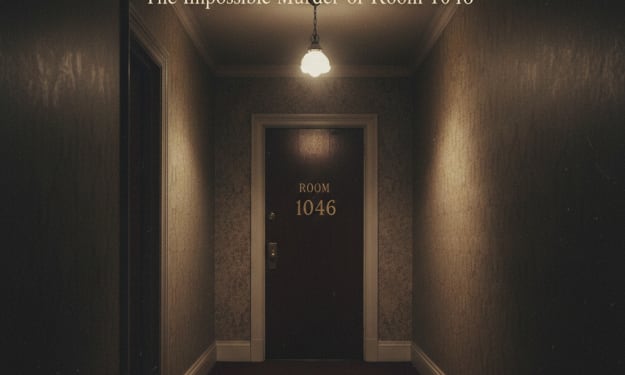
The Man Who Locked Himself In: The Impossible Murder of Room 1046
There are murders that frighten you because they are violent. And then there are murders that frighten you because they make no sense at all. The case of Room 1046 sits firmly in the second category — a story built of contradictions, shadows, unanswered questions, and a victim whose own identity was a mystery. The year was 1935. The place: the President Hotel in Kansas City, Missouri. A tall building, busy enough to feel alive but quiet enough for travelers to disappear in the flow of guests. People checked in. People checked out. Nothing unusual. Until a man calling himself Roland T. Owen walked through the lobby doors and changed the hotel’s history forever. A Man With No Story He arrived with almost nothing: A comb. A toothbrush. A hairbrush. No luggage. No real address. A name that felt like a pseudonym from the moment he spoke it. Witnesses described him as polite but tense, like someone carrying a weight he didn’t want to explain. He requested an interior room — one with no window view — and the clerk handed him the key to Room 1046. That was the last normal moment in the entire case. From here on, the story bends into angles that don’t fit. The First Strange Signs Housekeeping entered his room later and found something odd: Owen was sitting in the dark. All the lights were off, the blinds drawn tight, as if the outside world was an enemy. He seemed nervous. Distracted. He spoke quietly, almost carefully, as if someone else was listening. A maid later recalled his words: “Don’t lock the door — I’m expecting someone.” That sentence became a puzzle piece no one could place. Who was he waiting for? Why in the dark? Why in a nearly empty hotel? The Phone Calls, the Voices, the Fear In the next 24 hours, staff noticed more odd behavior: • Owen kept the room completely dark. • He barely left his bed. • He spoke to someone on the phone in a low, worried voice. • He mentioned a man named “Don” — a name that would become the ghost of the investigation. Witnesses heard fragments like: “I’ll be there tomorrow… I knew that…” “Don, don’t put it off, let’s settle it.” Settle what? Money? Threats? Blackmail? Something darker? No one knows. But the fear in his voice stayed with every witness who heard it. The Night Everything Broke By the second night, the hotel staff noticed the door to Room 1046 locked from the outside — which meant someone had left. But Owen was still inside. That detail alone makes the case feel impossible. How does a man stay inside a locked room… without locking it? Was he hiding from someone? Was someone locking him in? Or was someone entering and exiting quietly, with a key that should not have existed? The answer never came. The Discovery: A Room of Shadows and Blood On the morning of January 4th, a bellboy approached Room 1046 to deliver a message. The door was still locked. He knocked. A weak voice answered: “Come in.” But the door was locked — from the inside this time. When the bellboy reminded the man he couldn’t enter, the voice simply replied: “Turn on the lights.” It made no sense. Finally, worried, staff fetched a master key. And when the door opened, the scene inside looked like something from a nightmare. Owen was on his knees, naked, drenched in blood, his hands bound, his head wounded. The telephone had been ripped from the wall. Towels, sheets, and the carpet were soaked red. Yet he was still alive. Barely. When asked who did this, he whispered something that still haunts police files: “Nobody did this… I fell… against the bathtub.” A man with stab wounds and bindings was trying to protect someone — or something. Minutes later, he collapsed. By that afternoon, Roland T. Owen was dead.
By The Insight Ledger 11 months ago in Criminal
The Silent Twins: A Bond So Deep It Terrified Everyone Who Tried to Break It
There are mysteries made of missing people, strange footprints, or odd camera footage. Then there are mysteries like that of June and Jennifer Gibbons — two girls who never disappeared, never hid, never ran… yet remained unreadable, unreachable, and ultimately unexplainable. Their story feels less like true crime and more like a psychological ghost story written in real time. June and Jennifer were born in 1963 to a Caribbean family living in Wales. From the moment they could talk, something unusual began to show. They didn’t interact with the world the way other kids did. They stayed together, walked in sync, and developed a mirrored behavior that teachers, neighbors, and even psychologists found unsettling. The first red flag came in school: they spoke, but not to anyone else. Not to teachers. Not to classmates. Not even to their own parents. The silence wasn’t shyness. It was an act of exclusion — a deliberate closing of the door between them and everyone else. But the most shocking twist? They talked constantly — to each other. Rapid, fluid, expressive. A private language nobody else could understand. Their secret world had two rules: 1. Trust no one outside the twin bond. 2. Mirror each other’s life exactly, so neither could break the symmetry. For years, the girls were placed in special programs, speech therapy, and counseling. Experts suggested autism, selective mutism, trauma — every explanation except one: maybe the girls simply wanted their world to exist without outsiders. By their early teens, silence hardened into rebellion. June and Jennifer started committing small crimes — shoplifting, petty vandalism, breaking into homes. Their diaries later revealed they didn’t do these things out of thrill, but out of mutual pressure. Each wanted the other to push further. Each wanted to prove loyalty by matching the other’s actions. Eventually, a series of arsons sealed their fate. They were arrested and sent to Broadmoor, a high-security psychiatric hospital in England. It was the kind of place that housed violent offenders… and also two teenage girls who refused to speak. Broadmoor became a prison inside a prison. Not because of its walls — but because the twins’ own bond became suffocating. Their diaries, discovered years later, remain some of the most haunting personal writings ever recorded. Jennifer wrote: “I want to live. But I live through her. We are one. We are two. We are the same.” June wrote: “She is my shadow, and I am hers. Without her, I might live. But without me, she will not.” The twins' relationship was not simply close — it was parasitic, interdependent, and at times violent. They fought physically. They resented each other. They felt trapped inside a partnership they could not leave. The eeriest pattern: whenever one twin grew stronger — more confident, more expressive — the other weakened. It was as if their identities were sharing the same battery, taking turns draining each other. After 11 years in Broadmoor, the hospital finally arranged to move them to a lower-security facility. A journalist who had been following their story visited them days before the transfer. During that meeting, Jennifer said something chilling: “It’s been decided.” The journalist asked, “What has been decided?” Jennifer replied: “One of us has to die.” She said it calmly. Without fear. As if announcing the weather. And then came the moment that turned a psychological case into a supernatural legend. On the day of the transfer, Jennifer suddenly collapsed in the van. She was unresponsive, her eyes half-open. No drugs in her system. No injuries. No poisoning. No signs of trauma. She died hours later. The cause of death? Acute myocarditis — inflammation of the heart. No reason. No disease. No infection. Healthy girl, no medical history, no trigger. Doctors called it “natural,” but privately admitted it made no biological sense. June’s reaction was stranger than the death itself. She didn’t scream, faint, or panic. She simply said: “I’m free.” And then she began to speak — really speak — to doctors, to nurses, to investigators, and later to journalists. Her lifelong selective mutism disappeared as if a spell had been broken. Within months, she was living independently. Within years, she was fully rehabilitated. Today, she lives quietly in Wales, a normal woman with an abnormal past. The world still wonders: Did Jennifer die naturally? Did she choose to die? Did June’s freedom come at the cost of her twin’s life? Was their bond psychological, spiritual, or something beyond explanation? Even June refuses to give exact answers. In interviews, she simply says: “We had a pact. I can’t say more.” The Silent Twins remain one of the most unsettling mysteries in modern psychological history. A case where no monster existed outside them — the monster lived between them, inside a shared identity that broke the moment one heart stopped beating. It’s a reminder that not all mysteries require ghosts or killers. Sometimes, the strangest story is the human mind itself.
By The Insight Ledger 11 months ago in Criminal
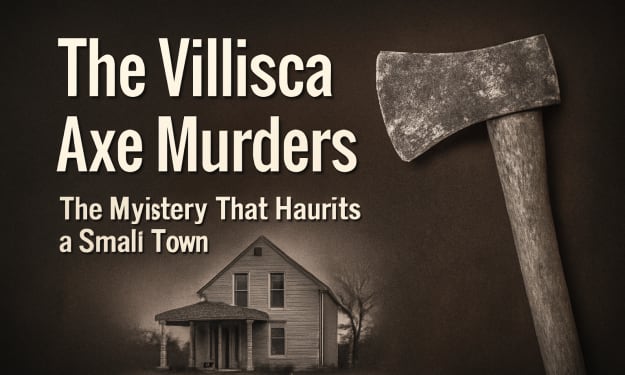
The Villisca Axe Murders: The Mystery That Haunts a Small Town
On the evening of June 9, 1912, in the quiet town of Villisca, Iowa, a gruesome crime was committed that would forever change the course of the community's history. Six members of the Moore family, along with two young guests, were brutally murdered in their home. The weapon used was an axe, and the brutality of the crime left an indelible mark on the town, leading to decades of speculation, numerous theories, and a case that remains unsolved to this day. The murder of the Moore family—parents Josiah and Sarah Moore, their four children (Herman, Kathryn, Martha, and Lewis Moore), and two young guests, Lena and Ina Stillinger—has been called one of the most horrific and perplexing crimes in early 20th-century American history. Despite several investigations, numerous suspects, and a trial that captivated the nation, the true identity of the killer—or killers—has never been confirmed. The Crime Scene: A Night of Horror The Moore family, well-respected members of the Villisca community, lived in a modest but comfortable home on 2nd Street. On the night of the murders, they were visited by Lena and Ina Stillinger, two young girls who had stayed over at the Moore home after attending a church service with the Moore children earlier that evening. The family was known to be a close-knit, religious household, and there was nothing to suggest that they had any enemies. That evening, after a long day, the family and their guests retired to their beds. The following morning, neighbors grew concerned when they noticed the Moore family had not yet emerged. At around 7:00 AM, Mary Peckham, a neighbor, went to the house to check on them. She knocked on the door but received no answer. Fearing something might be wrong, she entered the house and discovered a scene of unimaginable horror. Inside the home, the bodies of all eight victims were found. They had been brutally murdered with an axe. The killer had struck each victim in the head with tremendous force, leaving gruesome injuries. The bodies of the Moore family were found in their beds, while the two girls, Lena and Ina, were found in a separate room. It was evident that the killer had taken extreme care in committing the murders, as the victims were struck with precision. The Investigation: Searching for Answers The news of the murders spread quickly, sending shockwaves through the small town of Villisca. The local sheriff and deputies arrived at the scene, but they were unable to find any immediate clues that could lead to the killer’s identity. There were no signs of forced entry into the house, and nothing appeared to have been stolen. It was as if the killer had entered the house freely, committed the murders, and then simply left. One of the most puzzling aspects of the crime was that the killer had taken the time to clean up after the murders. There were no bloody footprints leading out of the house, and the axe used in the killings was wiped clean. The killer had also covered the victims’ faces with bedclothes, making it clear that they did not want their actions to be immediately discovered. Sheriff Lester R. G. D. and his team questioned neighbors, family members, and anyone who might have had a connection to the victims, but they were met with dead ends. Several theories emerged during the early stages of the investigation, but no solid evidence linked any suspects to the crime scene. The Suspects: From the Obvious to the Bizarre Over the years, numerous suspects have been linked to the Villisca Axe Murders, but no one has ever been definitively charged with the crime. The case remains one of the most enduring unsolved mysteries in American history. Some of the most notable suspects include: 1. Reverend George Kelly – A traveling preacher who was known to have been in Villisca the night of the murders. Kelly was questioned several times by authorities and became a prime suspect due to his odd behavior. He had a history of mental instability and had allegedly been seen acting strangely in the days before the murders. However, there was no direct evidence to link him to the crime, and he was eventually cleared of suspicion. 2. Frank Jones – A local businessman who had a longstanding feud with Josiah Moore. Some believed that Jones had a motive for the killings due to personal animosity and potential financial disputes. There were also rumors that Frank Jones’ son, Albert, was involved in the crime. However, no substantial evidence ever surfaced to connect Frank Jones or his family to the murders. 3. The “Stillinger” Theory – Another theory suggests that the murders may have been committed by someone familiar with the Moore family. Some believe that Lena and Ina Stillinger, the two young girls who were staying at the Moore home, may have been targeted specifically. The idea that the killer may have been someone the family knew has been suggested by several investigators, but no concrete proof has ever been found. 4. A Serial Killer Theory – Over the years, some investigators have suggested that the Villisca murders were part of a series of similar axe murders that occurred in other parts of the Midwest during the same time period. Some believe that a serial killer may have been responsible for the Villisca killings, with multiple unsolved murders potentially linked to the same individual. Theories and Speculations: What Really Happened? The Villisca Axe Murders have given rise to several theories, but the lack of hard evidence and the sheer brutality of the crime make it difficult to reach a conclusive answer. Some experts believe the killer may have had personal ties to the Moore family, while others argue that the crime was the work of a stranger with no clear motive. One popular theory is that the killer may have been motivated by religious zealotry, given that the Moore family was known for their strong religious beliefs. Others believe that it was a crime of passion or that the killer was mentally unstable and acting on impulse. Another theory suggests that the murders were committed by someone familiar with the area, possibly a local who was able to gain access to the house without raising suspicion. The fact that the killer had enough time to carefully plan and execute the murders, as well as clean up the crime scene, has led some investigators to conclude that the crime was highly organized and calculated. The Aftermath: The Legacy of the Villisca Axe Murders Though the Villisca Axe Murders were officially closed as a case, the mystery continues to capture the public’s imagination. The house where the murders took place has become a tourist attraction, with visitors flocking to the site in hopes of uncovering clues or experiencing a connection to the tragic event. The case has inspired numerous books, documentaries, and even films, cementing its place in the annals of American true crime history. Despite the passage of time, the families affected by the murders, as well as the townspeople of Villisca, are still haunted by the unsolved mystery. Conclusion The Villisca Axe Murders remain one of the most chilling and baffling crimes in American history. The brutality of the killings, the lack of a clear motive, and the enduring mystery of the killer’s identity have kept the case alive in the public consciousness. Whether it was a personal vendetta, a random act of violence, or the work of a serial killer, the truth about what happened that night in Villisca may never be known. However, the story of the Moore family and the Stillinger girls continues to fascinate and disturb us, leaving behind a mystery that will never be forgotten.
By The Insight Ledger 11 months ago in Criminal
The Girl in the Green Hoodie
M Mehran The storm hit Silverbridge just after midnight—sheets of rain hammering pavement, lightning flashing over the empty streets like camera shutters capturing crimes no one had yet committed. Detective Jalen Cross preferred nights like this. Bad weather made criminals sloppy. Tonight, however, he wasn’t hunting criminals. He was hunting ghosts. His radio crackled as he stepped out of his car. “Cross, you’re sure this is the location?” Captain Hale asked. “Positive,” Jalen replied. “Third anonymous tip in two weeks. Same description. Same time of night.” The description was always the same, too: A girl in a green hoodie. Barefoot. Wandering the abandoned rail yard. Crying. The first time dispatch received the call, units arrived in under five minutes. Nobody was there. Dogs picked up no scent. Security cameras caught nothing but fog and static. The second time was the same. Tonight, Jalen wanted answers. He pushed through the broken gate and stepped onto the gravel. The rain softened into a cold drizzle. The air felt wrong—too quiet, too heavy. The rail yard had been shut down for eight years, after a burning tanker ruptured and killed three workers, including sixteen-year-old Valerie Durnham, a runaway hiding in one of the boxcars. Some locals claimed the place stayed haunted. Jalen didn’t believe in ghosts. But he did believe in patterns. And this pattern terrified him more than he cared to admit. As he approached the old station house, thunder cracked overhead. A small figure darted from behind a rusted container. There. A flash of green. Jalen froze. “Hey! Stop!” The figure didn’t run. Instead, she turned slowly toward him. It was a girl—maybe fifteen, maybe younger—barefoot, soaked, wearing a green hoodie two sizes too big. Her hair plastered to her cheeks. Eyes wide. Trembling. Just like the callers had described. Jalen raised his hands in a gesture of calm. “You’re not in trouble. I just want to talk.” The girl shook her head violently. “You can’t be here. He’s coming.” “Who?” “Please,” she whispered, stepping backward. “He’ll kill us both.” Jalen took out his phone. “You need help. I can call—” “No!” she cried. “He listens. He always listens.” Lightning flashed again—and her shadow disappeared. Literally vanished. Jalen blinked hard. The girl still stood there, but the ground beneath her feet cast no silhouette. His breath caught. “What… are you?” he whispered. A tear slid down her cheek. “I’m just trying to go home.” Before he could respond, another voice echoed across the yard. “Detective Cross!” Jalen spun. Captain Hale and two officers jogged toward him. “There’s no one here,” Hale said without looking around. “We scanned the area. False alarm again. Let’s wrap it up.” Jalen gestured frantically. “What? She’s right—” He turned. The girl was gone. Not running. Not hiding. Gone. The ground where she stood was undisturbed. Even the gravel looked untouched. Jalen’s pulse thundered. “Captain, I swear she was right here.” Hale placed a hand on his shoulder. “You need sleep. You’ve worked fourteen days straight.” “I saw her.” “You saw what you expected to see.” Jalen wanted to argue, but a cold dread crawled up his spine. Something about Hale’s voice was wrong—too gentle, too final. “Let’s go,” Hale said. “We’re clearing the yard.” But Jalen didn’t move. Because something else caught his eye. A small footprint. Bare. Fresh. Pressed into the wet gravel behind a train car. Jalen walked toward it, ignoring Hale’s commands. More footprints appeared, leading toward Warehouse 7—the only building still boarded shut after the explosion. “Cross!” Hale barked. “Stand down!” But Jalen had already yanked the side door open. And discovered hell inside. The warehouse was massive, dark except for a series of lanterns arranged in a circle on the floor. In the center sat a workbench covered in files—photos of missing teenagers dating back ten years. Notes. Maps. Schedules. All marked in Captain Hale’s handwriting. Jalen felt the blood drain from his face. Hale had been running a trafficking network. And he was using the abandoned rail yard to store kids before shipping them out of state. A faint sob echoed from behind a crate. Jalen moved quietly around the corner. There she was. The girl in the green hoodie—knees pulled to her chest, shivering. Tangible. Solid. Real. “You came back,” she whispered. He knelt beside her. “I’m getting you out of here.” “No,” she said. “I came to warn you.” Jalen frowned. “Warn me about what?” “About him.” Jalen turned just as Captain Hale slammed the warehouse door shut. Holding a gun. “Detective Cross,” Hale said softly. “You never knew when to stop digging.” Jalen positioned himself between Hale and the girl. “You hurt her.” Hale smirked. “I didn’t hurt that one.” Jalen blinked. “That one?” He turned. The girl was gone again. Only her footprints remained. And then he understood. She wasn’t from tonight. She wasn’t even alive. She was Valerie Durnham—the runaway who died in the explosion eight years ago. Trying, even now, to save the next victim. Hale raised the gun. Jalen lunged. A shot cracked through the warehouse. When the officers finally broke in, Hale was handcuffed, bleeding from the shoulder, screaming that Jalen had ruined everything. Jalen didn’t hear him. He was staring at a wet footprint near the exit. Small. Barefoot. Pointing home. And for the first time, he believed in ghosts.
By Muhammad Mehran11 months ago in Criminal
The Last Confession
M Mehran Detective Mara Vance had learned two unshakable truths in her twenty years with the Harbor City Police Department: people lie, and guilt never sleeps. Tonight, both truths pressed heavily on her shoulders as she stepped into Cell 12 of the precinct’s lower wing. The man inside—Elias Rowan—sat on the metal bunk like he had been waiting for her. Maybe he had. His hands were folded neatly in his lap, cuffed, but calm. Too calm for someone accused of three murders. “You asked for me,” Mara said, shutting the door behind her. “You said you wanted to confess.” Elias smiled faintly. “I wanted to talk to the only detective in this city who still listens.” Mara didn’t rise to the flattery. She’d interrogated enough criminals to know when she was being played. Still, there was something different about Elias Rowan—an eerie steadiness in his dark eyes, a quiet sincerity in his voice. Serial killers usually radiated either arrogance or panic. Elias radiated neither. “You’re being charged with the deaths of Lorne Gibbons, Ava Morales, and Daniel Carter,” she said. “All found within three blocks of your apartment. All matching the same MO. You fit the pattern. Forensics fit the pattern. So tell me, Elias—what do you want to say?” “I didn’t kill them,” he said simply. She sighed. “That’s not a confession.” “No,” he said. “But it’s the truth. And I can prove it.” Mara paused. She hated wasting time, but she hated sloppy assumptions even more. “Go on.” “Each victim…” Elias shifted slightly, cuffs clicking. “Each victim came to me before they died.” Her brows rose. “Came to you? For what?” “For protection.” Mara crossed her arms. “And you didn’t think to mention this to anyone? Three separate people beg you for protection and then turn up dead? You see how that sounds.” “I didn’t say they begged.” His voice lowered. “I said they came. Because they were being hunted.” Mara leaned forward. “By whom?” Elias looked up, and for the first time, fear flickered across his face. “By a man who doesn’t exist on paper. A man with no name. Someone who kills loose ends.” The room suddenly felt colder. “I was supposed to be one of those loose ends,” Elias continued. “I used to work for him. Not officially. Not in any way that could be traced. I laundered assets, covered digital prints, rerouted funds. I never touched blood. But when you work for a ghost, you don’t quit. You vanish.” Mara hesitated—not because she believed him, but because she wanted to check. Something about this felt too detailed for fabrication. “You’re telling me those victims were connected to this ghost employer of yours?” “Yes,” Elias said. “Each one had something he wanted erased. Lorne was a driver. Ava was a runner. Daniel was a forger. They all tried to get out. They all came to me, hoping I could hide them like I hid transactions. But I’m not a miracle worker.” “And you didn’t kill them,” she said. “I didn’t kill them,” he repeated. “So who did?” Elias stared at her with the steady calm of a man speaking his final truth. “You already know. You’ve been chasing him for years.” A chill crept up Mara’s spine. “Corvus,” she whispered. The nickname tasted like metal. Harbor City’s phantom. The mastermind behind a constellation of unsolved crimes—money laundering, disappearances, blackmail rings, digital sabotage. A shadow figure the department could never pin down. “You’re saying Corvus killed them?” she asked. Elias nodded. “And he’s going to kill me too. But I thought I could make one last good choice and tell someone who might actually do something.” Mara swallowed hard. “Why now?” “Because he’s tying up his entire network,” Elias said. “Everyone who ever touched his operations. He’s disappearing us one by one.” Something buzzed in Mara’s pocket—her phone. She ignored it. “You can’t just throw Corvus’s name out there without evidence,” she said. “You’re asking me to believe the boogeyman is real.” “He is,” Elias said softly. “And if your phone is buzzing right now, it’s probably because you’re next.” A second buzz. Then a third. Mara blinked and pulled the phone free. Three text messages. Unknown number. Stop talking to him. Walk away. This is your only warning. Mara’s pulse quickened. “Elias… did you send these?” He shook his head. “Detective… Corvus already knows you’re here.” Her mouth ran dry. The basement level was nearly empty at this hour. If someone wanted to walk in and— The lights flickered. Elias tensed. “He’s here.” “How?” she whispered. “He’s always been here,” Elias said. “You’ve just never looked in the right place.” The lights snapped back on. A soft click echoed from behind Mara, near the hallway outside the cell. Not footsteps. Not voices. A door locking. Mara unholstered her gun and moved toward the cell door, adrenaline spiking. “Detective Vance,” a familiar voice crackled over the PA system. Her blood froze. Captain Rourke. Her captain. Her mentor. “I’m disappointed,” Rourke said, voice calm, almost bored. “You were always the smart one. I thought you’d stay out of this.” Elias’s voice broke. “I told you. He’s everywhere.” Mara’s heart slammed against her ribs. Rourke. Corvus. Her captain was the ghost. “You’re in my way, Mara,” Rourke continued. “Walk out now, and I’ll forget you were ever in that room.” The problem was—she couldn’t walk out. The door was sealed. Locked from the outside. Elias whispered urgently, “He’s going to kill both of us.” Mara turned slowly toward him, mind racing. “No,” she said. “Not tonight.” She raised her gun—not at Elias, but at the cell’s lock. One shot. Sparks flew. The lock cracked open. Elias stared at her, stunned. “You… believe me?” “I believe in evidence,” she said. “And I’m about to collect some.” Outside, heavy boots hit the concrete floor—Rourke’s men. Mara looked at Elias. “Run.” And for the first time since she met him, Elias Rowan obeyed without a word. The chase had begun. And the city’s ghost was finally visible.
By Muhammad Mehran11 months ago in Criminal