incarceration
Incarceration, rehabilitation, recidivism: The reality of prison life and what it's like to be an inmate locked up behind bars.
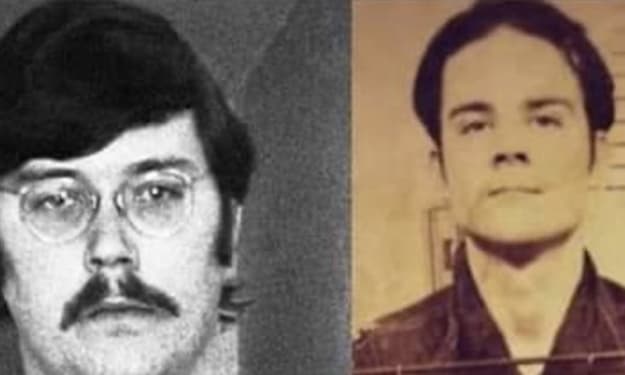
Inside the Minds: The Bizarre Prison Dynamics of Serial Killers Edmund Kemper and Herbert Mullin
The world of serial killers is one that often defies understanding, filled with complex psychological profiles and chilling behaviors. Among the most infamous names in this dark realm are Edmund Kemper and Herbert Mullin, two murderers whose crimes horrified the public. What is less well-known, however, is the strange and revealing relationship that developed between these two men when they were incarcerated in the same prison block at the California Medical Facility. Their interactions provide a unique glimpse into the psyches of two deeply disturbed individuals and the dynamics of prison life among the most notorious criminals. Edmund Kemper: The Co-ed Killer Edmund Kemper, also known as the Co-ed Killer, is a figure whose crimes are as horrific as they are baffling. Standing at 6 feet 9 inches, Kemper's imposing physical presence was matched by his monstrous acts. Between 1964 and 1973, Kemper murdered ten people, including his grandparents, mother, and six young women. His modus operandi included picking up hitchhiking college students, whom he would murder and dismember. Kemper's intelligence and self-awareness made him a particularly chilling figure, as he often spoke candidly about his crimes and the impulses that drove him. Herbert Mullin: The Mass Murderer Herbert Mullin, another notorious name in the annals of American crime, carried out his murders around the same time as Kemper. Mullin's killing spree in 1972 and 1973 resulted in the deaths of 13 people. His motives were steeped in delusions; Mullin believed that his murders were necessary to prevent catastrophic earthquakes, a belief fueled by his severe schizophrenia. Unlike Kemper, whose crimes were methodical and controlled, Mullin's actions were erratic and driven by his psychosis. Prison Dynamics: A Clash of Killers Incarcerated together at the California Medical Facility, Kemper and Mullin developed a relationship that was as bizarre as it was revealing. Kemper, with his towering intellect and manipulative skills, quickly came to dominate the interactions between the two. He viewed Mullin with disdain, considering him a "cold-blooded killer" who murdered "for no good reason." This disdain was not merely a moral judgment but also a reflection of the profound differences in their psychological profiles. Kemper's contempt for Mullin was exacerbated by Mullin's behavior in prison. Mullin, whose mental illness made him unpredictable, had a habit of singing and creating disturbances, particularly when other inmates were trying to watch television. This behavior infuriated Kemper, who prided himself on his own intelligence and control. Behavior Modification: Kemper's Unlikely Experiment In an attempt to curb Mullin's disruptive behavior, Kemper engaged in what he described as "behavior modification treatment." This involved a system of punishment and reward that was as chilling as it was effective. When Mullin's singing and disruptions became too much to bear, Kemper would throw water on him to silence him. Conversely, when Mullin behaved in a manner that Kemper deemed appropriate, he would reward him with peanuts, which Mullin particularly enjoyed. Kemper's approach worked, and soon Mullin began to ask permission to sing, effectively modifying his behavior to avoid punishment and receive rewards. Kemper's manipulation of Mullin is a stark example of the dynamics of power and control that can develop in prison, even among the most disturbed individuals. It also highlights Kemper's own disturbing intelligence and his ability to exert control over others, even within the confines of a prison. Psychological Insights The interactions between Kemper and Mullin provide fascinating insights into the minds of these two killers. Kemper's ability to manipulate and control Mullin underscores his cunning and his deep understanding of human psychology, traits that he used to devastating effect in his crimes. His contempt for Mullin also reveals a sense of superiority, as Kemper viewed his own actions as being driven by complex, albeit twisted, motivations, in contrast to what he saw as Mullin's senseless violence. Mullin's behavior in prison, on the other hand, reflects the profound impact of his mental illness. His erratic actions and his susceptibility to Kemper's manipulation highlight the severity of his schizophrenia. Unlike Kemper, who could articulate and rationalize his actions, Mullin's crimes were driven by delusions and a fractured sense of reality. The Broader Context The relationship between Kemper and Mullin also sheds light on the broader issues within the prison system, particularly the challenges of housing individuals with severe mental illnesses alongside those who are highly manipulative and intelligent. The interactions between these two men are a microcosm of the complex social dynamics that can develop in prison, where power struggles and psychological manipulation are common. Additionally, their case raises important questions about the treatment and management of mentally ill inmates. Mullin's behavior in prison, driven by his schizophrenia, underscores the need for better mental health care within the criminal justice system. Kemper's manipulation of Mullin, while a testament to his own disturbing abilities, also highlights the potential for exploitation and abuse in such environments. Conclusion The story of Edmund Kemper and Herbert Mullin's interactions in prison is a chilling reminder of the complexities of the human mind and the dynamics of power and control. Kemper's disdain for Mullin and his subsequent behavior modification experiment reveal much about his own psyche and his need to dominate others. Mullin's erratic behavior and susceptibility to manipulation, in turn, highlight the severe impact of his mental illness. While their crimes continue to horrify, the prison dynamics between these two men offer valuable insights into the psychological profiles of serial killers and the challenges of managing such individuals within the prison system. Their story is a fascinating, if unsettling, chapter in the study of criminal behavior and the human capacity for both manipulation and madness.
By Deji Akomolafe2 years ago in Criminal
TRUE CRIME - Mom Tortures & Neglects Baby for Being "Ugly" . Content Warning. AI-Generated.
On November 23, 2022, at approximately 12:16 p.m., Detective Captain James Sloan of the Lawrence County Sheriff's Department responded to a complaint at IU Health Hospital in Bedford, Indiana. Upon his arrival, he was met by Department of Child Services (DCS) caseworker Emily Werner, who shared a shocking but all too common story. At 11:01 a.m. that same day, a 20-month-old girl named Elliaunna Marji Plummer, also known as Ellie, had been diagnosed with a brain bleed, a broken collarbone, and facial bruising. Her condition was so severe that she needed to be transported by helicopter to Riley Children's Hospital in Indianapolis for specialized care.
By Maxwell Gray2 years ago in Criminal
TRUE CRIME A Family Torn Apart by a Ritual: The Tragic Tale of Tori and Lily Ball. Content Warning. AI-Generated.
A Troubled Beginning On September 12, 2007, twin sisters Tori Margaret Ball and Lily Teri Ball were born to Monica McCarrick and Michael Ball in San Diego, California. Despite the joy of their arrival, the family's beginnings were marred by significant challenges. Monica and Michael had a ten-year age gap, which, while not inherently problematic, highlighted deeper issues within their relationship. Monica's frequent drug use and a domestic violence arrest in 2006 further strained their relationship, leading to their eventual separation. By 2009, Monica had taken Michael to court for child support, and by 2010, she had relocated across the country to Pennsylvania.
By Maxwell Gray2 years ago in Criminal