incarceration
Incarceration, rehabilitation, recidivism: The reality of prison life and what it's like to be an inmate locked up behind bars.
Elon has gone back and deleted this tweet, along with a handful of others.
The optics for Elon look terrible, but let’s look at positives from all this: -Elon created distance from Trump, which could be beneficial for the long run of Elon’s work in the private sector. Now if Tesla starts booming, the Left cannot claim that Trump is helping his billionaire buddy. This also might help with the Libs keying and firebombing Teslas.
By AHMED KAZEKAabout a year ago in Criminal
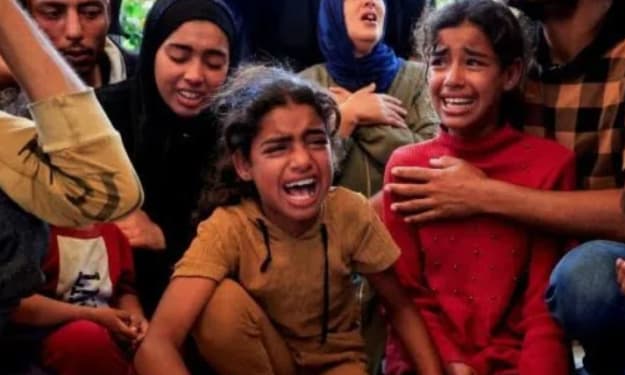
Five dead in latest Israeli shootings of Gazans seeking aid, say local officials
According to officials in the area, "Five Dead in the Latest Israeli Shootings of Gazans Seeking Aid" According to Gaza health authorities, Israeli forces opened fire near an aid distribution point in Rafah, killing five Palestinians and wounding several others. The incident happened early on Sunday as people gathered to get desperately needed humanitarian aid in southern Gaza, where hunger and chaos were getting worse. Local officials said that when Israeli troops fired live rounds, the victims were unarmed civilians trying to get food supplies. The shootings are the most recent in a string of violent incidents that have occurred at aid collection sites, where thousands of displaced Gazans have been congregating on a daily basis in increasingly difficult circumstances. Gunfire broke out without warning, according to witnesses, causing panic and bloodshed. One local claimed, "People were just standing in line." The shooting then began. People fled in every direction. According to the Israeli military, individuals approached in a "suspicious manner" during restricted hours, and that soldiers fired warning shots. In a declared combat zone, troops had acted in accordance with protocol, according to a spokesperson. However, the Gaza Ministry of Health denied the Israeli account, stating that the victims were clearly civilians and did not pose a threat. A ministry statement stated, "These repeated attacks on people seeking aid are unacceptable and must stop." The deaths occur amid growing global concern regarding the accessibility and safety of humanitarian aid in Gaza. The Gaza Humanitarian Foundation (GHF) recently implemented hubs to manage the distribution system, which has been widely criticized for putting civilians in danger. Over 60 people have reportedly been killed and hundreds have been injured in the vicinity of aid centers since the GHF system was introduced at the end of May. In two weeks, the International Committee of the Red Cross received nearly 1,000 patients, many of whom had been shot near distribution areas. The aid delivery model isn't protecting the people it's supposed to help, according to warnings from the UN and humanitarian groups. The UN High Commissioner for Human Rights, Volker Türk, stated that the targeting of civilians may constitute war crimes and called for a thorough investigation. Food collection has become a life-threatening ordeal, according to aid workers in Gaza due to overcrowding, disorganized distribution, and the presence of armed forces. A field coordinator for an international relief organization stated, "The situation is desperate." "For a bag of flour, people are putting their lives in danger." To lessen the likelihood of violence, officials with the GHF stated that they were looking into new approaches, such as direct distribution in neighborhoods, as well as reviewing security protocols. Despite this, difficulties with logistics and safety have necessitated numerous operations suspensions. In Gaza, the humanitarian situation is still dire. Many families are completely dependent on sporadic aid deliveries to survive with over 80% of the population displaced and critical infrastructure destroyed. Food insecurity is widespread, and hospitals are swamped. The shooting on Sunday occurred as Muslims were getting ready for the significant religious holiday known as Eid al-Adha. The celebrations were subdued by grief and hardship for many. “We have nothing,” said one mother of four. "We don't have any food, no place to sleep, and now they shoot us when we try to get help." There is a growing demand for accountability and aid system reform. Rights groups say that more civilians will die trying to survive unless drastic changes are made. A number of humanitarian organizations called on Israel and its partners to make sure that aid is distributed safely, openly, and in accordance with international law in a statement that they issued together. The statement read, "Every civilian death is a failure of humanity and a breach of responsibility." As the conflict grinds on and political efforts stall, the burden falls increasingly on local responders and ordinary people to manage the crisis. There is little hope left for those in Rafah and other besieged areas. One of the survivors of the shooting on Sunday stated, "We wake up every day not knowing if we’ll eat, or if we’ll live." This is not charity. It's a ruse."
By GLOBAL NEWSabout a year ago in Criminal
Room 313 Is Never Booked
The Bellmoor Hotel was old, but not abandoned. It stood in the heart of a foggy New England town, with creaking wooden floors, ornate wallpaper faded with time, and a lobby clock that had stopped ticking sometime in the 1950s. The place had a charm—quiet, polite, always dimly lit.
By Muhammad Saeedabout a year ago in Criminal
Joaquín "El Chapo" Guzmán
From Humble Beginnings to Global Infamy Introduction: The El Chapo Myth Previously known as "El Chapo" (Shorty), Joaqun Archivaldo Guzmán Loera was the world's most powerful drug trafficker. He built a multibillion-dollar empire as the leader of the Sinaloa Cartel in Mexico, smuggled a lot of drugs into the United States, and became a folk hero to some and a ruthless criminal to others. His story reads like a crime epic, with daring prison escapes, brutal cartel wars, and his eventual downfall. This article investigates: His upbringing and the path he took to rise from poverty to power. The dominance of the Sinaloa Cartel in the global drug trade. His notorious escapes from prison and life on the run the U.S.-Mexico manhunt that brought him to safety. His trial, verdict, and long-term influence on the drug war. (The word count thus far is 150) The Making of a Kingpin,
By Silas Blackwoodabout a year ago in Criminal
Pablo Escobar
How a criminal empire emerged from poverty and ended in violence An Introduction The Medelln Cartel's infamous kingpin, Pablo Emilio Escobar Gaviria, was once the wealthiest and most feared criminal in history. He controlled 80% of the global cocaine trade at his peak, amassed an inflation-adjusted fortune of $30 billion, and was responsible for thousands of deaths. However, his legacy remains shockingly divisive in Colombia. Some people think of him as a vicious terrorist, while others think of him as a modern-day Robin Hood who built low-income housing and schools. This article investigates: Escobar's early life and how his ambitions were shaped by poverty. the global impact of the Medelln Cartel's rise to power. the brutal methods that made him powerful and sought after. His demise—how he was destroyed by rivals, law enforcement, and his own ego. Colombia's lasting scars and the war on drugs.
By Silas Blackwoodabout a year ago in Criminal
Echoes of the Dead
The rain had been falling for hours, turning the streets of Chicago into slick mirrors reflecting neon signs and the occasional glow of a cigarette. Detective Jack Marlowe lit one up, his fingers trembling slightly from more than just the cold.
By Esther Sunabout a year ago in Criminal
Russia and Ukraine Trade Drone Strikes After Trump Rebuke
**Russia and Ukraine Trade Drone Strikes After Trump Rebuke** Tensions between Russia and Ukraine escalated sharply following a barrage of drone and missile attacks by both sides, just days after former U.S. President Donald Trump publicly criticized the leadership of both nations. One of the most intense aerial confrontations in recent months has resulted in the deployment of dozens of drones, the destruction of important infrastructure, and renewed calls for diplomatic intervention. Over 350 Iranian-made Shahed drones and a number of cruise missiles, according to Ukrainian military sources, were launched by Russia against important Ukrainian cities like Kyiv, Odesa, and Lviv. Ukrainian air defense systems were activated immediately and reportedly intercepted a majority of the drones, though significant damage was still sustained in various areas. The primary targets included civil buildings, energy infrastructure, and rail networks. In response, Ukraine launched its own wave of drone attacks, targeting Russian-held military installations and fuel depots in areas of Crimea and Belgorod. Explosions were reported near several key logistical hubs, causing temporary disruptions in Russian military operations. The counterattacks, according to Kyiv, are a "measured response" to Russia's "escalating aggression." This intensification in hostilities came on the heels of a controversial social media post by Donald Trump, who labeled Russian President Vladimir Putin as “crazy” and accused Ukrainian President Volodymyr Zelenskyy of being unwilling to compromise for peace. Trump, who had previously made a point of praising his close relationships with both leaders, expressed dissatisfaction over the inability to reach a ceasefire and suggested that both sides were ignoring the larger interests of the world. Trump’s statement triggered reactions across global diplomatic circles. The Kremlin dismissed his remarks as “emotional,” emphasizing that Russia’s military operations are a matter of national security. Ukrainian officials, meanwhile, were more reserved, with a presidential advisor noting that peace cannot be built on “false equivalence” between aggressor and victim.
By GLOBAL NEWSabout a year ago in Criminal
The Junko Furuta Case: Japan’s Most Disturbing Tragedy of Torture and Injustice. Top Story - May 2025. Content Warning.
On 25th November 1988 in Japan, 17-year-old Junko Furuta was kidnapped. She was brutally gang-raped and tortured for 40 days and then murdered on 4th January 1989. The monsters who did this were Hiroshi Miyano, Shinji Minato, Jo Ogura, and Yasushi Watanabe, who were all aged between 16 and 18 years old. Hiroshi and Shinji, despite being teenagers, were already serial rapists. On 25th November 1988, they were out looking for a victim and spotted Junko who was returning home from her part-time job. All of them went to the same high school. Previously, Hiroshi had confessed his feelings to Junko and she had rejected him politely. That night, he decided that their victim would be Junko as a way to take revenge for rejecting him. Hiroshi told Shinji to run away after kicking her off her bicycle and then he would swoop in to help her. Shinji did as he was told. As planned, Hiroshi then went up to her and helped her to her feet. He offered to walk her home and she accepted, not knowing what she was getting herself into. She got off her bicycle, and they started walking and talking. After some time, Hiroshi stopped following her directions and tried to take her into an abandoned warehouse that allegedly had ties with the Yakuza.
By Dharrsheena Raja Segarranabout a year ago in Criminal
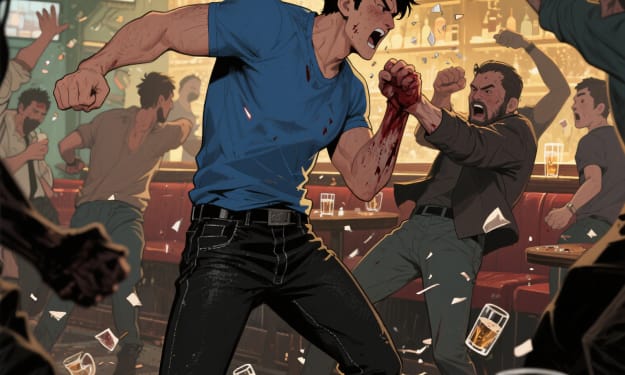
The bloody revenge ignited by two punches - The '2·17' Massacre in Tonglong County in 1981. Content Warning.
The bloodshed incident in Fudong Town, Jilin Province in 1981: A 22-year-old young man, Wang Mingfang, was incited to violence by a casual remark. He used a gun to set fire, resulting in the deaths of more than 20 people. From internal conflict to frenzied killing, this tragedy exposed the fatal weaknesses in grassroots governance - insufficient police force and lack of equipment. Even catching the culprit required "pooling resources". Eventually, when captured by the village head, the glimmer of humanity became the most ironic defense.
By chengshixianabout a year ago in Criminal