incarceration
Incarceration, rehabilitation, recidivism: The reality of prison life and what it's like to be an inmate locked up behind bars.
African American Serial Killers Part 14
Any case with explicit racial overtones should be taken more seriously than ever. The history of America permits little if no room for black serial killers to pass the test of having enough sense to commit atrocities and get away for a period.
By Skyler Saundersabout a year ago in Criminal
France's number one enemy | He escaped from the police twice (with 1000 faces)
In just seconds, France’s Public Enemy No. 1 was in police custody. French police and global security agencies were on high alert, ready to do whatever it took to capture him—because this time, the target wasn’t just any criminal. This man had killed over 100 people, escaped from prison multiple times—each time using a different method—and after one escape, he actually returned to the prison to retrieve something from inside. On top of all that, he was a politician with an unknown and mysterious intelligence agenda.
By Ink pulse(different angle)about a year ago in Criminal
Tragedy Born of Jealousy
This is a deeply heartbreaking story of four unfortunate brothers. They were ethnic Pashtuns hailing from Nowshera, Pakistan — young men who rose from humble beginnings, driven by ambition, perseverance, and dreams of a better life. Years ago, they left their homeland and ventured to Italy. It wasn't an easy journey. Like countless immigrants, they worked tirelessly, often under harsh conditions and away from their families. They faced language barriers, legal hurdles, cultural shocks, and financial constraints. But through their unwavering determination, they not only established themselves but went on to build their own business — their very own piece of success on foreign soil. Their grit earned them respect in the Italian community, and they ultimately secured citizenship in their new homeland. Despite finding success abroad, they never turned their backs on their roots. Their hearts still beat for their homeland, and their identities remained tied to their people and culture. They were known not only for their hard work but also for their generosity — often sending money home and supporting extended family members in Pakistan. One day, the eldest brother decided to return to Pakistan for his wedding. He didn’t want to celebrate the happiest moment of his life without his family and childhood friends. His brothers, too, joined him. For them, this was not just about a wedding — it was a celebration of love, success, family, and tradition. After years of struggle, they were finally able to celebrate as one. To make the occasion special, the brothers arranged a grand feast — a lavish dinner hosted in honor of their paternal cousins (the sons of their uncle). It was meant to be a gesture of goodwill, a way to bring the family together in the spirit of joy. They wanted to share their happiness, to be generous, and to show gratitude. They believed that their success would be a source of pride for their relatives — that it would inspire, not enrage. But little did they know that behind the polite smiles of those relatives lay burning envy and hidden malice. Their generosity, instead of being appreciated, fueled the flames of jealousy and hatred in the hearts of those who should have been their closest allies. In a horrific twist of fate, the very cousins they honored turned against them. Consumed by jealousy and resentment, the uncle's sons planned a brutal assault. During what was meant to be a moment of family unity, they launched a violent and cowardly attack. The gathering turned into a scene of tragedy and bloodshed. Three of the brothers were killed on the spot. Their dreams, their laughter, their sacrifice — all silenced in a matter of moments. The fourth brother was critically injured and survived, but the emotional scars he carries are beyond description. They came home to celebrate life, but their own blood betrayed them and sent them to the grave. The people they respected, loved, and honored — those with whom they shared their success — repaid them with bullets and blades. This isn’t just a personal tragedy. It’s a grim reflection of a deeper illness that plagues our society — the inability to digest someone else's success. In a culture where blood ties are sacred, and guests are revered, what could push cousins to murder their own flesh and blood? The answer is simple yet painful: jealousy, hatred, and the toxic ego that sees another’s rise as a personal defeat. It is a tragedy that exposes a harsh truth — in our society, success is rarely celebrated by others unless it’s their own. Often, those closest to us find it hardest to be happy for us. Instead of seeing others’ achievements as motivation, some see it as competition. Rather than learning or aspiring to rise themselves, they choose to destroy. These four brothers built something beautiful — a life of honor in a foreign land, a reputation of decency, a business that could have provided for generations. They returned home not to boast, but to share their joy. But all their dreams, all their goodwill, and all their kindness were met with a fate too cruel for words. This incident is not only a call for justice but a cry for societal reform. We must examine ourselves as a community. We must raise our children to be better — to compete through character, not cruelty. We must teach our families that someone else's success is not our defeat. We must celebrate one another, not destroy each other. What happened to these brothers is not just the failure of a family, but a failure of community, of values, and of morality. In a society where such hatred festers in silence and where people smile in front but plot behind, no one is truly safe. Today, three bright lives have been lost. One brother lives on — a survivor not only of physical wounds but of emotional devastation. He has lost his siblings, his happiness, and his faith in family — all in one moment. And so we ask: What kind of people are we becoming, if the price of success is death? If generosity leads to violence? If a celebration of love ends in a massacre? Let this story not be forgotten. Let it be a lesson that echoes through every village, town, and city. Let us rise above jealousy. Let us become a society where success is applauded, not punished. And most of all, let us protect those who return to us with goodwill in their hearts — not bury them with the very hands they came to embrace. May the souls of the martyred brothers rest in peace. May their story shake us awake. May justice be served, and may we never allow such a tragedy to repeat.
By Ikram Ullahabout a year ago in Criminal
10 Most Dangerous Prisoners Held at Fort Leavenworth Disciplinary Barracks Prison
10 – Dwight Loving Dwight Jeffrey Loving, a former U.S. Army private, became one of the most notable figures in modern military justice after his conviction and death sentence for the brutal murders of two taxi drivers in 1988.
By Vidello Productionsabout a year ago in Criminal
African American Serial Killers Part 12
It doesn’t matter what drugs a killer is high on at the time of his or her fatal viciousness. The idea of having a certain drug or cocktail in their system does not distract from their evil deeds. Such was the case when Craig Price, now 51, entered the home of Joan Heaton, 39, and stabbed her and her daughters Jennifer, 10, and Melissa, 7, to death in horrific fashion. Some reports alluded to the fact he looked only to rob the house and then run away. This is nonsense according to veteran detectives. They knew he came to kill and destroy.
By Skyler Saundersabout a year ago in Criminal
Bryan Kohberger’s Motive Still a Mystery — But Did Moscow Police Miss the Early Signs?
More than a year has passed since the shocking and senseless killings of four University of Idaho students, yet the mystery surrounding Bryan Kohberger’s motive remains one of the most unsettling elements of the case. As the investigation continues to unfold, a growing number of voices are questioning whether crucial warning signs in Kohberger’s behavior were missed by authorities before tragedy struck in Moscow, Idaho.
By Bevy Osuosabout a year ago in Criminal
Chilling Discovery: Colorado Couple Missing Since 2011 Found Sitting Inside Abandoned Utah Mine Eight Years Later
In a haunting case that puzzled both families and law enforcement for nearly a decade, the remains of two young travelers from Colorado — 26-year-old Sarah Bennett and 28-year-old Andrew Miller — were discovered in 2019, deep within a sealed uranium mine in southern Utah. Their mysterious disappearance in 2011 had left their loved ones in anguish, and their eventual discovery raised even more questions than answers. A Peaceful Weekend That Turned Into a Tragedy Sarah and Andrew, both outdoor enthusiasts and amateur photographers, had planned a quiet weekend getaway in May 2011. Known for their love of nature and photography, they were drawn to the haunting, otherworldly beauty of the San Rafael Swell — a remote, wind-swept expanse of desert in Utah, marked by abandoned uranium mines, deep canyons, and desolate valleys. “They weren’t thrill-seekers,” Sarah’s sister Emily Bennett told The Denver Post in 2020. “They were looking for silence — an escape from work, from life’s noise. Just a few days to recharge.” But the couple never returned. Their last confirmed sighting was at a gas station in Green River, Utah. Surveillance footage showed them fueling up their Subaru Outback and purchasing an Emery County map. That was the last time anyone saw them alive. What followed was an extensive search that lasted months and eventually stretched into years. Helicopters, search dogs, drones, and hundreds of volunteers scoured the rugged terrain. Yet, no sign of the couple or their vehicle was found. It was as if the desert had swallowed them whole. Over time, their story faded from the headlines, but not from the hearts of their families. Rumors swirled in the absence of evidence — from foul play to cartel involvement, even theories involving alien abduction. But none held water. The Grim Discovery Then, in August 2019, a team of geology students from the University of Utah were exploring old uranium shafts near Temple Mountain. While surveying one long-abandoned mine, they stumbled over something unexpected — an old, rusted folding chair partially hidden in the shadows of the mine’s entrance. Curious and cautious, they ventured deeper. Roughly 300 feet inside the shaft, they discovered a chilling scene: two fully clothed skeletons sitting side-by-side on metal folding chairs, their bones eerily preserved by the dry desert air. In front of them sat a shattered lantern, a rusted thermos, and an old Nikon camera — remarkably intact. The mine had partially collapsed further inside, creating what forensic experts would later refer to as a “natural crypt,” sealing the scene and preserving it from the elements. Dental records soon confirmed what the families had long feared: the remains were those of Sarah Bennett and Andrew Miller. A Mystery Without Clear Answers Despite finally discovering the couple’s remains, the mystery of their deaths remained unresolved. The official cause of death was listed as “undetermined.” Investigators believed the couple had willingly entered the mine, perhaps to explore or photograph its eerie interior. However, it appeared that a partial cave-in had trapped them inside, making escape impossible. Some speculated that the mine may have been filled with toxic gases, such as radon or carbon monoxide, which could have quickly rendered them unconscious. Others believed they may have simply lost their way and run out of food and water, deciding to sit and wait — possibly for help that never came.
By Ikram Ullahabout a year ago in Criminal
African American Serial Killers Part 10
Usually, suppressors are meant to prevent alarms. Ironically, such silencers raised suspicions and led to the capture of a vicious monster. Jason Scott Thomas preyed upon the people of Prince George’s County, Maryland in horrific fashion. Unlike what the reporters announced, Scott is no genius or mastermind. He’s an ogre who deserves his one hundred year sentence (though some reports claimed eighty five years).
By Skyler Saundersabout a year ago in Criminal
African American Serial Killers Part 9
The Kansas City Strangler, also known as Lorenzo Gilyard, maintained his innocence even after DNA evidence proved otherwise; even after he had been convicted of six murders; he always professed his alleged not guilty status. This could be infuriating. After leaving mostly prostitutes and women and girls on the fringes of society dead in his wake, Gilyard still maintains he’s innocent. How abominable is that?
By Skyler Saundersabout a year ago in Criminal
Viral Video of Woman and Man's Killing in Balochistan: "Tribal Chief Ordered the Execution"
In Pakistan’s province of Balochistan, a video has gone viral showing a man and a woman being killed allegedly on the orders of a local tribal chief over accusations of Karo-Kari (a form of honor killing). Following this, the police have registered a case. According to the FIR received from the police, the incident occurred in a remote area called Sanjidi Degar, located about 40 to 45 kilometers from the Hina Police Station in Quetta. The FIR has named 15 individuals. Earlier, Chief Minister Sarfaraz Bugti claimed on social media that the video showing the killing of the man and woman was recorded a few days before Eid. He further stated that 11 suspects have been arrested so far. However, police have not officially confirmed any arrests yet and have said the incident took place three days before Eid and the video surfaced 35 days after the event.
By Ikram Ullahabout a year ago in Criminal
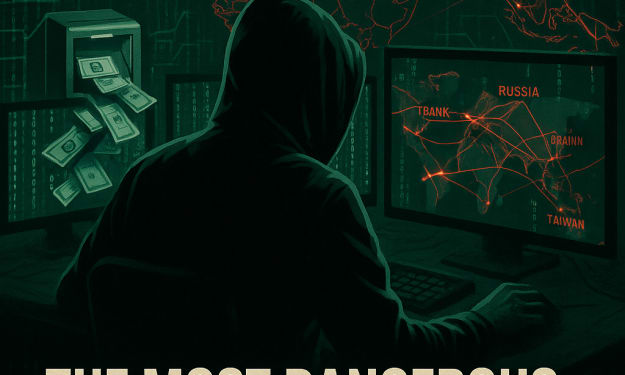
The most dangerous hacking operation in the history of banks | Kings of the Dark Web?
On September 13, 2017, the IT director of a Russian bank was living a normal life with everything going well. But at exactly 3 a.m. on that date, he called the bank’s accounts manager with a trembling voice and said, “Contact the IT team immediately because the situation is very serious.” Without asking for details, the IT employee contacted Kaspersky and requested that they send a specialist to the bank immediately. He told them, “It seems the problem that has baffled the world has now reached Russia.” Indeed, Kaspersky sent an IT expert to the bank within fifteen minutes. The expert met with the bank’s IT employee, and the surprise was that someone had managed to control the primary domain controller—the unit that controls all the bank’s computers. To clarify, if you control this unit, you control everything in the bank. The IT director and Kaspersky expert sat in front of the main server and watched the hacker sending data to China without any logical reason. The Kaspersky expert was shocked by the strength and scale of the breach and initially lost hope of stopping it, but he began searching for malicious software to minimize the damage. After a long search, he found a program that allowed the hacker to monitor and control the computer remotely. At one strange moment, the expert opened Microsoft Word and typed “Hello” in Russian. For minutes, nothing changed, then suddenly the mouse pointer moved, and a message appeared on the screen. The hacker replied in Russian, “You will never catch us.” The expert responded, “We will catch you.” The hacker answered, “No, my friend, you won’t.” This marked the start of a psychological war between professional hackers and the cybersecurity team. This was the beginning of one of the most dangerous hacking operations in history. But who won in the end? The hackers or the banks, security forces, and investigators? The entire story is highly classified, and only limited names and data have been disclosed because revealing the details of such a theft could cause a global economic crisis. The story began in 2014 when the group’s sole mission was to quietly monitor internal banking systems and gather information without carrying out any real hacking—just testing vulnerabilities and waiting for the right moment. On April 8, 2014, they started their plan by sending a phishing email with an infected Word document to a low-level employee at a Ukrainian bank. The document exploited a vulnerability in Microsoft Word, unleashing malware that opened a backdoor into the entire banking system. They were then able to watch everything on that employee’s computer, recording every keystroke and password entered. The employee was unaware his device was compromised. This employee effectively became the gateway to a much larger breach, gradually spreading into all the bank’s servers and devices. After nearly two years of surveillance, the hackers executed their first major theft on July 10, 2016, in Taipei, Taiwan. During this theft, two gang members wearing surgical masks entered a bank. One stood at the entrance observing, while the other stood calmly at an ATM machine without withdrawing cash or entering a PIN. Suddenly, the ATM started dispensing money continuously. The gang member calmly collected the cash into his bag and fled before a stranger approached the ATM. The stranger, who attempted to withdraw money, was shocked to see cash strewn all over the floor but didn’t take any. This wasn’t an isolated event; the exact operation occurred simultaneously at 20 locations worldwide, causing confusion among bank managers who initially thought it was a software glitch or a coincidence. The gang was highly organized with specific teams for each phase: reconnaissance, penetration testing, monitoring, data collection, analysis, planning, and execution. Their theft methods were sophisticated. They transferred money from fake accounts into their own while manipulating balances so the bank’s internal systems wouldn’t notice any suspicious activity. They also collaborated with on-the-ground “cash handlers” who physically collected the money from ATMs. In one month, they stole over $50 million using this method. After stealing billions from over 100 banks in 30 countries, Kaspersky, Taiwanese police, and various international security agencies began tracking the gang. In 2018, authorities raided the home of the gang’s Ukrainian leader, Denis, who lived a lavish life in Spain. They confiscated his possessions, including two BMW cars, half a million dollars in jewelry, and 15,000 bitcoins worth over a billion dollars today. Denis was a programming genius but used his skills more as a personal challenge than just for wealth. Authorities arrested several gang members, but the network remains large and complex. Some sources suggest the gang is part of the Russian cyber army, though no official evidence confirms this. The key lesson: never open suspicious links or log in to unknown websites, even if sent by trusted people, because hackers are everywhere.
By Ink pulse(different angle)about a year ago in Criminal