incarceration
Incarceration, rehabilitation, recidivism: The reality of prison life and what it's like to be an inmate locked up behind bars.
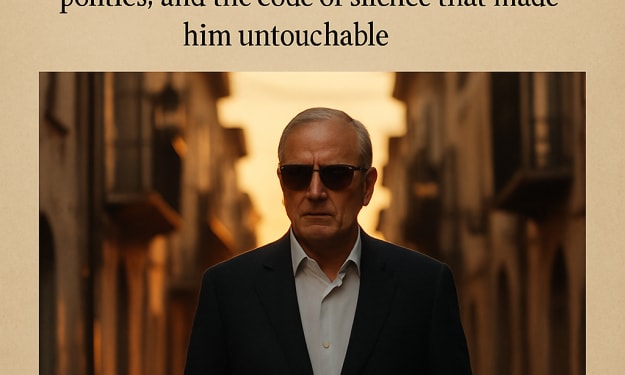
Matteo Messina Denaro: The Last Godfather of Sicily. AI-Generated.
For decades, the name Matteo Messina Denaro carried both fear and legend across Sicily. Known as “Diabolik,” after an Italian comic-book villain, he was the final link to the old Sicilian Mafia — the Cosa Nostra — a man whose power stretched from the dusty streets of Castelvetrano to the highest offices of Rome.
By shakir hamid12 months ago in Criminal
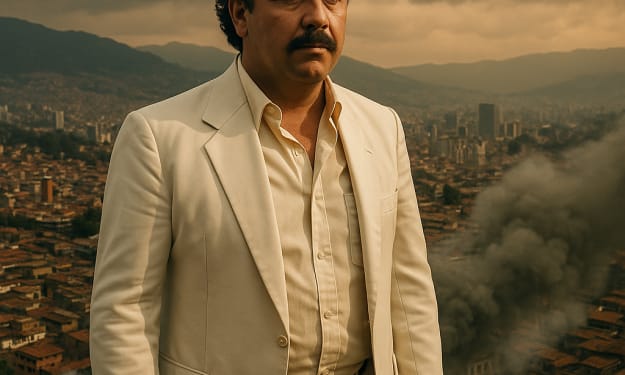
Pablo Escobar: The King Who Built a Kingdom of Dust. AI-Generated.
There are criminals, and then there are legends. Few names in history echo like Pablo Emilio Escobar Gaviria — the man who built a billion-dollar cocaine empire and turned it into a political and social revolution.
By shakir hamid12 months ago in Criminal
Raffaele Imperiale: The Drug Lord Who Collected Van Gogh. AI-Generated.
In the strange overlap between high art and high crime, one name stands out — Raffaele Imperiale, an Italian mafia boss who treated drug trafficking and fine art with the same obsessive care. He built a billion-euro cocaine empire stretching from South America to Europe, yet behind his mansion’s walls lay a secret treasure: two stolen Vincent van Gogh paintings.
By shakir hamidabout a year ago in Criminal
The Last Godfather: The Rise and Fall of Matteo Messina Denaro. AI-Generated.
For decades, the name Matteo Messina Denaro struck fear across Italy. Known as “Diabolik” — after a comic-book master criminal — he was the last great boss of the Sicilian Mafia, a man whose power came not only from violence but from silence.
By shakir hamidabout a year ago in Criminal
The Art of Crime: The Untold Story of Raffaele Imperiale, the Drug Lord Who Stole Van Gogh. AI-Generated.
In the quiet suburbs of southern Italy, behind high walls and manicured gardens, one of the most unusual mafia figures in Europe built his empire. His name was Raffaele Imperiale, and his story combined art, drugs, and deception in ways the world had never seen before.
By shakir hamidabout a year ago in Criminal
The Last Godfather: Matteo Messina Denaro and the End of Cosa Nostra’s Silent Reign. AI-Generated.
On the island of Sicily, where crime and honor have long been intertwined, the name Matteo Messina Denaro carried the weight of both legend and fear. To his men, he was “U Siccu” — “the skinny one.” To the Italian government, he was the last godfather, the heir to a criminal dynasty that had haunted Italy for over a century.
By shakir hamidabout a year ago in Criminal
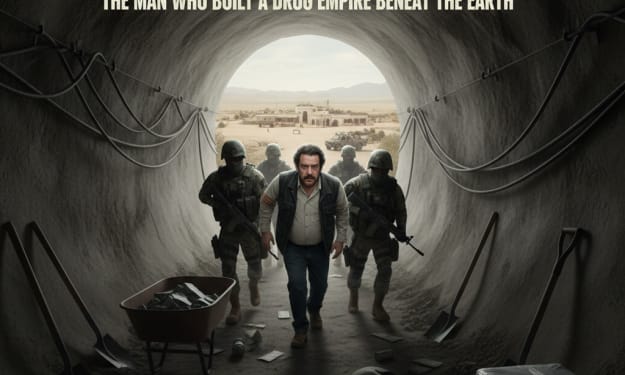
The Fall of El Chapo: The Man Who Built a Drug Empire Beneath the Earth. AI-Generated.
Deep in the rugged mountains of Sinaloa, Mexico, a boy named Joaquín Guzmán Loera was born in 1957 into poverty. His father was a poor farmer who sometimes grew opium poppies to survive. From a young age, Joaquín learned two truths: power came from money, and money came from risk.
By shakir hamidabout a year ago in Criminal
The Ghost of Moscow: The Billion-Dollar Crimes of Semion Mogilevich. AI-Generated.
In the dark corridors of global finance, where politics, business, and organized crime intersect, one name has lingered for decades — Semion Mogilevich. To most, he’s invisible. To law enforcement, he’s the “Boss of Bosses.” To those who crossed him, he’s the ghost who always wins.
By shakir hamidabout a year ago in Criminal
Invisible Empire: Inside the Global Web of the World’s Most Wanted Mafia Bosses. AI-Generated.
In the shadows of the modern world, beyond digital firewalls and government surveillance, lies an invisible empire. It stretches across continents — run not by politicians or CEOs, but by men whose names inspire fear even decades after their arrests or deaths. These are the world’s most wanted mafia figures — architects of a global underworld that thrives on drugs, weapons, money, and silence.
By shakir hamidabout a year ago in Criminal
Russia& Ukrainia Latest Developments
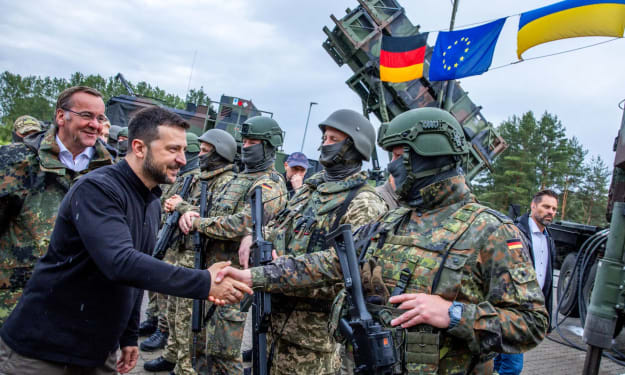
How much of Ukraine has Russia taken? By 2025, Russian forces occupy or claim control over approximately 20 percent of Ukraine’s territory (this includes areas seized since 2022 and newly taken ground in later offensives). The situation remains very fluid, with local counteroffensives, shifting frontlines, and contested zones. In 2025 alone, Russian President Vladimir Putin claimed that his forces captured nearly 5,000 square kilometers of Ukrainian land, representing about 1 percent of Ukraine’s area. Many of these gains are in smaller villages and buffer zones rather than major cities. The Ukrainian military disputes some of these claims, asserting that no large cities have fallen this year and that many Russian advances have been halted or reversed in certain sectors. What is the reason for Russia attacking Ukraine? Russia’s invasion of Ukraine in February 2022 was presented by Moscow under justifications such as demilitarization, de-Nazification, and securing “protective” buffer zones. From Russia’s perspective, they argue Ukraine’s alignment with Western institutions (e.g. NATO, EU) threatens Russian security interests. Ukraine and its supporters see this war as a straightforward act of aggression, territorial ambition, and an attempt to reassert influence over its neighbor. The conflict also involves control over resources, infrastructure, and strategic geography. Over time, it has evolved into a war of attrition with massive destruction of civilian infrastructure and prolonged battles for key regions. Which is stronger, Ukraine or Russia? This is not a simple question and depends on the dimension being considered—military capability, moral resolve, international backing, sustainability, or control of territory. On sheer numbers, Russia has advantages in certain heavy weapon systems, air power, and strategic reserves. Ukraine’s strengths lie in asymmetric warfare, local knowledge, effective use of western-provided weaponry, and higher morale in many units. International support for Ukraine—through weapons, finances, intelligence, and diplomatic pressure—shifts the balance significantly. Russia suffers from supply chain issues, domestic political strains, sanctions, and increasing equipment and troop attrition. In 2025, the battlefield has seen contested advances and stalemates rather than dramatic breakthroughs by either side, indicating that while Russia may hold structural advantages, Ukraine remains a resilient and capable adversary. Latest Developments Over the last days, Russia intensified aerial strikes especially on Ukraine’s power infrastructure as winter nears, seeking to degrade energy grids and civilian utilities. One thermal power plant was seriously damaged in an overnight strike, affecting multiple regions. Ukrainian officials responded by preparing warming centers and alerting vulnerable communities. In a large-scale assault involving missiles and drones, Russia reportedly launched 53 missiles and 496 drones across multiple Ukrainian regions. The attack resulted in several deaths and widespread damage to civilian infrastructure, especially energy systems and residential areas. Ukrainian authorities countered by revealing that many of those Russian weapons included over 100,000 foreign-made components, indicating continued leakage or transfer of military technology despite sanctions. Kyiv has pressed its international partners to tighten export controls and reduce dual-use supply to Russia. In terms of territory, Putin asserted that Russian forces gained close to 5,000 km² inside Ukraine in 2025 alone, while Ukrainian forces claim to have made localized counteroffensives in regions like Sumy, pushing back in some areas. The frontline remains dynamic, with gains and losses on both sides, especially near contested regions such as Siversk, Kupiansk, Pokrovsk, and Kharkiv. Russian military analysts report high casualties in certain sectors of the front. One assessment noted that the Western grouping of Russian forces in areas like Kupyansk and Borova has suffered tens of thousands of casualties. Meanwhile, losses in Russian equipment, especially tanks, armored vehicles, drones, and artillery systems, continue to accumulate. Ukrainian defense sources say that as of early October, Russian forces have lost over 11,200 tanks, tens of thousands of armored fighting vehicles, thousands of artillery systems, and large numbers of other equipment. Winter is approaching, and with it, a renewed battle over energy and infrastructure resilience. Russia’s strategy of targeting energy systems is designed to weaken morale and create humanitarian crises. Meanwhile, Ukraine is pushing for more air defense systems, deeper intelligence cooperation, and continued international pressure to limit Russia’s ability to resupply and rearm.
By America today about a year ago in Criminal
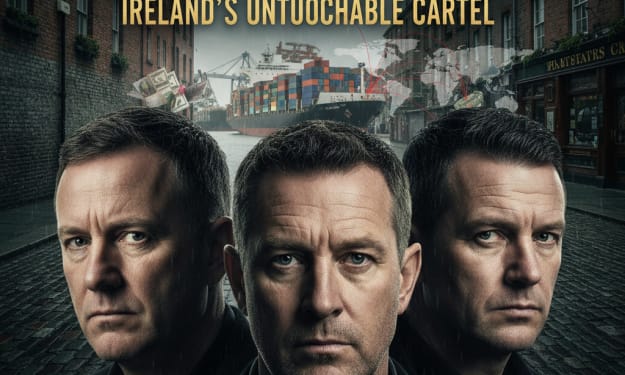
The Kinahan Empire: Ireland’s Untouchable Cartel. AI-Generated.
In the underworld of European organized crime, one name commands both fear and fascination — The Kinahan Cartel. Born in the gritty streets of Dublin, this family-run syndicate grew from small-scale dealing into one of the most powerful drug empires in the world. With operations stretching from Ireland to Dubai and Spain, the Kinahans built an empire worth billions — and for years, they did it all in plain sight.
By shakir hamidabout a year ago in Criminal