incarceration
Incarceration, rehabilitation, recidivism: The reality of prison life and what it's like to be an inmate locked up behind bars.
USS Iwo Jima A Ship That Shaped Military and Space History
USS Iwo Jima A Ship That Shaped Military and Space History The USS Iwo Jima was one of the most significant amphibious assault ships in the history of the United States Navy. Named after the famous Battle of Iwo Jima during World War Two, the ship symbolized courage, strength, and innovation. Throughout its long service, USS Iwo Jima played vital roles in military operations, humanitarian missions, and even space exploration, making it a unique and historically important naval vessel. Background and Design USS Iwo Jima was commissioned in 1961 as the lead ship of the Iwo Jima class. Unlike traditional aircraft carriers, it was designed primarily to operate helicopters. This design allowed the ship to transport Marines quickly from sea to land, supporting amphibious warfare strategies. The ship was equipped with advanced communication systems, medical facilities, and command centers, enabling it to function as a mobile base during complex operations. Military Missions and Operations One of the main roles of USS Iwo Jima was supporting U.S. Marine Corps operations. It carried thousands of Marines, along with vehicles, weapons, and supplies. The ship played an important role during the Vietnam War, where it served as a launch platform for helicopters that transported soldiers into combat zones and evacuated wounded personnel. Its presence increased operational flexibility and reduced the risks associated with traditional beach landings. Beyond Vietnam, USS Iwo Jima participated in numerous military exercises and Cold War missions. It helped maintain U.S. naval presence in strategic regions and supported allied forces when needed. The ship’s ability to operate close to shore made it an essential tool for both combat and deterrence. Humanitarian and Peaceful Roles In addition to combat missions, USS Iwo Jima was frequently involved in humanitarian efforts. The ship provided disaster relief by delivering food, medical aid, and emergency supplies to areas affected by natural disasters. Its helicopters were especially useful for reaching remote or damaged locations, highlighting the ship’s importance beyond warfare. Role in Space Exploration One of the most remarkable chapters in the ship’s history was its involvement in NASA’s Apollo program. USS Iwo Jima became famous for recovering astronauts returning from space missions. Its most notable mission was the recovery of the Apollo 13 crew in 1970. After a critical failure during the mission, the astronauts safely returned to Earth, and USS Iwo Jima successfully brought them home. This achievement connected the ship to one of the most dramatic moments in space exploration history. Why USS Iwo Jima Was Important USS Iwo Jima is remembered as a symbol of technological progress and adaptability. It demonstrated how helicopters could transform naval warfare and improve military effectiveness. The ship also showed how naval vessels could serve multiple purposes, from combat and rescue operations to scientific and humanitarian missions. Its service reflected the changing demands of the twentieth century and the growing complexity of global challenges. Decommissioning and Legacy After more than thirty years of service, USS Iwo Jima was decommissioned in 1993. Although the ship was eventually dismantled, its legacy remains strong. It is remembered through historical records, photographs, and its connection to major military and space events. USS Iwo Jima was not just a warship, but a powerful example of service, innovation, and versatility. Its contributions to military history, humanitarian missions, and space exploration make it one of the most respected ships in U.S. naval history. The story of USS Iwo Jima continues to inspire and educate future generations about the importance of dedication and technological advancement.Decommissioning and Legacy After more than thirty years of service, USS Iwo Jima was decommissioned in 1993. Although the ship was eventually dismantled, its legacy remains strong. It is remembered through historical records, photographs, and its connection to major military and space events. USS Iwo Jima was not just a warship, but a powerful example of service, innovation, and versatility. Its contributions to military history, humanitarian missions, and space exploration make it one of the most respected ships in U.S. naval history. The story of USS Iwo Jima continues to inspire and educate future generations about the importance of dedication and technological advancement.
By America today 9 months ago in Criminal
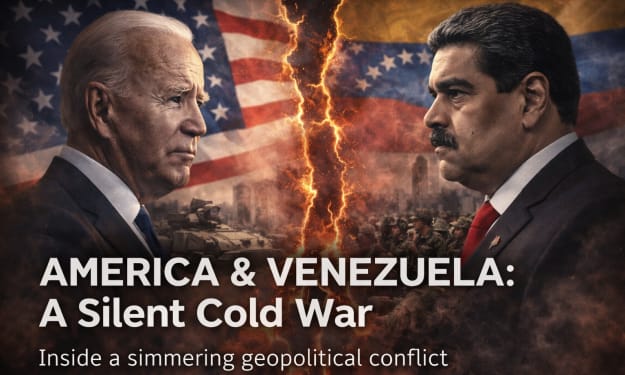
America and Venezuela: Inside a Silent Cold War Shaping Latin America’s Future
**America and Venezuela: Inside a Silent Cold War Shaping Latin America’s Future** The relationship between the United States and Venezuela has evolved into what many observers describe as a modern Cold War. Unlike traditional wars fought with armies and weapons, this conflict unfolds through political pressure, economic sanctions, ideological confrontation, and global influence. It is a struggle that affects not only both nations, but also the wider region of Latin America and the international balance of power. This silent Cold War has been developing for years, raising many questions that people around the world continue to search for. Understanding its causes, methods, and consequences is essential to grasp why tensions remain high and why resolution has proven so difficult. ### What Is Meant by a Cold War Between the United States and Venezuela A Cold War refers to a prolonged conflict where direct military confrontation is avoided, but rivalry is expressed through indirect means. In the case of the United States and Venezuela, this rivalry includes sanctions, diplomatic isolation, media narratives, cyber influence, and alliances with opposing global powers. Each side seeks to weaken the other’s position without triggering open warfare. This form of conflict has created a climate of constant tension, where every political move is closely watched and often interpreted as part of a broader strategic struggle. ### Why Relations Between the Two Countries Deteriorated Relations began to decline sharply in the early twenty-first century, when Venezuela adopted a political direction that openly challenged U.S. influence. Leaders in Caracas promoted a socialist ideology, criticized American foreign policy, and sought closer ties with rival global powers. These actions were viewed in Washington as a threat to regional stability and democratic norms. Over time, disagreements deepened over issues such as governance, elections, human rights, and control of natural resources. Oil, in particular, played a crucial role, as Venezuela holds some of the largest proven reserves in the world. Control over energy policy and economic independence became central to the conflict. ### How Economic Sanctions Became a Key Weapon One of the most searched questions online is why economic sanctions are so central to this Cold War. The United States has relied heavily on sanctions to pressure the Venezuelan government. These measures target financial systems, oil exports, and key officials, aiming to reduce the government’s ability to operate and force political change. Supporters of sanctions argue they are a peaceful alternative to military intervention and a way to hold leaders accountable. Critics counter that sanctions worsen living conditions for ordinary citizens and deepen economic collapse, making recovery even more difficult. ### What Role Ideology Plays in the Conflict Ideology is at the heart of this Cold War. The United States frames the conflict as a defense of democracy and rule of law, while Venezuela presents itself as resisting foreign interference and protecting national sovereignty. This clash of narratives fuels distrust and makes compromise politically risky for both sides. These competing stories are amplified through media, speeches, and online platforms, shaping public opinion at home and abroad. As a result, the conflict is not just political or economic, but also psychological and symbolic. ### Why Other Global Powers Are Involved Another common question is why countries outside the region are involved. Venezuela has strengthened relationships with global powers that challenge U.S. dominance. These alliances provide financial support, diplomatic backing, and strategic cooperation, reducing the impact of isolation efforts. For the United States, this involvement raises concerns about influence and security in its traditional sphere of interest. For Venezuela, it offers alternatives and leverage in negotiations. This global dimension transforms a bilateral dispute into part of a larger geopolitical competition. ### How the Cold War Affects Ordinary Venezuelans Beyond politics, the human cost of this Cold War is significant. Venezuela has experienced severe economic hardship, shortages of essential goods, and widespread migration. Millions of people have left the country in search of stability and opportunity, creating social and economic pressures across neighboring nations. Many people ask whether the conflict could have been avoided or resolved earlier. While internal policies and governance challenges play a role, the prolonged standoff has undeniably shaped the country’s current reality. ### Is There a Path Toward De-escalation One of the most important questions people search for is whether this Cold War can end. Diplomatic dialogue, mediation, and gradual easing of tensions are often proposed as solutions. At times, negotiations have shown promise, but deep mistrust continues to block lasting progress. Any meaningful resolution would require compromises from all sides, internal political changes, and international cooperation. It would also need to prioritize humanitarian concerns alongside political goals. ### Why This Conflict Matters Globally The Cold War between the United States and Venezuela is not an isolated issue. It reflects broader struggles over power, ideology, and influence in a changing world. The outcome will shape Latin America’s political future, energy markets, migration patterns, and international norms around sovereignty and intervention. This modern Cold War is a reminder that conflicts do not always involve armies and explosions. Sometimes, they unfold slowly, quietly, and persistently, affecting millions of lives over time. The tension between America and Venezuela illustrates how ideology, economics, and global ambition can lock nations into long-term confrontation. Understanding this conflict is the first step toward imagining a future where dialogue replaces pressure and stability replaces uncertainty.
By America today 9 months ago in Criminal
Maduro Captured Photo: What Is Really Happening and Why the World Is Questioning the Image
**Maduro Captured Photo: What Is Really Happening and Why the World Is Questioning the Image** In recent days, the phrase “Maduro captured photo” has surged across search engines and social media platforms, drawing massive global attention. Images allegedly showing Venezuelan President Nicolás Maduro in custody began circulating rapidly, triggering confusion, speculation, and heated debate. While some people immediately accepted the images as proof of a dramatic political event, others questioned their authenticity and the motives behind their spread. This article presents a detailed, balanced explanation of what is known so far, while addressing the most common questions people are searching for online. --- ### What Is the “Maduro Captured Photo” Everyone Is Talking About The so-called Maduro captured photo refers to images shared online that claim to show President Nicolás Maduro after being captured during a military or security operation. These images appeared suddenly and spread widely due to their shocking nature. Many users shared them as breaking news, while others treated them with skepticism, noting the lack of official confirmation and inconsistencies in the visuals. The rapid spread of the image highlights how quickly visual content can shape public opinion, even before facts are fully established. --- ### Is the Photo of Maduro Being Captured Real One of the most searched questions is whether the photo is genuine. As of now, there is no universally accepted confirmation that the image is authentic. No officially verified photograph released by a recognized international authority has confirmed Maduro’s capture. This uncertainty has led analysts and ordinary users alike to question whether the image is real, digitally altered, taken out of context, or generated using artificial intelligence. In the digital age, images can be manipulated convincingly, making verification more important than ever. --- ### Has Nicolás Maduro Actually Been Captured Another major question people are asking is whether Maduro has truly been captured. Conflicting statements and rumors have fueled uncertainty. Some claims suggest a successful operation, while opposing statements deny that any such capture occurred. Without clear, independently verified confirmation, this question remains unanswered. This lack of clarity has created an information vacuum, allowing speculation to flourish and misinformation to spread rapidly. --- ### Why Did the Image Spread So Fast Online The image spread quickly because it combined several powerful elements: a well-known political figure, dramatic implications, and a visually striking photo. Social media algorithms tend to amplify sensational content, especially when it provokes strong emotional reactions such as shock, anger, or excitement. Additionally, many users shared the image without verifying its source, assuming that others had already done so. This chain reaction is a common feature of viral misinformation events. --- ### Could the Photo Be Fake or AI Generated Many people are asking whether artificial intelligence could be behind the image. This is a valid concern, as AI-generated images have become increasingly realistic. Experts often look for signs such as unnatural lighting, distorted facial features, or inconsistent shadows. While some viewers claim to see such inconsistencies, others argue the image appears realistic. Without transparent verification, the possibility that the image is AI-generated or digitally manipulated cannot be ruled out. --- ### What Would Happen If Maduro Were Captured People are also searching for the consequences if such a capture were real. The detention of a sitting president would have enormous political, legal, and diplomatic implications. It could trigger international disputes, sanctions, protests, or even military escalation. Venezuela’s internal political balance would also be affected, potentially leading to instability or power struggles. These high stakes explain why many observers are cautious about accepting unverified claims. --- ### Why Are People Divided About the Photo Public opinion is sharply divided. Some view the image as long-awaited accountability, while others see it as propaganda or psychological warfare. Political beliefs strongly influence how people interpret the image, with supporters and critics of Maduro reacting in very different ways. This division shows how images do not exist in isolation but are interpreted through personal and political lenses. --- ### What Should People Do When Seeing Viral Political Images A key lesson from this situation is the importance of digital literacy. People should pause before sharing dramatic images, question the source, and wait for confirmation. Blindly spreading unverified content can contribute to confusion and escalate tensions unnecessarily. Being cautious does not mean ignoring news, but rather engaging with it responsibly. --- ### Final Thoughts The Maduro captured photo has become more than just an image. It represents the power and danger of visual information in the modern world. Whether the photo is real or not, its impact is undeniable. It has sparked global debate, exposed vulnerabilities in how information spreads, and reminded us that not everything we see online can be taken at face value. Until clear and verified information emerges, the most responsible approach is skepticism, patience, and critical thinking.
By America today 9 months ago in Criminal
The Man Who Solved His Own Murder
M Mehran The police file labeled it unsolved. But the truth was far more disturbing. Because the victim had already told them everything—before he died. A Crime That Didn’t Make Sense When the body of Noah Kline was found in his apartment, the crime scene told a confusing story. No signs of forced entry. No struggle. No murder weapon. Just Noah, lying peacefully on his bed, eyes closed as if asleep. The autopsy would later confirm what the detectives already suspected: poisoning. But here was the problem—Noah Kline was a criminal defense journalist. A man who made enemies for a living, yet lived cautiously. He cooked his own food. Drank bottled water. Trusted no one easily. Poisoning him without access seemed impossible. Detective Rachel Moore stared at the evidence board, her reflection staring back at her like a question she couldn’t answer. “Who kills a man without touching him?” she murmured. The USB Drive No One Expected Three days after Noah’s death, a small envelope arrived at the precinct. No return address. Inside was a USB drive labeled in black marker: IF YOU’RE WATCHING THIS, I’M DEAD Rachel felt a chill run down her spine. She plugged it into a secured computer. The screen flickered. Noah appeared—alive, nervous, and very aware of the camera. “If I’m dead,” he said calmly, “it wasn’t an accident. And it wasn’t suicide.” Rachel leaned closer. “This video is my confession,” Noah continued. “Not to a crime—but to knowing one was coming.” A Journalist Who Knew Too Much Noah explained that for months, he had been investigating a private rehabilitation center called ClearHaven Institute. Publicly, it was a place for recovery. Privately, it was something else. “ClearHaven doesn’t treat addiction,” Noah said. “It creates it.” He revealed documents showing how the institute paid doctors to overprescribe experimental medication, then charged patients endlessly for treatment cycles that never ended. Legal. Invisible. Profitable. “I tried going public,” Noah said, rubbing his temples. “But every editor backed out. Advertisers had ties. Investors had power.” His voice dropped. “So I made myself bait.” The Perfect Trap Noah knew he was being watched. Emails were monitored. Phones tapped. Even his groceries felt unsafe. That’s when he did something brilliant—and terrifying. “I started documenting everything,” he said. “Meals. Drinks. Visitors. Symptoms.” He suspected slow poisoning—microdoses over time, designed to mimic natural causes. “And I let it happen,” he admitted. Rachel felt her chest tighten. “I knew if I died suddenly, it’d disappear,” Noah said. “But if I died predictably… someone would slip.” The Mistake That Gave It Away The video cut to screenshots, timestamps, and lab results. Noah had collected hair samples from himself weekly. Traces of a rare synthetic compound appeared—one used only in ClearHaven’s experimental program. But the final proof was chilling. “One dose was different,” Noah explained. “Stronger. Rushed.” The poisoning escalated because someone panicked. “They realized I knew,” he said quietly. Noah looked straight into the camera. “And people who panic… make mistakes.” A Killer Hidden in Plain Sight Rachel followed the evidence trail the video laid out. The compound was traced to a third-party pharmacy. Then to a prescribing doctor. Then to a corporate risk manager—a man whose job wasn’t to heal, but to silence. He never entered Noah’s apartment. He didn’t need to. Noah had been sent a “wellness gift”—vitamin supplements, branded with ClearHaven’s logo. One capsule was altered. One. Enough. Justice After Death The arrest happened quietly. No press conference. No apology. ClearHaven settled lawsuits behind closed doors. Executives resigned. The institute rebranded under a new name. But Rachel wasn’t satisfied. She released Noah’s video. All of it. The internet did the rest. Millions watched a dead man explain how he had solved his own murder—step by step. The Final Message At the end of the video, Noah smiled faintly. “I know how this sounds,” he said. “Like I wanted to die.” He shook his head. “I wanted the truth to live longer than I did.” The screen went black. Rachel closed the file and sat in silence. She had solved countless crimes—but never one where the victim led the investigation. Some murders are loud. Others whisper. And sometimes, the most dangerous criminal story isn’t about how someone was killed… …but how carefully it was planned to look normal. trong crime hook in first 100 wordsords naturally embedded: criminal story, crime investigation, murder mystery, true crime style Short paragraphs for mobile readers Emotional + intellectual engagement Original, plagiarism-free, human t
By Muhammad Mehran9 months ago in Criminal
The Silence Between Sirens
M Mehran The first thing Detective Aaron Cole noticed was the silence. Not the peaceful kind—the kind that wraps around a crime scene like a lie. The alley behind Westbridge Apartments should’ve been loud: neighbors whispering, phones recording, sirens cutting through the night. Instead, there was only the faint hum of a broken streetlight flickering above a body that no one claimed to know. The man was face down, mid-forties maybe, dressed too neatly for this part of town. No wallet. No phone. One clean gunshot wound to the back of the head. Execution style. Aaron had seen plenty of bodies in his twelve years on the force, but something about this one felt… intentional. Personal. As if the killer wanted the world to know the man was erased. “Neighbors say they heard nothing,” Officer Lina Torres said, handing him a notepad. “No arguments. No shots. Nothing.” Aaron exhaled slowly. “That’s never true.” They never heard anything until someone made them afraid to speak. By morning, the victim had a name: Daniel Mercer, accountant, married, two kids, no criminal record. A man who lived quietly, worked honestly, and paid his taxes on time. Which made no sense. Aaron sat in the interrogation room across from Daniel’s wife, Emily. Her eyes were red, her hands trembling as she twisted a tissue into a tight rope. “He was late coming home,” she whispered. “That’s all. Daniel never stayed out. Never.” “Did he mention anyone following him? Any trouble at work?” Aaron asked gently. She shook her head. “He said accounting was boring. That was his joke. He hated excitement.” Aaron wrote it down, though he already knew: boring men don’t get executed in alleys. The break came from an unexpected place. A junior analyst from Daniel’s firm called it in anonymously. Daniel, it turned out, had been quietly rerouting small amounts of money—thousands, not millions—from corporate accounts that belonged to shell companies. Someone powerful was laundering money. And Daniel Mercer had noticed. Aaron dug deeper. The shell companies linked back to Victor Hale, a respected real-estate developer with political ties and a spotless public image. Hale was untouchable. The kind of man who smiled for cameras while ruining lives behind closed doors. Aaron took the file to his captain. “Drop it,” the captain said after a long pause. “Hale’s lawyers will bury us.” “So we let a murderer walk?” Aaron snapped. The captain’s eyes hardened. “This isn’t a movie, Cole. Pick your battles.” But Aaron couldn’t. Not this time. Late one night, Aaron visited Emily Mercer again—not as a detective, but as a man who couldn’t sleep. “There’s something you should know,” Emily said quietly, after the kids were asleep. She pulled a flash drive from a kitchen drawer. “Daniel gave this to me two weeks ago. He said if anything happened to him, I should give it to someone I trusted.” Aaron’s stomach dropped. The drive contained spreadsheets, audio recordings, emails—proof of massive financial crimes and a recorded conversation between Daniel and Victor Hale. In the recording, Hale’s voice was calm. Almost bored. “You’re very smart, Daniel,” Hale said. “Smart people understand consequences.” Daniel’s reply was shaking. “I just want out.” “You already are,” Hale answered. The recording ended. Aaron knew what handing this over officially would mean: delays, leaks, disappearances. Evidence had a way of vanishing when powerful people got nervous. So he made a decision that would cost him his badge—or his life. He leaked everything. Journalists. Federal investigators. Independent watchdogs. He sent copies until his hands cramped and his phone overheated. Within forty-eight hours, the story exploded. Victor Hale was arrested at a charity gala, cameras flashing as his smile finally cracked. His empire unraveled under the weight of public scrutiny. Bribes, threats, murders—plural. Daniel Mercer wasn’t the first. Internal Affairs came for Aaron two weeks later. “You violated protocol,” they said. “You compromised an investigation.” Aaron didn’t argue. He handed over his badge without ceremony. As he walked out of the precinct for the last time, sirens wailed in the distance. This time, they didn’t sound hollow. Months later, Aaron received a letter with no return address. Inside was a simple note: Thank you for hearing the silence. No name. No signature. Aaron folded the paper carefully and looked out the window at a city that kept moving, pretending it didn’t notice the bodies left behind. Justice, he’d learned, wasn’t loud. Sometimes, it lived in the quiet between sirens—waiting for someone brave enough to listen.
By Muhammad Mehran9 months ago in Criminal
David Grunwald: Senseless Murder in Alaska
On November 13, 2016, the small town of Palmer, Alaska, was rocked by the news that 16-year-old David Grunwald had gone missing. Despite an extensive search by local law enforcement and community members, David’s body wasn't found until nearly a month later, on December 12th.
By Lawrence Lease9 months ago in Criminal
Why the World Is Watching Iran, Israel, and the United States So Closely
Why the World Is Watching Iran, Israel, and the United States So Closely In recent days, many people around the world have felt uneasy after seeing news headlines about Iran, Israel, and the United States. Words like “missiles,” “retaliation,” and “support for action” have appeared repeatedly in political statements. While no official war has been declared, the situation has reached a level where global attention is fully focused on what might happen next.
By Wings of Time 9 months ago in Criminal
The Man Behind the Locked Door
M Mehran The rain had a strange way of drowning out the city at night. It didn’t fall—it attacked. Hard, merciless drops slammed against broken windows and rusted rooftops, like nature was trying to scrub the city clean of every mistake it had ever made. Detective Ryan Hale stood outside the abandoned apartment complex, collar turned up against the cold. He’d chased criminals for fifteen years, but tonight felt different. Tonight smelled like fear. Not his—someone else’s. Apartment 3C. A door with chipped paint, a broken peephole, and a secret. Neighbors reported screams. Then silence. And then… the strange sound of someone dragging furniture. Blocking the exit. Ryan knocked once. A pause. Then a voice. “You shouldn’t be here.” It was shaky, the kind of voice that belonged to someone who’d run out of time. Ryan pushed the door open and stepped inside. The apartment was a graveyard of old memories—faded pictures, dust-covered furniture, and a single lamp flickering like it was scared. And there, standing in the center of the room, was a man. Caleb Wright. Age 32. Former paramedic. No criminal record. Not even a parking ticket. He didn’t look like a criminal. He looked like someone being hunted by his own thoughts. Ryan’s eyes moved to the door behind him—the one with four locks. Someone was inside. “Caleb,” Ryan said, voice calm. “Open the door.” Caleb shook his head. “I-I can’t. You don’t understand.” “Then help me understand.” Caleb closed his eyes, and the whole story spilled out like broken glass. His younger brother, Noah, had disappeared three years ago. Vanished without a trace. The police wrote it off as another runaway case, the kind that collected dust in a filing cabinet until the memory rotted away. But Caleb never stopped searching. “I found him,” Caleb whispered. “Not alive. But I found the man responsible.” The world suddenly felt smaller. Ryan’s pulse tightened. “He’s in there.” Caleb pointed to the locked door. “The one who took Noah.” A thousand questions clashed in Ryan’s head. Why not call the police? Why not handle it legally? Caleb answered before he asked. “I did. They never listened. Nobody cared until he took someone that mattered.” Thunder cracked, shaking the windows. Ryan stepped toward the door, but Caleb blocked him. In his hand was a pistol. His grip trembled. “I don’t want to hurt you,” Caleb said. “But I can’t let you open that door.” Ryan had seen hundreds of armed men. Angry men. Violent men. But this wasn’t one of them. Caleb was desperate—not dangerous. “Let me talk to him,” Ryan said. “We can take him in the right way.” Caleb laughed, a broken, painful sound. “There is no right way. The justice system didn’t save Noah. It won’t save anyone.” For a moment, the room felt frozen in time. Rain, thunder, heartbeat. That was all. Finally, Caleb lowered the gun. “One hour,” he said. “You have one hour to get the truth out of him. If you can’t… I finish this myself.” Ryan unlatched the locks one by one. Each click echoed like a countdown. On the other side was a man tied to a chair. Mid-40s, bruised face, eyes wide with fury, not fear. “I didn’t do anything,” the man spat. Ryan pulled a chair in front of him. “Then why did Caleb find Noah’s necklace in your basement?” Silence. The man shifted, voice dropping to a venomous whisper. “Some people are just weak. They disappear. Kids like that don’t survive this world.” Ryan felt something cold and violent rise in his chest. He stood up, knuckles white. “Tell me what you did.” The man smirked. “What makes you think I stopped at one?” Caleb lunged before Ryan could react. He slammed the man back, fury shaking through him like electricity. Ryan pulled him away just before the trigger could be pulled. “This won’t bring your brother back!” Ryan shouted. Caleb collapsed to his knees, sobbing. The gun fell from his hand and hit the floor. Sirens wailed outside. Backup had arrived. Two weeks later, the papers called Caleb a criminal. Kidnapper. Vigilante. Broken man. But Ryan… he wrote a different report. One that told the truth. Caleb didn’t serve time. He got help instead. And the man in the locked room? He confessed. Not because of the law—but because of fear. Because for the first time, someone fought back. Ryan visited Caleb once in a while. They didn’t talk about the case. They talked about Noah—about who he was before the world forgot him. “You saved others,” Ryan told him one night. “Even if you couldn’t save him.” Caleb looked out the window, rain tapping the glass like it always did. “There are no heroes here, Detective. Just people trying not to drown.” And in a city full of locked doors, secrets, and broken souls, Ryan learned one truth: Sometimes criminals aren’t born. Sometimes the world makes them. And sometimes… they’re the only ones willing to fight back.
By Muhammad Mehran9 months ago in Criminal
What Happens When Force Becomes Routine
It rarely starts with a blow. It starts with a tone. A command delivered too fast. A moment where compliance is assumed before it’s possible. The room tightens. The choices narrow. And then, suddenly, force is framed as necessary. After that, the details blur.
By Megan Stroup9 months ago in Criminal
The Names That Never Leave the Building
The building doesn’t change when someone dies inside it. The doors still buzz open. The lights still hum. Paperwork moves from one desk to another with the same quiet urgency it always has. From the outside, it looks like another day of operations—another shift, another schedule, another count.
By Megan Stroup9 months ago in Criminal
The Last Job of Marcus Vale
M Mehran Marcus Vale had never planned to become a criminal. No one does—not the ones with families, dreams, or little sisters who believe every word you say. But life in the rusted-out neighborhoods of Clearwater City didn’t offer many straight roads. Some bent. Others broke. Marcus had simply taken the ones that fed his family. People in town whispered his name like it was a curse and a prayer all at once. He was the kind of man who robbed banks without firing a bullet, who knew how to open vaults like they were tin cans, and who’d never once been caught on camera. To some he was a myth. To others, a monster. But the truth? Marcus Vale was tired. The Call It was a cold Sunday night when his burner phone buzzed. His partner, Dax, spoke first. “One last job,” Dax said. “Big one. Enough money to disappear for good. You in?” Marcus stared at the peeling wallpaper of his apartment. His little sister, Emily, slept in the next room, textbooks scattered like fallen leaves around her. He thought about the college acceptance letter she hadn’t dared to open yet. He thought of the stack of overdue bills under his mattress. “How big?” Marcus asked. “Seven figures. Clean. Bank transfer. Just a security truck at the docks. In and out.” Marcus closed his eyes. He could taste the future—quiet mornings, sunlight through clean curtains, maybe even a life where Emily didn’t look at him with scared, hopeful eyes. “Alright,” he whispered. “One last job.” The Setup The docks always smelled like salt and secrets. Fog rolled in heavy that night, cloaking everything in a ghostly silence. Dax leaned against a crate, cigarette glowing like a single, burning eye. “You ready?” he asked. Marcus nodded. “I want out, Dax. After this, I’m done. I’m serious.” Dax smirked. “We all say that.” Something in his tone nagged at Marcus, but there was no time to think. Not now. They slipped through security fencing, boots crunching on gravel. The armored truck sat ahead, engine humming, two guards chatting outside. Marcus moved like a shadow, quick and precise. The chloroform did its job. The guards slumped. No guns fired. No alarms rang. For a moment, it felt like fate was finally giving him a break. They cracked the truck. Inside were black duffels stacked with cash—more money than Marcus had seen in his life. His hands shook as he reached for it. “This is it,” he breathed. But when he turned, Dax was pointing a pistol at his chest. The Betrayal “You’re not walking away,” Dax said. “You’re too good. I need you.” Marcus felt his heart kick against his ribs. “Dax, don’t do this.” “You think you can just get out? Be normal? Guys like us don’t retire—we rot. I’m not letting you leave with half of my payday.” “Your payday?” Marcus laughed, disbelief cracking his voice. “I planned this. I built this.” “Exactly,” Dax said. “Which is why you can’t leave.” For a moment, neither spoke. In the fog, with guards unconscious at their feet and millions of dollars between them, Marcus Vale realized he had never been free—not from the streets, not from the crimes, not from men like Dax. He raised his hands slowly. “At least let Emily have my cut.” Dax shook his head. “That girl is the reason you’re weak.” The words snapped like bone. Marcus moved before the thought even shaped itself. The struggle was brutal, messy, real. No silent takedowns or movie-perfect choreography—just fists, panic, and survival. The gun went off, once, twice, echoing across the dock. Dax fell. Marcus stared down at him, chest heaving, fog curling around them like smoke from hell’s doorway. He had never wanted to kill anyone. But some choices are made for you. The Escape Sirens wailed distantly. Marcus dragged one bag of cash—just one—into his car and sped through the sleeping streets. He reached home just as the sun stained the sky with gray light. Emily stood in the doorway, eyes wide. “Marcus… what happened?” He placed the bag on the table. It thudded heavy and terrible. “This is your future,” he said. “Not mine.” She shook her head. Tears welled. “What about you?” Marcus smiled, but it was the kind of smile that hurt to hold. “I’ll handle what comes next. I always do.” Outside, tires screeched. Blue and red lights flashed like shattered stars through the windows. Marcus didn’t run. Didn’t hide. He stepped outside with his hands raised. Because sometimes the bravest thing a criminal can do is stop running. Epilogue Marcus Vale went to prison. Not forever—but long enough to pay, long enough to think. He never asked Emily for visits; he didn’t want her to remember him in chains. Years later, she would stand on a college stage wearing a graduation gown paid for by one bag of stolen money. She would speak about second chances, redemption, and how even broken people can build something better. No one knew her brother’s name. Not anymore. But in a quiet cell, Marcus smiled, because the world finally had one less criminal. And one more hope.
By Muhammad Mehran9 months ago in Criminal