how to
How Tos for lawful misconduct; explore forensic analysis, legal proceedings, police investigations and beyond.
The most mysterious criminal case: The Zodiac Killer.
The Most Mysterious Criminal Case: The Zodiac Killer One of the most mysterious and chilling criminal cases in modern history is the story of the “Zodiac Killer” . This unidentified serial killer terrorized Northern California in the late 1960s and early 1970s. His brutal crimes and cryptic messages sent to the press and police have intrigued investigators, criminologists, and conspiracy theorists for decades. Despite extensive efforts, the identity of the Zodiac Killer remains unknown, making this one of the most compelling and unsolved criminal cases in history. --- The Beginnings of the Zodiac’s Reign of Terror. The Zodiac Killer’s reign of terror began in “1968” with the murders of “Betty Lou Jensen” (16) and “David Faraday” (17) on a remote road near Vallejo, California. The couple was shot to death in Faraday’s car. The Zodiac Killer’s cryptic letters were sent to local newspapers soon after the murder, claiming responsibility for the killings. These letters were filled with taunts directed at the police and journalists, and included a symbol of a cross-circle, which became his signature. In July 1969, the Zodiac struck again, this time murdering “Darlene Ferrin” (22) and “Michael Mageau” (19) in a parked car near Blue Rock Springs. Ferrin was killed instantly, while Mageau survived the attack but was severely wounded. The Zodiac once again sent a letter to the press, claiming responsibility and boasting about the crime. In this letter, he included another “cipher” — a code he claimed would reveal his identity. --- The Infamous Ciphers and Public Fascination. The Zodiac Killer’s cryptic letters and ciphers are one of the most perplexing aspects of this case. His “Zodiac ciphers” were composed of symbols and letters that he claimed would reveal his true identity. The first cipher, which was sent to the San Francisco Chronicle in 1969, was a “408-character” code. It was a complex mix of symbols, numbers, and letters, and many experts were unable to crack it initially. It took a couple of years, but eventually, in 1970, a high school teacher and his wife cracked the first cipher, revealing a chilling message. The Zodiac had written, “I like killing people because it is so much fun.” This message sent shockwaves across the country, and the killer’s eerie personality and twisted nature became clearer. Later, the Zodiac sent two more ciphers — one a “340-character cipher” in 1970, and a third “cipher” in 1974 that has never been definitively cracked. These ciphers and the killer’s obsession with sending them to the press became his trademark. --- The Victims and the Victims Who Survived. While the Zodiac’s exact number of victims remains uncertain, it is believed that he was responsible for at least “five confirmed murders”. His first two victims, Betty Lou Jensen and David Faraday, were shot at point-blank range, and it was clear that he wanted to kill them quickly. His third victims, Darlene Ferrin and Michael Mageau, were shot in their parked car. Ferrin died instantly, but Mageau survived, despite being shot multiple times. The Zodiac’s last known murder occurred in 1969 when he killed “Bryan Hartnell” (20) and “Cecelia Ann Shepard” (22) near Lake Berryessa, California. The killer approached them while they were relaxing near the lake, tied them up, and then stabbed them both. Hartnell survived the attack and was able to provide police with a description of the killer. In 1968, there was also an attempted murder of a woman named “Darlene Ferrin”, who survived the attack, but the Zodiac killer remained a mysterious figure. --- The Police Investigation and Theories. Despite an extensive investigation, the Zodiac Killer was never caught. The police were able to gather a few clues, including the fact that the killer appeared to be well-versed in military tactics. He often wore disguises and made sure not to leave any physical evidence at the crime scenes. The Zodiac’s ability to remain elusive has led to numerous theories about his identity. Some experts believe that he was a former military man, while others think that he could have been a police officer or someone involved in the investigation. The killer’s intelligence and manipulation of the media also suggested that he was highly educated and possibly a professional. Many suspects have been proposed over the years, including “Arthur Leigh Allen”, a convicted child molester who died in 1992, and “Richard Gaikowski”, a newspaper editor who was linked to the case by some. However, none of these suspects have been definitively proven to be the Zodiac Killer. --- The Legacy of the Zodiac Killer. The case remains open, and in recent years, there has been renewed interest in solving the mystery of the Zodiac Killer’s identity. In 2020, the “FBI” announced that they had been able to decode the infamous 340-character cipher. The message revealed the killer’s chilling words, but it still did not provide any new leads to his identity. The Zodiac Killer’s ability to evade capture and his psychological games with the police and the press have made him a subject of fascination. The mystery surrounding his identity has inspired countless books, documentaries, and films. To this day, the Zodiac Killer’s story remains one of the most enduring and puzzling mysteries in criminal history. --- Conclusion The Zodiac Killer case continues to captivate the public’s imagination. His cryptic messages, taunting letters, and brutal killings have made him one of the most infamous and mysterious figures in criminal history. While some aspects of his crimes have been solved, the true identity of the Zodiac Killer remains one of the greatest unsolved criminal mysteries in the world. Until the killer is found or more evidence comes to light, the question of who he really was will continue to haunt investigators and armchair detectives alike. At
By Riya mandalabout a year ago in Criminal
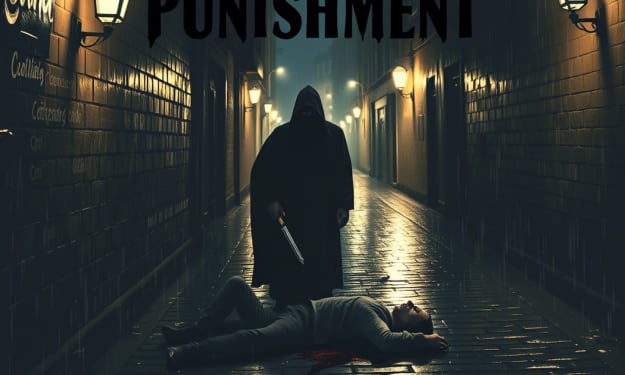
Crime and Punishment
Crime and Punishment is a powerful and emotional novel written by Fyodor Dostoevsky, one of the greatest Russian authors of all time. The story takes place in St. Petersburg, Russia, and follows the life of a young man named Rodion Raskolnikov, a former student who is smart, proud, and very poor.
By Muhammad Hayatabout a year ago in Criminal
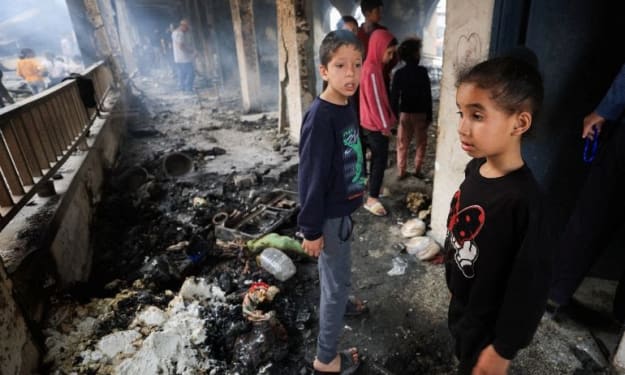
Child among at least 10 killed in Israeli attack on school shelter in Gaza
At least 10 people have been killed in an Israeli attack that sparked a fire at a school sheltering displaced people in Gaza City, including one child who was burned to death in the blaze.
By MONIRUL ISLAM about a year ago in Criminal
Weapons of Deception: How Propaganda Fuels Crime
As the internet has become a basic necessity for the whole world today, any small incident can take a monstrous form and create panic in the whole world. This is a good aspect due to which any criminal can get caught by using any internet. Before committing a crime, one will think about its consequences many times but on the other hand, nowadays a very dangerous and disgusting trend is being seen. In this we have seen that some people commit big crimes like theft, violence, fraud and even big crimes like murder and after committing them, they hide their lives. To justify or save themselves, they make videos and tell the society that they have committed this crime to save the society, if they had not done this, this money or this person would have been very dangerous for the society. They spread false propaganda about the death of the dead.
By umar khalidabout a year ago in Criminal
New Gmail Warning — Do Not Open This Email From Google
Gmail users are currently in the goal of a trained phishing scam that affects official Google communication. This cont is specifically fraudulent because it comes from email addresses which look like real, such as [email protected], and it passes in Google accounts by passing Google's proofs, in which DKIM signature Imams are often difficult because they are often known as real Google security precautions Your Gmail account is being reviewed or nauseous valid in the same conversation. Phishing link: button or link that says "review activity" or similar and takes you to a fake website where you can steal your certificate. Follow-up phone calls from people who visit as Google Support Agent, to provide more pressure to provide sensitive information, another feature of this bride's form. How to take care of your suspicious links: Go directly to https://myaccount.google.com instead of clicking on the links of any account activity, verify your email. Enable DB-Factor authentication (2FA): 2FA Enable 2FA will give an additional level for security to your account. Use Password: A great way to protect yourself from phishing scams on your Google Account Passengers Report: If you receive a suspicious email, select "phishing report from the menu with three points "phishing report" by choosing report in Gmail If you have already clicked, update your Google account password now: Request to prevent access unnumodit now Change your Google Account password now. Remove any unfamiliar app or devices from the security settings of your Google Account to withdraw unauthorized access. If you provide payment information, keep an eye on your bank transactions for any unauthorized activities. You can report cyber crime to Bangladesh E-Government Computer Incident Response Team (BGD e-Gov CIRT) to Bangladesh.What to Watch Out For
By MONIRUL ISLAM about a year ago in Criminal
Online Scams
How to Avoid Scams Online in the Digital Age The internet has changed our lives. We can shop, bank, learn, and connect with people from all over the world with just a few clicks. However, despite all of its benefits, the digital world carries risks, one of which is online fraud. These con schemes are used by cybercriminals to get people to give away money, personal information, or account access. As our reliance on technology grows, it's more important than ever to know how online scams work and how to avoid them. Scams that take place online can take many different forms, but they all aim to take advantage of people's lack of awareness or trust. Phishing is one of the most common types. Examples include fake emails, messages, and websites that appear to be from well-known banks, government agencies, or businesses. The message almost always instructs the recipient to "verify" their account, modify their password, or claim a reward. If the victim clicks the link and gives the con artist their personal information, the con artist can access the victim's accounts. Social media phishing scams are another growing threat. Swindlers may hack into or create fictitious profiles, then send messages to friends and followers requesting money or promoting fictitious giveaways. They occasionally share links that let users download malware or spyware to their devices. Because the messages come from familiar faces, people are more likely to fall for the scam. Given the rise of e-commerce, scams involving online purchases are also common. Fake websites may offer expensive goods at very low prices, such as designer clothes, concert tickets, or electronics. After payment has been made, the item never arrives. In order to entice customers to enter their credit card information, some con artists even go so far as to create bogus online stores that appear to be genuine. There are also romance scams, in which a person pretends to be in a relationship with another person online before asking for money or help. Victims frequently experience emotional manipulation as a result of these scams, making it even more difficult for them to recognize warning signs. Cybercriminals also use employment scams and investment frauds to target professionals and businesses. In fake job offers, candidates may be required to pay for background checks, training, or equipment. In the meantime, rip-off investments promise high returns and force victims to act quickly, only to disappear with the money. Therefore, how can we avoid being exploited online? Awareness is the first and most crucial step. We can be more vigilant if we are aware of the existence of online scams and how they operate. Always be cautious when a stranger asks for money or personal information, especially if the request seems urgent or too good to be true. Email senders and website addresses must also be carefully examined. Official organizations use secure websites (look for "https" and a padlock symbol in the address bar). If an email comes from an odd or slightly misspelled address, it's probably a scam. Never download unknown attachments or click on suspicious links. These can be used by con artists to install malware on your device, track your activities, and steal your data. Create unique, strong passwords for each account and enable two-factor authentication whenever possible for additional security. Think twice before accepting friend requests from strangers on social media or clicking on messages that have been forwarded to you. Make sure your privacy settings are tight and be cautious about what you share online because scammers can use your personal information to create convincing messages or fake profiles. When shopping online, stick with well-known and reputable websites. Read reviews, look for contact information, and stay away from offers that sound too good to be true. Since legitimate businesses do not accept cryptocurrency, gift cards, or wire transfers as forms of payment, it is probably a scam. Not least of all, report any unusual behavior. On most platforms, you can report fake emails, messages, or profiles. Scams can also be reported to your neighborhood cybercrime unit or national fraud reporting services. Sharing your experience might assist in protecting other people. Conclusion
By Snigdha Ahmed about a year ago in Criminal
Echoes of April 19
A Day of Reflection, Resistance, and Quiet Revolutions The sun rose on April 19 with a strange calmness. The kind of morning that feels like it's holding its breath, waiting for something to begin. In the small town of Elmsbury, nestled between rolling hills and slow rivers, the day started like any other. Coffee brewed, dogs barked, newspapers hit porches. But something was stirring—not just in Elmsbury, but across the world. It was a day marked in history for many reasons. In 1775, the American Revolution had begun with the shot heard ‘round the world. In 1943, the Warsaw Ghetto Uprising flared against unimaginable odds. Each April 19 seemed to echo with some kind of resistance, some kind of quiet revolution. This year, it began with a woman named Lila Ramos. A quiet figure in the town, known mostly for running the local library and rescuing stray cats, Lila didn’t appear revolutionary. She lived in a small house with blue shutters and had shelves lined with books and old radios. But Lila carried history in her bones. Her grandfather had marched in Selma. Her mother had chained herself to a tree in protest of a forest demolition in the '90s. Lila herself had always felt her role was to preserve stories, not make them. Until now. The night before, she’d discovered something—a sealed envelope in the back of an old donated copy of 1984. Inside was a letter dated April 19, 1961. It was from a young man named Ezra to his future self, describing how he and a group of friends planned to expose illegal experiments happening in a local lab disguised as a community health center. Ezra’s words were full of fear, but also determination. The letter ended with: “If you find this, tell our story. April 19 is never just a date—it’s a reminder. Speak.” Lila didn’t sleep that night. The next morning, she posted a photo of the letter on the library’s community page, writing, “History whispers through forgotten pages. What will we choose to remember? What will we choose to change?” By noon, the post had gone viral. The story of Ezra and the hidden truth beneath the town’s past began to spread. Elders who had long kept silent began messaging her privately—sharing names, dates, memories of whispers and rumors. A retired nurse confessed to seeing “strange vans and government types” coming into the lab after hours. A janitor, now in his 80s, remembered burning files he hadn’t been allowed to read. By 3 p.m., reporters had started showing up at the library. Lila, who had never so much as given a speech in public, found herself standing at a podium outside, flanked by townspeople holding hand-written signs that read “Truth Matters” and “No More Silence.” “I didn’t plan this,” Lila said, the wind tugging at her scarf. “I just opened a book. But maybe that’s how revolutions begin—not with thunder, but with paper, and courage, and people deciding that enough is enough.” Across the world, other echoes rang out. In a small village in Myanmar, students used encrypted channels to share footage of peaceful protests against military occupation, timestamped April 19. In Paris, climate activists occupied a fossil fuel company’s headquarters, chaining themselves to stair railings and reading poetry through bullhorns. In a cramped Berlin apartment, a dissident coder launched a software that allowed censored journalists to safely distribute their work across hostile firewalls. They didn’t know each other. They didn’t plan it together. But somehow, April 19 became a day of small fires lit in the dark. A date on the calendar that reminded people that history was made not only in the halls of power, but in bookstores, kitchens, forests, and streets. Back in Elmsbury, the mayor—once dismissive of Lila and her post—called for an independent investigation into the lab’s past. A local journalist named Marcus, inspired by the unfolding events, started a podcast called “The Echoes Project”, documenting local stories of resistance, big and small. Lila became its first guest. When asked what she thought made April 19 so special, she smiled quietly and said, “It’s not the date. It’s the people who decide to stop waiting.” Weeks later, an anonymous envelope arrived at the library. It contained a photograph of Ezra and his friends—young, grinning, unaware of how their words would one day ripple forward in time. Lila hung it on the wall above her desk, next to a framed copy of the letter. Not because she wanted to be reminded of the past, but because she wanted others to remember that change begins somewhere. And often, quietly. On April 19 the following year, Elmsbury held its first Day of Voices—a town-wide event dedicated to storytelling, truth-sharing, and honoring acts of resistance both known and unsung. Children read poems. Veterans shared war stories. Refugees told tales of escape and hope. And at the center stood Lila, holding a book that had once hidden a revolution. The sun set on April 19, 2025, just as quietly as it had risen. But in its wake were echoes—echoes of voices that chose to speak, ears that chose to listen, and hearts that chose to change. . . .
By Mujeeb Ur Rahmanabout a year ago in Criminal
Walk the Plank. AI-Generated.
It had rained all night in the city of Fairview. The streets still shimmered under the morning haze, the scent of wet asphalt hanging in the air. At precisely 6:47 AM, the body of Terrence Hall—a respected community leader and activist—was discovered lying face-down near the old shipyard, a rotting plank from a cargo crate splintered beside him. His skull had been crushed. No signs of a struggle. No weapon in sight. Detective Nathan Boone stood over the yellow tape, sipping lukewarm coffee. He’d known Hall. Everyone had. A loud, fearless man who’d rallied youth programs, taken on corrupt councilmen, and cleaned up the notorious 9th Ward. Hall had made enemies, no doubt—but murder? Boone examined the scene with his usual sharpness. The plank wasn’t from any structure nearby—it was aged, warped, likely driftwood. There were no security cameras in that forgotten part of the city. Whoever did this had planned it well. Hall’s phone was found shattered nearby, but his watch and wallet were untouched. Not a robbery, then. Boone made note of the time and left the scene. His first stop: Hall’s office. It was a modest space filled with protest posters, community flyers, and photos of youth events. His assistant, Carla, was already crying when Boone entered. “Terrence got a threat two nights ago,” she whispered. “Someone slipped a note under the door. It said, ‘Keep pushing, and you’ll fall off the plank.’ He thought it was a joke.” Boone stared at her. “Did he mention any names?” She shook her head. “He just said some people didn’t want him to testify next week.” Boone’s brow furrowed. He remembered reading about a pending court case. Hall was scheduled to testify against Fairview’s largest private contractor, Larkridge Development, accused of fraud and bribery. Hall had proof—documents tying Larkridge to falsified safety reports and kickbacks to city officials. It was supposed to be his biggest stand. Boone drove to City Hall. He knew Councilman Briggs would be there—one of Hall’s loudest critics and a known supporter of Larkridge. The man greeted Boone with a practiced smile. “Terrible news,” Briggs said, voice hollow. “A real loss for the city.” “Tell me about your last interaction with Hall,” Boone asked casually. Briggs leaned back in his leather chair. “We disagreed often, but I respected the man. We had a heated meeting last week, but that’s nothing new.” Boone nodded. “Do you know anything about a threat he received?” Briggs raised an eyebrow. “I don’t traffic in threats, detective.” Boone left with a gnawing feeling. Briggs was lying, but he couldn’t prove it—yet. By evening, Boone met with forensics. The plank had traces of industrial oil and sea barnacles—likely from a shipping container, not the local docks. It had one clue: a faded serial number burned into the wood’s underside. The team traced it back to a closed Larkridge site on the east pier. Boone drove there under the cover of dusk. The pier was silent, rusted, and half-sunk in tidewater. Inside the main warehouse, dust and old tools littered the floor. And then he saw them—planks identical to the one used in the murder, stacked by a wall. The match was perfect. Someone had brought Hall here. Killed him. Dumped him feet away from the riverbank like a warning. As Boone turned to leave, he heard a sound behind him. Footsteps. He drew his weapon. “Fairview PD. Step out!” A man in coveralls emerged from the shadows—thin, pale, trembling. “Don’t shoot! I—I used to work here.” Boone lowered his gun slightly. “Did you see anything?” The man hesitated. “I was here two nights ago, just sleeping. I—I saw a black SUV pull in. Three men dragged someone out. One hit him with something—it sounded like wood. They were yelling about ‘shutting him up.’ Then they left him there. I was too scared to move.” Boone took a statement, recorded the witness’s ID, and rushed back to headquarters. By morning, surveillance logs from nearby traffic lights confirmed the SUV. It was registered to a shell company—one later traced back to Larkridge’s legal department. Boone confronted Larkridge’s lawyer, Jordan Mayes, in his uptown office. “You’re in deep now,” Boone said, dropping a folder of evidence on his desk. Mayes scoffed, but his hands shook. “You don’t have anything solid.” “I’ve got a witness. Forensics. Footage. And a dead man who trusted the law more than fear. You can take the fall, or give me the men who did this.” Mayes crumbled. Within hours, three Larkridge employees—including a security chief—were arrested. The motive: Hall had refused a $500,000 bribe to withdraw his testimony. So they silenced him the only way they knew. A week later, Boone stood silently at Hall’s memorial service. Hundreds gathered. Children, families, even former enemies. The man had moved a city. In his pocket, Boone still carried a copy of the note that started it all: “Keep pushing, and you’ll fall off the plank.” They’d meant it as a threat. But Hall had walked the plank willingly—for justice. And Boone made sure he didn’t fall in vain.
By Abdurrahman Abdurrahmanabout a year ago in Criminal